Clive Ruggles - Böcker
Visar alla böcker från författaren Clive Ruggles. Handla med fri frakt och snabb leverans.
4 produkter
4 produkter
705 kr
Skickas inom 7-10 vardagar
Professor Alexander Thom, who died in 1985, was a distinguished engineer. Independently of his 'mainstream' academic career, he developed a deep and active interest in the prehistoric megalithic sites of Britain and Brittany, visiting and surveying many hundreds of them over a period of forty years. Thom's interpretations of the field data have aroused strong interest and some intense controversy. The main areas of debate are: geometry (the methods used to set out the megalithic rings, many of which appear to be non-circular); mensuration (the possible use of 'standard' units of measurement in setting out rings and rows); and astronomy (the connection between structures aligned upon the horizon and the rising and setting positions of the sun, moon or stars).
461 kr
Kommande
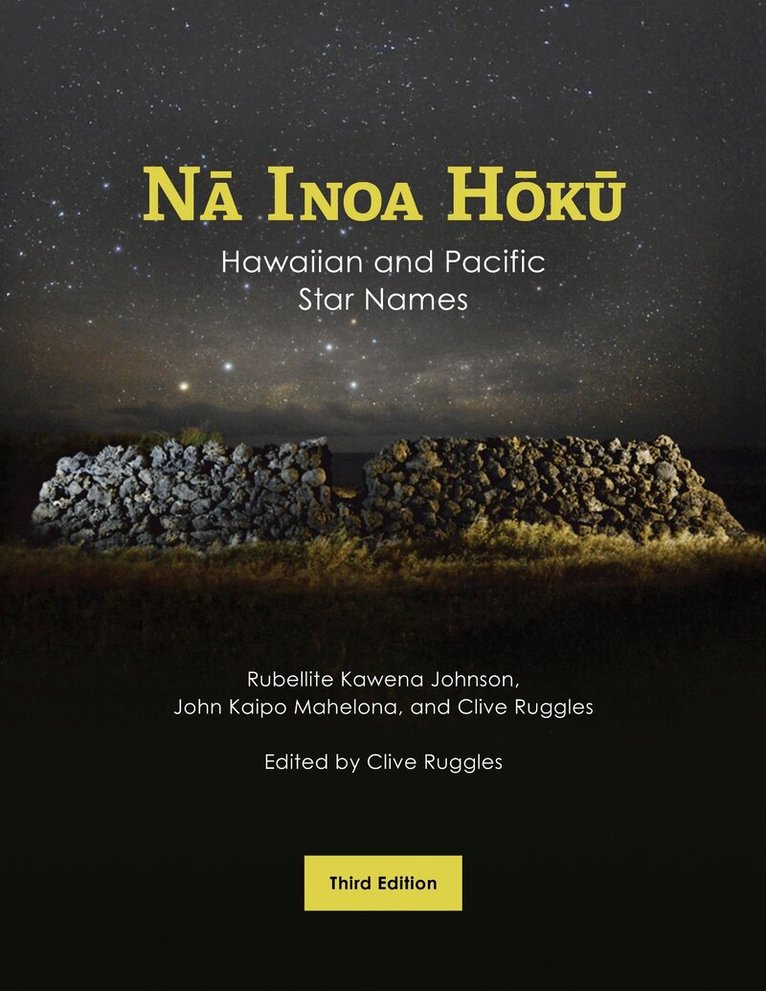
The first edition of Nā Inoa Hōkū, published in 1975, reignited global interest in Hawaiian and Pacific star knowledge and navigation at a critical time, coinciding with the epic first journey of the Hawaiian voyaging canoe Hōkūleʻa. This third edition is a hugely expanded version of Rubellite Kawena Johnson and John Kaipo Mahelona’s seminal book, representing a quartercentury of collaboration between the original authors and cultural astronomer Clive Ruggles. It remains true to Johnson’s initial objective not only to document Hawaiian star names used in navigation, mythology, and genealogy, but also to foster a much broader cultural and linguistic comprehension of Oceanic sky knowledge. Nā Inoa Hōkū: Hawaiian and Pacific Star Names, Third Edition is a compendium of the available information on traditional astronomical knowledge in the Pacific region. It comprises a major synthesis of what we know about Hawaiians’ understanding of the skies, celestial navigation, and calendrical practices, as well as insights into cosmology and religious ideology. Additionally, the three comparative star catalogues—Hawaiian, Polynesian, and Austronesian—represent an unparalleled reference compilation derived from a wide range of Indigenous, historical, and ethnographic accounts. These are accompanied by a "Western identifications" table with cross-references from Western to Oceanic star names and appendices listing modern star terminology and the various islands and ethnolinguistic groups. The section on Hawaiian knowledge and sources is enhanced by detailed interpretations and explanations that clarify many earlier transcription errors and misunderstandings. Key texts from Hawaiian-language newspapers are shown alongside new translations by Mahelona, ranging from short articles by Samuel Kamakau in the 1850s and 1860s to Benjamin K. Nāmakaokeahi’s thirty-part history of the priesthood of Kanalu published in 1900, 1901, and beyond. Also included are documents recently uncovered in the Bishop Museum Archives in Honolulu and the Cambridge University Library in the UK, along with an unpublished archive that includes firsthand testimony collected in the early twentieth century by historian Theodore Kelsey. A definitive resource for Hawaiian cultural practitioners, this book is of particular value to astronomers and linguists worldwide and an essential reference for anyone interested in Pacific history and culture.
215 kr
Tillfälligt slut
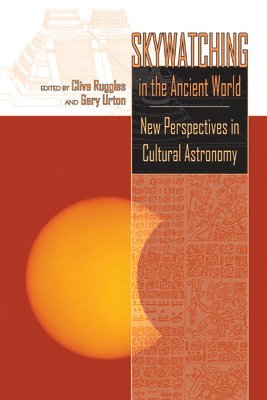
Compiled in honor of Anthony F. Aveni, America's leading archaeoastronomer, Skywatching in the Ancient World offers state-of-the-art work in cultural astronomy by well-known experts in Mayan glyphic studies, cultural history, ethnohistory, and the history of science and of religions.This collection's wide range of outstanding scholarship reveals that cultural astronomy has come into its own. The diverse topics addressed by the contributors include the correlation between Colonial Northern Zapotec and Gregorian calendars, the period of use of the Dresden Codex Venus table and the significance of the Lunar Almanacs that precede it, a new interpretation of an Inka tapestry mantle as a commemorative calendar, temple orientations in Hawai'i and church orientations in Medieval England, and the connection in cultural imagery between astronomers (science) and wizards (magic).Contributors include: Harvey M. Bricker, Victoria R. Bricker, Edward E. Calnek, Clemency Coggins, John Justeson, Edwin C. Krupp, Stephen C. McCluskey, Susan Milbrath, Clive Ruggles, David Tavárez, Barbara Tedlock, Dennis Tedlock, Gary Urton, and R. Tom Zuidema. Mesoamerican Worlds Series
674 kr
Skickas inom 7-10 vardagar
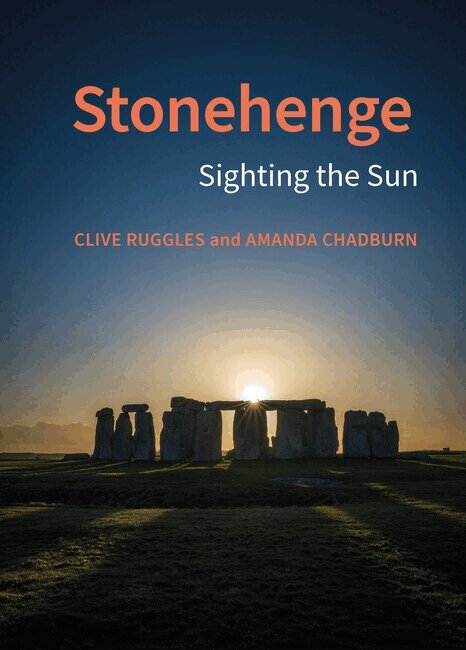
Stonehenge is one of the most famous ancient monuments in the world and its solar alignment is one of its most important features. Yet although archaeologists have learned a huge amount about this iconic monument and its development, a sense of mystery continues about its purpose. This helps fuel numerous theories and common misconceptions, particularly concerning its relationship to the sky and the heavenly bodies. A desire to cut through this confusion was the inspiration for this book, and it fills a gaping hole in the existing literature.The book provides both an introduction to Stonehenge and its landscape and an introduction to archaeoastronomy—the study of how ancient peoples understood phenomena in the sky, and what role the sky played in their cultures. Archaeoastronomy is a specialism critical to explaining the relationship of Stonehenge and nearby monuments to the heavens, but interpreting archaeoastronomical evidence has often proved highly controversial in the past. Stonehenge: Sighting the Sun explains why. It makes clear which ideas about Stonehenge are generally accepted and which are not, with clear graphics to explain complicated concepts.This beautifully illustrated book shines new light on this most famous of ancient monuments, and is the first in-depth study of this fascinating topic suitable both for specialists and for anyone with a general interest.The volume includes a Foreword by British archaeologist and academic Professor Sir Barry Cunliffe.