Gary Urton - Böcker
Visar alla böcker från författaren Gary Urton. Handla med fri frakt och snabb leverans.
6 produkter
6 produkter
380 kr
Skickas inom 10-15 vardagar
The Inka Empire stretched over much of the length and breadth of the South American Andes, encompassed elaborately planned cities linked by a complex network of roads and messengers, and created astonishing works of architecture and artistry and a compelling mythology-all without the aid of a graphic writing system. Instead, the Inkas' records consisted of devices made of knotted and dyed strings-called khipu-on which they recorded information pertaining to the organization and history of their empire. Despite more than a century of research on these remarkable devices, the khipu remain largely undeciphered.In this benchmark book, twelve international scholars tackle the most vexed question in khipu studies: how did the Inkas record and transmit narrative records by means of knotted strings? The authors approach the problem from a variety of angles. Several essays mine Spanish colonial sources for details about the kinds of narrative encoded in the khipu. Others look at the uses to which khipu were put before and after the Conquest, as well as their current use in some contemporary Andean communities. Still others analyze the formal characteristics of khipu and seek to explain how they encode various kinds of numerical and narrative data.
1 232 kr
Skickas inom 7-10 vardagar
The Inca Empire existed for fewer than 100 years, yet ruled more subjects than either the Aztecs or the Maya and occupied a territory stretching nearly 3000 miles. The Incas left no system of writing; what we know of them has been gleaned from the archaeological record and accounts written following the Spanish invasion. In this A-to-Z encyclopedia, Gary Urton and Adriana von Hagen, together with over thirty contributors, provide a broad introduction to the fascinating civilization of the Incas, including their settlements, culture, society, celebrations, and achievements.Following a broad introduction, 128 individual entries explore wide-ranging themes (religion, architecture, farming) and specific topics (ceremonial drinking cup, astronomy), interweaving ethnohistoric and archaeological research with nuanced interpretation. Each entry provides suggestions for further reading. Sidebars profiling chroniclers and researchers of Inca life—ranging from José de Acosta and Cristóbal de Albornoz to Maria Rostworowski and R. Tom Zuidema—add depth and context for the cultural entries. Cross-references, alphabetical and topical lists of entries, and a thorough index help readers navigate the volume. A chronology, selected bibliography, regional map, and almost ninety illustrations round out the volume. In sum, the Encyclopedia of the Incas provides a unique, comprehensive resource for scholars, as well as the general public, to explore the civilization of the Incas—the largest empire of the pre-Columbian New World.
Del 26 - Dumbarton Oaks Pre-Columbian Symposia and Colloquia
Their Way of Writing
Scripts, Signs, and Pictographies in Pre-Columbian America
Inbunden, Engelska, 2011
536 kr
Skickas inom 7-10 vardagar
215 kr
Tillfälligt slut
Compiled in honor of Anthony F. Aveni, America's leading archaeoastronomer, Skywatching in the Ancient World offers state-of-the-art work in cultural astronomy by well-known experts in Mayan glyphic studies, cultural history, ethnohistory, and the history of science and of religions.This collection's wide range of outstanding scholarship reveals that cultural astronomy has come into its own. The diverse topics addressed by the contributors include the correlation between Colonial Northern Zapotec and Gregorian calendars, the period of use of the Dresden Codex Venus table and the significance of the Lunar Almanacs that precede it, a new interpretation of an Inka tapestry mantle as a commemorative calendar, temple orientations in Hawai'i and church orientations in Medieval England, and the connection in cultural imagery between astronomers (science) and wizards (magic).Contributors include: Harvey M. Bricker, Victoria R. Bricker, Edward E. Calnek, Clemency Coggins, John Justeson, Edwin C. Krupp, Stephen C. McCluskey, Susan Milbrath, Clive Ruggles, David Tavárez, Barbara Tedlock, Dennis Tedlock, Gary Urton, and R. Tom Zuidema. Mesoamerican Worlds Series
991 kr
Tillfälligt slut
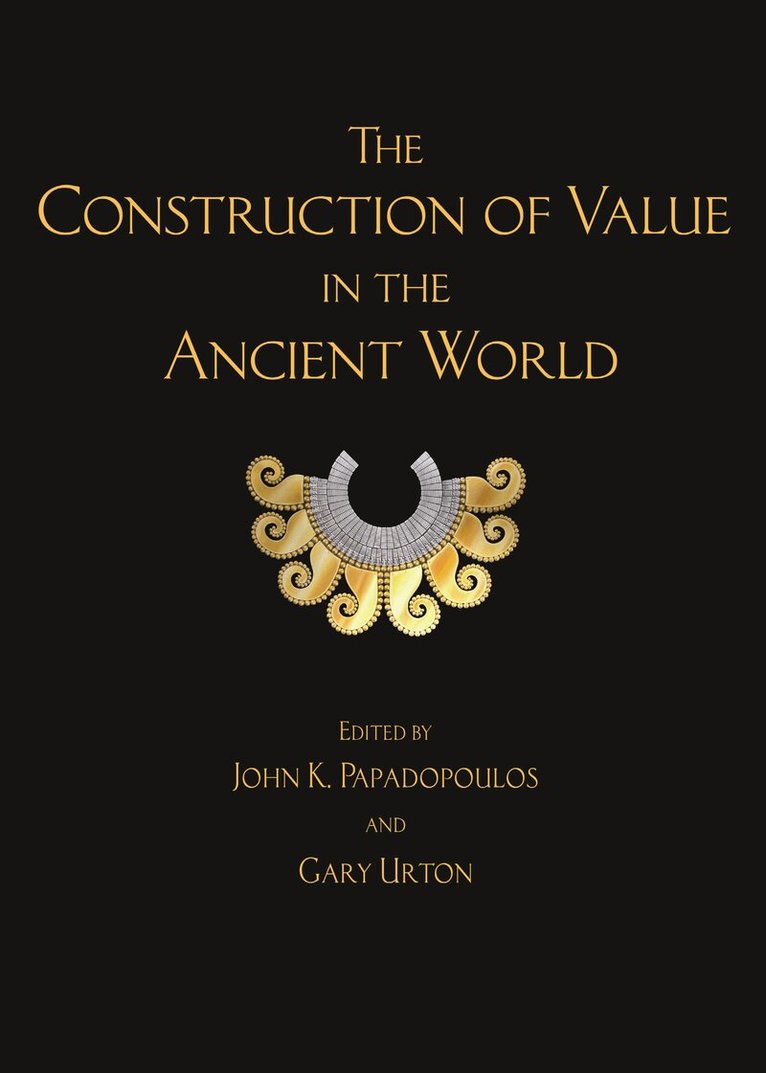
Recipient of the Jo Anne Stolaroff Cotsen Prize Scholars from Aristotle to Marx and beyond have been fascinated by the question of what constitutes value. The Construction of Value in the Ancient World makes a significant contribution to this ongoing inquiry, bringing together in one comprehensive volume the perspectives of leading anthropologists, archaeologists, historians, linguists, philologists, and sociologists on how value was created, defined, and expressed in a number of ancient societies around the world. Based on the basic premise that value is a social construct defined by the cultural context in which it is situated, the volume explores four overarching but closely interrelated themes: place value, body value, object value, and number value. The questions raised and addressed are of central importance to archaeologists studying ancient civilizations: How can we understand the value that might have been accorded to materials, objects, people, places, and patterns of action by those who produced or used the things that compose the human material record? Taken as a whole, the contributions to this volume demonstrate how the concept of value lies at the intersection of individual and collective tastes, desires, sentiments, and attitudes that inform the ways people select, or give priority to, one thing over another.
699 kr
Skickas inom 5-8 vardagar
Recipient of the Jo Anne Stolaroff Cotsen PrizeScholars from Aristotle to Marx and beyond have been fascinated by the question of what constitutes value. The Construction of Value in the Ancient World makes a significant contribution to this ongoing inquiry, bringing together in one comprehensive volume the perspectives of leading anthropologists, archaeologists, historians, linguists, philologists, and sociologists on how value was created, defined, and expressed in a number of ancient societies around the world.Based on the premise that value is a social construct defined by the cultural context in which it is situated, the book explores four overarching but closely interrelated themes: place value, body value, object value, and number value. The questions raised and addressed are of central importance to archaeologists studying ancient civilizations: How can we understand the value that might have been accorded to materials, objects, people, places, and patterns of action by those who produced or used the things that compose the human material record? Taken as a whole, the contributions to this volume demonstrate how the concept of value lies at the intersection of individual and collective tastes, desires, sentiments, and attitudes that inform the ways people select, or give priority to, one thing over another.24 pages of colour plates