Cóilín Parsons - Böcker
Visar alla böcker från författaren Cóilín Parsons. Handla med fri frakt och snabb leverans.
8 produkter
8 produkter
1 684 kr
Skickas inom 7-10 vardagar
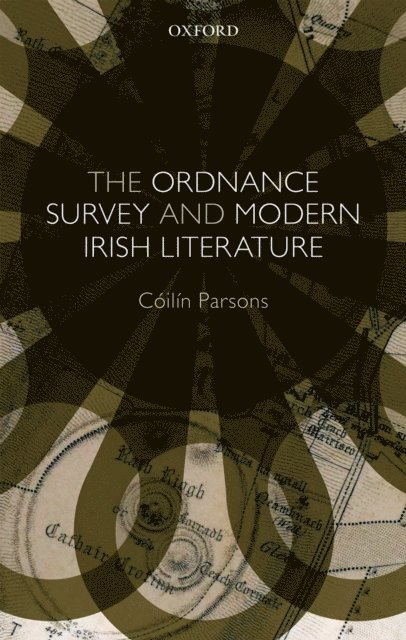
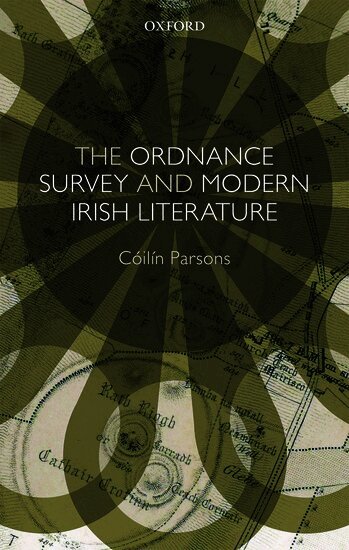
The Ordnance Survey and Modern Irish Literature offers a fresh new look at the origins of literary modernism in Ireland, tracing a history of Irish writing through James Clarence Mangan, J.M. Synge, W.B. Yeats, James Joyce, and Samuel Beckett. Beginning with the archives of the Ordnance Survey, which mapped Ireland between 1824 and 1846, the book argues that one of the sources of Irish modernism lies in the attempt by the Survey to produce a comprehensive archive of a land emerging rapidly into modernity. The Ordnance Survey instituted a practice of depicting the country as modern, fragmented, alienated, and troubled, both diagnosing and representing a landscape burdened with the paradoxes of colonial modernity. Subsequent literature returns in varying ways, both imitative and combative, to the complex representational challenge that the Survey confronts and seeks to surmount. From a colonial mapping project to an engine of nationalist imagining, and finally a framework by which to evade the claims of the postcolonial nation, the Ordnance Survey was a central imaginative source of what makes Irish modernist writing both formally innovative and politically challenging. Drawing on literary theory, studies of space, the history of cartography, postcolonial theory, archive theory, and the field Irish Studies, The Ordnance Survey and Modern Irish Literature paints a picture of Irish writing deeply engaged in the representation of a multi-layered landscape.
670 kr
Skickas
The Ordnance Survey and Modern Irish Literature offers a fresh new look at the origins of literary modernism in Ireland, tracing a history of Irish writing through James Clarence Mangan, J.M. Synge, W.B. Yeats, James Joyce, and Samuel Beckett. Beginning with the archives of the Ordnance Survey, which mapped Ireland between 1824 and 1846, the book argues that one of the sources of Irish modernism lies in the attempt by the Survey to produce a comprehensive archive of a land emerging rapidly into modernity. The Ordnance Survey instituted a practice of depicting the country as modern, fragmented, alienated, and troubled, both diagnosing and representing a landscape burdened with the paradoxes of colonial modernity. Subsequent literature returns in varying ways, both imitative and combative, to the complex representational challenge that the Survey confronts and seeks to surmount. From a colonial mapping project to an engine of nationalist imagining, and finally a framework by which to evade the claims of the postcolonial nation, the Ordnance Survey was a central imaginative source of what makes Irish modernist writing both formally innovative and politically challenging. Drawing on literary theory, studies of space, the history of cartography, postcolonial theory, archive theory, and the field Irish Studies, The Ordnance Survey and Modern Irish Literature paints a picture of Irish writing deeply engaged in the representation of a multi-layered landscape.
806 kr
Skickas inom 10-15 vardagar
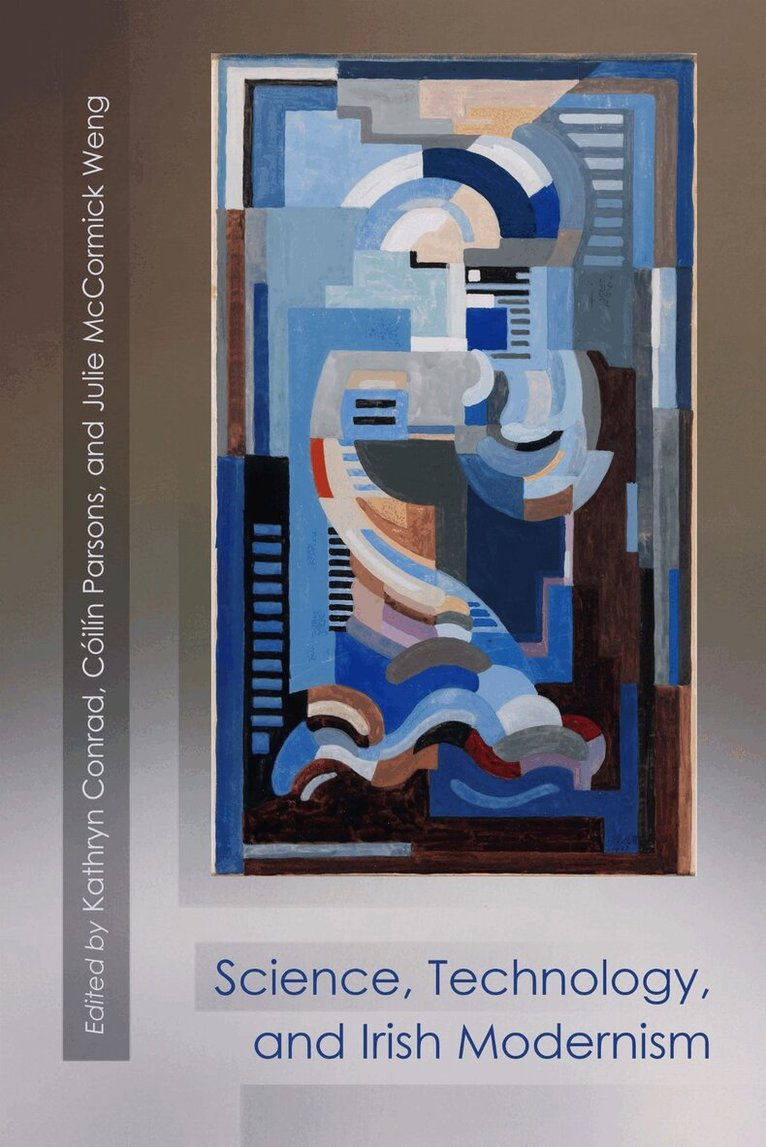
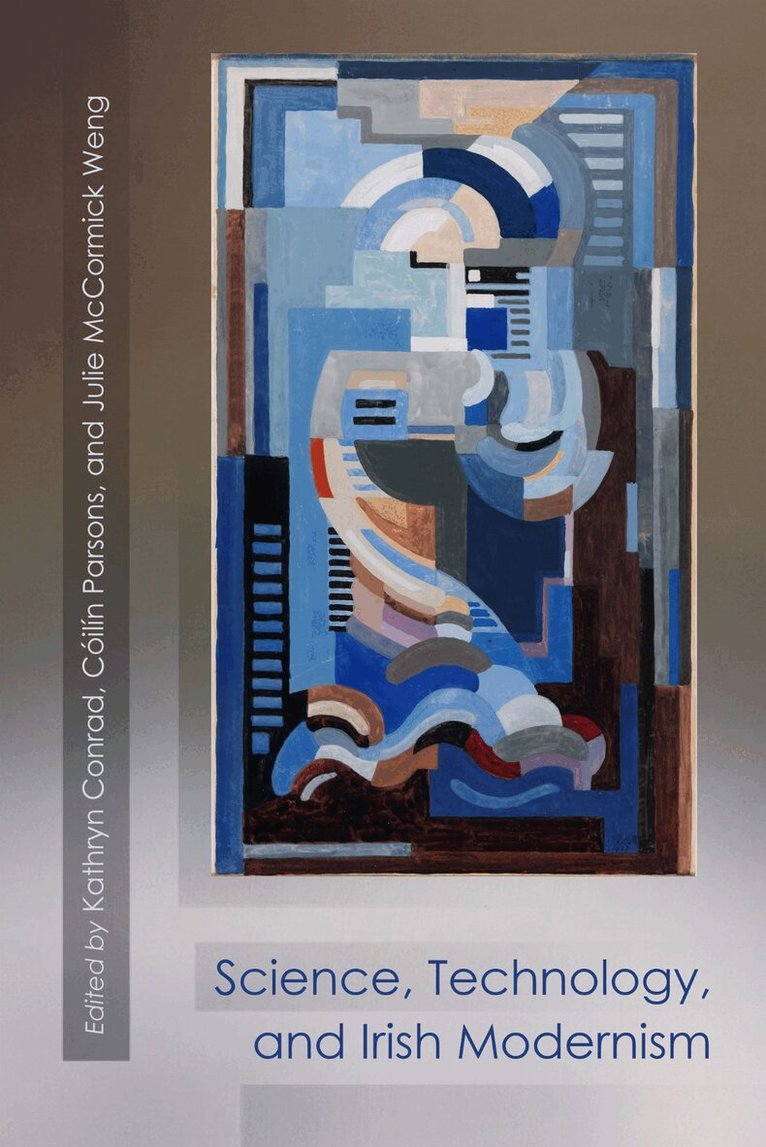
Since W. B. Yeats wrote in 1890 that ""the man of science is too often a person who has exchanged his soul for a formula,"" the anti-scientific bent of Irish literature has often been taken as a given. Science, Technology, and Irish Modernism brings together leading and emerging scholars of Irish modernism to challenge the stereotype that Irish literature has been unconcerned with scientific and technological change. The collection spotlights authors ranging from James Joyce, Elizabeth Bowen, Flann O'Brien, and Samuel Beckett to less-studied writers like Emily Lawless, John Eglinton, Denis Johnston, and Lennox Robinson. With chapters on naturalism, futurism, dynamite, gramophones, uncertainty, astronomy, automobiles, and more, this book showcases the far-reaching scope and complexity of Irish writers' engagement with innovations in science and technology.Taken together, the fifteen original essays in Science, Technology, and Irish Modernism map a new literary landscape of Ireland in the twentieth century. By focusing on writers' often-ignored interest in science and technology, this book uncovers shared concerns between revivalists, modernists, and late modernists that challenge us to rethink how we categorize and periodize Irish literature.
416 kr
Skickas inom 7-10 vardagar
Since W. B. Yeats wrote in 1890 that "the man of science is too often a person who has exchanged his soul for a formula," the anti-scientific bent of Irish literature has often been taken as a given. Science, Technology, and Irish Modernism brings together leading and emerging scholars of Irish modernism to challenge the stereotype that Irish literature has been unconcerned with scientific and technological change. The collection spotlights authors ranging from James Joyce, Elizabeth Bowen, Flann O’Brien, and Samuel Beckett to less-studied writers like Emily Lawless, John Eglinton, Denis Johnston, and Lennox Robinson. With chapters on naturalism, futurism, dynamite, gramophones, uncertainty, astronomy, automobiles, and more, this book showcases the far-reaching scope and complexity of Irish writers’ engagement with innovations in science and technology.Taken together, the fifteen original essays in Science, Technology, and Irish Modernism map a new literary landscape of Ireland in the twentieth century. By focusing on writers' often-ignored interest in science and technology, this book uncovers shared concerns between revivalists, modernists, and late modernists that challenge us to rethink how we categorize and periodize Irish literature.
1 333 kr
Skickas inom 7-10 vardagar
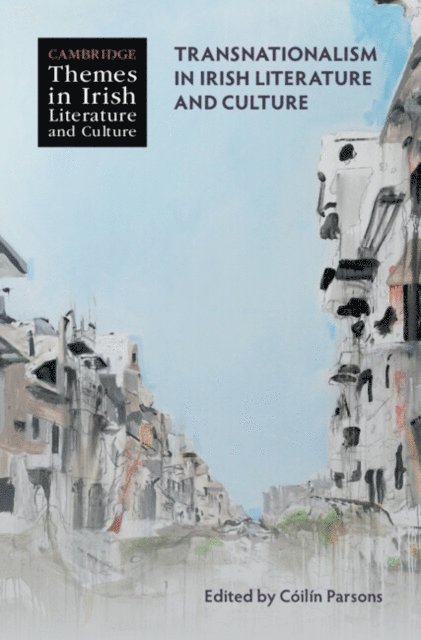
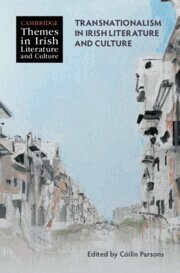
Transnationalism in Irish Literature and Culture offers a wide-ranging set of essays exploring the travels of Irish literature and culture over the last century and more. The essays focus on writers and artists whose work has been taken up and re-read overseas; on cultural producers who have engaged with transnational scales in their work; and on critical practices that pay attention to comparative, global, and planetary dimensions of Irish literature and culture. Nation and territory have long been central to cultural production in Ireland, especially as both remain significantly contested, but a continued focus on these inherited scales has hindered critical attention to transnational routes and roots that exist alongside and challenge the nation. This volume sets agenda for the future of study of transnationalism in Irish literature and culture, recognizing the need for a new set of theories and methodologies that are adequate to our emerging world.
557 kr
Kommande
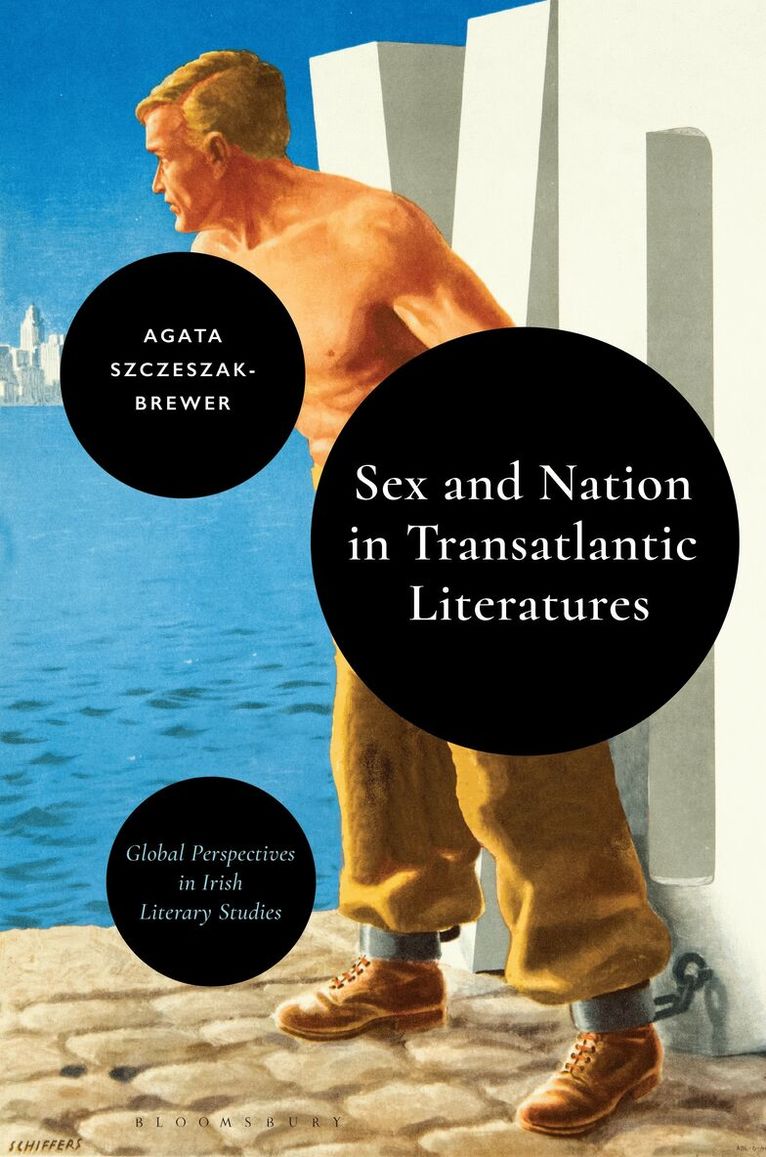
Nationalist and tribal cohesion in Ireland, South Africa, the US, and elsewhere often relies on an absence of female and gender-nonconforming bodies in the public life.Staging a vital counter-narrative to global nationalist discourses, this book explores how 20th and 21st-century postcolonial literatures criticize hetero-normative definitions of nationhood across different geopolitical and cultural contexts.Szczeszak-Brewer delves into the metaphorical currency of male impotence and sexual aggression in nationalist narratives. She examines the place of gender-nonconforming characters in literature from Ireland, the US, Poland, France, Britain, South Africa, and Senegal, in the work of writers including: James Joyce, Witold Gombrowicz, Jean Toomer, Bessie Head, Zoë Wicomb, J. M. Coetzee, Andrea Levy, Patrick McCabe, and David Diop.Aligning queer and gender perspectives with discussions of white supremacy, this book examines the urgency for contemporary geopolitics to imagine new discourses of community against the backdrop of a rise in neo-nationalisms steeped in homophobic and misogynistic rhetoric.
557 kr
Kommande
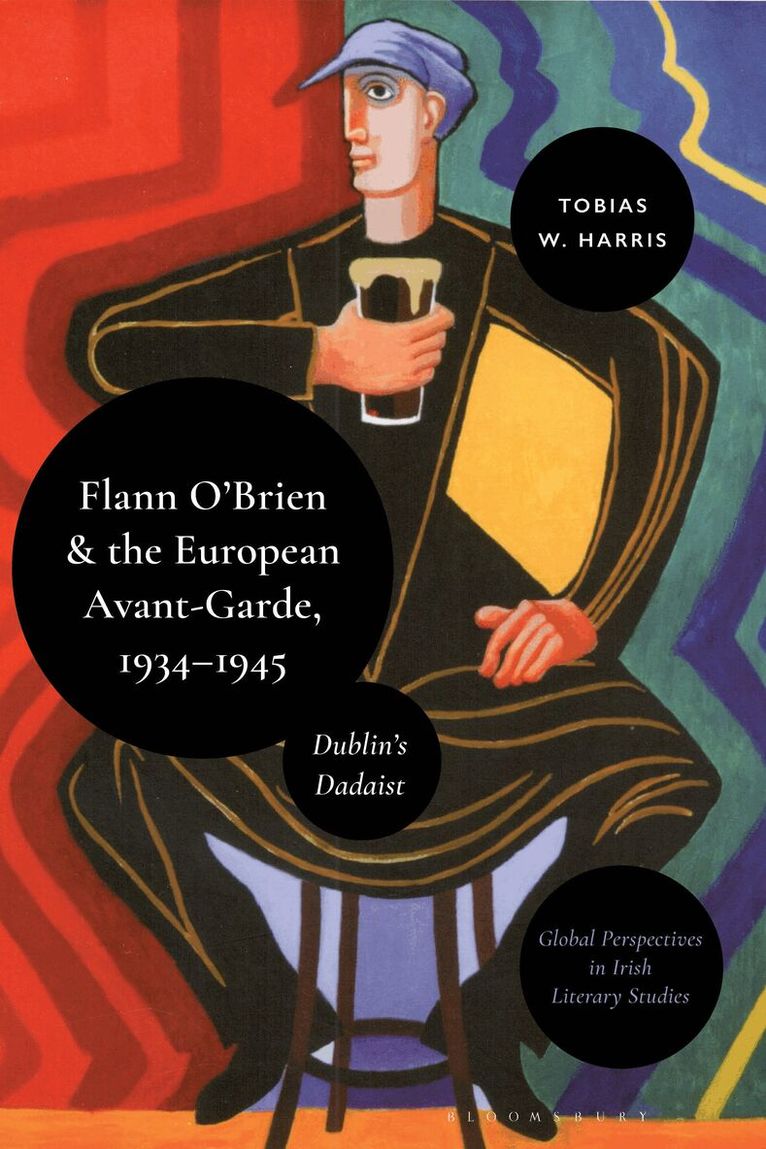
Crossing the boundaries of a single-author study, this book uncovers Flann O'Brien's attempt to forge a commercially successful Irish literary project from international avant-garde influences.Situating O'Brien's early work within a global context, the book uses new evidence of his collaborations to reimagine him as a networked writer. O'Brien drew upon experimental techniques to generate new categories of writing, rethink Irish culture and reach a wide audience. This study illuminates a network of cultural production around O'Brien, linking his work to English comic magazines, Dadaist photomontage, Expressionism, Central European theatre, and renowned writers like Jorge Luis Borges and Franz Kafka.By re-examining Flann O'Brien within the context of the momentous global political and cultural crises that spurred avant-garde experimentation, the book also rewrites the cultural history of Ireland in the 1930s and 1940s.
1 617 kr
Kommande
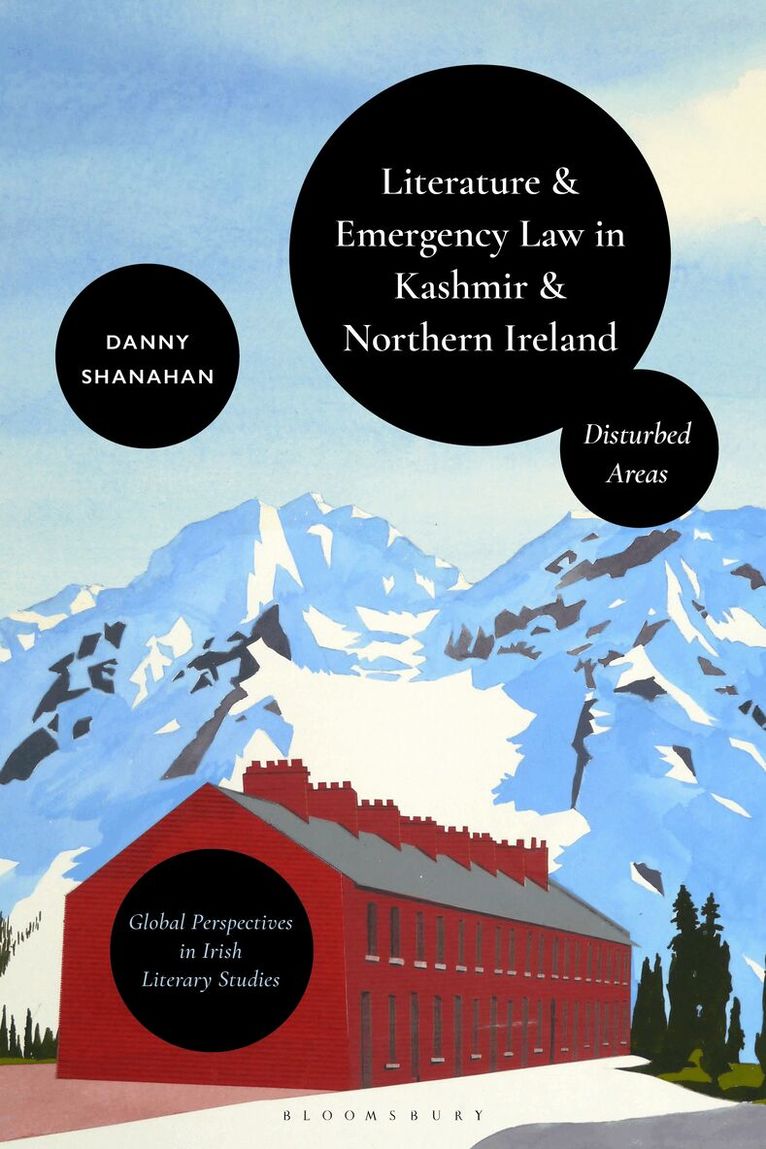
The first substantial study of emergency law’s relationship to literature in either the Northern Irish or the Kashmiri conflict, this book develops an original legal history that links these laws to a shared British colonial root. Engaging a wide range of fiction, poetry and film, from canonical poets Seamus Heaney and Agha Shahid Ali to contemporary works by Anna Burns, Mirza Waheed, and Bollywood filmmaker Vishal Bhardwaj, the book examines the literary response to the suspension of normative legal rights such as habeas corpus, the right to silence and even, in Kashmir, the right to life. By bringing these literary cultures together for the first time, it develops a literary and legal history that reveals common roots in colonial-era jurisprudence. The book re-situates these corpora, often isolated in scholarly work, as important parts of the global, material legacies of colonialism.