Colin Koopman - Böcker
Visar alla böcker från författaren Colin Koopman. Handla med fri frakt och snabb leverans.
9 produkter
9 produkter
719 kr
Tillfälligt slut
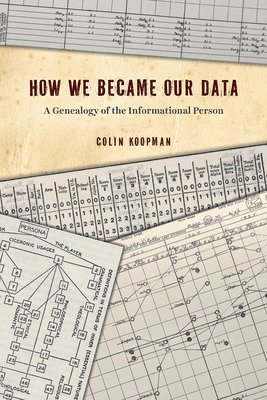
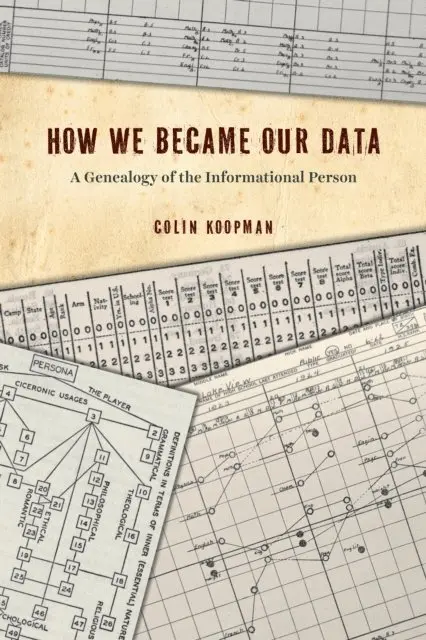
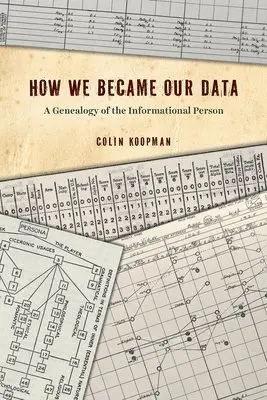
We are now acutely aware, as if all of the sudden, that data matters enormously to how we live. How did information come to be so integral to what we can do? How did we become people who effortlessly present our lives in social media profiles and who are meticulously recorded in state surveillance dossiers and online marketing databases? What is the story behind data coming to matter so much to who we are?In How We Became Our Data, Colin Koopman excavates early moments of our rapidly accelerating data-tracking technologies and their consequences for how we think of and express our selfhood today. Koopman explores the emergence of mass-scale record keeping systems like birth certificates and social security numbers, as well as new data techniques for categorizing personality traits, measuring intelligence, and even racializing subjects. This all culminates in what Koopman calls the "informational person" and the "informational power" we are now subject to. The recent explosion of digital technologies that are turning us into a series of algorithmic data points is shown to have a deeper and more turbulent past than we commonly think. Blending philosophy, history, political theory, and media theory in conversation with thinkers like Michel Foucault, J rgen Habermas, and Friedrich Kittler, Koopman presents an illuminating perspective on how we have come to think of our personhood--and how we can resist its erosion.
263 kr
Skickas inom 7-10 vardagar
We are now acutely aware, as if all of the sudden, that data matters enormously to how we live. How did information come to be so integral to what we can do? How did we become people who effortlessly present our lives in social media profiles and who are meticulously recorded in state surveillance dossiers and online marketing databases? What is the story behind data coming to matter so much to who we are?In How We Became Our Data, Colin Koopman excavates early moments of our rapidly accelerating data-tracking technologies and their consequences for how we think of and express our selfhood today. Koopman explores the emergence of mass-scale record keeping systems like birth certificates and social security numbers, as well as new data techniques for categorizing personality traits, measuring intelligence, and even racializing subjects. This all culminates in what Koopman calls the "informational person" and the "informational power" we are now subject to. The recent explosion of digital technologies that are turning us into a series of algorithmic data points is shown to have a deeper and more turbulent past than we commonly think. Blending philosophy, history, political theory, and media theory in conversation with thinkers like Michel Foucault, J rgen Habermas, and Friedrich Kittler, Koopman presents an illuminating perspective on how we have come to think of our personhood--and how we can resist its erosion.
927 kr
Skickas inom 7-10 vardagar
An expansive vision for data equality that goes beyond algorithmic fairness.When we gave algorithms power over our world, we hoped that the apparent neutrality of machine thinking would create a more egalitarian age. Yet we are more divided than ever, staring down threats to democracy itself. In Data Equals, Colin Koopman argues that data technologies fail us so often because we built them around a deficient notion of equality.It is not enough, Koopman explains, that algorithms engage everyone’s data with the same measuring stick. The data themselves are all too often structured in ways that obscure and exacerbate stratifying distinctions. Koopman contends that we must also work to ensure that those people subject to computational assessment enter data systems on equal terms. Part philosophical argument, part practical guide (replete with case studies from education technology), Data Equals offers novel methods for realizing democratic equality in a digital age.
239 kr
Skickas inom 7-10 vardagar
An expansive vision for data equality that goes beyond algorithmic fairness.When we gave algorithms power over our world, we hoped that the apparent neutrality of machine thinking would create a more egalitarian age. Yet we are more divided than ever, staring down threats to democracy itself. In Data Equals, Colin Koopman argues that data technologies fail us so often because we built them around a deficient notion of equality.It is not enough, Koopman explains, that algorithms engage everyone’s data with the same measuring stick. The data themselves are all too often structured in ways that obscure and exacerbate stratifying distinctions. Koopman contends that we must also work to ensure that those people subject to computational assessment enter data systems on equal terms. Part philosophical argument, part practical guide (replete with case studies from education technology), Data Equals offers novel methods for realizing democratic equality in a digital age.
1 127 kr
Skickas inom 7-10 vardagar
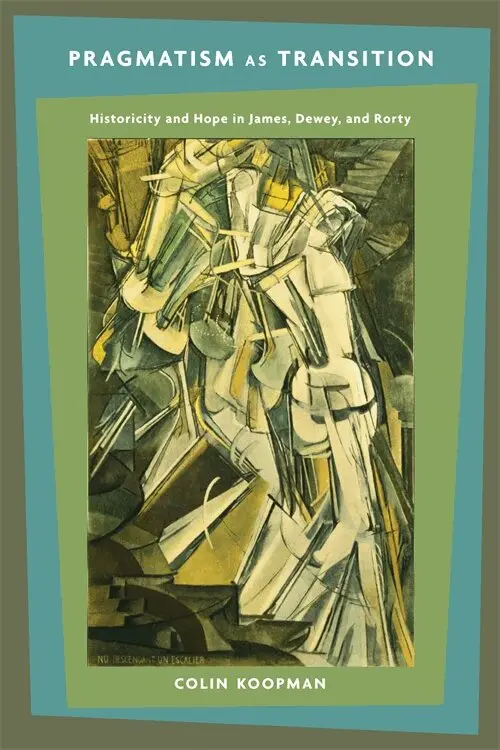
Pragmatism is America's best-known native philosophy. It espouses a practical set of beliefs and principles that focus on the improvement of our lives. Yet the split between classical and contemporary pragmatists has divided the tradition against itself. Classical pragmatists, such as John Dewey and William James, believed we should heed the lessons of experience. Neopragmatists, including Richard Rorty, Hilary Putnam, and Jurgen Habermas, argue instead from the perspective of a linguistic turn, which makes little use of the idea of experience. Can these two camps be reconciled in a way that revitalizes a critical tradition? Colin Koopman proposes a recovery of pragmatism by way of "transitionalist" themes of temporality and historicity which flourish in the work of the early pragmatists and continue in contemporary neopragmatist thought. "Life is in the transitions," James once wrote, and, in following this assertion, Koopman reveals the continuities uniting both phases of pragmatism. Koopman's framework also draws from other contemporary theorists, including Michel Foucault, Pierre Bourdieu, Bernard Williams, and Stanley Cavell.By reflecting these voices through the prism of transitionalism, a new understanding of knowledge, ethics, politics, and critique takes root. Koopman concludes with a call for integrating Dewey and Foucault into a model of inquiry he calls genealogical pragmatism, a mutually informative critique that further joins the analytic and continental schools.
287 kr
Skickas inom 7-10 vardagar
Pragmatism is America's best-known native philosophy. It espouses a practical set of beliefs and principles that focus on the improvement of our lives. Yet the split between classical and contemporary pragmatists has divided the tradition against itself. Classical pragmatists, such as John Dewey and William James, believed we should heed the lessons of experience. Neopragmatists, including Richard Rorty, Hilary Putnam, and Jurgen Habermas, argue instead from the perspective of a linguistic turn, which makes little use of the idea of experience. Can these two camps be reconciled in a way that revitalizes a critical tradition? Colin Koopman proposes a recovery of pragmatism by way of "transitionalist" themes of temporality and historicity which flourish in the work of the early pragmatists and continue in contemporary neopragmatist thought. "Life is in the transitions," James once wrote, and, in following this assertion, Koopman reveals the continuities uniting both phases of pragmatism. Koopman's framework also draws from other contemporary theorists, including Michel Foucault, Pierre Bourdieu, Bernard Williams, and Stanley Cavell.By reflecting these voices through the prism of transitionalism, a new understanding of knowledge, ethics, politics, and critique takes root. Koopman concludes with a call for integrating Dewey and Foucault into a model of inquiry he calls genealogical pragmatism, a mutually informative critique that further joins the analytic and continental schools.
312 kr
Skickas inom 7-10 vardagar
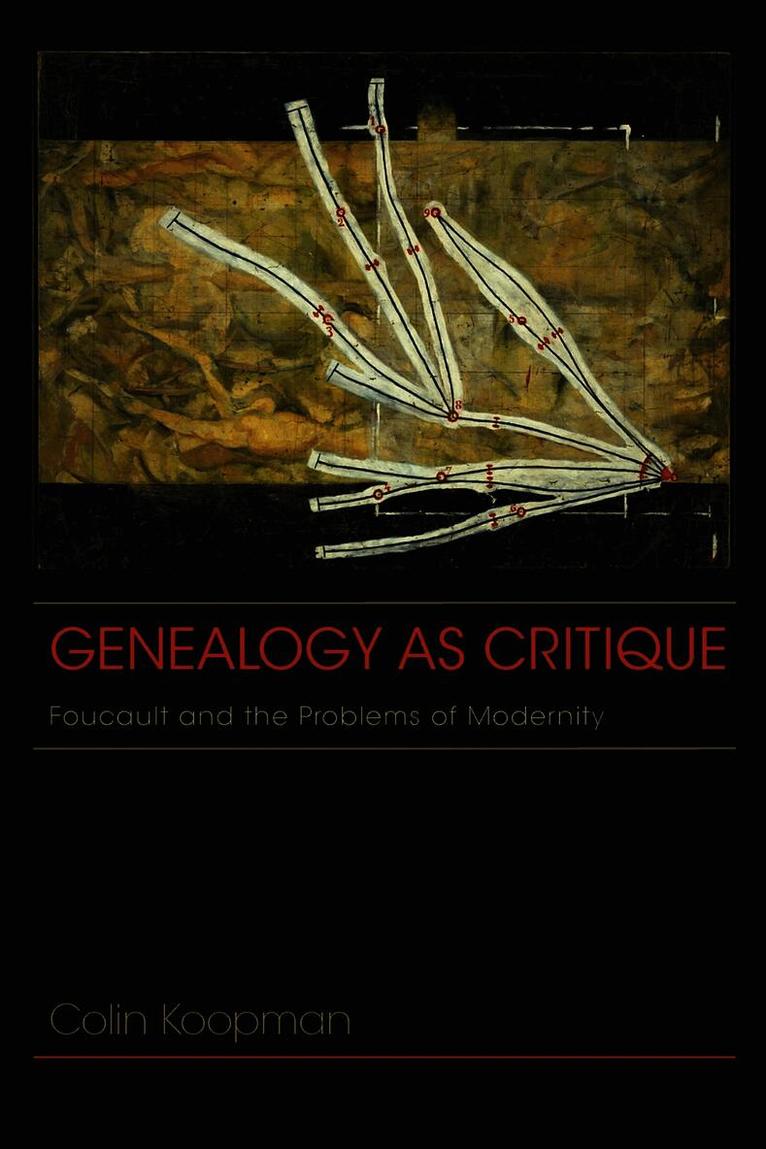
Viewing Foucault in the light of work by Continental and American philosophers, most notably Nietzsche, Habermas, Deleuze, Richard Rorty, Bernard Williams, and Ian Hacking, Genealogy as Critique shows that philosophical genealogy involves not only the critique of modernity but also its transformation. Colin Koopman engages genealogy as a philosophical tradition and a method for understanding the complex histories of our present social and cultural conditions. He explains how our understanding of Foucault can benefit from productive dialogue with philosophical allies to push Foucaultian genealogy a step further and elaborate a means of addressing our most intractable contemporary problems.
1 833 kr
Skickas inom 10-15 vardagar
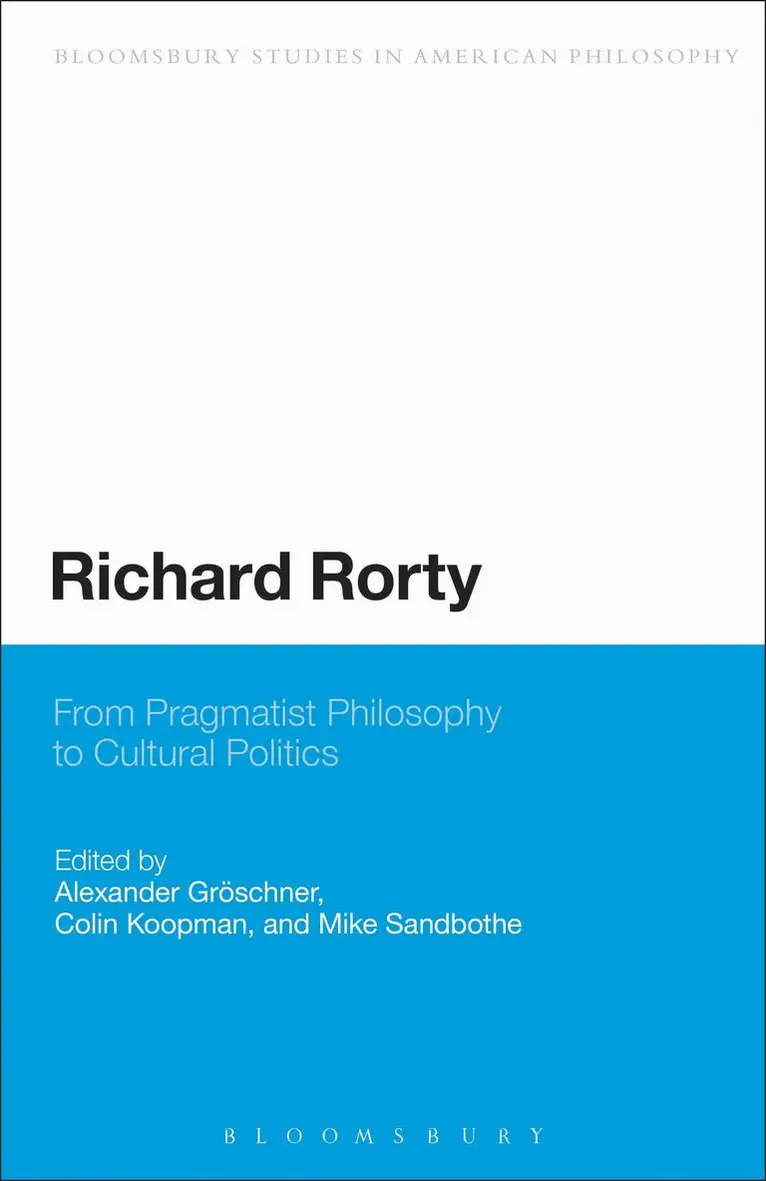
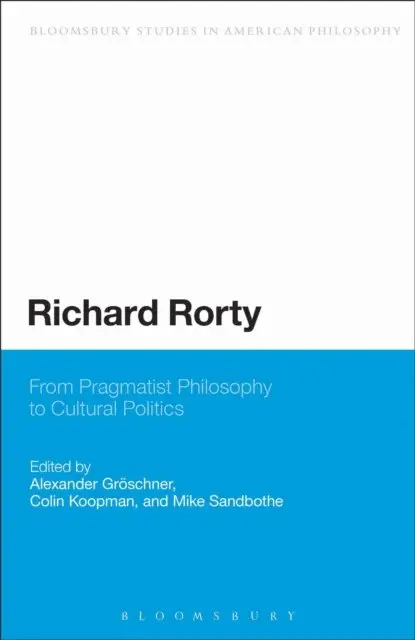
Richard Rorty was one of the most important philosophers of the last half of the twentieth century. His work helped effect global transformations in the way philosophy thinks about its work and role midst contemporary culture. He was influential across a diversity of disciplines in perturbing our inherited self-understandings of the place of intellectuals in culture and the roles of art, literature, science, and religion in contemporary liberal democratic society. This collection of essays, by an international and interdisciplinary group of eminent scholars and thinkers in their own right, including Jürgen Habermas, Saskia Sassen, Robert Brandom, and Richard Shusterman, presents the first complete posthumous study of Rorty’s work as a whole. The collection reflects on Rorty’s myriad accomplishments, with particular attention on the role of pragmatist philosophy in Rorty’s increasing identification of his thinking with the work of cultural politics. The book covers the full range of Rortyan themes, including the practice of philosophy and metaphilosophy, the politics of culture, and Rorty’s place in the contemporary philosophical and critical-cultural landscapes. These reflections serve to both introduce the arc of Rorty’s thinking and advance the critical reception of his work.
528 kr
Skickas inom 10-15 vardagar
Richard Rorty was one of the most important philosophers of the last half of the twentieth century. His work helped effect global transformations in the way philosophy thinks about its work and role midst contemporary culture. He was influential across a diversity of disciplines in perturbing our inherited self-understandings of the place of intellectuals in culture and the roles of art, literature, science, and religion in contemporary liberal democratic society. This collection of essays, by an international and interdisciplinary group of eminent scholars and thinkers in their own right, including Jürgen Habermas, Saskia Sassen, Robert Brandom, and Richard Shusterman, presents the first complete posthumous study of Rorty’s work as a whole. The collection reflects on Rorty’s myriad accomplishments, with particular attention on the role of pragmatist philosophy in Rorty’s increasing identification of his thinking with the work of cultural politics. The book covers the full range of Rortyan themes, including the practice of philosophy and metaphilosophy, the politics of culture, and Rorty’s place in the contemporary philosophical and critical-cultural landscapes. These reflections serve to both introduce the arc of Rorty’s thinking and advance the critical reception of his work.