Committee on Planetary and Lunar Exploration – författare
633 kr
Läs direkt efter köp
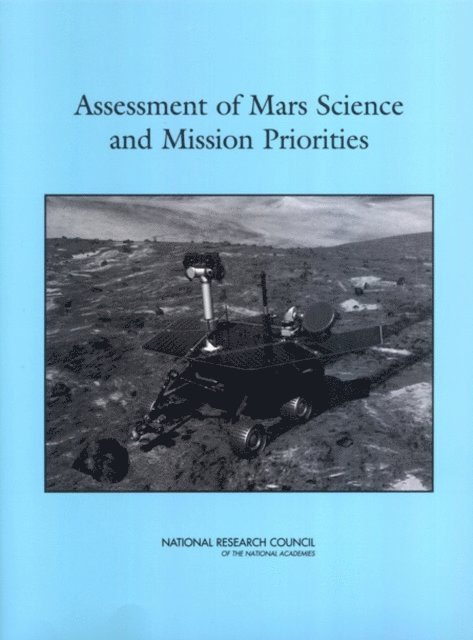
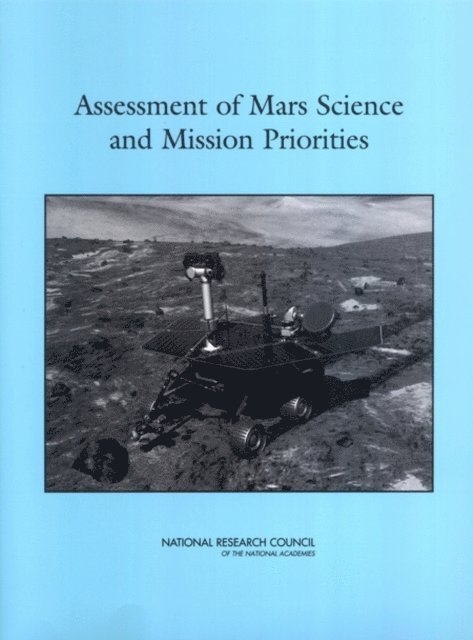
Within the Office of Space Science of the National Aeronautics and Space Administration (NASA) special importance is attached to exploration of the planet Mars, because it is the most like Earth of the planets in the solar system and the place where the first detection of extraterrestrial life seems most likely to be made. The failures in 1999 of two NASA missions—Mars Climate Orbiter and Mars Polar Lander—caused the space agency''s program of Mars exploration to be systematically rethought, both technologically and scientifically. A new Mars Exploration Program plan (summarized in Appendix A) was announced in October 2000. The Committee on Planetary and Lunar Exploration (COMPLEX), a standing committee of the Space Studies Board of the National Research Council, was asked to examine the scientific content of this new program. This goals of this report are the following:
-Review the state of knowledge of the planet Mars, with special emphasis on findings of the most recent Mars missions and related research activities;
-Review the most important Mars research opportunities in the immediate future;
-Review scientific priorities for the exploration of Mars identified by COMPLEX (and other scientific advisory groups) and their motivation, and consider the degree to which recent discoveries suggest a reordering of priorities; and
-Assess the congruence between NASA''s evolving Mars Exploration Program plan and these recommended priorities, and suggest any adjustments that might be warranted.
390 kr
Läs direkt efter köp
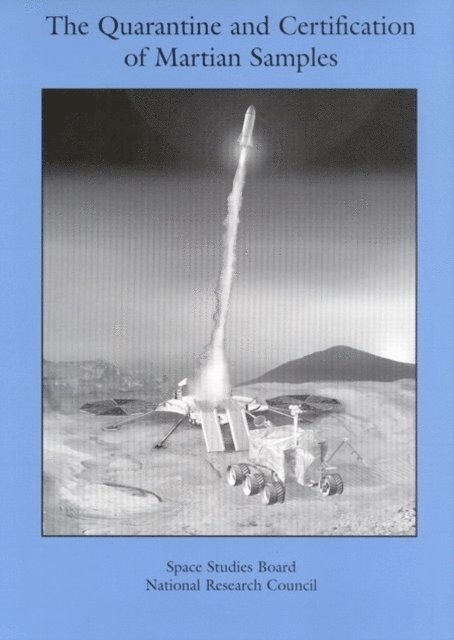
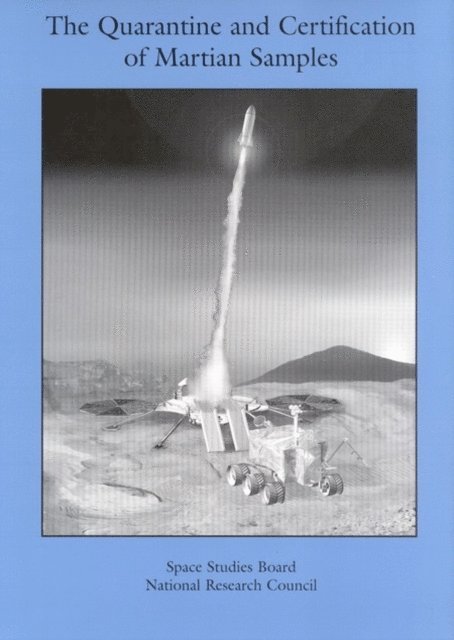
One of the highest-priority activities in the planetary sciences identified in published reports of the Space Studies Board''s Committee on Planetary and Lunar Exploration (COMPLEX) and in reports of other advisory groups is the collection and return of extraterrestrial samples to Earth for study in terrestrial laboratories. In response to recommendations made in such studies, NASA has initiated a vigorous program that will, within the next decade, collect samples from a variety of solar system environments. In particular the Mars Exploration Program is expected to launch spacecraft that are designed to collect samples of martian soil, rocks, and atmosphere and return them to Earth, perhaps as early as 2015.
International treaty obligations mandate that NASA conduct such a program in a manner that avoids the cross-contamination of both Earth and Mars. The Space Studies Board''s 1997 report Mars Sample Return: Issues and Recommendations examined many of the planetary-protection issues concerning the back contamination of Earth and concluded that, although the probability that martian samples will contain dangerous biota is small, it is not zero.1 Steps must be taken to protect Earth against the remote possibility of contamination by life forms that may have evolved on Mars. Similarly, the samples, collected at great expense, must be protected against contamination by terrestrial biota and other matter. Almost certainly, meeting these requirements will entail opening the sample-return container in an appropriate facility on Earth-presumably a BSL-4 laboratory-where testing, biosafety certification, and quarantine of the samples will be carried out before aliquots are released to the scientific community for study in existing laboratory facilities. The nature of the required quarantine facility, and the decisions required for disposition of samples once they are in it, were regarded as issues of sufficient importance and complexity to warrant a study by the Committee on Planetary and Lunar Exploration (COMPLEX) in isolation from other topics. (Previous studies have been much broader, including also consideration of the mission that collects samples on Mars and brings them to Earth, atmospheric entry, sample recovery, and transport to the quarantine facility.) The charge to COMPLEX stated that the central question to be addressed in this study is the following: What are the criteria that must be satisfied before martian samples can be released from a quarantine facility?
617 kr
Läs direkt efter köp
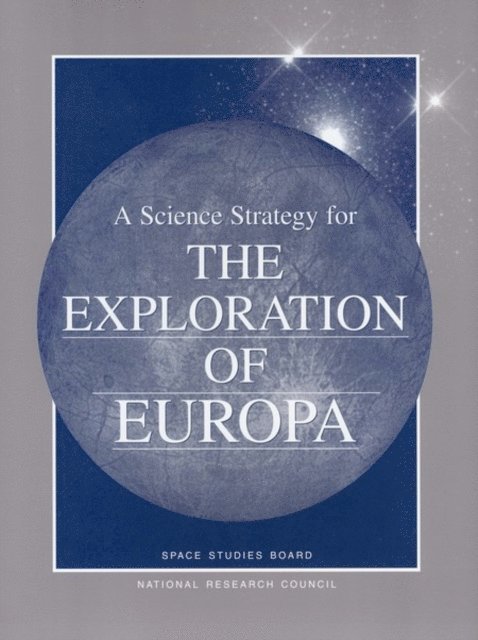
Since its discovery in 1610, Europa—one of Jupiter''s four large moons—has been an object of interest to astronomers and planetary scientists. Much of this interest stems from observations made by NASA''s Voyager and Galileo spacecraft and from Earth-based telescopes indicating that Europa''s surface is quite young, with very little evidence of cratering, and made principally of water ice.
More recently, theoretical models of the jovian system and Europa have suggested that tidal heating may have resulted in the existence of liquid water, and perhaps an ocean, beneath Europa''s surface. NASA''s ongoing Galileo mission has profoundly expanded our understanding of Europa and the dynamics of the jovian system, and may allow us to constrain theoretical models of Europa''s subsurface structure.
Meanwhile, since the time of the Voyagers, there has been a revolution in our understanding of the limits of life on Earth. Life has been detected thriving in environments previously thought to be untenable—around hydrothermal vent systems on the seafloor, deep underground in basaltic rocks, and within polar ice. Elsewhere in the solar system, including on Europa, environments thought to be compatible with life as we know it on Earth are now considered possible, or even probable. Spacecraft missions are being planned that may be capable of proving their existence.
Against this background, the Space Studies Board charged its Committee on Planetary and Lunar Exploration (COMPLEX) to perform a comprehensive study to assess current knowledge about Europa, outline a strategy for future spacecraft missions to Europa, and identify opportunities for complementary Earth-based studies of Europa. (See the preface for a full statement of the charge.)
617 kr
Läs direkt efter köp
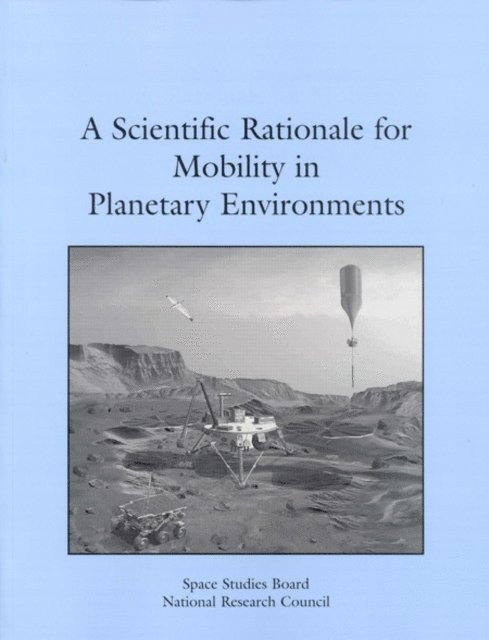
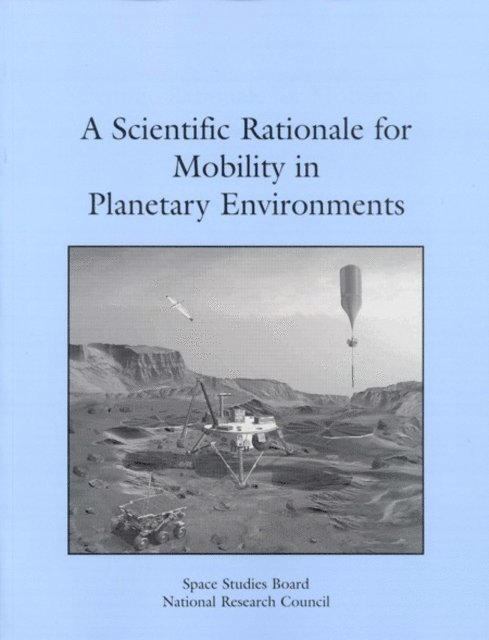
For the last several decades, the Committee on Planetary and Lunar Exploration (COMPLEX) has advocated a systematic approach to exploration of the solar system; that is, the information and understanding resulting from one mission provide the scientific foundations that motivate subsequent, more elaborate investigations. COMPLEX''s 1994 report, An Integrated Strategy for the Planetary Sciences: 1995-2010, advocated an approach to planetary studies emphasizing "hypothesizing and comprehending" rather than "cataloging and categorizing." More recently, NASA reports, including The Space Science Enterprise Strategic Plan and, in particular, Mission to the Solar System: Exploration and Discovery-A Mission and Technology Roadmap, have outlined comprehensive plans for planetary exploration during the next several decades. The missions outlined in these plans are both generally consistent with the priorities outlined in the Integrated Strategy and other NRC reports, and are replete with examples of devices embodying some degree of mobility in the form of rovers, robotic arms, and the like.
Because the change in focus of planetary studies called for in the Integrated Strategy appears to require an evolutionary change in the technical means by which solar system exploration missions are conducted, the Space Studies Board charged COMPLEX to review the science that can be uniquely addressed by mobility in planetary environments.
617 kr
Läs direkt efter köp
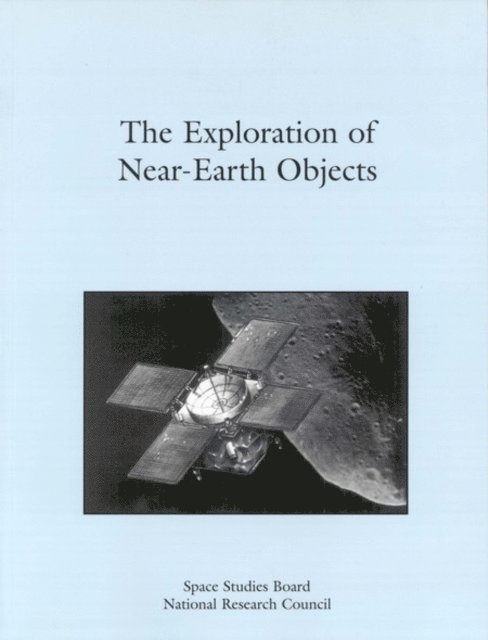
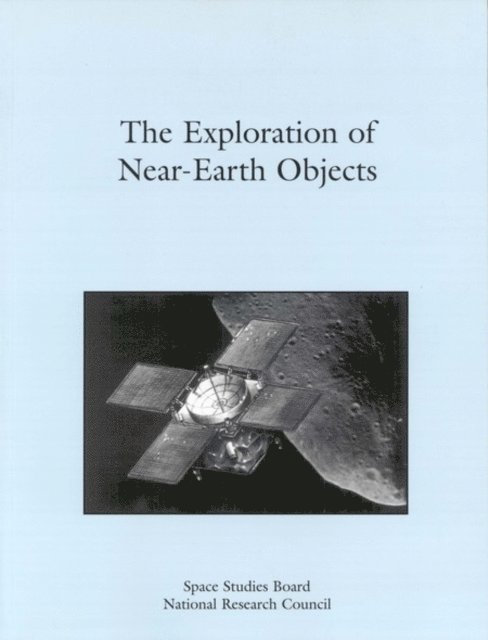
Comets and asteroids are in some sense the fossils of the solar system. They have avoided most of the drastic physical processing that shaped the planets and thus represent more closely the properties of the primordial solar nebula. What processing has taken place is itself of interest in decoding the history of our solar neighborhood. Near-Earth objects are also of interest because one or more large ones have been blamed for the rare but devastating events that caused mass extinctions of species on our planet, as attested by recent excitement over the impending passage of asteroid 1997 XF11.
The comets and asteroids whose orbits bring them close to Earth are clearly the most accessible to detailed investigation, both from the ground and from spacecraft. When nature kindly delivers the occasional asteroid to the surface of Earth as a meteorite, we can scrutinize it closely in the laboratory; a great deal of information about primordial chemical composition and primitive processes has been gleaned from such objects.
This report reviews the current state of research on near-Earth objects and considers future directions. Attention is paid to the important interplay between ground-based investigations and spaceborne observation or sample collection and return. This is particularly timely since one U.S. spacecraft is already on its way to rendezvous with a near-Earth object, and two others plus a Japanese mission are being readied for launch. In addition to scientific issues, the report considers technologies that would enable further advances in capability and points out the possibilities for including near-Earth objects in any future expansion of human exploration beyond low Earth orbit.
617 kr
Läs direkt efter köp
In the last decade, our knowledge of the outer solar system has been transformed as a result of the Voyager 2 encounter with Neptune and its satellite Triton and from Earth-based observations of the Pluto-Charon system. However, the planetary system does not simply end at the distance of Pluto and Neptune. In the past few years, dozens of bodies have been discovered in near-circular, low inclination orbits near or beyond the orbit of Neptune. These bodies are now believed to be directly related to each other and to Pluto, Charon, and Triton, and as a class they define and occupy the inner boundary of a hitherto unexplored component of the solar system, the trans-neptunian region. Exploring the Trans-Neptunian Solar System reviews current understanding of the trans-neptunian solar system and makes recommendations for the future exploration of this distant realm.
438 kr
Läs direkt efter köp
Within the Office of Space Science of the National Aeronautics and Space Administration (NASA) special importance is attached to exploration of the planet Mars, because it is the most like Earth of the planets in the solar system and the place where the first detection of extraterrestrial life seems most likely to be made. The failures in 1999 of two NASA missions—Mars Climate Orbiter and Mars Polar Lander—caused the space agency''s program of Mars exploration to be systematically rethought, both technologically and scientifically. A new Mars Exploration Program plan (summarized in Appendix A) was announced in October 2000. The Committee on Planetary and Lunar Exploration (COMPLEX), a standing committee of the Space Studies Board of the National Research Council, was asked to examine the scientific content of this new program. This goals of this report are the following:
-Review the state of knowledge of the planet Mars, with special emphasis on findings of the most recent Mars missions and related research activities;
-Review the most important Mars research opportunities in the immediate future;
-Review scientific priorities for the exploration of Mars identified by COMPLEX (and other scientific advisory groups) and their motivation, and consider the degree to which recent discoveries suggest a reordering of priorities; and
-Assess the congruence between NASA''s evolving Mars Exploration Program plan and these recommended priorities, and suggest any adjustments that might be warranted.
268 kr
Läs direkt efter köp
One of the highest-priority activities in the planetary sciences identified in published reports of the Space Studies Board''s Committee on Planetary and Lunar Exploration (COMPLEX) and in reports of other advisory groups is the collection and return of extraterrestrial samples to Earth for study in terrestrial laboratories. In response to recommendations made in such studies, NASA has initiated a vigorous program that will, within the next decade, collect samples from a variety of solar system environments. In particular the Mars Exploration Program is expected to launch spacecraft that are designed to collect samples of martian soil, rocks, and atmosphere and return them to Earth, perhaps as early as 2015.
International treaty obligations mandate that NASA conduct such a program in a manner that avoids the cross-contamination of both Earth and Mars. The Space Studies Board''s 1997 report Mars Sample Return: Issues and Recommendations examined many of the planetary-protection issues concerning the back contamination of Earth and concluded that, although the probability that martian samples will contain dangerous biota is small, it is not zero.1 Steps must be taken to protect Earth against the remote possibility of contamination by life forms that may have evolved on Mars. Similarly, the samples, collected at great expense, must be protected against contamination by terrestrial biota and other matter. Almost certainly, meeting these requirements will entail opening the sample-return container in an appropriate facility on Earth-presumably a BSL-4 laboratory-where testing, biosafety certification, and quarantine of the samples will be carried out before aliquots are released to the scientific community for study in existing laboratory facilities. The nature of the required quarantine facility, and the decisions required for disposition of samples once they are in it, were regarded as issues of sufficient importance and complexity to warrant a study by the Committee on Planetary and Lunar Exploration (COMPLEX) in isolation from other topics. (Previous studies have been much broader, including also consideration of the mission that collects samples on Mars and brings them to Earth, atmospheric entry, sample recovery, and transport to the quarantine facility.) The charge to COMPLEX stated that the central question to be addressed in this study is the following: What are the criteria that must be satisfied before martian samples can be released from a quarantine facility?
438 kr
Läs direkt efter köp
Since its discovery in 1610, Europa—one of Jupiter''s four large moons—has been an object of interest to astronomers and planetary scientists. Much of this interest stems from observations made by NASA''s Voyager and Galileo spacecraft and from Earth-based telescopes indicating that Europa''s surface is quite young, with very little evidence of cratering, and made principally of water ice.
More recently, theoretical models of the jovian system and Europa have suggested that tidal heating may have resulted in the existence of liquid water, and perhaps an ocean, beneath Europa''s surface. NASA''s ongoing Galileo mission has profoundly expanded our understanding of Europa and the dynamics of the jovian system, and may allow us to constrain theoretical models of Europa''s subsurface structure.
Meanwhile, since the time of the Voyagers, there has been a revolution in our understanding of the limits of life on Earth. Life has been detected thriving in environments previously thought to be untenable—around hydrothermal vent systems on the seafloor, deep underground in basaltic rocks, and within polar ice. Elsewhere in the solar system, including on Europa, environments thought to be compatible with life as we know it on Earth are now considered possible, or even probable. Spacecraft missions are being planned that may be capable of proving their existence.
Against this background, the Space Studies Board charged its Committee on Planetary and Lunar Exploration (COMPLEX) to perform a comprehensive study to assess current knowledge about Europa, outline a strategy for future spacecraft missions to Europa, and identify opportunities for complementary Earth-based studies of Europa. (See the preface for a full statement of the charge.)
438 kr
Läs direkt efter köp
For the last several decades, the Committee on Planetary and Lunar Exploration (COMPLEX) has advocated a systematic approach to exploration of the solar system; that is, the information and understanding resulting from one mission provide the scientific foundations that motivate subsequent, more elaborate investigations. COMPLEX''s 1994 report, An Integrated Strategy for the Planetary Sciences: 1995-2010, advocated an approach to planetary studies emphasizing "hypothesizing and comprehending" rather than "cataloging and categorizing." More recently, NASA reports, including The Space Science Enterprise Strategic Plan and, in particular, Mission to the Solar System: Exploration and Discovery-A Mission and Technology Roadmap, have outlined comprehensive plans for planetary exploration during the next several decades. The missions outlined in these plans are both generally consistent with the priorities outlined in the Integrated Strategy and other NRC reports, and are replete with examples of devices embodying some degree of mobility in the form of rovers, robotic arms, and the like.
Because the change in focus of planetary studies called for in the Integrated Strategy appears to require an evolutionary change in the technical means by which solar system exploration missions are conducted, the Space Studies Board charged COMPLEX to review the science that can be uniquely addressed by mobility in planetary environments.
438 kr
Läs direkt efter köp
In the last decade, our knowledge of the outer solar system has been transformed as a result of the Voyager 2 encounter with Neptune and its satellite Triton and from Earth-based observations of the Pluto-Charon system. However, the planetary system does not simply end at the distance of Pluto and Neptune. In the past few years, dozens of bodies have been discovered in near-circular, low inclination orbits near or beyond the orbit of Neptune. These bodies are now believed to be directly related to each other and to Pluto, Charon, and Triton, and as a class they define and occupy the inner boundary of a hitherto unexplored component of the solar system, the trans-neptunian region. Exploring the Trans-Neptunian Solar System reviews current understanding of the trans-neptunian solar system and makes recommendations for the future exploration of this distant realm.
438 kr
Läs direkt efter köp
Comets and asteroids are in some sense the fossils of the solar system. They have avoided most of the drastic physical processing that shaped the planets and thus represent more closely the properties of the primordial solar nebula. What processing has taken place is itself of interest in decoding the history of our solar neighborhood. Near-Earth objects are also of interest because one or more large ones have been blamed for the rare but devastating events that caused mass extinctions of species on our planet, as attested by recent excitement over the impending passage of asteroid 1997 XF11.
The comets and asteroids whose orbits bring them close to Earth are clearly the most accessible to detailed investigation, both from the ground and from spacecraft. When nature kindly delivers the occasional asteroid to the surface of Earth as a meteorite, we can scrutinize it closely in the laboratory; a great deal of information about primordial chemical composition and primitive processes has been gleaned from such objects.
This report reviews the current state of research on near-Earth objects and considers future directions. Attention is paid to the important interplay between ground-based investigations and spaceborne observation or sample collection and return. This is particularly timely since one U.S. spacecraft is already on its way to rendezvous with a near-Earth object, and two others plus a Japanese mission are being readied for launch. In addition to scientific issues, the report considers technologies that would enable further advances in capability and points out the possibilities for including near-Earth objects in any future expansion of human exploration beyond low Earth orbit.
187 kr
Läs direkt efter köp
This volume addresses a new opportunity in the planetary sciences—to extend our exploration outward to discover and study planetary systems that may have formed or are forming around other stars.
It concludes that a coordinated program of astronomical observation, laboratory research, theoretical development, and understanding of the dynamics and origins of whatever may be found would be a technologically feasible and potentially richly rewarding extension of the study of bodies within the solar system.
1 656 kr
Tillfälligt slut
1 290 kr
Tillfälligt slut
1 290 kr
Tillfälligt slut
1 290 kr
Tillfälligt slut
1 290 kr
Tillfälligt slut
477 kr
Tillfälligt slut
637 kr
Tillfälligt slut