Constantine Nomikos Vaporis - Böcker
Visar alla böcker från författaren Constantine Nomikos Vaporis. Handla med fri frakt och snabb leverans.
4 produkter
4 produkter
301 kr
Kommande
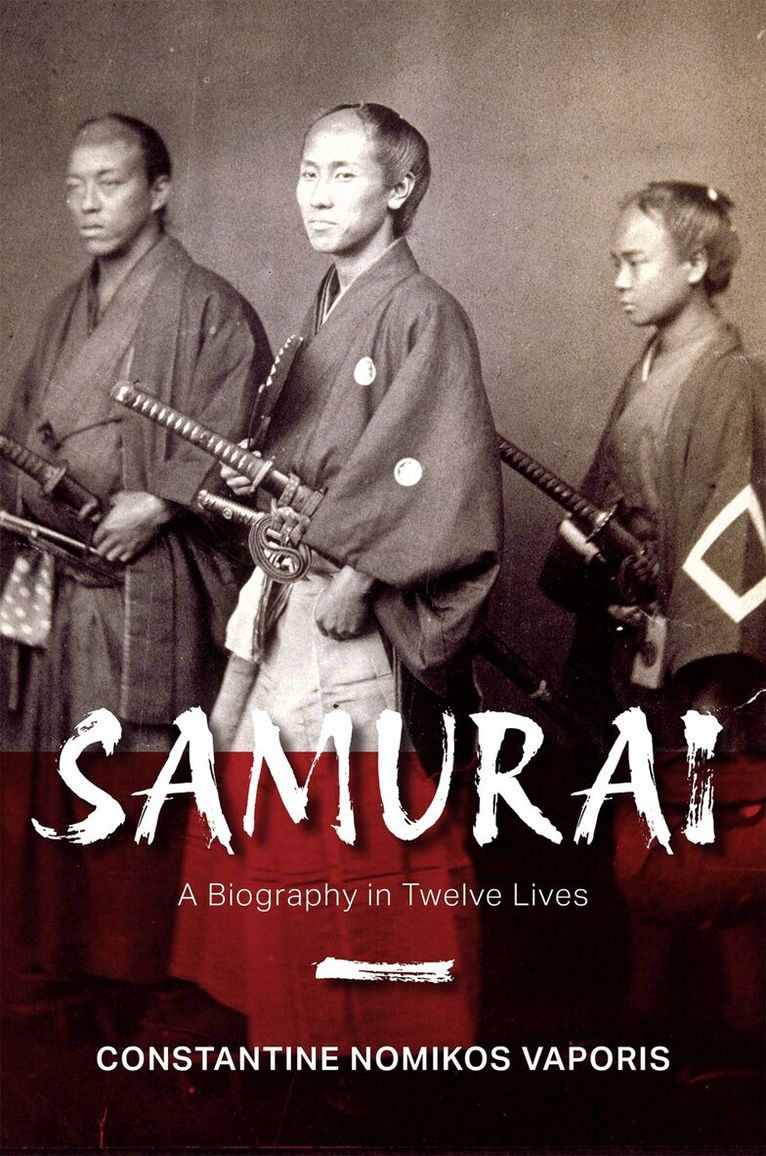
The samurai are often viewed monolithically as fearsome warriors, driven by a fixed code-the Bushido-and bent on dying in service to a lord, or daimyo. However, the Tokugawa Era, the long period of peace (1600 to 1868) after the Shogunate had centralized control in Japan, forced them to adjust. While many samurai continued to uphold martial values, others became bureaucrats, teachers, scholars, artists, and even entrepreneurs.In Samurai: A Biography in Twelve Lives, Constantine Nomikos Vaporis uses the lives of individual samurai during the Tokugawa Period to illuminate and explore this transformation. Twelve biographical portraits, ranging from that of legendary figures like Asano Naganori, to Niijima Yae, one of the few women to achieve warrior renown, illustrate the diversity of experience. Vaporis offers a riveting and comprehensive picture of their evolving identities. As he shows, samurai navigated the societal changes brought on by the "Great Peace" by balancing their warrior heritage with the demands of peacetime service, grappling with financial hardship and reinterpreting loyalty in a shifting political landscape.Vaporis provides a hauntingly humane portrayal of these historical figures while offering readers a deeper understanding of Japan's early modern era.
Del 163 - Harvard East Asian Monographs
Breaking Barriers
Travel and the State in Early Modern Japan
Inbunden, Engelska, 1995
558 kr
Skickas inom 10-15 vardagar
Travel in Tokugawa Japan was officially controlled by bakufu and domainal authorities via an elaborate system of barriers, or sekisho, and travel permits; commoners, however, found ways to circumvent these barriers, frequently ignoring the laws designed to control their mobility. In this study, Constantine Vaporis challenges the notion that this system of travel regulations prevented widespread travel, maintaining instead that a “culture of movement” in Japan developed in the Tokugawa era.Using a combination of governmental documentation and travel literature, diaries, and wood-block prints, Vaporis examines the development of travel as recreation; he discusses the impact of pilgrimage and the institutionalization of alms-giving on the freedom of movement commoners enjoyed. By the end of the Tokugawa era, the popular nature of travel and a sophisticated system of roads were well established. Vaporis explores the reluctance of the bakufu to enforce its travel laws, and in doing so, beautifully evokes the character of the journey through Tokugawa Japan.
Tour of Duty
Samurai, Military Service in Edo, and the Culture of Early Modern Japan
Häftad, Engelska, 2009
228 kr
Skickas inom 11-20 vardagar
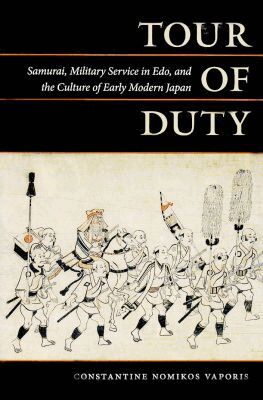
Alternate attendance (sankin kotai) was one of the central institutions of Edo-period (1603–1868) Japan and one of the most unusual examples of a system of enforced elite mobility in world history. It required the daimyo to divide their time between their domains and the city of Edo, where they waited upon the Tokugawa shogun. Based on a prodigious amount of research in both published and archival primary sources, Tour of Duty renders alternate attendance as a lived experience, for not only the daimyo but also the samurai retainers who accompanied them. Beyond exploring the nature of travel to and from the capital as well as the period of enforced bachelorhood there, Constantine Vaporis elucidates―for the first time―the significance of alternate attendance as an engine of cultural, intellectual, material, and technological exchange.Vaporis argues against the view that cultural change simply emanated from the center (Edo) and reveals more complex patterns of cultural circulation and production taking place between the domains and Edo and among distant parts of Japan. What is generally known as "Edo culture" in fact incorporated elements from the localities. In some cases, Edo acted as a nexus for exchange; at other times, culture traveled from one area to another without passing through the capital. As a result, even those who did not directly participate in alternate attendance experienced a world much larger than their own. Vaporis begins by detailing the nature of the trip to and from the capital for one particular large-scale domain, Tosa, and its men and goes on to analyze the political and cultural meanings of the processions of the daimyo and their extensive entourages up and down the highways. These parade-like movements were replete with symbolic import for the nature of early modern governance. Later chapters are concerned with the physical and social environment experienced by the daimyo’s retainers in Edo; they also address the question of who went to Edo and why, the network of physical spaces in which the domainal samurai lived, the issue of staffing, political power, and the daily lives and consumption habits of retainers. Finally, Vaporis examines retainers as carriers of culture, both in a literal and a figurative sense. In doing so, he reveals the significance of travel for retainers and their identity as consumers and producers of culture, thus proposing a multivalent model of cultural change.
197 kr
Skickas
A captivating and comprehensive guide to Japan's elite class of warriors—revised and updated with over 70 color photographs!The Samurai played a leading role in Japanese society for centuries, and this is the first encyclopedia to showcase the fascinating history and culture of these enigmatic warriors. With a new foreword by Samurai scholar and martial arts expert Alexander Bennet and over 70 new color photographs, this newly designed edition offers the most comprehensive and enticing collection of Samurai information available today.This book contains 171 highly detailed alphabetical entries and essays on a broad variety of intriguing topics, including the following:Samurai weapons and armor, including the fearsome katana swordFamous Samurai including Miyamoto Musashi, Japan's greatest swordsman; Tokugawa Ieyasu, the founder of the Tokugawa shogunate; and Toyotomi Hideyoshi, a uni er of Japan and notorious persecutor of Christians in the 16th centuryThe Battle of Sekigahara, the largest battle ever to take place in Japan, and the Boshin War, which led to the fall of the shogunate and restoration of imperial powerThe Bushido code—the legendary Samurai code of chivalry and honorThe new foreword by renowned Samurai historian Alexander Bennett provides expert insights into the lives and philosophy of the Samurai. Also included are many informative sidebars, suggestions for further reading, a selection of primary sources, and over 125 illustrations.