Constantine Pleshakov - Böcker
Visar alla böcker från författaren Constantine Pleshakov. Handla med fri frakt och snabb leverans.
6 produkter
6 produkter
271 kr
Tillfälligt slut
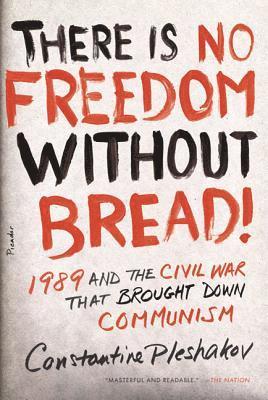
There Is No Freedom Without Bread!
1989 and the Civil War That Brought Down Communism
Häftad, Engelska, 2010
208 kr
Skickas inom 5-8 vardagar
367 kr
Skickas inom 5-8 vardagar
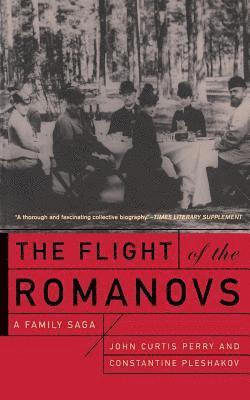
A saga of love and lust, personal tensions and rivalries, antagonisms and hatreds, The Flight of the Romanovs describes the last century of the Russian imperial dynasty-a century that saw the greatest social and political upheavals in all of recorded history. Drawing upon a wealth of untapped resources from Russian, British, and American archives, including unpublished diaries of many of the principal characters and never-before-published photographs, Perry and Pleshakov render an indelible portrait of a family and their time, from the youth of Alexander III in the 1860s to the death, one hundred years later, of his daughter Olga Alexandrovna, the last Grand Duchess.Set against the backdrop of this most cataclysmic century, The Flight of the Romanovs is a must-read for anyone interested in this fascinating dynasty, Russian history, and the history of European royalty.
356 kr
Skickas inom 5-8 vardagar
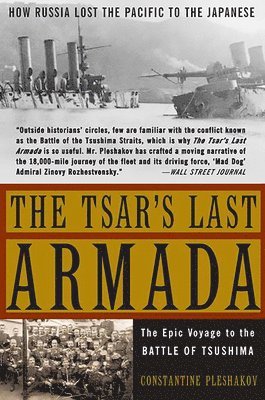
On May 14-15, 1905, in the Tsushima Straits near Japan, an entire Russian fleet was annihilated, its ships sunk, scattered, or captured by the Japanese. In the deciding battle of the Russo-Japanese War, the Japanese lost only three destroyers but the Russians lost twenty-two ships and thousands of sailors. It was the first modern naval battle, employing all the new technology of destruction. The old imperial navy was woefully unprepared. The defeat at Tsushima was the last and greatest of many indignities suffered by the Russian fleet, which had traveled halfway around the world to reach the battle, dogged every mile by bad luck and misadventure. Their legendary admiral, dubbed "Mad Dog," led them on an extraordinary eighteen-thousand-mile journey from the Baltic Sea, around Europe, Africa, and Asia, to the Sea of Japan. They were burdened by the Tsar's incompetent leadership and the old, slow ships that he insisted be included to bulk up the fleet. Moreover, they were under constant fear of attack, and there were no friendly ports to supply coal, food, and fresh water. The level of self-sufficiency attained by this navy was not seen again until the Second World War. The battle of Tsushima is among the top five naval battles in history, equal in scope and drama to those of Lepanto, Trafalgar, Jutland, and Midway, yet despite its importance it has been long neglected in the West. With a novelist's eye and a historian's authority, Constantine Pleshakov tells of the Russian squadron's long, difficult journey and fast, horrible defeat.
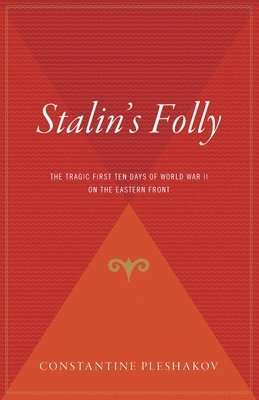
Stalin's Folly: The Tragic First Ten Days of World War II on the Eastern Front
Häftad, Engelska, 2006
266 kr
Skickas inom 3-6 vardagar
300 kr
Skickas inom 7-10 vardagar
Covering the volatile period from 1945 to 1962, Vladislav Zubok and Constantine Pleshakov explore the personalities and motivations of the key people who directed Soviet political life and shaped Soviet foreign policy. They begin with the fearsome figure of Joseph Stalin, who was driven by the dual dream of a Communist revolution and a global empire. They reveal the scope and limits of Stalin’s ambitions by taking us into the world of his closest subordinates, the ruthless and unimaginative foreign minister Molotov and the Party’s chief propagandist, Zhdanov, a man brimming with hubris and missionary zeal. The authors expose the machinations of the much-feared secret police chief Beria and the party cadre manager Malenkov, who tried but failed to set Soviet policies on a different course after Stalin’s death. Finally, they document the motives and actions of the self-made and self-confident Nikita Khrushchev, full of Russian pride and party dogma, who overturned many of Stalin’s policies with bold strategizing on a global scale. The authors show how, despite such attempts to change Soviet diplomacy, Stalin’s legacy continued to divide Germany and Europe, and led the Soviets to the split with Maoist China and to the Cuban missile crisis.Zubok and Pleshakov’s groundbreaking work reveals how Soviet statesmen conceived and conducted their rivalry with the West within the context of their own domestic and global concerns and aspirations. The authors persuasively demonstrate that the Soviet leaders did not seek a conflict with the United States, yet failed to prevent it or bring it to conclusion. They also document why and how Kremlin policy-makers, cautious and scheming as they were, triggered the gravest crises of the Cold War in Korea, Berlin, and Cuba. Taking us into the corridors of the Kremlin and the minds of its leaders, Zubok and Pleshakov present intimate portraits of the men who made the West fear, to reveal why and how they acted as they did.