Vladislav Zubok - Böcker
Visar alla böcker från författaren Vladislav Zubok. Handla med fri frakt och snabb leverans.
9 produkter
9 produkter
152 kr
Kommande
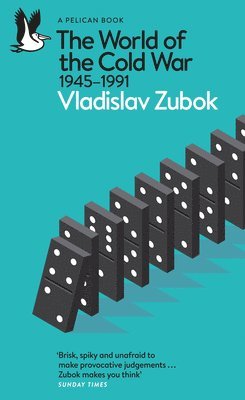
FINALIST FOR THE ORWELL PRIZE'Monumental and highly readable... by smartly knitting together the past with the present, Zubok brings a prescient and fresh perspective' Financial TimesA sweeping, original history of the Cold War, from an acclaimed historian of the USSRWhy did the Cold War erupt so soon after the Second World War? How did it escalate so rapidly, spanning five continents over six decades? And what led to the spectacular collapse of the Soviet Union? In this comprehensive guide to the most widespread conflict in contemporary history, Vladislav Zubok traces the origins of the Cold War in post-war Europe, through the tumultuous decades of confrontation, to the fall of the Berlin Wall and beyond.With remarkable clarity and unique perspective, Zubok argues that the Cold War, often seen as an existential battle between capitalist democracy and totalitarian communism, has long been misunderstood. He challenges the popular Western narrative that economic superiority and democratic values led the USA to victory. Instead, he looks beyond the familiar images of East-West rivalry, shining a light on the impact of non-Western actors and placing the war in the context of global decolonization, Soviet weakness and the accidents of history. Here, he interrogates what happens when stability and peace are no longer the default, when treaties are broken and when diplomacy ceases to function.Drawing on years of research and informed by Zubok’s three decades in the USSR followed by three decades in the West, The World of the Cold War paints a striking portrait of a world on the brink.
1 586 kr
Skickas inom 3-6 vardagar
1 148 kr
Skickas inom 3-6 vardagar
Ideal for introductory courses, the second edition of Current Debates in International Relations presents more than forty readings drawn from major scholarly journals, magazines, and newspapers including Foreign Affairs, Foreign Policy, International Relations, and The Wall Street Journal. It provides students with a broad selection of articles—both classical/theoretical and practical/applied—and steers them through major internationalissues, offering contending yet complementary approaches.
262 kr
Skickas
FINALIST FOR THE ORWELL PRIZE'Monumental and highly readable... by smartly knitting together the past with the present, Zubok brings a prescient and fresh perspective' Financial TimesA sweeping, original history of the Cold War, from an acclaimed historian of the USSRWhy did the Cold War erupt so soon after the Second World War? How did it escalate so rapidly, spanning five continents over six decades? And what led to the spectacular collapse of the Soviet Union? In this comprehensive guide to the most widespread conflict in contemporary history, Vladislav Zubok traces the origins of the Cold War in post-war Europe, through the tumultuous decades of confrontation, to the fall of the Berlin Wall and beyond.With remarkable clarity and unique perspective, Zubok argues that the Cold War, often seen as an existential battle between capitalist democracy and totalitarian communism, has long been misunderstood. He challenges the popular Western narrative that economic superiority and democratic values led the USA to victory. Instead, he looks beyond the familiar images of East-West rivalry, shining a light on the impact of non-Western actors and placing the war in the context of global decolonization, Soviet weakness and the accidents of history. Here, he interrogates what happens when stability and peace are no longer the default, when treaties are broken and when diplomacy ceases to function.Drawing on years of research and informed by Zubok’s three decades in the USSR followed by three decades in the West, The World of the Cold War paints a striking portrait of a world on the brink.
267 kr
Skickas inom 7-10 vardagar
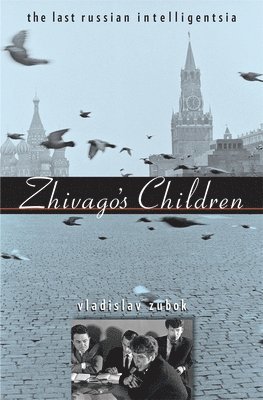
Among the least-chronicled aspects of post–World War II European intellectual and cultural history is the story of the Russian intelligentsia after Stalin. Young Soviet veterans had returned from the heroic struggle to defeat Hitler only to confront the repression of Stalinist society. The world of the intelligentsia exerted an attraction for them, as it did for many recent university graduates. In its moral fervor and its rejection of authoritarianism, this new generation of intellectuals resembled the nineteenth-century Russian intelligentsia that had been crushed by revolutionary terror and Stalinist purges. The last representatives of the Russian intelligentsia, heartened by Khrushchev’s denunciation of Stalinism in 1956, took their inspiration from the visionary aims of their nineteenth-century predecessors and from the revolutionary aspirations of 1917. In pursuing the dream of a civil, democratic socialist society, such idealists contributed to the political disintegration of the communist regime. Vladislav Zubok turns a compelling subject into a portrait as intimate as it is provocative. The highly educated elite—those who became artists, poets, writers, historians, scientists, and teachers—played a unique role in galvanizing their country to strive toward a greater freedom. Like their contemporaries in the United States, France, and Germany, members of the Russian intelligentsia had a profound effect during the 1960s, in sounding a call for reform, equality, and human rights that echoed beyond their time and place. Zhivago’s children, the spiritual heirs of Boris Pasternak’s noble doctor, were the last of their kind—an intellectual and artistic community committed to a civic, cultural, and moral mission.
295 kr
Skickas inom 7-10 vardagar
Covering the volatile period from 1945 to 1962, Vladislav Zubok and Constantine Pleshakov explore the personalities and motivations of the key people who directed Soviet political life and shaped Soviet foreign policy. They begin with the fearsome figure of Joseph Stalin, who was driven by the dual dream of a Communist revolution and a global empire. They reveal the scope and limits of Stalin’s ambitions by taking us into the world of his closest subordinates, the ruthless and unimaginative foreign minister Molotov and the Party’s chief propagandist, Zhdanov, a man brimming with hubris and missionary zeal. The authors expose the machinations of the much-feared secret police chief Beria and the party cadre manager Malenkov, who tried but failed to set Soviet policies on a different course after Stalin’s death. Finally, they document the motives and actions of the self-made and self-confident Nikita Khrushchev, full of Russian pride and party dogma, who overturned many of Stalin’s policies with bold strategizing on a global scale. The authors show how, despite such attempts to change Soviet diplomacy, Stalin’s legacy continued to divide Germany and Europe, and led the Soviets to the split with Maoist China and to the Cuban missile crisis.Zubok and Pleshakov’s groundbreaking work reveals how Soviet statesmen conceived and conducted their rivalry with the West within the context of their own domestic and global concerns and aspirations. The authors persuasively demonstrate that the Soviet leaders did not seek a conflict with the United States, yet failed to prevent it or bring it to conclusion. They also document why and how Kremlin policy-makers, cautious and scheming as they were, triggered the gravest crises of the Cold War in Korea, Berlin, and Cuba. Taking us into the corridors of the Kremlin and the minds of its leaders, Zubok and Pleshakov present intimate portraits of the men who made the West fear, to reveal why and how they acted as they did.
489 kr
Skickas inom 10-15 vardagar
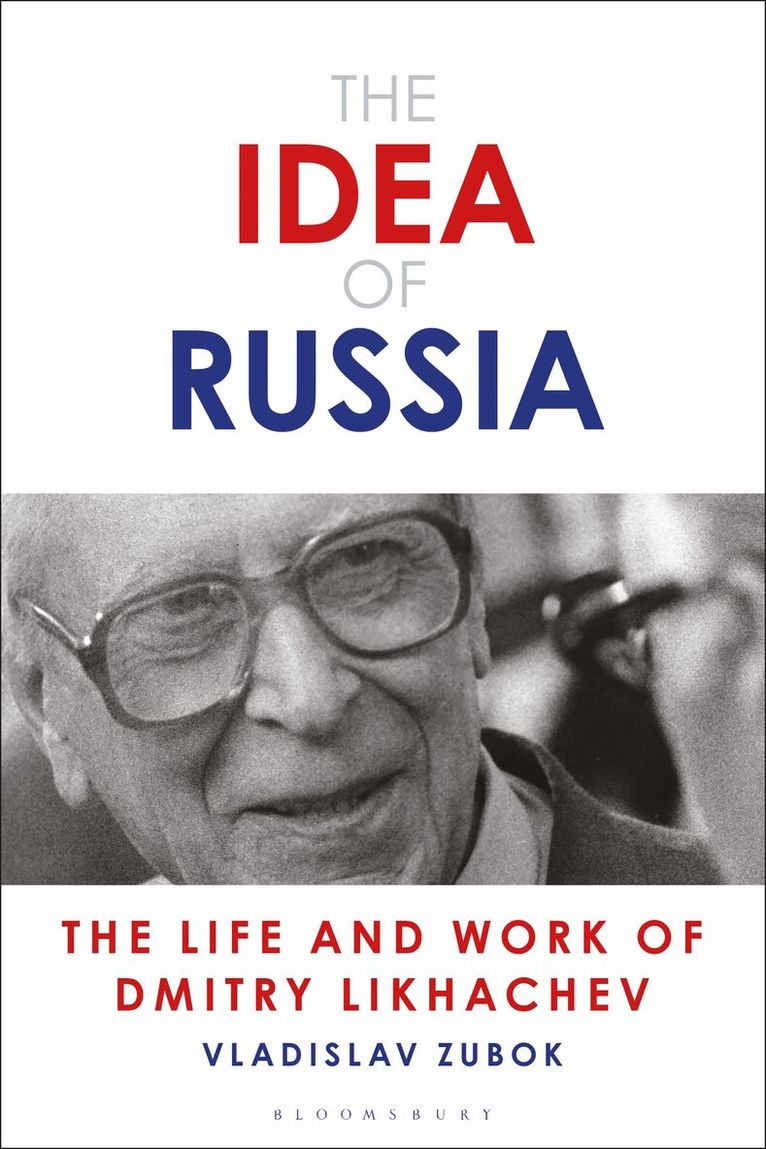
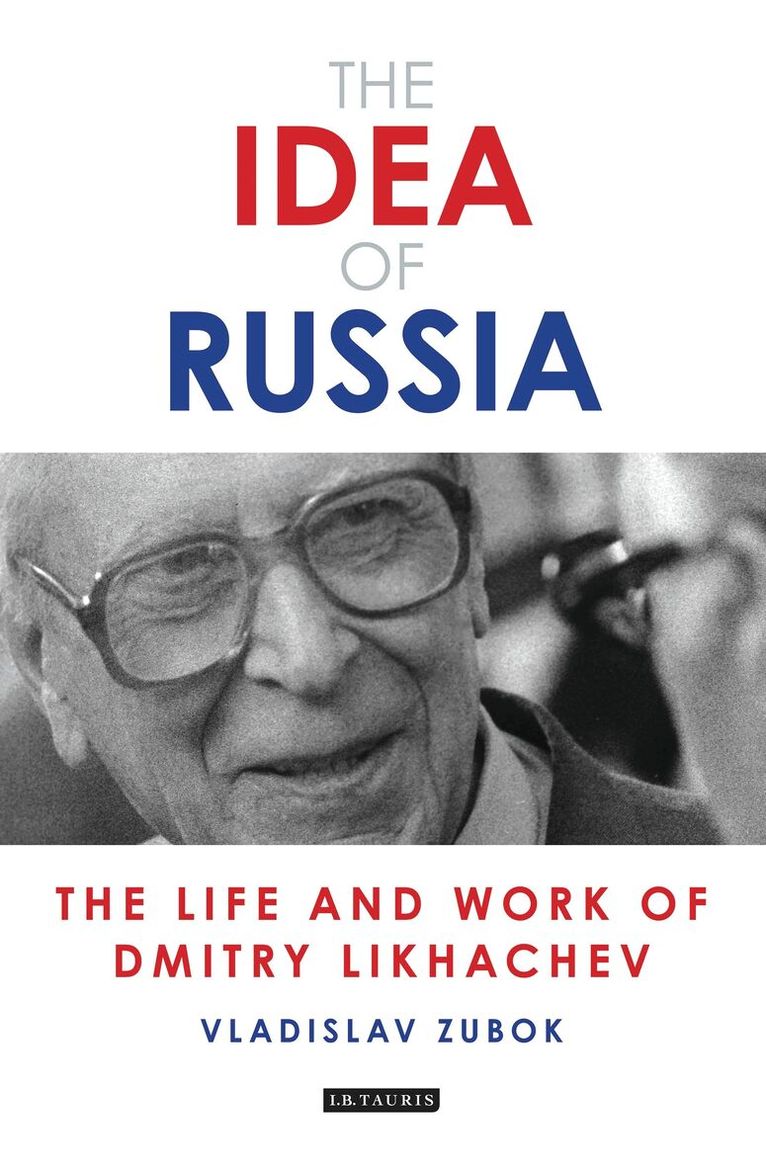
Dmitry Likhachev (1906-1999) was one of the most prominent Russian intellectuals of the twentieth century. His life spanned virtually the entire century - a tumultuous period which saw Russia move from Tsarist rule under Nicholas II via the Russian Revolution and Civil War into seven decades of communism followed by Gorbachev's Perestroika and the rise of Putin. In 1928, shortly after completing his university education, Likhachev was arrested, charged with counter-revolutionary ideas and imprisoned in the Gulag, where he spent the next five years. Returning to a career in academia, specialising in Old Russian literature, Likhachev played a crucial role in the cultural life of twentieth-century Russia, campaigning for the protection of important cultural sites and historic monuments. He also founded museums dedicated to great Russian writers including Dostoevsky, Pushkin and Pasternak. In this, the first biography of Likhachev to appear in English, Vladislav Zubok provides a thoroughly-researched account of one of Russia's most extraordinary and influential public figures.
1 808 kr
Skickas inom 10-15 vardagar
Dmitry Likhachev (1906-1999) was one of the most prominent Russian intellectuals of the twentieth century. His life spanned virtually the entire century - a tumultuous period which saw Russia move from Tsarist rule under Nicholas II via the Russian Revolution and Civil War into seven decades of communism followed by Gorbachev's Perestroika and the rise of Putin. In 1928, shortly after completing his university education, Likhachev was arrested, charged with counter-revolutionary ideas and imprisoned in the Gulag, where he spent the next five years. Returning to a career in academia, specialising in Old Russian literature, Likhachev played a crucial role in the cultural life of twentieth-century Russia, campaigning for the protection of important cultural sites and historic monuments. He also founded museums dedicated to great Russian writers including Dostoevsky, Pushkin and Pasternak. In this, the first biography of Likhachev to appear in English, Vladislav Zubok provides a thoroughly-researched account of one of Russia's most extraordinary and influential public figures.
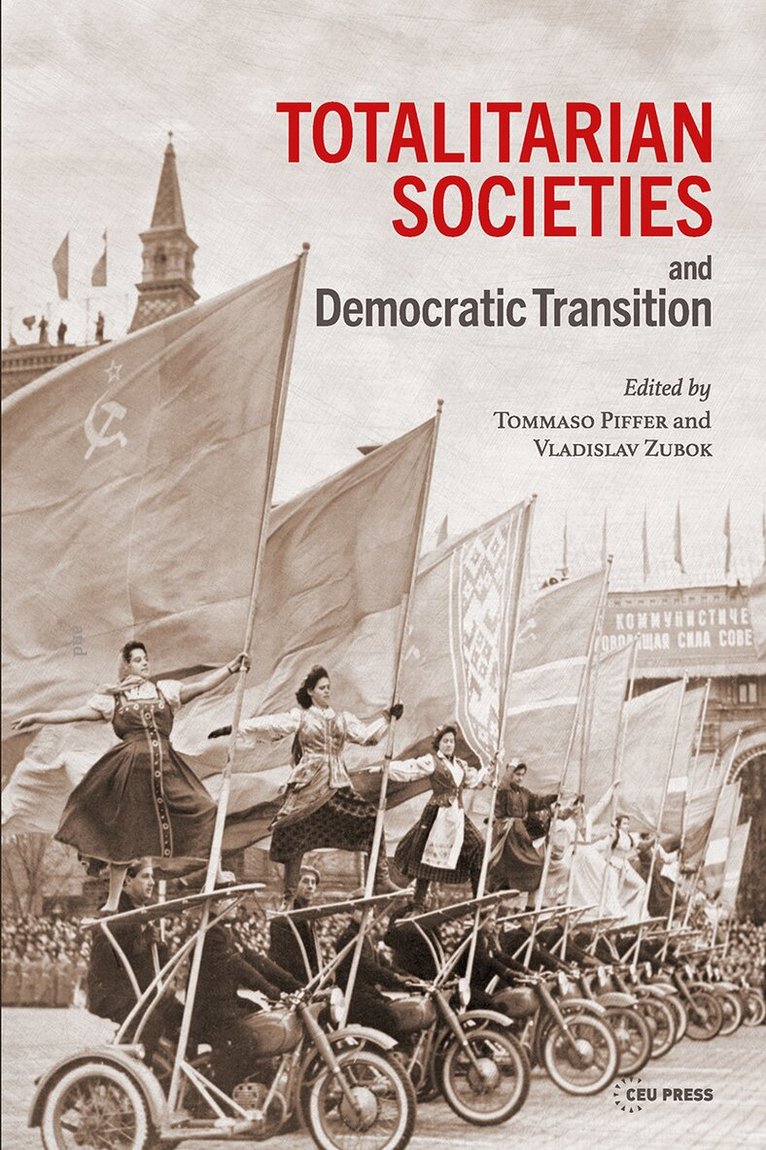
Totalitarian Societies and Democratic Transition
Essays in Memory of Victor Zaslavsky
Inbunden, Engelska, 2017
1 913 kr
Skickas inom 10-15 vardagar
This book is a tribute to the memory of Victor Zaslavsky (1937–2009), sociologist, émigré from the Soviet Union, Canadian citizen, public intellectual, and keen observer of Eastern Europe. In seventeen essays leading European, American and Russian scholars discuss the theory and the history of totalitarian society with a comparative approach. They revisit and reassess what Zaslavsky considered the most important project in the latter part of his life: the analysis of Eastern European - especially Soviet societies and their difficult “transition” after the fall of communism in 1989–91. The variety of the contributions reflects the diversity of specialists in the volume, but also reveals Zaslavsky's gift: he surrounded himself with talented people from many different fields and disciplines. In line with Zaslavsky's work and scholarly method, the book promotes new theoretical and methodological approaches to the concept of totalitarianism for understanding Soviet and East European societies, and the study of fascist and communist regimes in general.