Costantino Grasso - Böcker
Visar alla böcker från författaren Costantino Grasso. Handla med fri frakt och snabb leverans.
4 produkter
4 produkter
2 303 kr
Skickas inom 7-10 vardagar
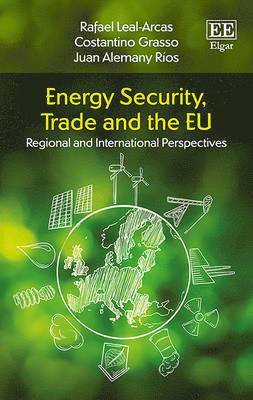
Energy security is a burning issue in a world where 1.4 billion people still have no access to electricity. This book is about finding solutions for energy security through the international trading system. Focusing mainly on the European Union as a case study, this holistic and comprehensive analysis of the existing legal and geopolitical instruments strives to identify the shortcomings of the international and EU energy trade governance systems, concluding with the notion of a European Energy Union and what the EU is politically prepared to accept as part of its unified energy security.This snapshot of multilateral, regional and bilateral energy trade governance deals with energy transit from the perspective of the Energy Charter Treaty as a means to enhance EU energy security, and examines the system of law and governance of international trade in unconventional fossil fuels. The authors analyze concerns that arise from preferential trade agreements and renewable energy from the EU's perspective, and explain how the EU can diversify its energy supply to improve its energy security.This book will be of interest to students, scholars, lawyers, economists, policymakers, and think tanks dealing with the links between energy security and international trade, as well as those communities relating to other energy-related disciplines.
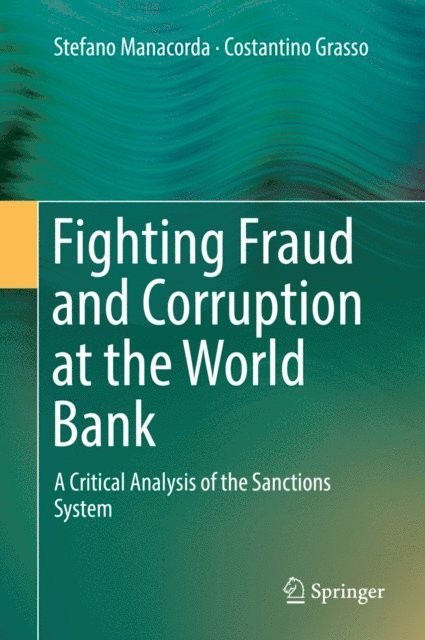
Fighting Fraud and Corruption at the World Bank
A Critical Analysis of the Sanctions System
Häftad, Engelska, 2018
837 kr
Skickas inom 10-15 vardagar
This book focuses on the World Bank’s sanctions system, which is an innovative instrument of global governance implemented by the leading multilateral development bank in order to impose penalties on legal entities and individuals that are involved in Bank-financed projects. Although similar regimes have also been implemented by other regional multilateral development banks, the World Bank’s legal framework is currently the most comprehensive one.The book offers a rich and detailed analysis of the sanctions system, presenting an in-depth examination of all the phases of its procedure with a special focus on key aspects such as the criteria for assigning liability to legal entities and corporate groups, as well as the World Bank’s jurisdictional reach over non-contractors. The book also explores the compatibility between the legal framework implemented by the Bank and the rule of law, the role of precedents, and the level of due process. It highlights the fact that the sanctions system is currently characterized by a lack of legal guarantees, and that there are compelling reasons for supporting the argument that due process safeguards should be applied to it in their entirety. To that end, the book conducts a thorough analysis of specific procedural aspects such as the right to a hearing, the right to evidence disclosure, the time limit regime, the standard of proof and shift of the burden of proof, the evidential value of a party’s silence, and the consistency and predictability of the World Bank’s sentencing practice. The study is conducted on the basis of a detailed and painstaking examination of the most relevant decisions taken by the Sanctions Board, providing the first-ever commentary on the World Bank’s case law.
1 648 kr
Kommande
Framing the global “Whistleblowers’ Revolution” as a vital response to democratic malaise, this volume examines the socio-legal dynamics surrounding the exposure of illegal or unethical practices in both the public and private sectors. The analysis covers innovative legal frameworks and protective regimes across multiple jurisdictions while also closing the divide between theory and practice. The volume brings together contributions from distinguished scholars and practitioners alongside firsthand accounts from whistleblowers, resulting in a holistic approach that evaluates existing and prospective measures aimed at empowering truth-tellers and confronting entrenched cultures of silence.The volume is structured to connect theory with lived experience. It moves from a transnational socio-legal analysis of global conditions (Part 1) to critical jurisdiction-based assessments across multiple countries (Part 2). The work then culminates in a series of firsthand narratives (Part 3), offered by insiders whose accounts reveal the significance, personal costs, and institutional consequences tied to speaking truth to power.
Fighting Fraud and Corruption at the World Bank
A Critical Analysis of the Sanctions System
Inbunden, Engelska, 2018
1 179 kr
Skickas inom 10-15 vardagar
This book focuses on the World Bank’s sanctions system, which is an innovative instrument of global governance implemented by the leading multilateral development bank in order to impose penalties on legal entities and individuals that are involved in Bank-financed projects. Although similar regimes have also been implemented by other regional multilateral development banks, the World Bank’s legal framework is currently the most comprehensive one.The book offers a rich and detailed analysis of the sanctions system, presenting an in-depth examination of all the phases of its procedure with a special focus on key aspects such as the criteria for assigning liability to legal entities and corporate groups, as well as the World Bank’s jurisdictional reach over non-contractors. The book also explores the compatibility between the legal framework implemented by the Bank and the rule of law, the role of precedents, and the level of due process. It highlights the fact that the sanctions system is currently characterized by a lack of legal guarantees, and that there are compelling reasons for supporting the argument that due process safeguards should be applied to it in their entirety. To that end, the book conducts a thorough analysis of specific procedural aspects such as the right to a hearing, the right to evidence disclosure, the time limit regime, the standard of proof and shift of the burden of proof, the evidential value of a party’s silence, and the consistency and predictability of the World Bank’s sentencing practice. The study is conducted on the basis of a detailed and painstaking examination of the most relevant decisions taken by the Sanctions Board, providing the first-ever commentary on the World Bank’s case law.