Craig Cravens – författare
Visar alla böcker från författaren Craig Cravens. Handla med fri frakt och snabb leverans.
2 produkter
2 produkter
283 kr
Skickas inom 10-15 vardagar
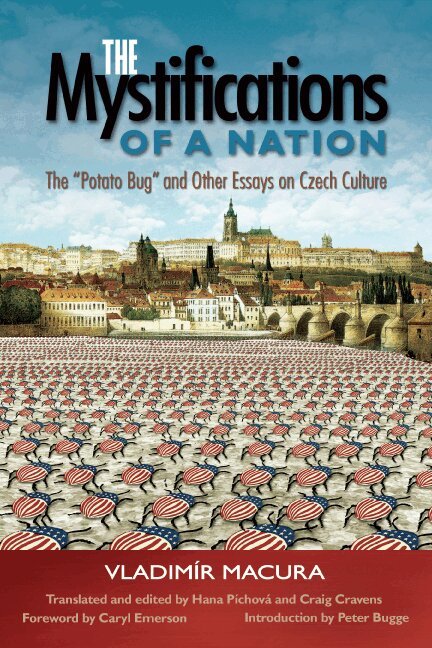
A keen observer of culture, Czech writer Vladimír Macura (1945-99) devoted a lifetime to illuminating the myths that defined his nation. The Mystifications of a Nation, the first book-length translation of Macura's work in English, offers essays deftly analyzing a variety of cultural phenomena that originate, Macura argues, in the 'big bang' of the nineteenth-century Czech National Revival, with its celebration of a uniquely Czech identity. In reflections on two centuries of Czech history, he ponders the symbolism in daily life. Bridges, for example - once a force of civilization connecting diverse peoples - became a sign of destruction in World War I. Turning to the Soviet and post-Soviet eras, Macura probes a range of richly symbolic practices, from the naming of the Prague metro system, to the mass gymnastic displays of the Communist period, to post-Velvet Revolution preoccupations with the national anthem. In 'The Potato Bug,' he muses on one of the stranger moments in the Cold War - the claim that the United States was deliberately dropping insects from airplanes to wreak havoc on the crops of Czechoslovakia. While attending to the distinctively Czech elements of such phenomena, Macura reveals the larger patterns of Soviet-brand socialism. 'We were its cocreators,' he declares, 'and its analysis touches us as a scalpel turned on its own body.' Writing with erudition, irony, and wit, Macura turns the scalpel on the authoritarian state around him, demythologizing its mythology.
675 kr
Skickas inom 10-15 vardagar
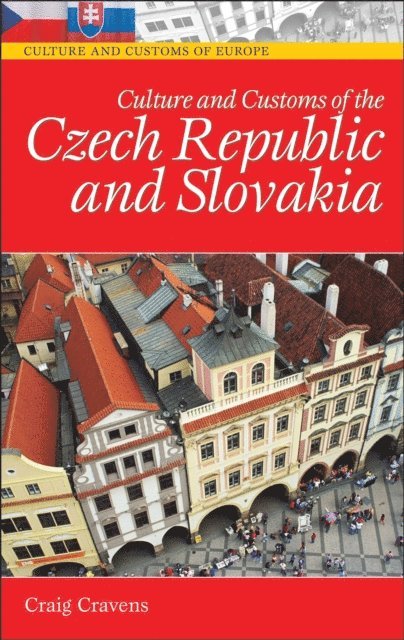
The Czech Republic is a red-hot European destination, and the charms of Slovakia are slowly being discovered by Westerners as well. The two countries share fundamental similarities in language and culture, but they never really managed to create a common national Czechoslovak identity, after being merged in 1918 when the Austro-Hungarian Empire collapsed. With the lifting of the Iron Curtain in 1989 through the Velvet Revolution and the final breakup of Czechoslovakia in to two countries in 1993, this up-to-date, substantive insight is much needed. This volume overviews the current social, cultural, and political scene of both countries, so that general readers come away with a solid understanding of where the Czechs and Slovaks have been and where they are going.The land, people, and history chapter lays the groundwork for the rest of the narrative. In the chapter on religion and thought, the reasons for the widespread atheism of the Czechs and the contrasting religiosity of the Slovaks are explained. Both peoples are shown to have relaxed attitude toward life and a love of celebrations, with a strong beer culture. The state of women and family and feminism in the post-Soviet era is also discussed and readers will learn about the role of romance novels and the Czech Cosmopolitan. The literature chapter emphasizes the Czech sense of humor and the lack of translations of Slovakian works. The crises in journalism and cinema are other important topics. Finally, the strong traditions of theater and music, which have always been part of the Czech national consciousness, are seen to be as alive and vibrant as in any place in the world.