Crain Soudien - Böcker
Visar alla böcker från författaren Crain Soudien. Handla med fri frakt och snabb leverans.
8 produkter
8 produkter
1 034 kr
Skickas inom 10-15 vardagar
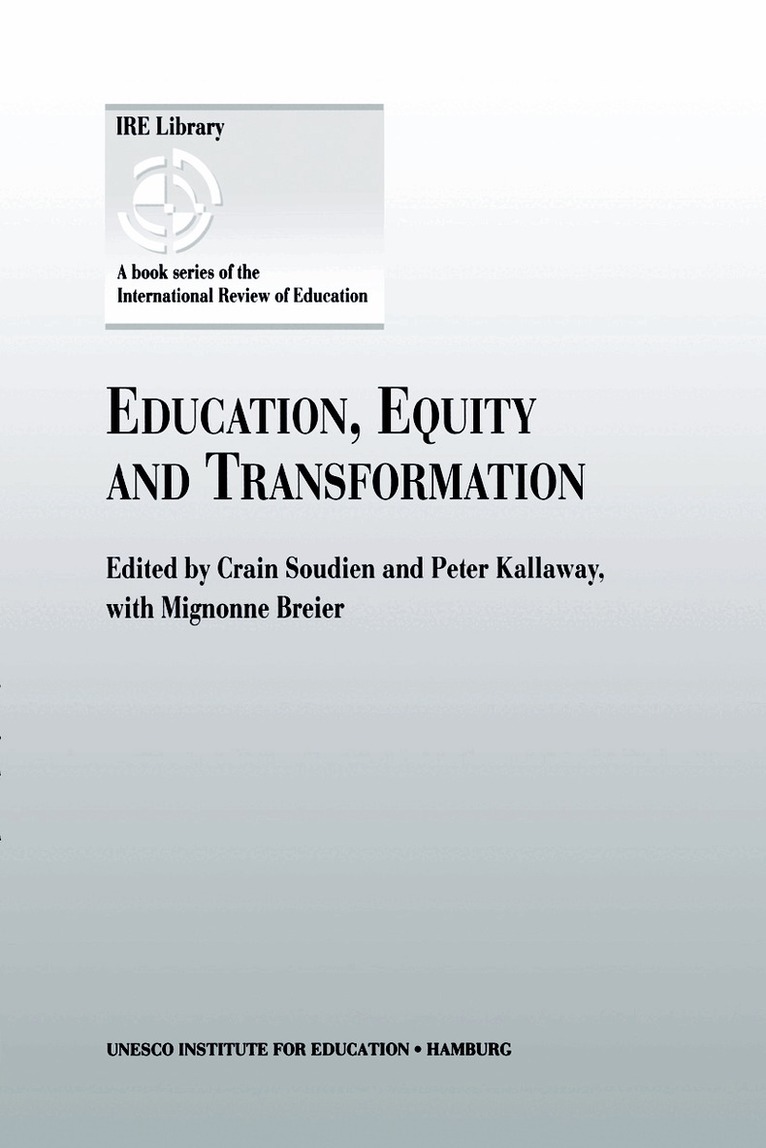
This volume consists of selected papers from the 10th Congress of the World Council of Comparative Education Societies. An Editorial Introduction, giving an overview of the contents, is followed by 14 contributions from different parts of the world. The papers examine the themes of equity and transformation in relation to many educational issues including gender equity, globalization, the erosion of state provision, the growth of free-market approaches, the weakening of theoretical perspectives, the post-colonial heritage and the emancipatory potential of lifelong learning.
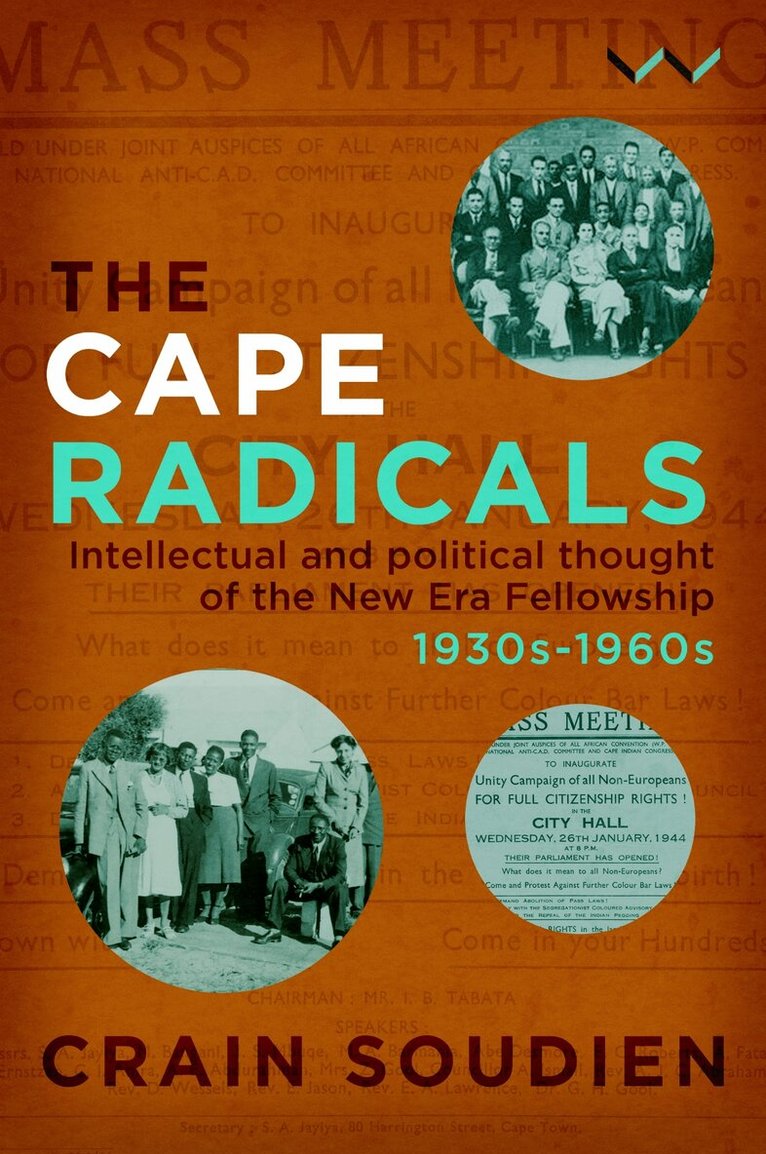
Cape Radicals
Intellectual and Political Thought of the New Era Fellowship, 1930s-1960s
Häftad, Engelska, 2019
319 kr
Skickas inom 7-10 vardagar
The history of a radical group of intellectuals who founded the New Era Fellowship, which shaped human rights precedents and social justice policy in South Africa In 1937 a group of young Capetonians, socialist intellectuals from the Workers' Party of South Africa, embarked on a project they called the New Era Fellowship (NEF). In doing so they sought to disrupt and challenge not only prevailing political narratives but the very premises – class and 'race' – on which they were based. In different forums – public debates, lectures, study circles and cultural events – the seeds of radical thinking were planted, nurtured and brought to full flower. Taking a position of non-collaboration and non-racialism, the NEF played a vital role in challenging society's responses to events ranging from the problem of taking up arms during the Second World War for an empire intent on stripping people of colour of their human rights to the Hertzog Bills, which foreshadowed apartheid in all its ruthless effectiveness. In subsequent narratives of liberation their significance has been overlooked, even disparaged, and has never been fully understood and acknowledged. By shining a contemporary light on the NEF and locating its contribution in current sociological and political discourse, educationist Crain Soudien shows how its members were at the forefront of redefining the debate about social difference in a racially divided society.
352 kr
Skickas inom 7-10 vardagar
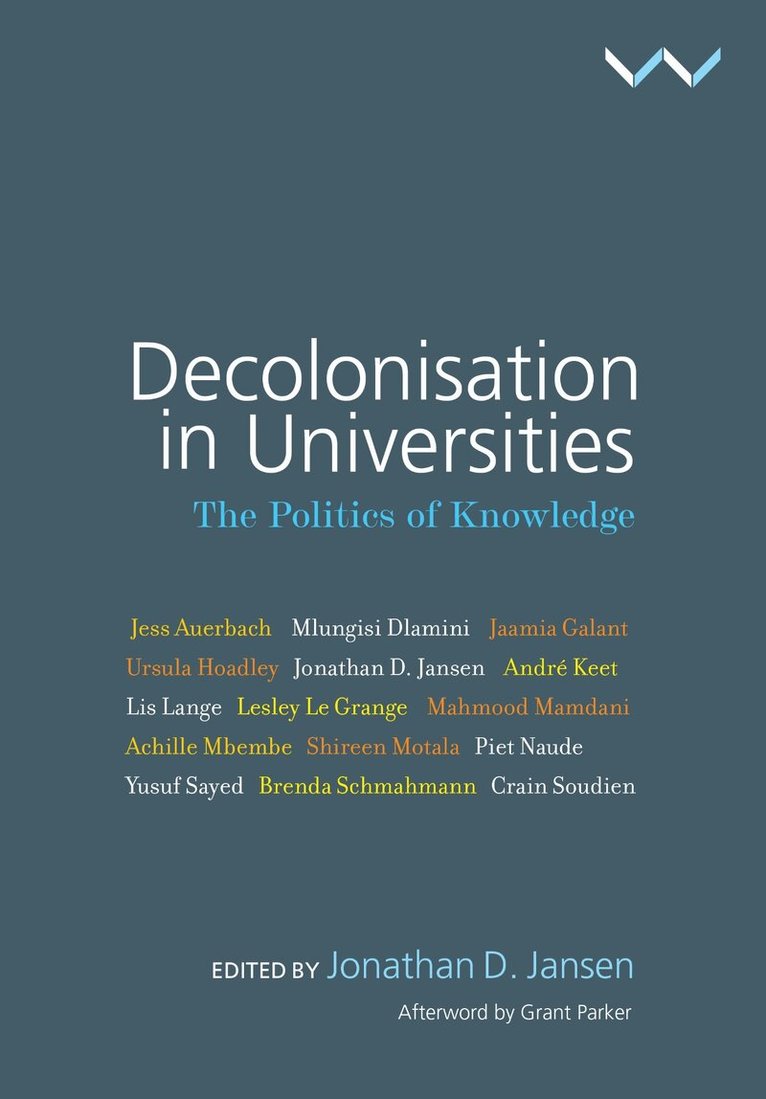
In this collection of case studies and stories from the field, South African scholars come together to trade stories on how to decolonise the universityShortly after the giant bronze statue of Cecil John Rhodes came down at the University of Cape Town, student protestors called for the decolonisation of universities. It was a word hardly heard in South Africa's struggle lexicon and many asked: What exactly is decolonisation? This edited volume brings together the best minds in curriculum theory to address this important question. In the process, several critical questions are raised: Is decolonisation simply a slogan for addressing other pressing concerns on campuses and in society? What is the colonial legacy with respect to curriculum and can it be undone? How is the project of curriculum decolonisation similar to or different from the quest for postcolonial knowledge, indigenous knowledge or a critical theory of knowledge? What does decolonisation mean in a digital age where relationships between knowledge and power are shifting?The book combines strong conceptual analyses with novel case studies of attempts to 'do decolonisation' in settings as diverse as South Africa, Uganda, Tanzania and Mauritius. Such a comparative perspective enables reasonable judgements to be made about the prospects for institutional take-up within the curriculum of century-old universities.
Cape Radicals
Intellectual and Political Thought of the New Era Fellowship, 1930s-1960s
Inbunden, Engelska, 2019
1 196 kr
Skickas inom 5-8 vardagar
The history of a radical group of intellectuals who founded the New Era Fellowship, which shaped human rights precedents and social justice policy in South Africa In 1937 a group of young Capetonians, socialist intellectuals from the Workers' Party of South Africa, embarked on a project they called the New Era Fellowship (NEF). In doing so they sought to disrupt and challenge not only prevailing political narratives but the very premises – class and 'race' – on which they were based. In different forums – public debates, lectures, study circles and cultural events – the seeds of radical thinking were planted, nurtured and brought to full flower. Taking a position of non-collaboration and non-racialism, the NEF played a vital role in challenging society's responses to events ranging from the problem of taking up arms during the Second World War for an empire intent on stripping people of colour of their human rights to the Hertzog Bills, which foreshadowed apartheid in all its ruthless effectiveness. In subsequent narratives of liberation their significance has been overlooked, even disparaged, and has never been fully understood and acknowledged. By shining a contemporary light on the NEF and locating its contribution in current sociological and political discourse, educationist Crain Soudien shows how its members were at the forefront of redefining the debate about social difference in a racially divided society.
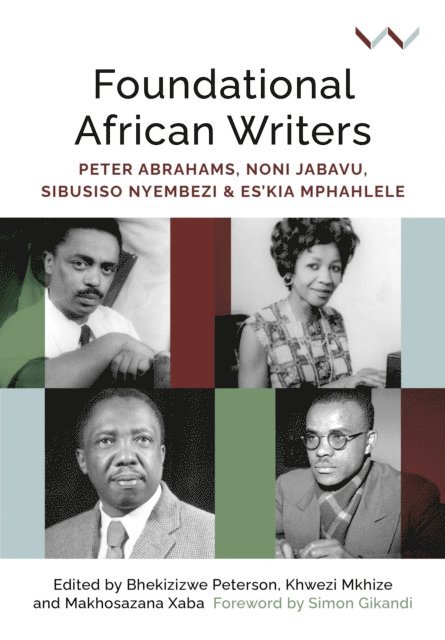
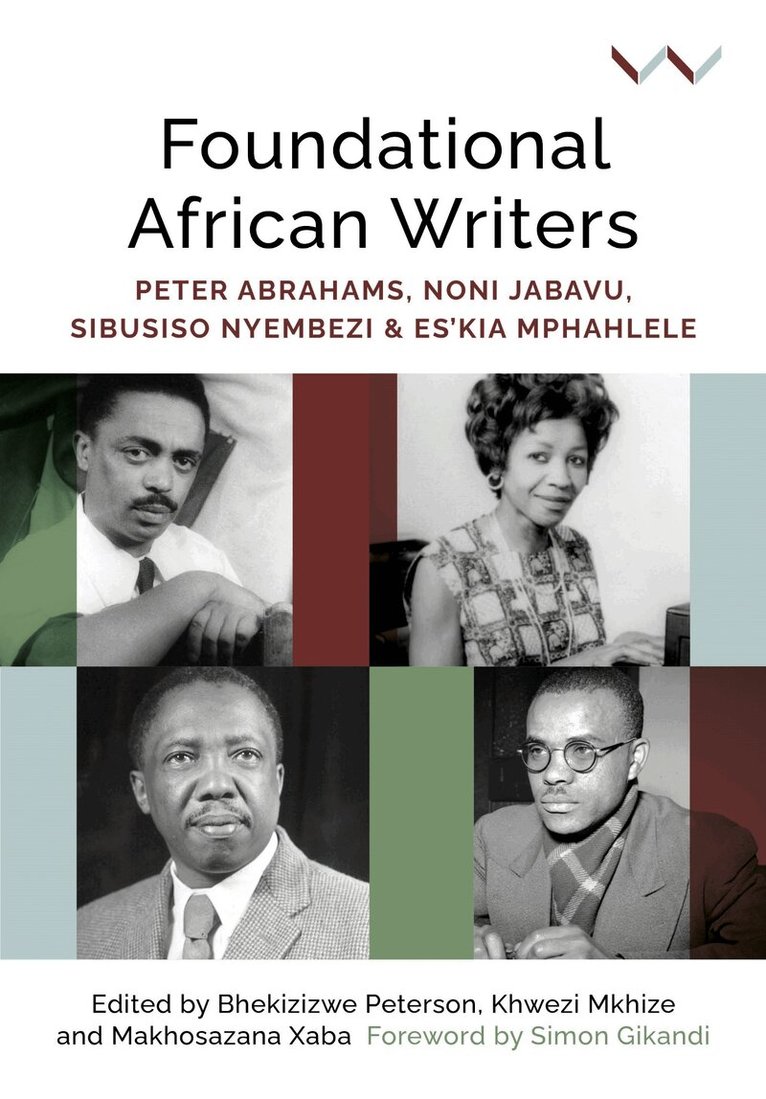
Foundational African Writers
Peter Abrahams, Noni Jabavu, Sibusiso Nyembezi and Es'kia Mphahlele
Häftad, Engelska, 2022
416 kr
Skickas inom 7-10 vardagar
This collection explores the complexities of black existence, and intellectual and cultural life in the work and legacies of centenarian writers, Peter Abrahams, Noni Jabavu, Sibusiso Cyril Lincoln Nyembezi and Es'kia Mphahlele
309 kr
Skickas inom 7-10 vardagar
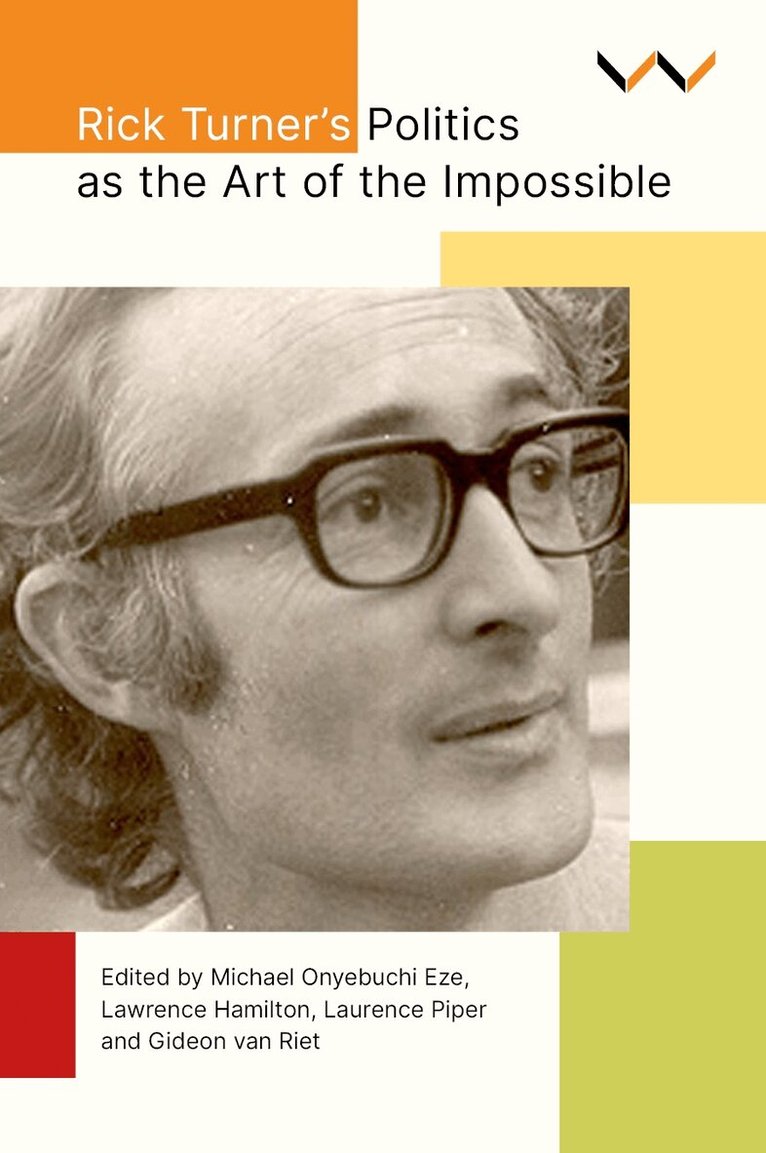
Revisits the work of Rick Turner, a South African political theorist, and addresses contemporary debatesRick Turner was a South African academic and anti-apartheid activist who rebelled against the apartheid state at the height of its power. For this he was assassinated in 1978, at just 32 years of age, but his life and work are testimony to the power of philosophical thinking for humans everywhere. Turner chose to live freely in an unfree time and argued for a non-racial, socialist future in a context where this seemed unimaginable.This book takes seriously Rick Turner's challenge that political theorising requires thinking in a utopian way. Turner's seminal book The Eye of the Need: Towards a Participatory Democracy laid out some of his most potent ideas on a radically different political and economic system. His demand was that we work to escape the limiting ideas of the present, carefully design a just future based on shared human values, and act to make it a reality, both politically and in our daily lives.The contributors to this volume engage critically with Turner's work on race relations, his relationship with Steve Biko, his views on religion, education and gender oppression, his participatory model of democracy, and his critique of enduring forms of poverty and economic inequality. They show how, in his life and work, Turner modeled how we can dare to be free and how hope can return, as the future always remains open to human construction. This book makes an important contribution to contemporary thinking and activism where the need for South Africans to define their understanding of their greater common good is of crucial importance.
941 kr
Skickas inom 7-10 vardagar
Revisits the work of Rick Turner, a South African political theorist, and addresses contemporary debatesRick Turner was a South African academic and anti-apartheid activist who rebelled against the apartheid state at the height of its power. For this he was assassinated in 1978, at just 32 years of age, but his life and work are testimony to the power of philosophical thinking for humans everywhere. Turner chose to live freely in an unfree time and argued for a non-racial, socialist future in a context where this seemed unimaginable.This book takes seriously Rick Turner's challenge that political theorising requires thinking in a utopian way. Turner's seminal book The Eye of the Need: Towards a Participatory Democracy laid out some of his most potent ideas on a radically different political and economic system. His demand was that we work to escape the limiting ideas of the present, carefully design a just future based on shared human values, and act to make it a reality, both politically and in our daily lives.The contributors to this volume engage critically with Turner's work on race relations, his relationship with Steve Biko, his views on religion, education and gender oppression, his participatory model of democracy, and his critique of enduring forms of poverty and economic inequality. They show how, in his life and work, Turner modeled how we can dare to be free and how hope can return, as the future always remains open to human construction. This book makes an important contribution to contemporary thinking and activism where the need for South Africans to define their understanding of their greater common good is of crucial importance.
373 kr
Skickas inom 7-10 vardagar
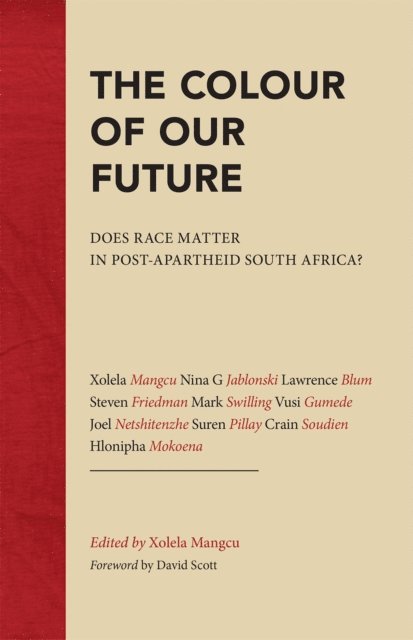
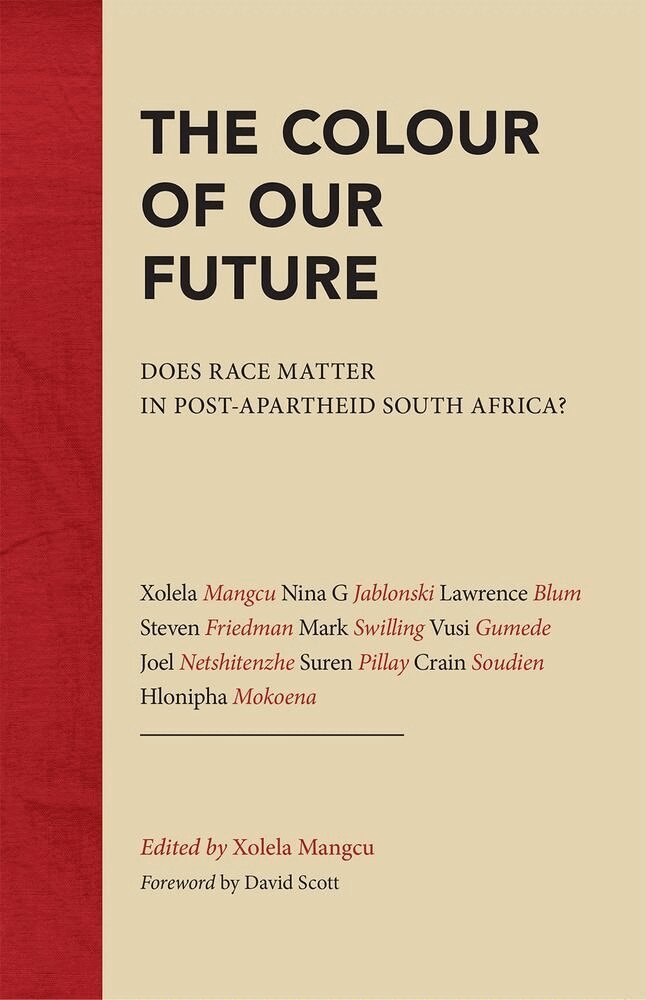
South Africa is ready for a new vocabulary than can form the basis for a national consciousness which recognises racialised identities while affirming that, as human beings, we are much more than our racial, sexual, class, religious or national identities.The Colour of Our Future makes a bold and ambitious contribution to the discourse on race. It addresses the tension between the promise of a post-racial society and the persistence of racialised identities in South Africa, which has historically played itself out in debates between the 'I don't see race' of non-racialism and the 'I'm proud to be black' of black consciousness. The chapters in this volume highlight the need for a race-transcendent vision that moves beyond 'the festival of negatives' embodied in concepts such as non-racialism, non-sexism, anti-colonialism and anti-apartheid. Steve Biko's notion of a 'joint culture' is the scaffold on which this vision rests; it recognises that a race-transcendent society can only be built by acknowledging the constituent elements of South Africa's EuroAfricanAsian heritage.The distinguished authors in this volume have, over the past two decades, used the democratic space to insert into the public domain new conversations around the intersections of race and the economy, race and the state, race and the environment, race and ethnic difference, and race and higher education. Presented here is some of their most trenchant and yet still evolving thinking.