Crina Baltag – författare
1 070 kr
Skickas inom 5-8 vardagar
2 596 kr
Läs direkt efter köp
2 799 kr
Läs direkt efter köp
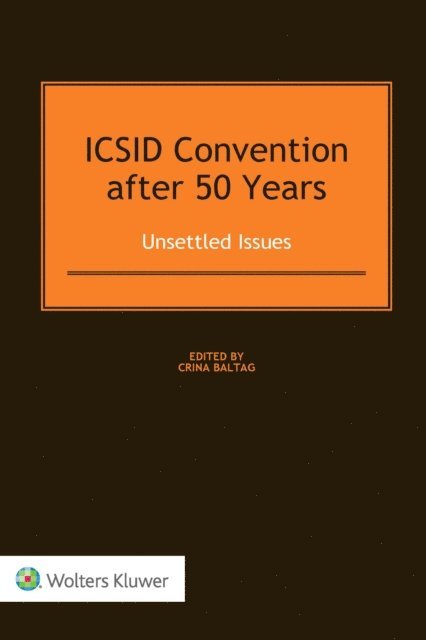
The International Centre for Settlement of Investment Disputes (ICSID) has played a leading role in establishing the field of foreign investment law. It is primarily due to the ICSID that it is no longer peculiar for individuals and corporations to have legal standing in claims against governments — probably the most notable development of international law of the last half century. Now, in its fiftieth year and ratified by more than 150 states, the ICSID received in 2015 its 500th case. This book celebrates this anniversary with an overview and analysis of ICSID case law to date and, focusing particularly on unsettled issues, assesses possible developments in the institution’s next phase.
This volume collects twenty-two essays by prominent practitioners with substantial experience in investment arbitration law. The topics they cover encompass such issues as the following:
• the political and economic reasons behind the creation of the ICSID;• admissibility and jurisdiction;• ICSID vis-à-vis bilateral investment treaties;• States’ concerns about the ‘partiality’ of arbitrators in favour of investors;• applicable laws under the ICSID Convention;• fact-finding rules;• conflicting interpretations of ICSID Convention provisions;• interaction of foreign investment and economic development;• value of ICSID awards in the light of EU law;• annulment of ICSID awards;• effects of denunciation (Bolivia, Ecuador, Venezuela) and non-contracting States (Russia, Brazil, India);• attribution of conduct of State-owned enterprises (SOEs);• counterclaims;• guarantees against political risk; and• allocation of costs.As a detailed response to the question whether ICSID has contributed as promised to an improvement in the investment climate and promoted the flow of private foreign capital — and as an assessment of the present and future feasibility of the ICSID system for the resolution of investment disputes by arbitration and conciliation — this book has no peers. Considering the current crisis of investment law, the book’s immediate value not only to investors and their counsel but also to practitioners and academics in the field of investment law and arbitration and public international law cannot be overstated.
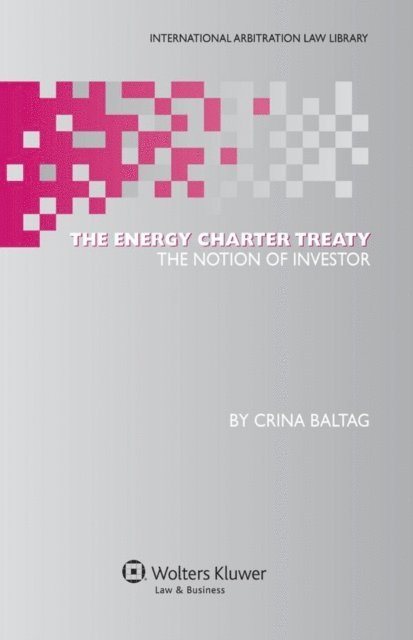
Dr Crina Baltag is the author of Kluwer’s 2012 book The Energy Charter Treaty: The Notion of Investor and the Associate Editor of Kluwer Arbitration Blog.
2 900 kr
Läs direkt efter köp
The International Centre for Settlement of Investment Disputes (ICSID) has played a leading role in establishing the field of foreign investment law. It is primarily due to the ICSID that it is no longer peculiar for individuals and corporations to have legal standing in claims against governments - probably the most notable development of international law of the last half century. Now, in its fiftieth year and ratified by more than 150 states, the ICSID received in 2015 its 500th case. This book celebrates this anniversary with an overview and analysis of ICSID case law to date and, focusing particularly on unsettled issues, assesses possible developments in the institution''s next phase.
This volume collects twenty-two essays by prominent practitioners with substantial experience in investment arbitration law. The topics they cover encompass such issues as the following:
• the political and economic reasons behind the creation of the ICSID;• admissibility and jurisdiction;• ICSID vis-à-vis bilateral investment treaties;• States'' concerns about the ''partiality'' of arbitrators in favour of investors;• applicable laws under the ICSID Convention;• fact-finding rules;• conflicting interpretations of ICSID Convention provisions;• interaction of foreign investment and economic development;• value of ICSID awards in the light of EU law;• annulment of ICSID awards;• effects of denunciation (Boli via, Ecuador, Venezuela) and non-contracting States (Russia, Brazil, India );• attribution of conduct of State-owned enterprises (SOEs);• counterclaims;• guarantees against political risk; and• allocation of costs.As a detailed response to the question whether ICSID has contributed as promised to an improvement in the investment climate and promoted the flow of private foreign capital - and as an assessment of the present and future feasibility of the ICSID system for the resolution of investment disputes by arbitration and conciliation - this book has no peers. Considering the current crisis of investment law, the book''s immediate value not only to investors and their counsel but also to practitioners and academics in the field of investment law and arbitration and public international law cannot be overstated.
Dr Crina Baltag is the author of Kluwer''s 2012 book The energy Charter Treaty: The Notion of Investor and the Associate Editor of Kluwer Arbitration Blog.
1 974 kr
Läs direkt efter köp
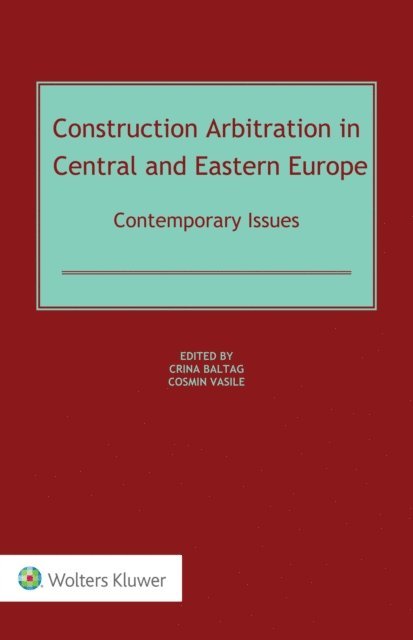
Construction Arbitration in Central and Eastern Europe
Contemporary Issues
Edited by: Crina Baltag & Cosmin Vasile
The successful execution of a construction project is inextricably linked to the management of risks and the expeditious settlement of any disputes that may arise. In this regard, the wealth of experience gained by Central and Eastern European practitioners in dealing with complex issues arising in construction projects in the region is highly relevant to international arbitration. Thus, this timely book provides a combination of local expertise and cross-jurisdictional perspectives on topics that most often emerge in construction disputes and which resonate far beyond the specific region covered.
The authors, all practitioners with significant expertise in international and domestic construction disputes in Central and Eastern European countries, focus on the following topics:
the peculiarities of evidence in construction disputes; the probative value of dispute boards, as well as their enforceability; multi-party issues triggered by the participation of various stakeholders besides employer, contractor and subcontractors; provisional measures; arbitrability of contracts with public authorities; issues of liquidated damages; changes of legislation and costs over passage of time; time bar issues; and resolution of disputes related to construction projects as protected investments.Given the increasing number of disputes and the scarce resources available, this essential guide to contemporary topics in construction disputes, with its cross-border perspective, will prove invaluable to practitioners and to academics in the field of construction law and dispute resolution.
2 046 kr
Läs direkt efter köp
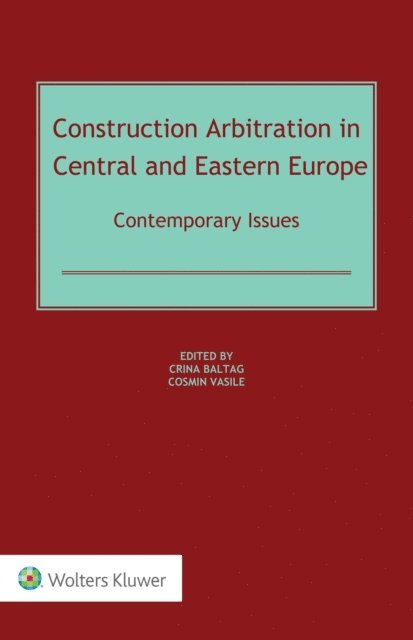
Construction Arbitration in Central and Eastern Europe
Contemporary Issues
Edited by: Crina Baltag & Cosmin Vasile
The successful execution of a construction project is inextricably linked to the management of risks and the expeditious settlement of any disputes that may arise. In this regard, the wealth of experience gained by Central and Eastern European practitioners in dealing with complex issues arising in construction projects in the region is highly relevant to international arbitration. Thus, this timely book provides a combination of local expertise and cross-jurisdictional perspectives on topics that most often emerge in construction disputes and which resonate far beyond the specific region covered.
The authors, all practitioners with significant expertise in international and domestic construction disputes in Central and Eastern European countries, focus on the following topics:
the peculiarities of evidence in construction disputes; the probative value of dispute boards, as well as their enforceability; multi-party issues triggered by the participation of various stakeholders besides employer, contractor and subcontractors; provisional measures; arbitrability of contracts with public authorities; issues of liquidated damages; changes of legislation and costs over passage of time; time bar issues; and resolution of disputes related to construction projects as protected investments.Given the increasing number of disputes and the scarce resources available, this essential guide to contemporary topics in construction disputes, with its cross-border perspective, will prove invaluable to practitioners and to academics in the field of construction law and dispute resolution.
1 962 kr
Läs direkt efter köp
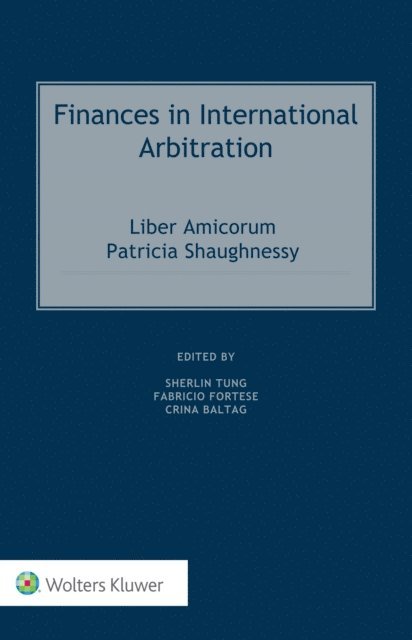
Finances in International Arbitration Liber Amicorum Patricia Shaughnessy Edited by Sherlin Tung, Fabricio Fortese & Crina Baltag
Costs of arbitration has always been a main concern in international arbitration. It is a topic most often discussed and analyzed. In spite of the recent developments in thirdparty funding regulations as well as other mechanisms made available to users of arbitration to reduce costs, the topic remains a key focus for users of arbitration.
As the founder of the world’s leading international commercial arbitration Master’s programme, Dr Patricia Shaughnessy is a huge advocate of communicating recent and important developments in international arbitration and has written and spoken extensively on such matters. Over twenty-five renowned practitioners and academics worldwide, who have been influenced by Dr Shaughnessy, explore this much-debated topic on the occasion of her 65th birthday.
The contributions in this dedication to Dr Shaughnessy’s legacy look at issues such as the following:
costs arising out of Third-Party Funding; costs of court proceedings versus arbitration proceedings; fee arrangements with legal counsel; costs of commercial versus investment arbitration; how to deal with in-house costs in international arbitration; impact of tribunal secretaries in international arbitration; cost sanctions in international arbitration; damages in international arbitration.The analysis and views offered by leading scholars and practitioners on current day issues arising out of costs of arbitration will offer readers a unique perspective on various aspects of the finances involved in arbitration. This book will provide insightful thoughts and practical guidance for academics and practitioners in the field of international arbitration.
1 893 kr
Läs direkt efter köp
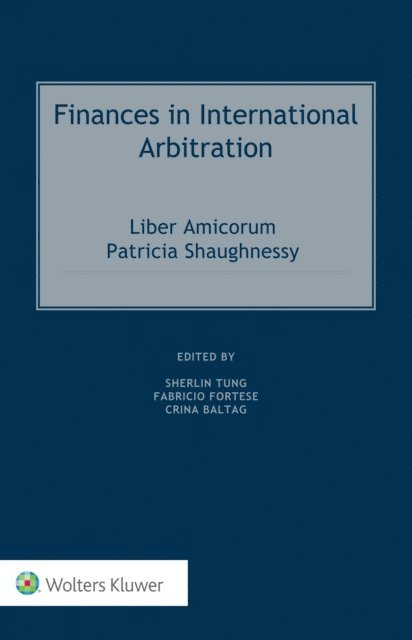
Finances in International Arbitration Liber Amicorum Patricia Shaughnessy Edited by Sherlin Tung, Fabricio Fortese & Crina Baltag
Costs of arbitration has always been a main concern in international arbitration. It is a topic most often discussed and analyzed. In spite of the recent developments in thirdparty funding regulations as well as other mechanisms made available to users of arbitration to reduce costs, the topic remains a key focus for users of arbitration.
As the founder of the world’s leading international commercial arbitration Master’s programme, Dr Patricia Shaughnessy is a huge advocate of communicating recent and important developments in international arbitration and has written and spoken extensively on such matters. Over twenty-five renowned practitioners and academics worldwide, who have been influenced by Dr Shaughnessy, explore this much-debated topic on the occasion of her 65th birthday.
The contributions in this dedication to Dr Shaughnessy’s legacy look at issues such as the following:
costs arising out of Third-Party Funding; costs of court proceedings versus arbitration proceedings; fee arrangements with legal counsel; costs of commercial versus investment arbitration; how to deal with in-house costs in international arbitration; impact of tribunal secretaries in international arbitration; cost sanctions in international arbitration; damages in international arbitration.The analysis and views offered by leading scholars and practitioners on current day issues arising out of costs of arbitration will offer readers a unique perspective on various aspects of the finances involved in arbitration. This book will provide insightful thoughts and practical guidance for academics and practitioners in the field of international arbitration.
1 962 kr
Läs direkt efter köp
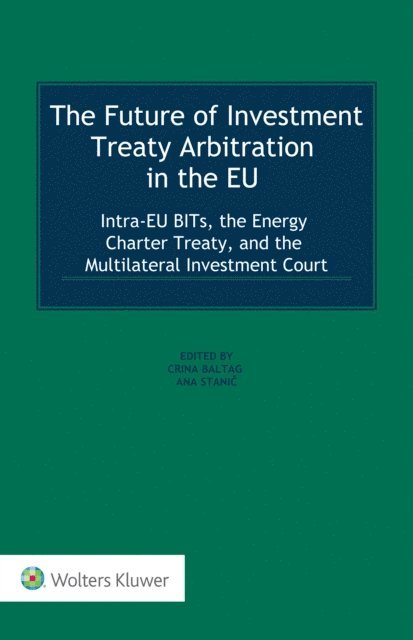
In March 2018, the Court of Justice of the European Union (EU) ruled in Achmea that investor-state dispute resolution provisions in intra-EU bilateral investment treaties (BITs) are incompatible with EU law and ipso facto invalid. In January 2019, EU Member States issued Declarations on the Legal Consequences of the Judgment in Achmea undertaking to take steps formally to terminate intra-EU BITs. However, at present, there is no consensus among them on the implications of Achmea on the Energy Charter Treaty, the multilateral energy treaty to which the EU and its Member States are all parties.
Many EU law scholars consider the Achmea judgment as the death knell to intra-EU investment treaty arbitrations. Some have even predicted the end of Investor-State Dispute Settlement itself. Investment treaty and public international law scholars and legal practitioners, however, have a different view of the schism now growing between EU and international law.
The Future of Investment Treaty Arbitration in the EU examines the current and the proposed new framework for investment protection in the EU and internationally, with a particular focus on investment treaty arbitration and energy-related investments.
With contributions from leading academics and practitioners, the book addresses the following themes:
Intra-EU investment protection and the rule of law, including the proposed Multilateral Investment Court. The original purpose and features of investment protection, with particular focus on the EU. The Achmea judgment and its impact on the Energy Charter Treaty and energy investments. The ongoing discussion to modernize the Energy Charter Treaty post-Achmea. EU state aid and investment arbitral awards. Recognition and enforcement of investment arbitral awards post-Achmea in EU Member States, including in the light of Brexit. Recognition and enforcement of investment arbitral awards post-Achmea in China, Singapore, Switzerland and the United States.This eminently informative book is very timely given the ongoing debate taking place in the EU and internationally regarding the interrelationship between investment treaty arbitration, public international law and EU law. The contributions from leading academics, scholars and European Commission officials provide a balanced, contextualized, detailed and critical analysis that will aid interested stakeholders to navigate their way with confidence through this difficult and changing area of the law.
1 893 kr
Läs direkt efter köp
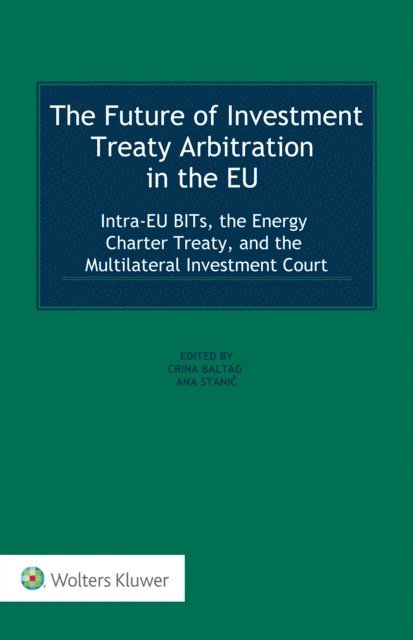
In March 2018, the Court of Justice of the European Union (EU) ruled in Achmea that investor-state dispute resolution provisions in intra-EU bilateral investment treaties (BITs) are incompatible with EU law and ipso facto invalid. In January 2019, EU Member States issued Declarations on the Legal Consequences of the Judgment in Achmea undertaking to take steps formally to terminate intra-EU BITs. However, at present, there is no consensus among them on the implications of Achmea on the Energy Charter Treaty, the multilateral energy treaty to which the EU and its Member States are all parties.
Many EU law scholars consider the Achmea judgment as the death knell to intra-EU investment treaty arbitrations. Some have even predicted the end of Investor-State Dispute Settlement itself. Investment treaty and public international law scholars and legal practitioners, however, have a different view of the schism now growing between EU and international law.
The Future of Investment Treaty Arbitration in the EU examines the current and the proposed new framework for investment protection in the EU and internationally, with a particular focus on investment treaty arbitration and energy-related investments.
With contributions from leading academics and practitioners, the book addresses the following themes:
Intra-EU investment protection and the rule of law, including the proposed Multilateral Investment Court. The original purpose and features of investment protection, with particular focus on the EU. The Achmea judgment and its impact on the Energy Charter Treaty and energy investments. The ongoing discussion to modernize the Energy Charter Treaty post-Achmea. EU state aid and investment arbitral awards. Recognition and enforcement of investment arbitral awards post-Achmea in EU Member States, including in the light of Brexit. Recognition and enforcement of investment arbitral awards post-Achmea in China, Singapore, Switzerland and the United States.This eminently informative book is very timely given the ongoing debate taking place in the EU and internationally regarding the interrelationship between investment treaty arbitration, public international law and EU law. The contributions from leading academics, scholars and European Commission officials provide a balanced, contextualized, detailed and critical analysis that will aid interested stakeholders to navigate their way with confidence through this difficult and changing area of the law.
2 650 kr
Skickas inom 5-8 vardagar
2 256 kr
Läs direkt efter köp
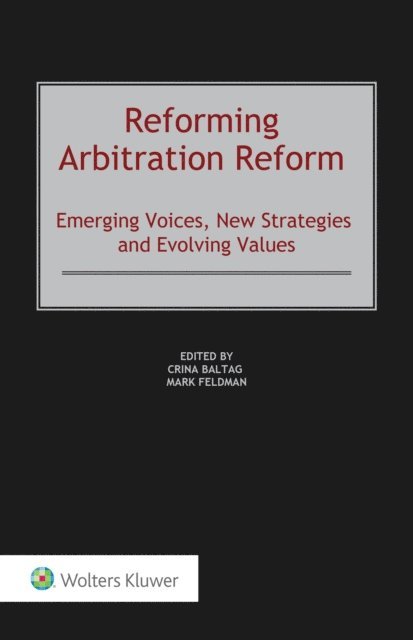
Reforming Arbitration Reform: Emerging Voices, New Strategies and Evolving Values
Edited by Crina Baltag & Mark Feldman
The legitimacy of international arbitration is being called into question. Arbitration is now subject to a multitude of regulatory sources and critical voices that seem to compromise the core interests of arbitration users and the arbitration community. This comprehensive discussion of ongoing and emerging reform efforts in both commercial and investment arbitration provides a thorough examination of how evolving values of diversity, inclusiveness, and sustainability are impacting the very nature of the field.
Capturing the imperative need to critically consider how these new strategies and voices can lead to a new age of international arbitration, more than thirty well-known practitioners and academics offer invaluable perspectives on such aspects of the subject as the following:
conflicts of interest and ethical dilemmas;
gender diversity;
alleged instances of judicial overreach;
third-party funders;
role of professional organizations;
intersections between investment law and race, environmental protection, and indigenous peoples;
role of developing states; and
increasing importance of regionalism.
Particular attention is paid to a number of countries and regions that have been most active in reform measures, including Latin America and the Caribbean, the MERCOSUR and ASEAN groups, the European Union, Brazil, and China.
The contributions are based on papers presented at the 20th ITA-ASIL Conference which took place on 29 March 2023 in Washington DC.
Given that demands for arbitration reform come from very different perspectives that need to be reconciled, the active engagement of key stakeholders of the arbitration process in reform projects is essential in order to ensure that reforms are meaningful and successful. For this reason, the book will prove of immeasurable value to both arbitration users and regulators for the in-depth understanding it will impart of how emerging voices are advancing reform of the international arbitration practice area.
2 256 kr
Läs direkt efter köp
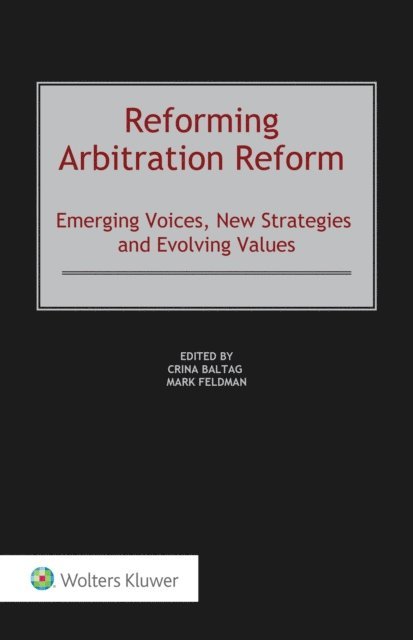
Reforming Arbitration Reform: Emerging Voices, New Strategies and Evolving Values
Edited by Crina Baltag & Mark Feldman
The legitimacy of international arbitration is being called into question. Arbitration is now subject to a multitude of regulatory sources and critical voices that seem to compromise the core interests of arbitration users and the arbitration community. This comprehensive discussion of ongoing and emerging reform efforts in both commercial and investment arbitration provides a thorough examination of how evolving values of diversity, inclusiveness, and sustainability are impacting the very nature of the field.
Capturing the imperative need to critically consider how these new strategies and voices can lead to a new age of international arbitration, more than thirty well-known practitioners and academics offer invaluable perspectives on such aspects of the subject as the following:
conflicts of interest and ethical dilemmas;
gender diversity;
alleged instances of judicial overreach;
third-party funders;
role of professional organizations;
intersections between investment law and race, environmental protection, and indigenous peoples;
role of developing states; and
increasing importance of regionalism.
Particular attention is paid to a number of countries and regions that have been most active in reform measures, including Latin America and the Caribbean, the MERCOSUR and ASEAN groups, the European Union, Brazil, and China.
The contributions are based on papers presented at the 20th ITA-ASIL Conference which took place on 29 March 2023 in Washington DC.
Given that demands for arbitration reform come from very different perspectives that need to be reconciled, the active engagement of key stakeholders of the arbitration process in reform projects is essential in order to ensure that reforms are meaningful and successful. For this reason, the book will prove of immeasurable value to both arbitration users and regulators for the in-depth understanding it will impart of how emerging voices are advancing reform of the international arbitration practice area.
2 102 kr
Läs direkt efter köp
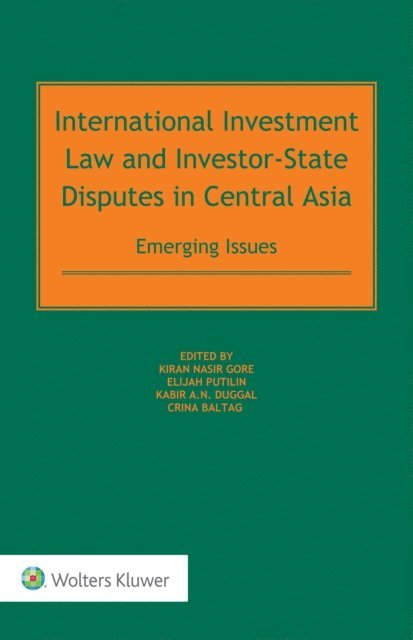
The five Central Asian States – Kazakhstan, the Kyrgyz Republic, Tajikistan, Turkmenistan and Uzbekistan – collectively present a unique case study for the nexus between international investment frameworks, investor-State dispute settlement (ISDS) and the future of this field. In this groundbreaking book, the editors have curated contributions from globally renowned practitioners and scholars to provide the first comprehensive overview of experiences and lessons arising from the region.
This book draws upon the Central Asian experience with international investment law and ISDS to develop globally relevant insights and analyses on, among other topics:
approaches to foreign direct investment and domestic investment legislation;
jurisdictional questions arising in investment treaty arbitration, such as the notion of ‘investor’ and the definition of ‘investment’;
the interpretation of investment treaties and the role of international and domestic law;
substantive and procedural rights of foreign investors, with a focus on guarantees against expropriation and most-favoured nation and fair and equitable treatment standards;
arbitral awards, as well as grounds and procedures for their enforcement and annulment;
the state-of-play for allegations of corruption and fraud once a dispute has arisen; and
emerging challenges and opportunities in light of ongoing reform initiatives.
This book establishes that the Central Asian experience should be taken into consideration in any comprehensive and robust discussion on the future of international investment law and ISDS. It provides useful analyses of how these frameworks may be improved, reformed and remain fit for purpose. This book is an essential tool that allows practitioners, arbitrators, policymakers and scholars to confidently engage with the substantive and procedural challenges and opportunities that are anticipated in the next generation of investor-State disputes.
2 102 kr
Läs direkt efter köp
The five Central Asian States – Kazakhstan, the Kyrgyz Republic, Tajikistan, Turkmenistan and Uzbekistan – collectively present a unique case study for the nexus between international investment frameworks, investor-State dispute settlement (ISDS) and the future of this field. In this groundbreaking book, the editors have curated contributions from globally renowned practitioners and scholars to provide the first comprehensive overview of experiences and lessons arising from the region.
This book draws upon the Central Asian experience with international investment law and ISDS to develop globally relevant insights and analyses on, among other topics:
approaches to foreign direct investment and domestic investment legislation;
jurisdictional questions arising in investment treaty arbitration, such as the notion of ‘investor’ and the definition of ‘investment’;
the interpretation of investment treaties and the role of international and domestic law;
substantive and procedural rights of foreign investors, with a focus on guarantees against expropriation and most-favoured nation and fair and equitable treatment standards;
arbitral awards, as well as grounds and procedures for their enforcement and annulment;
the state-of-play for allegations of corruption and fraud once a dispute has arisen; and
emerging challenges and opportunities in light of ongoing reform initiatives.
This book establishes that the Central Asian experience should be taken into consideration in any comprehensive and robust discussion on the future of international investment law and ISDS. It provides useful analyses of how these frameworks may be improved, reformed and remain fit for purpose. This book is an essential tool that allows practitioners, arbitrators, policymakers and scholars to confidently engage with the substantive and procedural challenges and opportunities that are anticipated in the next generation of investor-State disputes.
2 957 kr
Tillfälligt slut