Cristina Giorcelli - Böcker
Visar alla böcker från författaren Cristina Giorcelli. Handla med fri frakt och snabb leverans.
5 produkter
5 produkter
327 kr
Skickas inom 10-15 vardagar
Margaret Fuller (1810-1850), a pioneering gender theorist, transcendentalist, journalist, and literary critic, was one of the most well-known and highly regarded feminist intellectuals of nineteenth-century America. With her contemporaries Ralph Waldo Emerson and Henry David Thoreau, she was one of the predominant writers of the Transcendentalist movement, and she aligned herself in both her public and private life with the European revolutionary fervor of the 1840s. She traveled to Italy as a foreign correspondent for the New York Tribune to cover the nascent revolutions, pursuing the transnational ideal awakened in her youth by a classical education in European languages and a Romantic curiosity about other cultures, traditions, and identities. This volume is a collaboration of international scholars who, from varied fields and approaches, assess Fuller's genius and character. Treating the last several years of Margaret Fuller's short life, these essays offer a truly international discussion of Fuller's unique cultural, political, and personal achievements. From the origins and articulations of Fuller's cosmopolitanism to her examination of ""the woman question,"" and from her fascination with the European ""other"" to her candid perception of imperial America from abroad, they ponder what such an extraordinary woman meant to America, and also to Italy and Europe, during her lifetime and continuing to the present.
290 kr
Skickas inom 10-15 vardagar
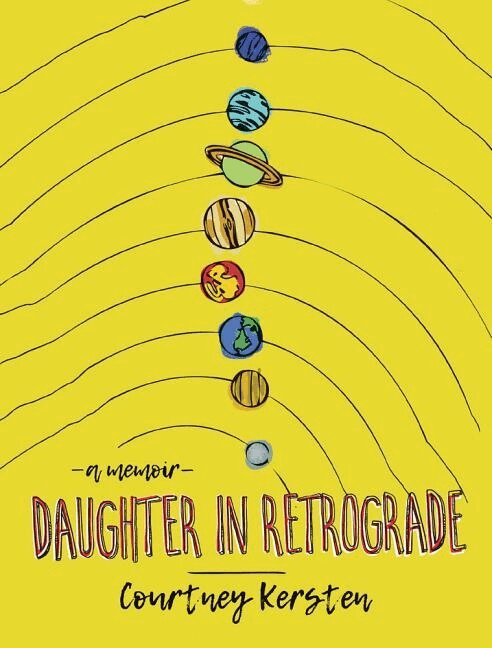
When she isn't eavesdropping on family gossip or gazing at taxidermy squirrels in smoky dives, Courtney Kersten charts the uncertainty of her midwestern homeland by looking to the stars and planets. As a teen she had plunged deep into the worlds of signs, symbols, and prophecy. But as her mother—her traveling companion into these spheres—lies dying, Kersten must learn to navigate without the person who always lit the way. Their last journey together, to swim in a Wisconsin lake, is a bittersweet, darkly comic, poignant climax to this transformative memoir.
264 kr
Skickas inom 7-10 vardagar
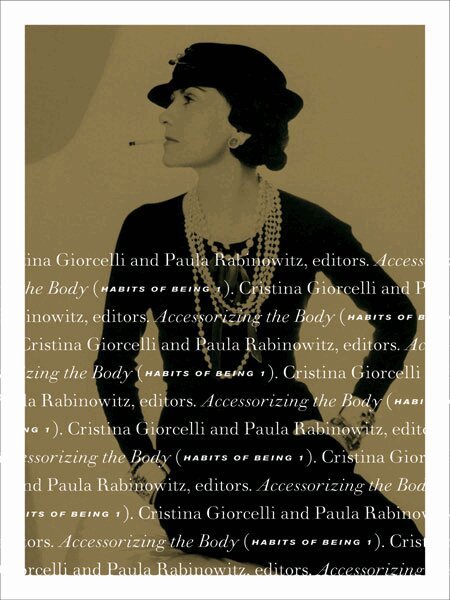
The first in the four-part series Habits of Being, charting the social, cultural, and political expression of clothing as seen on the street and in museums, in films and literature, and in advertisements and magazines, this volume features a close-up focus on accessories-the shoe, the hat, the necklace-intimately connected to the body. These essays, most of which have appeared in the cutting-edge Italian series Abito e IdentitÀ, offer new theoretical and historical takes on the role of clothing, dress, and accessories in the construction of the modern subject. With contributions by leading scholars in art history, semiotics, literary and film studies, history and fashion studies, and with additional writings by psychoanalysts, textile artists, and fashion designers from Europe and America, readers will encounter a dizzying array of ideas about the modern body and the ways in which we dress it. From perspectives on the “model body” to Sonia Delaunay’s designs, from Fascist-era Spanish women’s prescribed ways of dressing to Futurist vests, from Barbara Stanwyck’s anklet to Salvatore Ferragamo’s sandals, from a poet’s tiara to a worker’s cap, from the scarlet letter to the yellow star: Accessorizing the Body imparts startling insights into how much the most modest accessory might reveal.Contributors: ZsÓfia BÁn, Eotvos Lorand U, Budapest; Martha Banta, U of California, Los Angeles; Vittoria C. Caratozzolo, U of Rome “La Sapienza”; Paola Colaiacomo, U of Rome “La Sapienza”; Maria Damon, U of Minnesota; Giuliana Di Febo, U of Rome Three; Micol Fontana; Manuela Fraire; Becky Peterson, U of New Mexico; Jeffrey C. Stewart, U of California, Santa Barbara; Vito Zagarrio, U of Rome Three; Franca Zoccoli.
291 kr
Skickas inom 7-10 vardagar
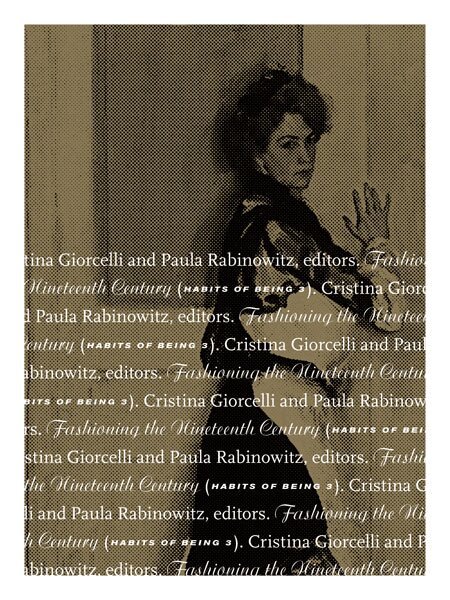
In nineteenth-century Europe and the United States, fashion-once the province of the well-to-do-began to make its way across class lines. At once a democratizing influence and a means of maintaining distinctions, gaps in time remained between what the upper classes wore and what the lower classes later copied. And toward the end of the century, style also moved from the streets to the parlor. The third in a four-part series charting the social, cultural, and political expression of clothing, dress, and accessories, Fashioning the Nineteenth Century focuses on this transformative period in an effort to show how certain items of apparel acquired the status of fashion and how fashion shifted from the realm of the elites into the emerging middle and working classes-and back.The contributors to this volume are leading scholars from France, Italy, and the United States, as well as a practicing psychoanalyst and artists working in fashion and with textiles. Whether considering girls’ school uniforms in provincial Italy, widows’ mourning caps in Victorian novels, Charlie’s varying dress in Kate Chopin’s eponymous story, or the language of clothing in Henry James, the essays reveal how changes in ideals of the body and its adornment, in classes and nations, created what we now understand to be the imperatives of fashion.Contributors: Dagni Bredesen, Eastern Illinois U; Carmela Covato, U of Rome Three; AgnÈs Derail-Imbert, École Normale SupÉrieure/VALE U of Paris, Sorbonne; Clair Hughes, International Christian University of Tokyo; Bianca Iaccarino Idelson; Beryl Korot; Anna Masotti; Bruno Monfort, UniversitÉ of Paris, Ouest Nanterre La DÉfense; Giuseppe Nori, U of Macerata, Italy; Marta Savini, U of Rome Three; Anna Scacchi, U of Padua; Carroll Smith-Rosenberg, U of Michigan.
291 kr
Skickas inom 7-10 vardagar
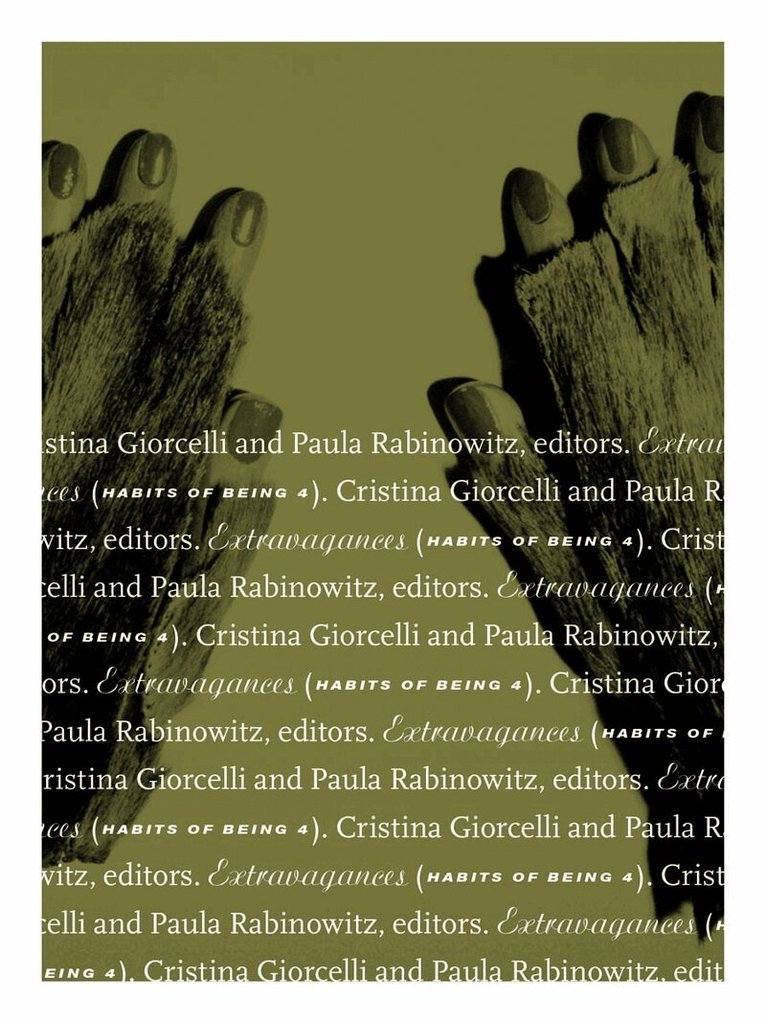
This final volume in the four-volume series Habits of Being shows how the dialectic between everyday appearance and outrageous acts is mediated through clothing and accessories. It considers how clothing and accessories can move quickly from the ordinary to the extravagant. Employing many different approaches, these essays explore how wearing an object-a crown, a flower, an earring, a corsage, a veil, even a length of material-can stray beyond the bounds of the body on which it is placed into the discrepant territory of flagrantly excessive public signs of love, status, honor, prestige, power, desire, and display. The varied contributions of scholars (historians, ethnographers, literary and film critics) and artists (photographers, sculptors, writers, weavers, and embroiderers) take up the threads of these forays into history, psyche, and aesthetics in surprising and useful ways. With examples from around the world, contributors address how the simple action of ornamenting the body, even with something as common as a button, are open to elaborate interpretations-which themselves offer new understandings of human behavior and artistic endeavor. When our “habits of being” receive close scrutiny, they seem anything but habitual. Contributors: Mariapia Bobbiobi; Camilla Cattarulla, U of Rome Three; Paola Colaiacomo, Sapienza, U of Rome; Maria Damon, Pratt Institute of Art; Joanne B. Eicher, U of Minnesota; Maria Giulia Fabi, U of Ferrara; Margherita di Fazio; Adeena Karasick, Fordham U; Tarrah Krajnak, Pitzer College; Charlotte Nekola, William Paterson U; Victoria R. Pass, Maryland Institute College of Art; Amanda Salvioni, U of Macerata; Maria Anita Stefanelli, U of Rome Three.