Paula Rabinowitz - Böcker
Visar alla böcker från författaren Paula Rabinowitz. Handla med fri frakt och snabb leverans.
13 produkter
13 produkter
548 kr
Skickas inom 3-6 vardagar
Black & White & Noir explores America's pulp modernism through penetrating readings of the noir sensibility lurking in an eclectic array of media: Office of War Information photography, women's experimental films, and African-American novels, among others. It traces the dark edges of cultural detritus blowing across the postwar landscape, finding in pulp a political theory that helps explain America's fascination with lurid spectacles of crime. We are accustomed to thinking of noir as a film form popularized in movies like The Maltese Falcon, The Big Sleep, and, more recently, Quentin Tarantino's Pulp Fiction. But it is also, Paula Rabinowitz argues, an avenue of social and political expression. This book offers an unparalleled historical and theoretical overview of the noir shadows cast when the media's glare is focused on the unseen and the unseemly in our culture.Through far-ranging discussions of the Starr Report, movies such as Double Indemnity and The Big Heat, and figures as various as Barbara Stanwyck, Kenneth Fearing, and Richard Wright, Rabinowitz finds in film noir the representation of modern America's attempt to submerge and mask its violent history of racial and class anatagonisms. Black & White & Noir also explores the theory and practice of stilettos, the ways in which girls in the 1950s viewed film noir as a secret language about their mothers' pasts, the extraordinary tone-setting photographs of Esther Bubley, and the smutty aspect of social workers' case studies, among other unexpected twists and provocative turns.
279 kr
Skickas inom 7-10 vardagar
"There is real hope for a culture that makes it as easy to buy a book as it does a pack of cigarettes."--a civic leader quoted in a New American Library ad (1951) American Pulp tells the story of the midcentury golden age of pulp paperbacks and how they brought modernism to Main Street, democratized literature and ideas, spurred social mobility, and helped readers fashion new identities. Drawing on extensive original research, Paula Rabinowitz unearths the far-reaching political, social, and aesthetic impact of the pulps between the late 1930s and early 1960s. Published in vast numbers of titles, available everywhere, and sometimes selling in the millions, pulps were throwaway objects accessible to anyone with a quarter. Conventionally associated with romance, crime, and science fiction, the pulps in fact came in every genre and subject. American Pulp tells how these books ingeniously repackaged highbrow fiction and nonfiction for a mass audience, drawing in readers of every kind with promises of entertainment, enlightenment, and titillation.Focusing on important episodes in pulp history, Rabinowitz looks at the wide-ranging effects of free paperbacks distributed to World War II servicemen and women; how pulps prompted important censorship and First Amendment cases; how some gay women read pulp lesbian novels as how-to-dress manuals; the unlikely appearance in pulp science fiction of early representations of the Holocaust; how writers and artists appropriated pulp as a literary and visual style; and much more. Examining their often-lurid packaging as well as their content, American Pulp is richly illustrated with reproductions of dozens of pulp paperback covers, many in color. A fascinating cultural history, American Pulp will change the way we look at these ephemeral yet enduringly intriguing books.
252 kr
Skickas inom 7-10 vardagar
"There is real hope for a culture that makes it as easy to buy a book as it does a pack of cigarettes."--a civic leader quoted in a New American Library ad (1951) American Pulp tells the story of the midcentury golden age of pulp paperbacks and how they brought modernism to Main Street, democratized literature and ideas, spurred social mobility, and helped readers fashion new identities. Drawing on extensive original research, Paula Rabinowitz unearths the far-reaching political, social, and aesthetic impact of the pulps between the late 1930s and early 1960s. Published in vast numbers of titles, available everywhere, and sometimes selling in the millions, pulps were throwaway objects accessible to anyone with a quarter. Conventionally associated with romance, crime, and science fiction, the pulps in fact came in every genre and subject. American Pulp tells how these books ingeniously repackaged highbrow fiction and nonfiction for a mass audience, drawing in readers of every kind with promises of entertainment, enlightenment, and titillation.Focusing on important episodes in pulp history, Rabinowitz looks at the wide-ranging effects of free paperbacks distributed to World War II servicemen and women; how pulps prompted important censorship and First Amendment cases; how some gay women read pulp lesbian novels as how-to-dress manuals; the unlikely appearance in pulp science fiction of early representations of the Holocaust; how writers and artists appropriated pulp as a literary and visual style; and much more. Examining their often-lurid packaging as well as their content, American Pulp is richly illustrated with reproductions of dozens of pulp paperback covers, many in color. A fascinating cultural history, American Pulp will change the way we look at these ephemeral yet enduringly intriguing books.
515 kr
Skickas inom 10-15 vardagar
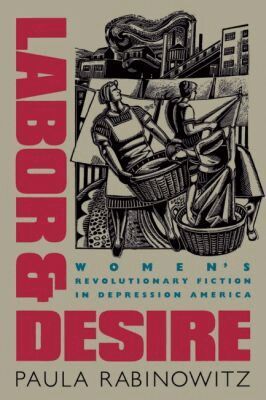
This critical, historical, and theoretical study looks at a little-known group of novels written during the 1930s by women who were literary radicals. Arguing that class consciousness was figured through metaphors of gender, Paula Rabinowitz challenges the conventional wisdom that feminism as a discourse disappeared during the decade. She focuses on the ways in which sexuality and maternity reconstruct the ""classic"" proletarian novel to speak about both the working-class woman and the radical female intellectual. Two well-known novels bracket this study: Agnes Smedley's Daughters of Earth (1929) and Mary McCarthy's The Company She Keeps (1942). In all, Rabinowitz surveys more than forty novels of the period, many largely forgotten. Discussing these novels in the contexts of literary radicalism and of women's literary tradition, she reads them as both cultural history and cultural theory. Through a consideration of the novels as a genre, Rabinowitz is able to theorize about the interrelationship of class and gender in American culture. Rabinowitz shows that these novels, generally dismissed as marginal by scholars of the literary and political cultures of the 1930s, are in fact integral to the study of American fiction produced during the decade. Relying on recent feminist scholarship, she reformulates the history of literary radicalism to demonstrate the significance of these women writers and to provide a deeper understanding of their work for twentieth-century American cultural studies in general.
264 kr
Skickas inom 7-10 vardagar
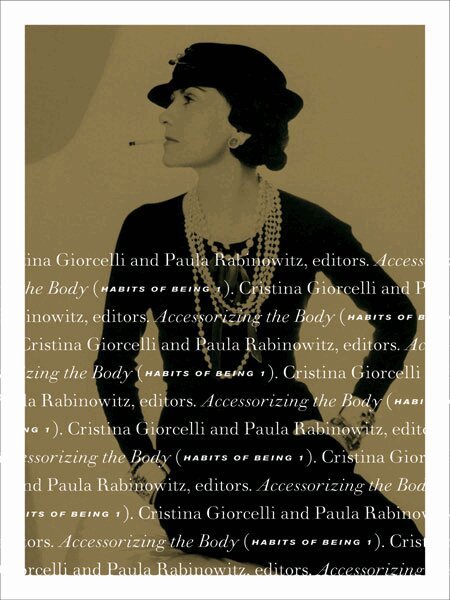
The first in the four-part series Habits of Being, charting the social, cultural, and political expression of clothing as seen on the street and in museums, in films and literature, and in advertisements and magazines, this volume features a close-up focus on accessories-the shoe, the hat, the necklace-intimately connected to the body. These essays, most of which have appeared in the cutting-edge Italian series Abito e IdentitÀ, offer new theoretical and historical takes on the role of clothing, dress, and accessories in the construction of the modern subject. With contributions by leading scholars in art history, semiotics, literary and film studies, history and fashion studies, and with additional writings by psychoanalysts, textile artists, and fashion designers from Europe and America, readers will encounter a dizzying array of ideas about the modern body and the ways in which we dress it. From perspectives on the “model body” to Sonia Delaunay’s designs, from Fascist-era Spanish women’s prescribed ways of dressing to Futurist vests, from Barbara Stanwyck’s anklet to Salvatore Ferragamo’s sandals, from a poet’s tiara to a worker’s cap, from the scarlet letter to the yellow star: Accessorizing the Body imparts startling insights into how much the most modest accessory might reveal.Contributors: ZsÓfia BÁn, Eotvos Lorand U, Budapest; Martha Banta, U of California, Los Angeles; Vittoria C. Caratozzolo, U of Rome “La Sapienza”; Paola Colaiacomo, U of Rome “La Sapienza”; Maria Damon, U of Minnesota; Giuliana Di Febo, U of Rome Three; Micol Fontana; Manuela Fraire; Becky Peterson, U of New Mexico; Jeffrey C. Stewart, U of California, Santa Barbara; Vito Zagarrio, U of Rome Three; Franca Zoccoli.
291 kr
Skickas inom 7-10 vardagar
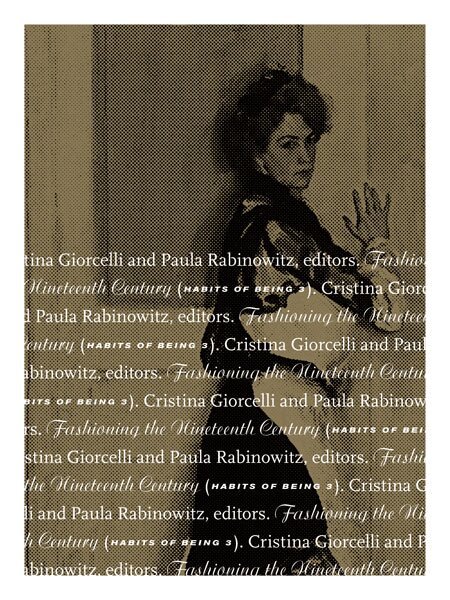
In nineteenth-century Europe and the United States, fashion-once the province of the well-to-do-began to make its way across class lines. At once a democratizing influence and a means of maintaining distinctions, gaps in time remained between what the upper classes wore and what the lower classes later copied. And toward the end of the century, style also moved from the streets to the parlor. The third in a four-part series charting the social, cultural, and political expression of clothing, dress, and accessories, Fashioning the Nineteenth Century focuses on this transformative period in an effort to show how certain items of apparel acquired the status of fashion and how fashion shifted from the realm of the elites into the emerging middle and working classes-and back.The contributors to this volume are leading scholars from France, Italy, and the United States, as well as a practicing psychoanalyst and artists working in fashion and with textiles. Whether considering girls’ school uniforms in provincial Italy, widows’ mourning caps in Victorian novels, Charlie’s varying dress in Kate Chopin’s eponymous story, or the language of clothing in Henry James, the essays reveal how changes in ideals of the body and its adornment, in classes and nations, created what we now understand to be the imperatives of fashion.Contributors: Dagni Bredesen, Eastern Illinois U; Carmela Covato, U of Rome Three; AgnÈs Derail-Imbert, École Normale SupÉrieure/VALE U of Paris, Sorbonne; Clair Hughes, International Christian University of Tokyo; Bianca Iaccarino Idelson; Beryl Korot; Anna Masotti; Bruno Monfort, UniversitÉ of Paris, Ouest Nanterre La DÉfense; Giuseppe Nori, U of Macerata, Italy; Marta Savini, U of Rome Three; Anna Scacchi, U of Padua; Carroll Smith-Rosenberg, U of Michigan.
291 kr
Skickas inom 7-10 vardagar
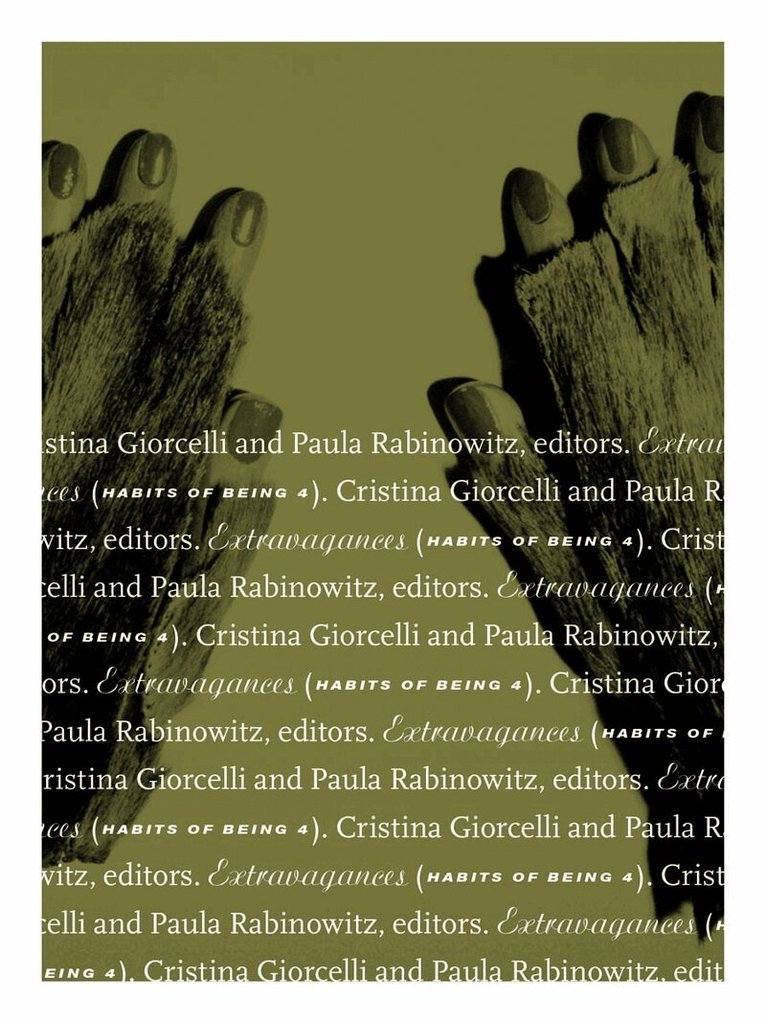
This final volume in the four-volume series Habits of Being shows how the dialectic between everyday appearance and outrageous acts is mediated through clothing and accessories. It considers how clothing and accessories can move quickly from the ordinary to the extravagant. Employing many different approaches, these essays explore how wearing an object-a crown, a flower, an earring, a corsage, a veil, even a length of material-can stray beyond the bounds of the body on which it is placed into the discrepant territory of flagrantly excessive public signs of love, status, honor, prestige, power, desire, and display. The varied contributions of scholars (historians, ethnographers, literary and film critics) and artists (photographers, sculptors, writers, weavers, and embroiderers) take up the threads of these forays into history, psyche, and aesthetics in surprising and useful ways. With examples from around the world, contributors address how the simple action of ornamenting the body, even with something as common as a button, are open to elaborate interpretations-which themselves offer new understandings of human behavior and artistic endeavor. When our “habits of being” receive close scrutiny, they seem anything but habitual. Contributors: Mariapia Bobbiobi; Camilla Cattarulla, U of Rome Three; Paola Colaiacomo, Sapienza, U of Rome; Maria Damon, Pratt Institute of Art; Joanne B. Eicher, U of Minnesota; Maria Giulia Fabi, U of Ferrara; Margherita di Fazio; Adeena Karasick, Fordham U; Tarrah Krajnak, Pitzer College; Charlotte Nekola, William Paterson U; Victoria R. Pass, Maryland Institute College of Art; Amanda Salvioni, U of Macerata; Maria Anita Stefanelli, U of Rome Three.
267 kr
Skickas inom 3-6 vardagar
Red Love Across the Pacific
Political and Sexual Revolutions of the Twentieth Century
Inbunden, Engelska, 2015
1 137 kr
Skickas inom 10-15 vardagar
This book examines the Red Love vogue that swept across the Asia-Pacific in the 1920s and 1930s as part of a worldwide interest in socialism and follows its trails throughout the twentieth century. Encouraging both political and sexual liberation, Red Love was a transnational movement demonstrating the revolutionary potential of love and desire.
499 kr
Skickas inom 5-8 vardagar
For nearly half a century, Alan M. Wald’s pathbreaking research has demonstrated that attention to the complex lived experiences of writers on the Left provides a new context for viewing major achievements as well as instructive minor ones in United States fiction, poetry, drama, and criticism. The essays in this volume in honor of Alan M. Wald investigate aspects of intellectual, literary, and cultural movements and figures associated with left-wing politics beginning in the early twentieth century and continuing into our own time. Intimately linked with social struggle, the thinkers and actors analyzed in these diverse essays can be collectively understood to form the intertwined lineages of the Literary Left.
208 kr
Skickas
This comprehensive collection of fiction, poetry, and reportage by revolutionary women of the 1930s lays to rest the charge that feminism disappeared after 1920. Among the thirty-six writers are Muriel Rukeyser, Margaret Walker, Josephine Herbst, Tillie Olsen, Tess Slesinger, Agnes Smedley, and Meridel Le Sueur. Other voices may be new to readers, including many working-class Black and white women. Topics covered range from sexuality and family relationships, to race, class, and patriarchy, to party politics. Toni Morrison writes that the anthology is “peopled with questioning, caring, socially committed women writers.”
474 kr
Skickas inom 5-8 vardagar
This comprehensive collection of fiction, poetry, and reportage by revolutionary women of the 1930s lays to rest the charge that feminism disappeared after 1920. Among the thirty-six writers are Muriel Rukeyser, Margaret Walker, Josephine Herbst, Tillie Olsen, Tess Slesinger, Agnes Smedley, and Meridel Le Sueur. Other voices may be new to readers, including many working-class Black and white women. Topics covered range from sexuality and family relationships, to race, class, and patriarchy, to party politics. Toni Morrison writes that the anthology is “peopled with questioning, caring, socially committed women writers.”
314 kr
Skickas inom 3-6 vardagar
They Must Be Represented examines documentary in print, photography, television and film from the 1930s through the 1980s, using the lens of recent feminist film theory as well as scholarship on race, class and gender emerging from the new interdisciplinary approach of American cultural studies. Paula Rabinowitz discusses the ways in which these four media shaped truth-claims and political agency over the decades: in the 1930s, about poverty, labor and popular culture during the depression; in the 1960s, about the Vietnam War, racism, work and counterculture; and in the 1980s, about feminist and gay critiques of gender, history, narrative and cinema.A great deal of documentary expression has been influenced by developments in cultural anthropology, as committed artists brought their cameras and typewriters into the field not only to report, but also to change the world. Yet recently the projects of both anthropology and documentary have come under scrutiny. Rabinowitz argues that the gendering of vision that occurs when narratives confirm to conventional genres profoundly affects the relation of documentarian to subject. She goes on to define this gendering of vision in documentary as an ethnographic process. Ultimately, this polemical study challenges the construction of the spectator in psychoanalytic film theory, and articulates a new model for theorizing power relations in culture and history.