Cristina Peicuti – författare
Visar alla böcker från författaren Cristina Peicuti. Handla med fri frakt och snabb leverans.
8 produkter
8 produkter
635 kr
Skickas
Constantly bandied about, 'crisis' has tended to be a much-overused word. Understanding the economy and its future challenges requires a detailed and precise analysis of what an economic crisis is. This book sets out to do just that. It first provides a deep historical context of what economic theory says about crises and their perpetual return in the form of a cycle. It then looks at what lessons might be learned from such cycles. Since 1945, the world economy has been dominated by the United States, so an analysis of recent crises must necessarily consider public policy response in this country. Decoding Economic Crises attempts to answer the question of whether American leadership has emerged unscathed from the damage inflicted by the 1975, 1992, 2009 and 2020 recessions and their legacies of debt.Looking forward to the future, there is a particular focus on environmental change. The book interrogates whether devastating crises might ensue, reminiscent of the 'nutritional trap' theorised by Nobel Prize winner Angus Deaton. Finally, Decoding Economic Crises asks if there will be a return to times of extreme scarcity as seen prior to the mid-18th century.

869 kr
Skickas inom 3-6 vardagar
"It is a familiar remark that only 'the rich can borrow,' and the experience of every day seems to prove it. Yet the poor also may have need of credit, even more than the rich. How, then, can they obtain it? This problem is easily solved by cooperation. An isolated laborer or artisan, no matter how honest or industrious he may be, cannot furnish sufficient guarantee for a loan. Sickness, loss of work, and death, may at any time overtake him and make it impossible, despite his best intentions, to pay back what he has borrowed. But if laborers or artisans to the number of ten, a hundred, or a thousand, are grouped in an organization, and held together, if need be, by the ties of collective responsibility, the security they have to offer will be considerably greater, and they will find it much easier to obtain credit without falling into the hands of usurers. The dues which are paid to such an organization, moreover, will ultimately build up to a large amount of capital which the organization can lend to its members."Charles GidePrinciples of Economic Policy (1984), Boston USA: DC Heath & Co, publishers translated by C Williams A VerditzA professor of economics, who predicted the subprime mortgage crisis in her doctoral thesis at the Sorbonne between 2006 and 2009, and the general secretary of a major bank analyse the role of banks in triggering the Great Depression and the Great Recession, as well as in helping companies out of the COVID-19 crisis and into the New Environmental Cycle. The book focuses on the dynamics of financial crises that led to the Second World War, Brexit and Donald Trump's presidency. It also chronicles the metamorphosis of the banking profession over the centuries and its reinvention by cooperative banks by and for their customers.
334 kr
Skickas inom 5-8 vardagar
Constantly bandied about, 'crisis' has tended to be a much-overused word. Understanding the economy and its future challenges requires a detailed and precise analysis of what an economic crisis is. This book sets out to do just that. It first provides a deep historical context of what economic theory says about crises and their perpetual return in the form of a cycle. It then looks at what lessons might be learned from such cycles. Since 1945, the world economy has been dominated by the United States, so an analysis of recent crises must necessarily consider public policy response in this country. Decoding Economic Crises attempts to answer the question of whether American leadership has emerged unscathed from the damage inflicted by the 1975, 1992, 2009 and 2020 recessions and their legacies of debt.Looking forward to the future, there is a particular focus on environmental change. The book interrogates whether devastating crises might ensue, reminiscent of the 'nutritional trap' theorised by Nobel Prize winner Angus Deaton. Finally, Decoding Economic Crises asks if there will be a return to times of extreme scarcity as seen prior to the mid-18th century.
414 kr
Skickas inom 5-8 vardagar
"It is a familiar remark that only 'the rich can borrow,' and the experience of every day seems to prove it. Yet the poor also may have need of credit, even more than the rich. How, then, can they obtain it? This problem is easily solved by cooperation. An isolated laborer or artisan, no matter how honest or industrious he may be, cannot furnish sufficient guarantee for a loan. Sickness, loss of work, and death, may at any time overtake him and make it impossible, despite his best intentions, to pay back what he has borrowed. But if laborers or artisans to the number of ten, a hundred, or a thousand, are grouped in an organization, and held together, if need be, by the ties of collective responsibility, the security they have to offer will be considerably greater, and they will find it much easier to obtain credit without falling into the hands of usurers. The dues which are paid to such an organization, moreover, will ultimately build up to a large amount of capital which the organization can lend to its members."Charles GidePrinciples of Economic Policy (1984), Boston USA: DC Heath & Co, publishers translated by C Williams A VerditzA professor of economics, who predicted the subprime mortgage crisis in her doctoral thesis at the Sorbonne between 2006 and 2009, and the general secretary of a major bank analyse the role of banks in triggering the Great Depression and the Great Recession, as well as in helping companies out of the COVID-19 crisis and into the New Environmental Cycle. The book focuses on the dynamics of financial crises that led to the Second World War, Brexit and Donald Trump's presidency. It also chronicles the metamorphosis of the banking profession over the centuries and its reinvention by cooperative banks by and for their customers.
1 094 kr
Skickas inom 10-15 vardagar
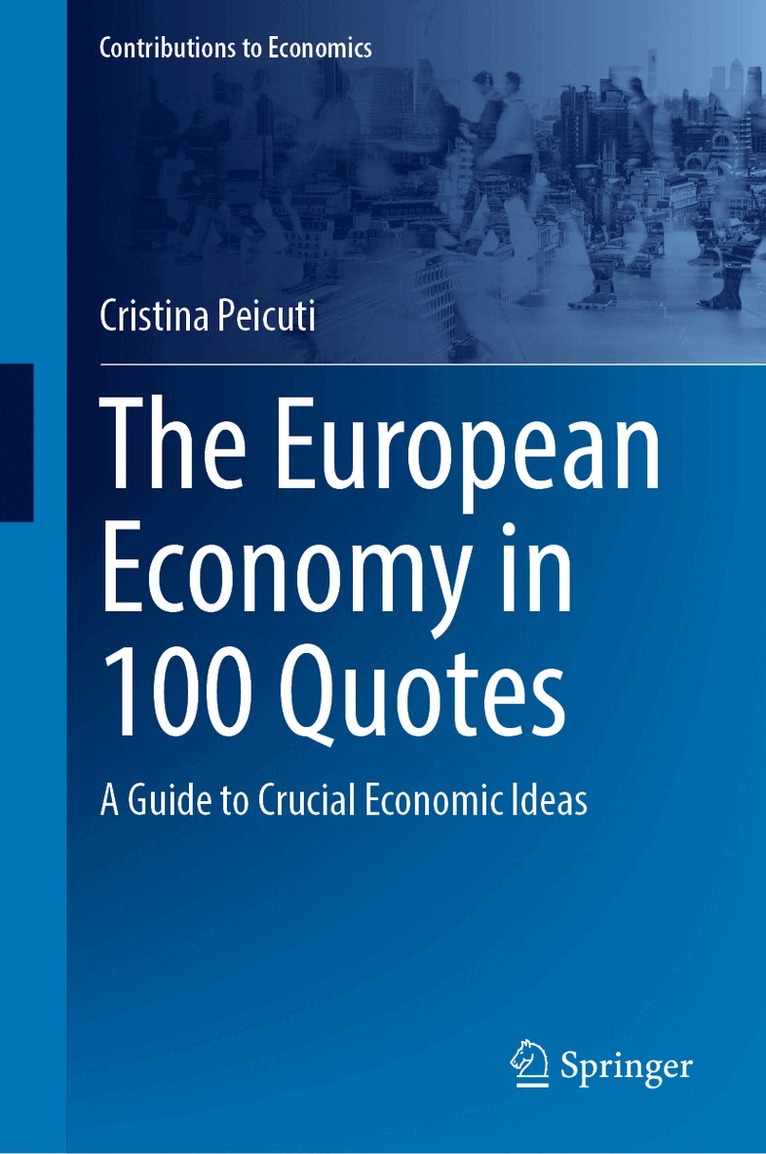
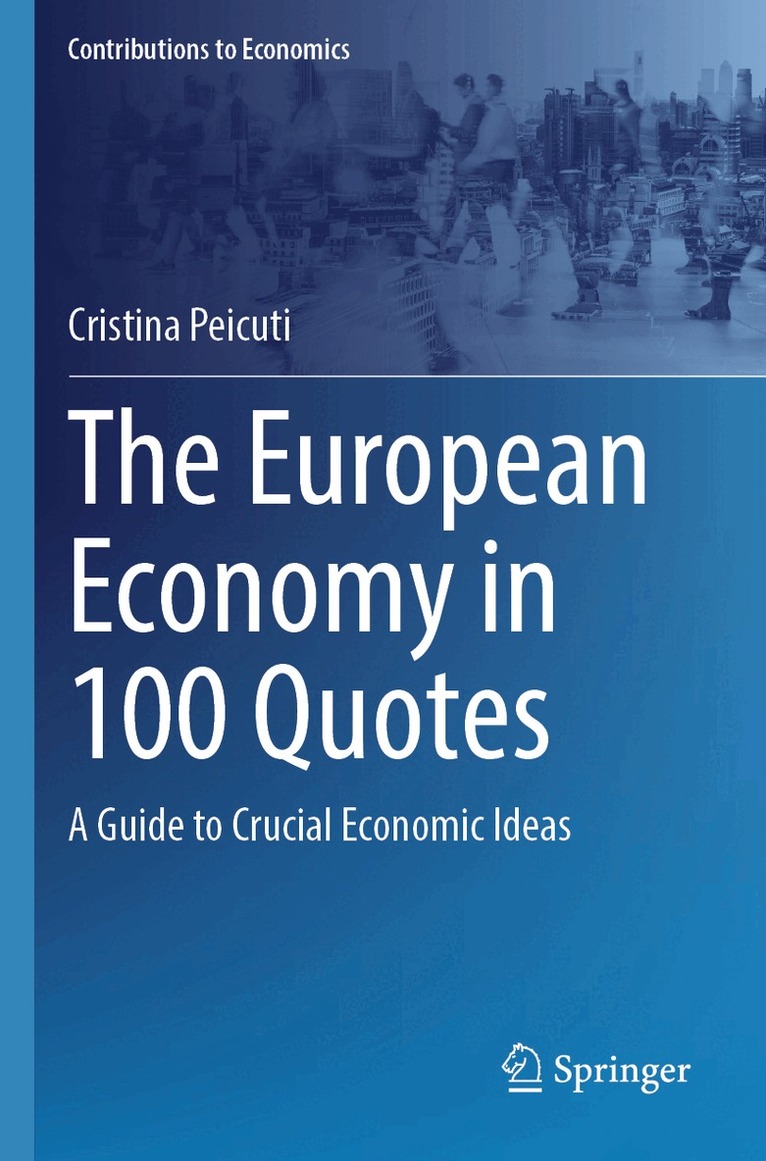
This book will take the reader on a journey through the economic thought of Europe, spanning from ancient Greece to the modern day.
1 094 kr
Skickas inom 10-15 vardagar
This book will take the reader on a journey through the economic thought of Europe, spanning from ancient Greece to the modern day. It explores the economic ideas of the 27 European Union countries, the United Kingdom and Norway, across history. By presenting 500 important quotes, the book offers a better understanding of Europe's economic landscape and serves as a guide that invites readers to explore in more detail the quoted sources. It displays the common socio-economic threads that bind European nations over millennia, transcending artificial divisions imposed by history. From ancient Greece to the reunification post-Berlin Wall, the book enables readers to explore the continuous European economic evolution. The book will appeal to students and scholars of economics, as well as a wider audience, interested in a better understanding of how quotes and economic ideas from the past shape a future with aspirations, such as for the freedom of enterprise, for a market economy based on competition, for the fight against corruption, for a fair distribution of wealth, and an economy at the service of mankind.
1 062 kr
Skickas inom 10-15 vardagar
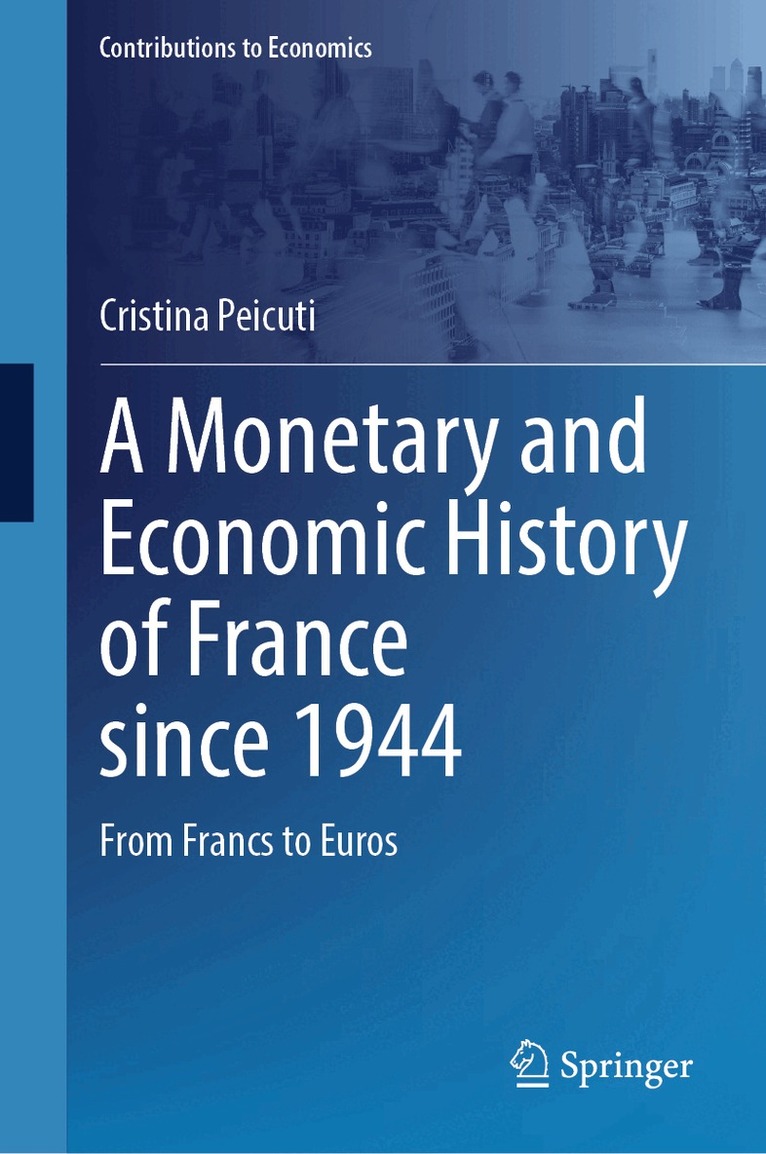
This book presents France's economic and monetary history from the ruins of 1945 to its prospects in the 22nd century. It focuses on the pivotal moments that transformed France into a global economic leader, overcoming monumental challenges such as elevated inflation, crippling public debt, and the loss of its colonial empire.The book examines topics such as the Marshall Plan's role in reconstruction, the impact of European and American influences, and the unique policies that shaped modern France. As France faces new challenges like the Yellow Vests movement, the COVID-19 pandemic, and the energy crisis, this book discusses whether these trials will see France falter or rise stronger than ever.The book finally compares past forecasts and present realities, offering a glimpse into a potential future. It will appeal to economic historians and economists, policy-makers, and a broader audience interested in a better understanding of recent French economic history and lessons from the past for the future.
Credit Channel and the Subprime Mortgage Crisis
An Examination of Monetary Policy
Inbunden, Engelska, 2026
1 844 kr
Kommande
This book explores the evolving role of the credit channel in contemporary macroeconomic policy and financial stability. In ten analytical chapters, Cristina Pecuiti examines the dual function of the credit channel—as both a conduit for monetary policy transmission and a macroeconomic stabilizer—within the broader context of capitalist economies.Grounded in both theoretical inquiry and empirical investigation, the volume first establishes the conceptual foundations of the credit channel, drawing on influential contributions from leading economists. Pecuiti systematically demonstrates the channel’s critical role in amplifying or mitigating the effects of monetary interventions, thereby shaping macroeconomic outcomes.A central focus of the book is the empirical analysis of the credit channel’s performance during the European subprime crisis. Pairing case studies with policy evaluations, Pecuiti assesses the measures adopted by EU Member States to preserve credit flows and support economic recovery. This analysis not only underscores the operational significance of the credit channel during periods of financial distress but also highlights its potential as a strategic policy instrument.The concluding chapters advocate for a structural rethinking of capitalism’s financial architecture, emphasizing the need for central banks to integrate the credit channel more explicitly into their policy frameworks. By doing so, the book argues that monetary authorities can foster conditions conducive to sustainable growth, price stability, and crisis prevention.The resulting book contextualizes modern economic governance and highlights the transformative potential of credit channels.