D. Wayne Osgood - Böcker
Visar alla böcker från författaren D. Wayne Osgood. Handla med fri frakt och snabb leverans.
3 produkter
3 produkter
803 kr
Skickas inom 5-8 vardagar
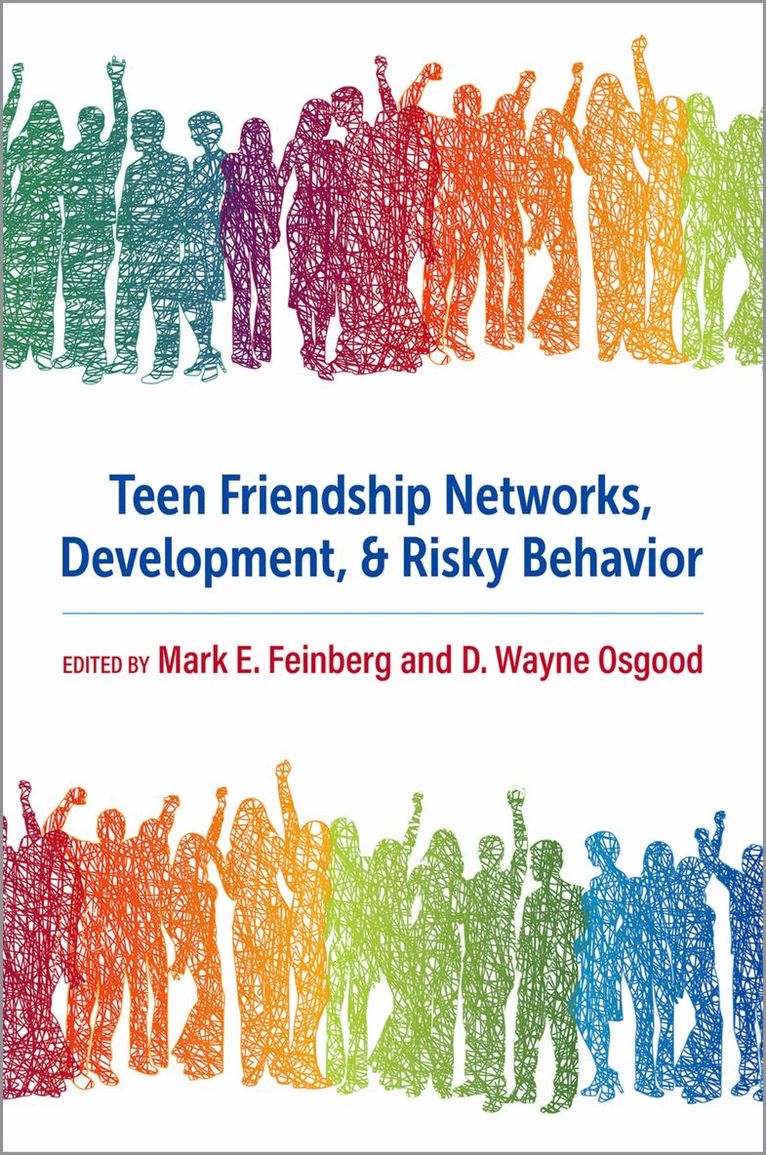
The PROSPER study is the premier study of adolescent peer networks in the world, with a scope of over 12,000 youth in 28 school districts, and with 8 annual waves of data collection covering grades 6-12. Research output from the PROSPER study has provided extensive new insights in the areas of adolescent development, risky behaviors, and social networks.Through the lens of the PROSPER study, Teen Friendship Networks, Development, and Risky Behavior describes the many ways that adolescent friendship networks channel and facilitate the spread of adolescent substance use, delinquent behaviors, mental health problems, educational success, romantic relationships, and future development. Introductory chapters explain the theories of adolescent development and the elements of peer network science. The chapters of the main part of the book each focus on a domain of adolescent behavior, providing background on the topic and highlighting the contribution of the PROSPER study to understanding the way teen friendships operate to promote initiation or diffusion of the behavior or attribute. With coverage of major themes such as the ways that teens select friends based on particular characteristics or similarity between them, and the ways that friends, once selected, influence each other, as well as discussion of how friendship and network patterns are linked to the uptake and spread of positive prevention messages, Teen Friendship Networks, Development, and Risky Behavior will appeal to researchers and students across several fields.
On Your Own without a Net
The Transition to Adulthood for Vulnerable Populations
Häftad, Engelska, 2007
284 kr
Skickas inom 7-10 vardagar
In the decade after high school, young people continue to rely on their families in many ways - sometimes for financial support, sometimes for help with childcare, and sometimes for continued shelter. But what about those young people who confront special difficulties during this period, many of whom can't count on help from their families? "On Your Own Without a Net" documents the special challenges facing seven vulnerable populations during the transition to adulthood: former foster-care youth, youth formerly involved in the juvenile justice system, youth in the criminal justice system, runaway and homeless youth, former special-education students, young people in the mental health system, and youth with physical disabilities. During adolescence, government programs have been a major part of their lives, yet eligibility for most programs typically ends between the ages of eighteen and twenty-one. This volume shows the unfortunate repercussions of this termination of support and points out the issues that must be addressed to improve these young people's chances of becoming successful adults.
980 kr
Skickas inom 10-15 vardagar
This is an innovative study of 300 delinquent boys in a medium security institution and after their release. This longitudinal field experiment shows how peers affect the rehabilitation of different group members, how staff use those influences to lead to prosocial change after release from the institution, and how different behavior, values, and feelings improved. This well-designed research has broad implications for use in graduate courses in sociology, criminology and penology, social and personality psychology, and group dynamics. The book is equally useful to administrators and policymakers dealing with delinquents and individuals with behavior problems.The field experiment was devised with both practical and theoretical purposes in mind, to develop corrective programs for delinquent youth and to test social science hypotheses in the context of a longitudinal experimental research design. The study presents a typology of delinquent boys that guides differential treatment, focuses on peer group and staff influences, and identifies factors in residential treatment and in the open community that facilitate prosocial reentry. The findings test hypotheses about group and staff impact on anti-social behavior within the institution and after release.