D.A. Williams – författare
Visar alla böcker från författaren D.A. Williams. Handla med fri frakt och snabb leverans.
11 produkter
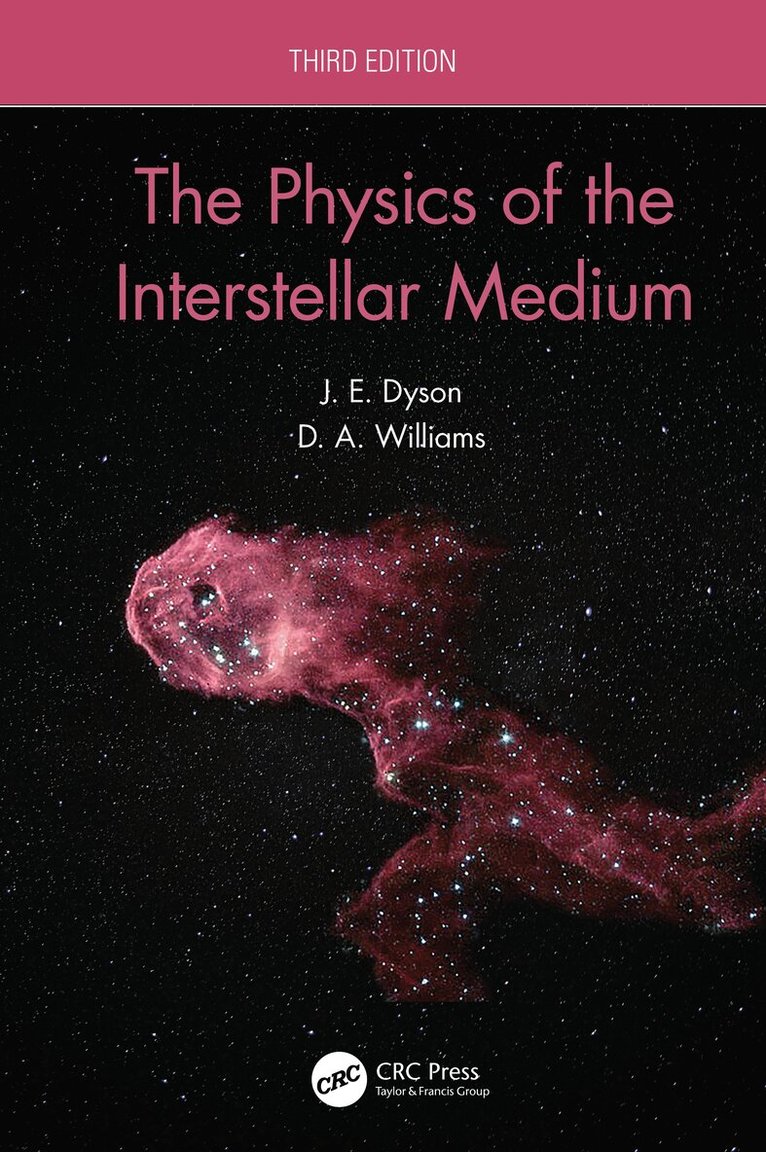
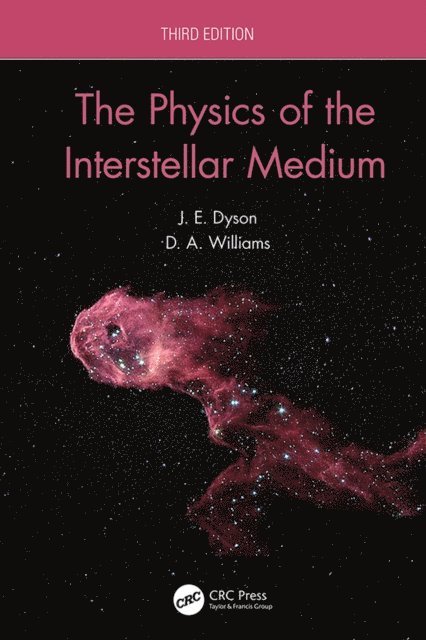
Physics of the Interstellar Medium
Inbunden, 2020
2743 kr
Lägg i varukorg
This third edition of The Physics of the Interstellar Medium continues to introduce advanced undergraduates to the fundamental processes and the wide range of disciplines needed to understand observations of the interstellar medium and its role in the Milky Way galaxy. The book is suitable for …
Physics of the Interstellar Medium
Häftad, 2020
1040 kr
Lägg i varukorg
This third edition of The Physics of the Interstellar Medium continues to introduce advanced undergraduates to the fundamental processes and the wide range of disciplines needed to understand observations of the interstellar medium and its role in the Milky Way galaxy. The book is suitable for …
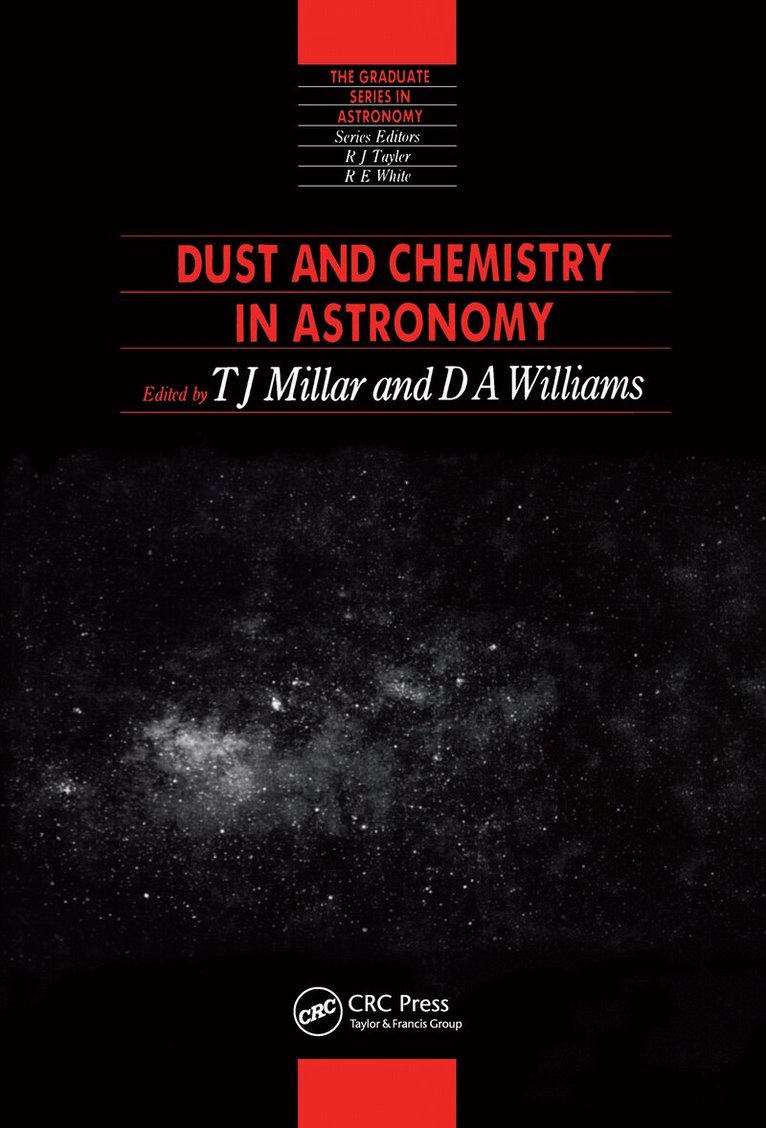
Dust and Chemistry in Astronomy
Inbunden, 1993
2743 kr
Lägg i varukorg
Dust is widespread in the galaxy. To astronomers studying stars it may be just an irritating fog, but it is becoming widely recognized that cosmic dust plays an active role in astrochemistry. Without dust, the galaxy would have evolved differently, and planetary systems like ours would not have …
Physics of the Interstellar Medium
E-bok, 2020
1091 kr
Lägg i varukorg
This third edition of The Physics of the Interstellar Medium continues to introduce advanced undergraduates to the fundamental processes and the wide range of disciplines needed to understand observations of the interstellar medium and its role in the Milky Way galaxy. The book is suitable for …
Physics of the Interstellar Medium
E-bok, 2020
1091 kr
Lägg i varukorg
This third edition of The Physics of the Interstellar Medium continues to introduce advanced undergraduates to the fundamental processes and the wide range of disciplines needed to understand observations of the interstellar medium and its role in the Milky Way galaxy. The book is suitable for …
Dust and Chemistry in Astronomy
E-bok, 2019
2998 kr
Lägg i varukorg
Dust is widespread in the galaxy. To astronomers studying stars it may be just an irritating fog, but it is becoming widely recognized that cosmic dust plays an active role in astrochemistry. Without dust, the galaxy would have evolved differently, and planetary systems like ours would not have …
Dust and Chemistry in Astronomy
E-bok, 2019
3065 kr
Lägg i varukorg
Dust is widespread in the galaxy. To astronomers studying stars it may be just an irritating fog, but it is becoming widely recognized that cosmic dust plays an active role in astrochemistry. Without dust, the galaxy would have evolved differently, and planetary systems like ours would not have …
December's Child
E-bok, 2016
41 kr
Lägg i varukorg
Every secret has a key. As a child worker of the December Mining Corporation, 18-year-old Jett’s plan has always been to earn a life outside the mines by selling her body—a plan she’s nearly fulfilled until she reluctantly takes on a new trainee from the outside world. The daughter of a government …
Rate Coefficients in Astrochemistry
Proceedings of a Conference held at Umis, Manchester, U.K. September 21–24, 1987
Inbunden, 1988
2185 kr
Lägg i varukorg
''An atteJDpt has been made to cOll1PlJte the numbers of certain JI10lecules in interstellar space , . . . . A search for the bands of CH, O/{, DR, en and C2 would appear to be proIDising" P Swings and L Rosenfeld Astrophysical Journal 86,483(1937) This may have been the first attempt at modelling …
Rate Coefficients in Astrochemistry
Proceedings of a Conference held at Umis, Manchester, U.K. September 21–24, 1987
E-bok, 2012
2925 kr
Lägg i varukorg
''''An atteJDpt has been made to cOll1PlJte the numbers of certain JI10lecules in interstellar space , . . . . A search for the bands of CH, O/{, DR, en and C2 would appear to be proIDising" P Swings and L Rosenfeld Astrophysical Journal 86,483(1937) This may have been the first attempt at …
Rate Coefficients in Astrochemistry
Proceedings of a Conference held at Umis, Manchester, U.K. September 21–24, 1987
Häftad, 2011
2185 kr
Lägg i varukorg
''An atteJDpt has been made to cOll1PlJte the numbers of certain JI10lecules in interstellar space , . . . . A search for the bands of CH, O/{, DR, en and C2 would appear to be proIDising" P Swings and L Rosenfeld Astrophysical Journal 86,483(1937) This may have been the first attempt at modelling …