Dag Henriksen – författare
Visar alla böcker från författaren Dag Henriksen. Handla med fri frakt och snabb leverans.
12 produkter
Air War in Ukraine
The First Year of Conflict
Av Dag Henriksen, Justin Bronk
Häftad, 2025
725 kr
Lägg i varukorg
This book provides a comprehensive account of the use of airpower in the first year of the Ukraine conflict.Airpower has been central to political, military, and public debates from the outset of the Russo‑Ukrainian war. After having started with whether the US and NATO should attempt to establish …
Political Rationale and International Consequences of the War in Libya
Av Ann Karin Larssen, Dag Henriksen
E-bok, 2016
1198 kr
Lägg i varukorg
Political Rationale and International Consequences of the War in Libya focuses on the international intervention in Libya in 2011, and tries to answer two broad questions; (1) What was the political rationale for the various actors to proceed as they did in the lead-up and conduct of the military …
Political Rationale and International Consequences of the War in Libya
Av Ann Karin Larssen, Dag Henriksen
E-bok, 2016
1198 kr
Lägg i varukorg
Political Rationale and International Consequences of the War in Libya focuses on the international intervention in Libya in 2011, and tries to answer two broad questions; (1) What was the political rationale for the various actors to proceed as they did in the lead-up and conduct of the military …
Political Rationale and International Consequences of the War in Libya
Av Dag Henriksen, Ann Karin Larssen
Inbunden, 2016
1450 kr
Lägg i varukorg
Political Rationale and International Consequences of the War in Libya focuses on the international intervention in Libya in 2011, and tries to answer two broad questions; (1) What was the political rationale for the various actors to proceed as they did in the lead-up and conduct of the military …
Air War in Ukraine
The First Year of Conflict
Av Dag Henriksen, Justin Bronk
Inbunden, 2024
2578 kr
Lägg i varukorg
This book provides a comprehensive account of the use of airpower in the first year of the Ukraine conflict.Airpower has been central to political, military, and public debates from the outset of the Russo‑Ukrainian war. After having started with whether the US and NATO should attempt to establish …
Air War in Ukraine
The First Year of Conflict
Av Justin Bronk, Dag Henriksen
E-bok, 2024
856 kr
Lägg i varukorg
This book provides a comprehensive account of the use of airpower in the first year of the Ukraine conflict. Airpower has been central to political, military, and public debates from the outset of the Russo‑Ukrainian war. After having started with whether the US and NATO should attempt to establish …
Air War in Ukraine
The First Year of Conflict
Av Justin Bronk, Dag Henriksen
E-bok, 2024
856 kr
Lägg i varukorg
This book provides a comprehensive account of the use of airpower in the first year of the Ukraine conflict. Airpower has been central to political, military, and public debates from the outset of the Russo‑Ukrainian war. After having started with whether the US and NATO should attempt to establish …
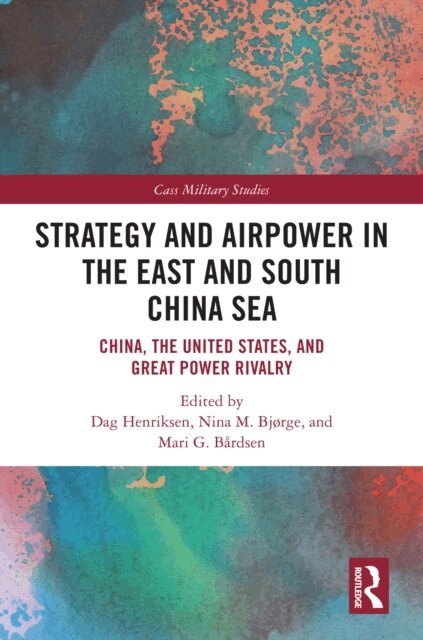
Strategy and Airpower in the East and South China Sea
China, the United States, and Great Power Rivalry
Av Mari G. Bardsen, Nina M. Bjorge m. fl.
E-bok, 2026
831 kr
Lägg i varukorg
This book examines the role of airpower in the great power rivalry between the United States (US) and the People's Republic of China (PRC) in the East and South China Sea over Taiwan.While the volume emphasizes the role of the US and the PRC, it also looks at the other regional powers with …
Strategy and Airpower in the East and South China Sea
China, the United States, and Great Power Rivalry
Av Mari G. Bardsen, Nina M. Bjorge m. fl.
E-bok, 2026
831 kr
Lägg i varukorg
This book examines the role of airpower in the great power rivalry between the United States (US) and the People's Republic of China (PRC) in the East and South China Sea over Taiwan.While the volume emphasizes the role of the US and the PRC, it also looks at the other regional powers with …
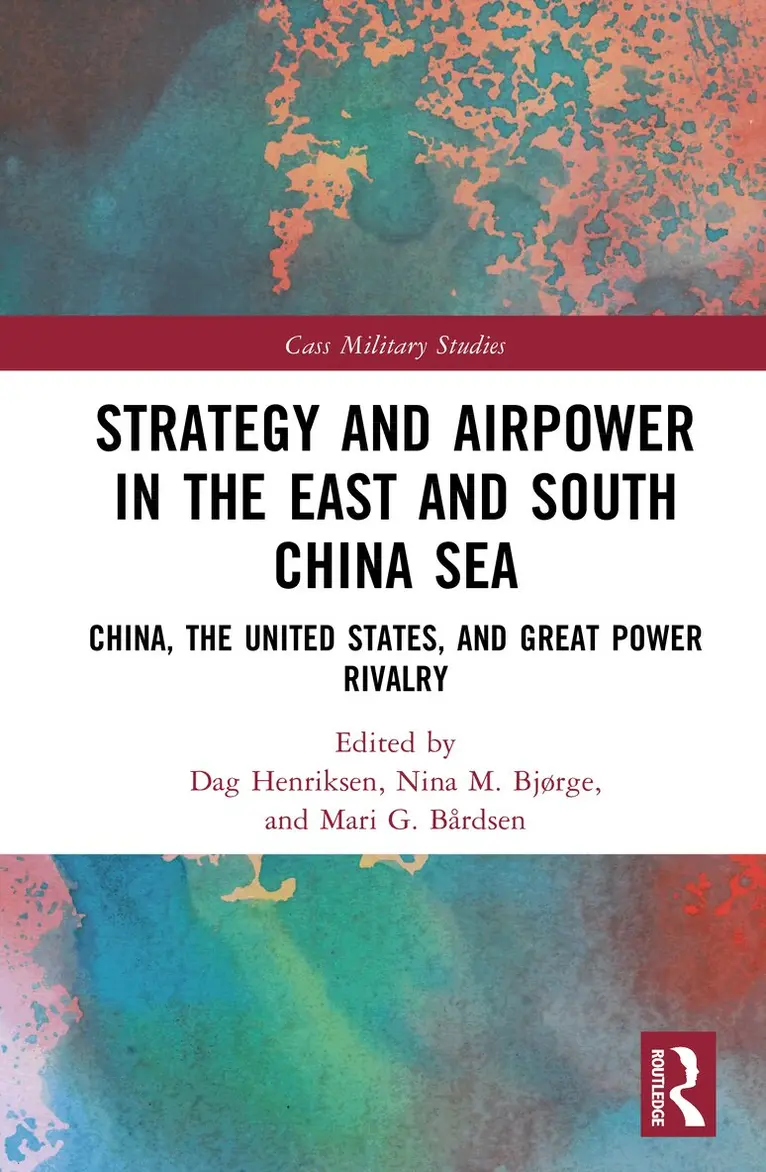
Strategy and Airpower in the East and South China Sea
China, the United States, and Great Power Rivalry
Av Dag Henriksen, Nina M. Bjørge m. fl.
Inbunden, 2026
2504 kr
Lägg i varukorg
This book examines the role of airpower in the great power rivalry between the United States (US) and the People’s Republic of China (PRC) in the East and South China Sea over Taiwan.While the volume emphasizes the role of the US and the PRC, it also looks at the other regional powers with …
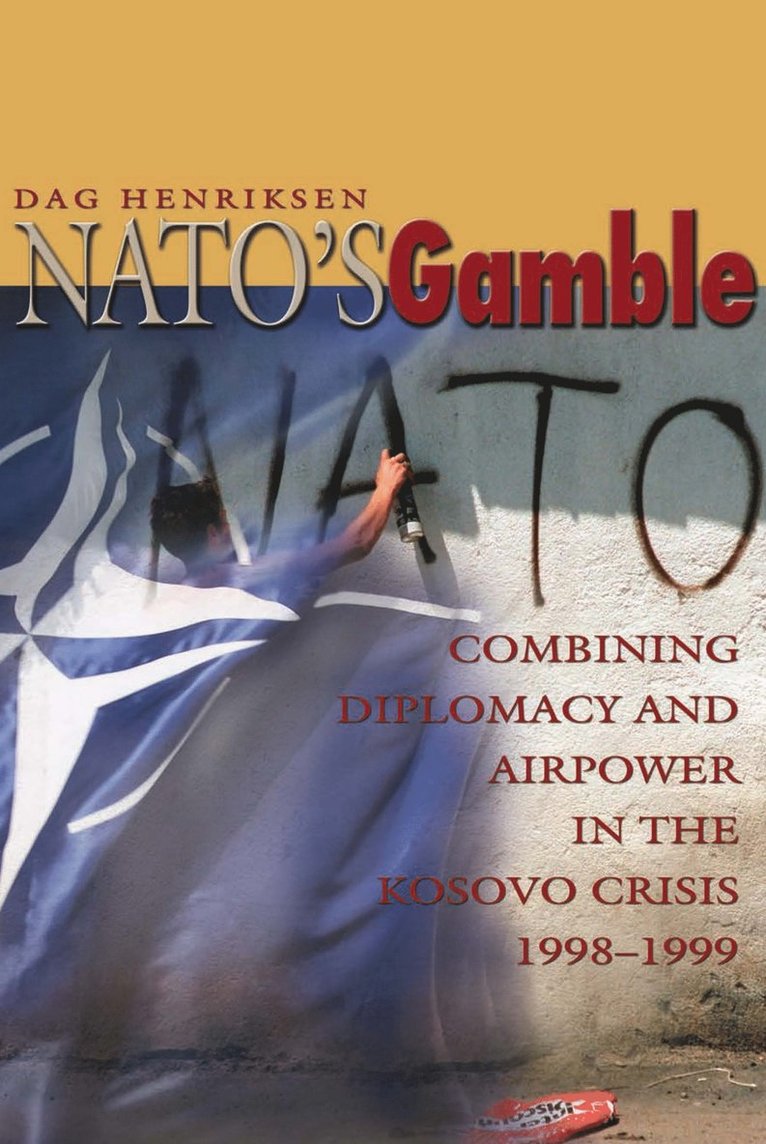
Nato'S Gamble
Combining Diplomacy and Airpower in the Kosovo Crisis, 1998-1999
Häftad, 2014
266 kr
Lägg i varukorg
In NATO’s Gamble, Henriksen discloses the origins and content of NATO’s strategic and conceptual thinking on how the use of force was to succeed politically in altering the behavior of the Federal Republic of Yugoslavia (FRY). The air campaign, known as Operation Allied Force, was the first war …
NATO's Gamble
Combining Diplomacy and Airpower in the Kosovo Crisis, 1998-1999
E-bok, 2013
355 kr
Lägg i varukorg
In this revealing work, Dag Henriksen discloses the origins and content of NATO''s strategic and conceptual thinking on how the use of force was to succeed politically in altering the behavior of the Federal Republic of Yugoslavia (FRY). The air campaign, known as Operation Allied Force, was the …