Dale B. Martin - Böcker
Visar alla böcker från författaren Dale B. Martin. Handla med fri frakt och snabb leverans.
9 produkter
9 produkter
302 kr
Skickas inom 7-10 vardagar
In this intriguing discussion of Paul's first letter to the Corinthians, Dale Martin contends that Paul's various disagreements with the Corinthians were the result of a fundamental conflict over the ideological construction of the human body.According to Martin, most Corinthian Christians and Paul himself saw the body as an entity that could be permeated by different pollutions. Other members of the Corinthian church, however, viewed the body as hierarchical—as a microcosm of the universe—and were not particularly concerned about body boundaries or pollution. These differing views of the human body (and also of the church as the body of Christ) led to differing opinions on a variety of subjects—including the role of rhetoric and philosophy in a hierarchical society, the eating of meat sacrificed to idols, prostitution, sexual desire and marriage, and the resurrection of the body. Martin explores these conflicts by drawing on ancient medical writings, modern anthropological approaches, and feminist and ideological methods of critical analysis. He shows how Paul's understanding of the body prevailed among the less well-educated inhabitants of the Roman Empire, who occupied relatively low socioeconomic levels. The minority who espoused the ideas of hierarchy, on the other hand, were usually of higher social status and were better educated. And it was along these same class lines, Martin argues, that the Corinthian church itself was divided.
398 kr
Tillfälligt slut
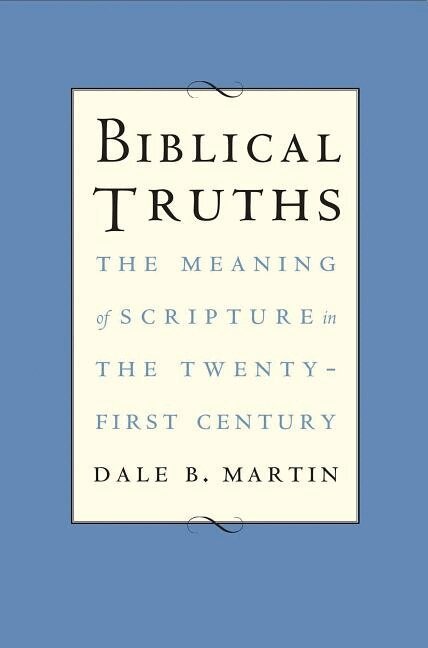
A leading biblical scholar’s landmark work challenges the historical realism that has dominated the discipline for more than two centuriesHow can a modern person, informed by science and history, continue to recite the traditional creeds and confessions of the Christian church? What does the Bible mean and how do we verify biblical truths? In this groundbreaking book, a leading biblical scholar urges readers to be more creative interpreters of biblical texts, mapping out an alternative way of reading that is not first and foremost about understanding what those texts would have meant for the original authors and readers. Limiting our study to the ancient meaning of the text, he argues, has produced either bad history, or bad theology, or both. One cannot derive robustly orthodox Christian doctrine or theology from a mere “historical” interpretation of the Bible. Martin offers instead theological readings of the New Testament that are faithful to Christian orthodoxy as generally understood, but without attempting a “foundationalist” understanding of the meaning of the text. His provocative and ambitious book demonstrates how theology and scripture can remain vital in the twenty-first century.
403 kr
Skickas inom 3-6 vardagar
Probing into numerous questions about gender and sexuality, Dale Martin delves into the biblical texts anew and unearths surprising findings. Avoiding preconceptions about ancient sexuality, he explores the ethics of desire and marriage and pays careful attention to the original meanings of words, especially those used as evidence of Paul's opposition to homosexuality. For example, after a remarkably faithful reading of the scriptural texts, Martin concludes that our contemporary obsession with marriage--and the whole search for the "right" sexual relationships--is antithetical to the message of the gospel. In all of these essays, however, Martin argues for engaging Scripture in a way that goes beyond the standard historical-critical questions and the assumptions of textual agency in order to find a faith that has no foundations other than Jesus Christ.
318 kr
Skickas inom 3-6 vardagar
For generations, most seminary teaching of the Bible has focused on the historical-critical method. While this method has been the standard in almost every seminary curriculum, the effects of this approach to Scripture have hardly been examined. From examining the biblical studies courses at ten different seminaries and divinity schools, Dale Martin learned what faculties were doing and what students were hearing. This book presents his discoveries, offering the best-ever inside look at the teaching of the Bible for ministry.Going beyond mere description, Martin argues for a new emphasis on interpreting Scripture within the context of church history and theology. Such a reading would be more theological, more integrated into the whole theological curriculum, and more theoretical (as it would focus on what's at stake in interpretation); however, Martin surprisingly argues, it would be more practical at the same time.
297 kr
Skickas inom 10-15 vardagar
The Roman author Pliny the Younger characterizes Christianity as “contagious superstition”; two centuries later the Christian writer Eusebius vigorously denounces Greek and Roman religions as vain and impotent “superstitions.” The term of abuse is the same, yet the two writers suggest entirely different things by “superstition.”Dale Martin provides the first detailed genealogy of the idea of superstition, its history over eight centuries, from classical Greece to the Christianized Roman Empire of the fourth century C.E. With illuminating reference to the writings of philosophers, historians, and medical teachers he demonstrates that the concept of superstition was invented by Greek intellectuals to condemn popular religious practices and beliefs, especially the belief that gods or other superhuman beings would harm people or cause disease. Tracing the social, political, and cultural influences that informed classical thinking about piety and superstition, nature and the divine, Inventing Superstition exposes the manipulation of the label of superstition in arguments between Greek and Roman intellectuals on the one hand and Christians on the other, and the purposeful alteration of the idea by Neoplatonic philosophers and Christian apologists in late antiquity.Inventing Superstition weaves a powerfully coherent argument that will transform our understanding of religion in Greek and Roman culture and the wider ancient Mediterranean world.
426 kr
Skickas inom 7-10 vardagar
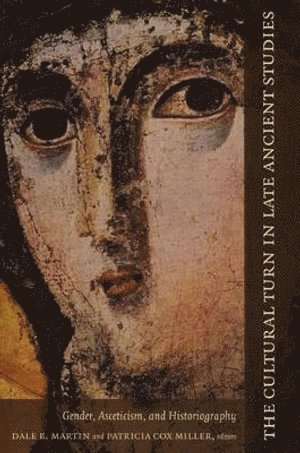
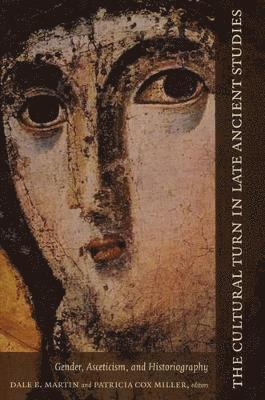
The essays in this provocative collection exemplify the innovations that have characterized the relatively new field of late ancient studies. Focused on civilizations clustered mainly around the Mediterranean and covering the period between roughly 100 and 700 CE, scholars in this field have brought history and cultural studies to bear on theology and religious studies. They have adopted the methods of the social sciences and humanities-particularly those of sociology, cultural anthropology, and literary criticism. By emphasizing cultural and social history and considerations of gender and sexuality, scholars of late antiquity have revealed the late ancient world as far more varied than had previously been imagined.The contributors investigate three key concerns of late ancient studies: gender, asceticism, and historiography. They consider Macrina’s scar, Mary’s voice, and the harlot’s body as well as Augustine, Jovinian, Gregory of Nazianzus, Julian, and Ephrem the Syrian. Whether examining how animal bodies figured as a means for understanding human passion and sexuality in the monastic communities of Egypt and Palestine or meditating on the almost modern epistemological crisis faced by Theodoret in attempting to overcome the barriers between the self and the wider world, these essays highlight emerging theoretical and critical developments in the field.Contributors. Daniel Boyarin, David Brakke, Virginia Burrus, Averil Cameron, Susanna Elm, James E. Goehring, Susan Ashbrook Harvey, David G. Hunter, Blake Leyerle, Dale B. Martin, Patricia Cox Miller, Philip Rousseau, Teresa M. Shaw, Maureen A. Tilley, Dennis E. Trout, Mark Vessey
313 kr
Skickas inom 5-8 vardagar
489 kr
Skickas inom 5-8 vardagar
Del 210 - Wissenschaftliche Untersuchungen zum Neuen Testament
Religion, Ethnicity and Identity in Ancient Galilee
A Region in Transition
Inbunden, Engelska, 2007
2 779 kr
Skickas inom 5-8 vardagar
Wer galt als 'Galiläer' und warum? Welche Kriterien werden in der Antike für diese Zuschreibung benutzt und was können archäologischen Quellen zur Klärung beitragen? Welche Bedeutung besaß Religion in diesem Gemenge? Die Autoren der 22 Artikel des Bandes greifen die neuesten Erkenntnisse aus Bibelwissenschaft, Archäologie, Rabbinic Studies, Numismatik, Epigrafik, Musik- und Literaturwissenschaft auf und leisten so einen wichtigen Beitrag nicht nur zur Erhellung des sozial- und kulturgeschichtlichen Hintergrunds der galiläischen Jesusbewegung und des entstehenden rabbinischen Judentums, sondern sie beleuchten zugleich das komplexe Wechselspiel zwischen indigenen Kulturen mit ihren Institutionen und Selbstdefinitionen sowie hellenistisch-römischem Einfluss im östlichen Mittelmeerbereich. Es zeigt sich, dass Galiläa seine Geheimnisse besonders dann zu entlocken sind, wenn man es als dynamische Region versteht, in der Ethnizität und Identität ihre Konturen in konstanter Bewegung und Gegenbewegung ausgebildet haben.