Dale K. Van Kley - Böcker
Visar alla böcker från författaren Dale K. Van Kley. Handla med fri frakt och snabb leverans.
8 produkter
8 produkter
1 338 kr
Skickas inom 10-15 vardagar
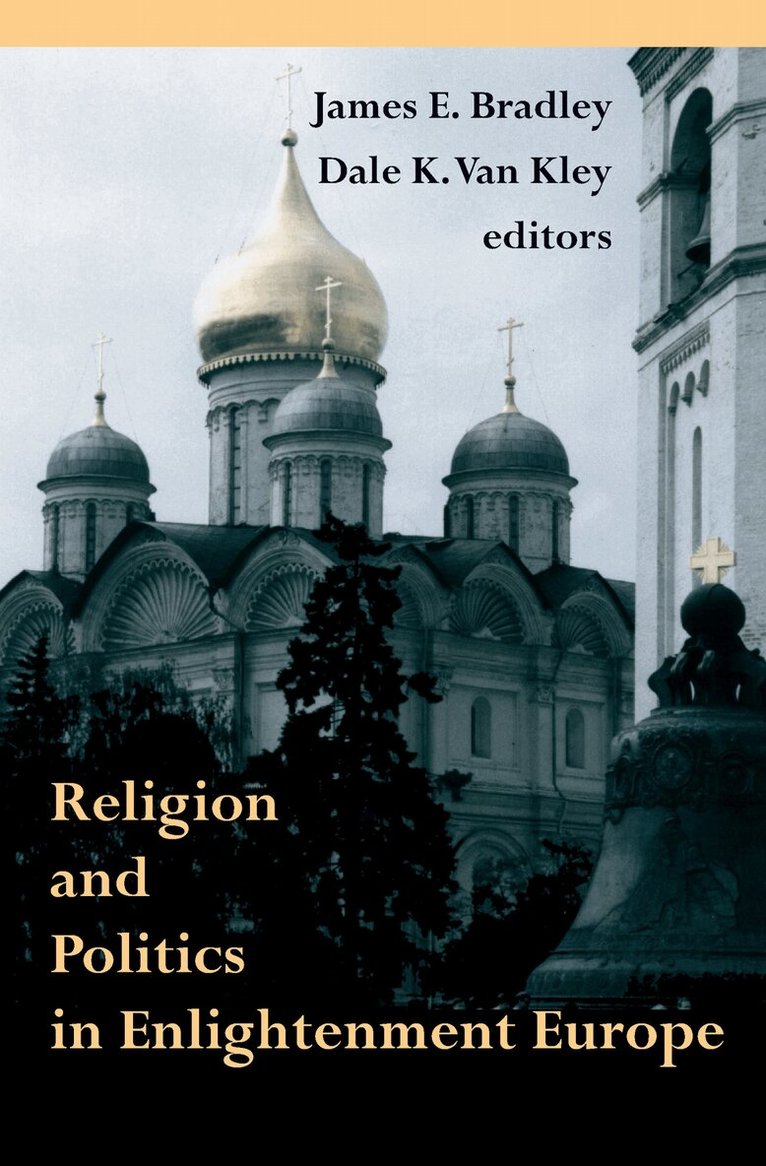
Religion and Politics in Enlightenment Europe, a collection of original essays from leading scholars, demonstrates that the collapse of the post-Reformation confessional state was more the result of religious dissent from within, much of it orthodox, than attacks of an anti-religious Enlightenment. In sharp contrast to the Reformation-era religious conflicts which tended to pit Protestant and Catholic confessions and states against each other, the eighteenth-century religious conflicts described in Religion and Politics in Enlightenment Europe took place within the various confessional establishments and states that founded and maintained them, such as Russian Orthodoxy in the East and the Anglican Establishment in England and Ireland.In the course of its analysis, Religion and Politics in Enlightenment Europe destroys the notion of any kind of privileged relationship between "religion" and political or social "reaction". This book reveals the religious roots of modern ideas of individual rights and limitations on government, as well as the imperative of political order and the need for social hierarchy. It also shows the impossibility of any purely secular treatment of eighteenth-century European political history or institutions.Based on fresh, primary research as well as a synthesis of secondary sources, Religion and Politics in Enlightenment Europe turns the familiar eighteenth century of the textbooks upside down and inside out, challenging the dominant narratives of secularization and inevitable conclusion in the French Revolution.
366 kr
Skickas inom 10-15 vardagar
Religion and Politics in Enlightenment Europe, a collection of original essays from leading scholars, demonstrates that the collapse of the post-Reformation confessional state was more the result of religious dissent from within, much of it orthodox, than attacks of an anti-religious Enlightenment. In sharp contrast to the Reformation-era religious conflicts which tended to pit Protestant and Catholic confessions and states against each other, the eighteenth-century religious conflicts described in Religion and Politics in Enlightenment Europe took place within the various confessional establishments and states that founded and maintained them, such as Russian Orthodoxy in the East and the Anglican Establishment in England and Ireland.In the course of its analysis, Religion and Politics in Enlightenment Europe destroys the notion of any kind of privileged relationship between "religion" and political or social "reaction". This book reveals the religious roots of modern ideas of individual rights and limitations on government, as well as the imperative of political order and the need for social hierarchy. It also shows the impossibility of any purely secular treatment of eighteenth-century European political history or institutions.Based on fresh, primary research as well as a synthesis of secondary sources, Religion and Politics in Enlightenment Europe turns the familiar eighteenth century of the textbooks upside down and inside out, challenging the dominant narratives of secularization and inevitable conclusion in the French Revolution.
Religious Origins of the French Revolution
From Calvin to the Civil Constitution, 1560-1791
Häftad, Engelska, 2000
590 kr
Skickas inom 5-8 vardagar
Although the French Revolution is associated with efforts to dechristianize the French state and citizens, it actually had long-term religious—even Christian—origins, claims Dale Van Kley in this controversial new book. Looking back at the two and a half centuries that preceded the revolution, Van Kley explores the diverse, often warring religious strands that influenced political events up to the revolution.Van Kley draws on a wealth of primary sources to show that French royal absolutism was first a product and then a casualty of religious conflict. On the one hand, the religious civil wars of the sixteenth century between the Calvinist and Catholic internationals gave rise to Bourbon divine-right absolutism in the seventeenth century. On the other hand, Jansenist-related religious conflicts in the eighteenth century helped to "desacralize" the monarchy and along with it the French Catholic clergy, which was closely identified with Bourbon absolutism. The religious conflicts of the eighteenth century also made a more direct contribution to the revolution, for they left a legacy of protopolitical and ideological parties (such as the Patriot party, a successor to the Jansenist party), whose rhetoric affected the content of revolutionary as well as counterrevolutionary political culture. Even in its dechristianizing phase, says Van Kley, revolutionary political culture was considerably more indebted to varieties of French Catholicism than it realized.
Reform Catholicism and the International Suppression of the Jesuits in Enlightenment Europe
Inbunden, Engelska
396 kr
Tillfälligt slut
1 088 kr
Skickas inom 3-6 vardagar
This book examines an unsuccessful assassination attempt against Louis XV of France and the trial of his assailant, Robert-Francois Damiens, revealing the beginnings of the French Revolution in the ecclesiastical controversies that dominated the Damiens affair. Originally published in 1984. The Princeton Legacy Library uses the latest print-on-demand technology to again make available previously out-of-print books from the distinguished backlist of Princeton University Press. These editions preserve the original texts of these important books while presenting them in durable paperback and hardcover editions. The goal of the Princeton Legacy Library is to vastly increase access to the rich scholarly heritage found in the thousands of books published by Princeton University Press since its founding in 1905.
2 725 kr
Skickas inom 3-6 vardagar
This book examines an unsuccessful assassination attempt against Louis XV of France and the trial of his assailant, Robert-Francois Damiens, revealing the beginnings of the French Revolution in the ecclesiastical controversies that dominated the Damiens affair. Originally published in 1984. The Princeton Legacy Library uses the latest print-on-demand technology to again make available previously out-of-print books from the distinguished backlist of Princeton University Press. These editions preserve the original texts of these important books while presenting them in durable paperback and hardcover editions. The goal of the Princeton Legacy Library is to vastly increase access to the rich scholarly heritage found in the thousands of books published by Princeton University Press since its founding in 1905.
1 542 kr
Skickas inom 10-15 vardagar
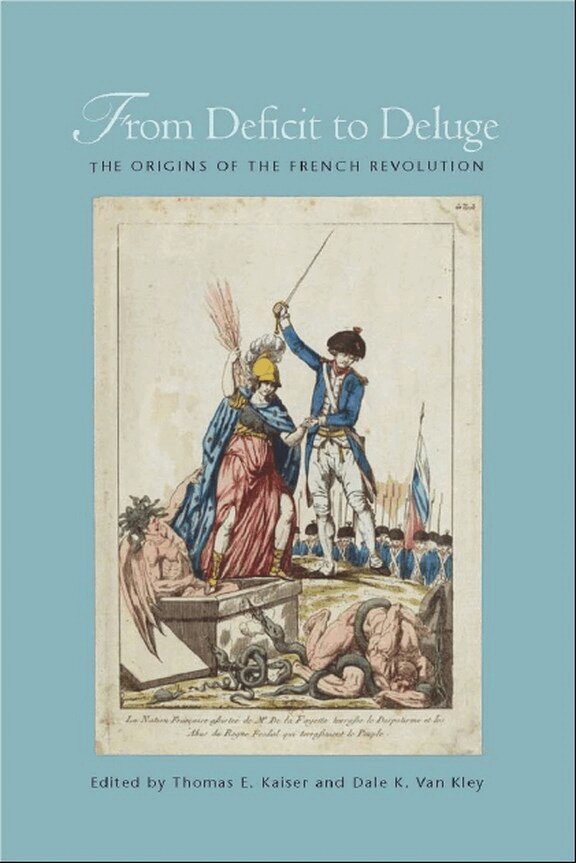
From Deficit to Deluge takes stock of shifts in scholarly investigation of the origins of French Revolution. During the last decade, scholars have moved beyond "revisionist" historians of the 1970s, who highlighted the monarchy's degeneration into despotism, to explore related conflicts in the realms of finance, social relations, religion, diplomacy, the Enlightenment, and colonial policy. In this book, seven established authorities explore some of these critical intersections, and together they make clear the role that unresolved tensions in these realms played in the essentially political narrative told by post-Marxian revisionist historiography.While each chapter of From Deficit to Deluge focuses upon one site of contention—fiscal, social, religious, diplomatic, ideological, and colonial—they all help to explain how long-standing structural problems of the Old Regime caused a fairly "normal" fiscal crisis to metastasize into a revolution. As the editors show in their introduction and conclusion, the growing democratization of politics sparked by the monarchy's clumsy efforts to solve the fiscal crisis put these wide-ranging problems at the epicenter of political debate, thereby sapping the foundations of royal authority and the social hierarchy.
372 kr
Skickas inom 7-10 vardagar
From Deficit to Deluge takes stock of shifts in scholarly investigation of the origins of French Revolution. During the last decade, scholars have moved beyond "revisionist" historians of the 1970s, who highlighted the monarchy's degeneration into despotism, to explore related conflicts in the realms of finance, social relations, religion, diplomacy, the Enlightenment, and colonial policy. In this book, seven established authorities explore some of these critical intersections, and together they make clear the role that unresolved tensions in these realms played in the essentially political narrative told by post-Marxian revisionist historiography.While each chapter of From Deficit to Deluge focuses upon one site of contention—fiscal, social, religious, diplomatic, ideological, and colonial—they all help to explain how long-standing structural problems of the Old Regime caused a fairly "normal" fiscal crisis to metastasize into a revolution. As the editors show in their introduction and conclusion, the growing democratization of politics sparked by the monarchy's clumsy efforts to solve the fiscal crisis put these wide-ranging problems at the epicenter of political debate, thereby sapping the foundations of royal authority and the social hierarchy.