James E. Bradley - Böcker
Visar alla böcker från författaren James E. Bradley. Handla med fri frakt och snabb leverans.
5 produkter
5 produkter
1 341 kr
Skickas inom 10-15 vardagar
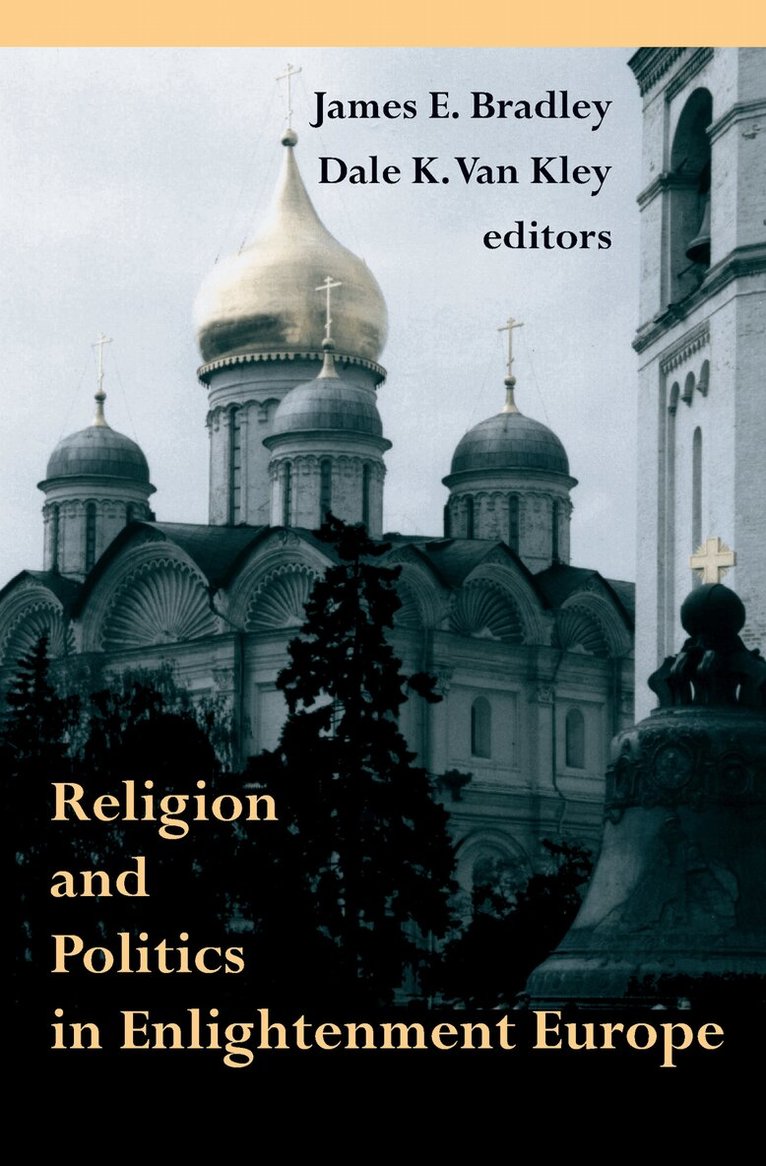
Religion and Politics in Enlightenment Europe, a collection of original essays from leading scholars, demonstrates that the collapse of the post-Reformation confessional state was more the result of religious dissent from within, much of it orthodox, than attacks of an anti-religious Enlightenment. In sharp contrast to the Reformation-era religious conflicts which tended to pit Protestant and Catholic confessions and states against each other, the eighteenth-century religious conflicts described in Religion and Politics in Enlightenment Europe took place within the various confessional establishments and states that founded and maintained them, such as Russian Orthodoxy in the East and the Anglican Establishment in England and Ireland.In the course of its analysis, Religion and Politics in Enlightenment Europe destroys the notion of any kind of privileged relationship between "religion" and political or social "reaction". This book reveals the religious roots of modern ideas of individual rights and limitations on government, as well as the imperative of political order and the need for social hierarchy. It also shows the impossibility of any purely secular treatment of eighteenth-century European political history or institutions.Based on fresh, primary research as well as a synthesis of secondary sources, Religion and Politics in Enlightenment Europe turns the familiar eighteenth century of the textbooks upside down and inside out, challenging the dominant narratives of secularization and inevitable conclusion in the French Revolution.
367 kr
Skickas inom 10-15 vardagar
Religion and Politics in Enlightenment Europe, a collection of original essays from leading scholars, demonstrates that the collapse of the post-Reformation confessional state was more the result of religious dissent from within, much of it orthodox, than attacks of an anti-religious Enlightenment. In sharp contrast to the Reformation-era religious conflicts which tended to pit Protestant and Catholic confessions and states against each other, the eighteenth-century religious conflicts described in Religion and Politics in Enlightenment Europe took place within the various confessional establishments and states that founded and maintained them, such as Russian Orthodoxy in the East and the Anglican Establishment in England and Ireland.In the course of its analysis, Religion and Politics in Enlightenment Europe destroys the notion of any kind of privileged relationship between "religion" and political or social "reaction". This book reveals the religious roots of modern ideas of individual rights and limitations on government, as well as the imperative of political order and the need for social hierarchy. It also shows the impossibility of any purely secular treatment of eighteenth-century European political history or institutions.Based on fresh, primary research as well as a synthesis of secondary sources, Religion and Politics in Enlightenment Europe turns the familiar eighteenth century of the textbooks upside down and inside out, challenging the dominant narratives of secularization and inevitable conclusion in the French Revolution.
Religion, Revolution and English Radicalism
Non-conformity in Eighteenth-Century Politics and Society
Häftad, Engelska, 2002
699 kr
Skickas inom 7-10 vardagar
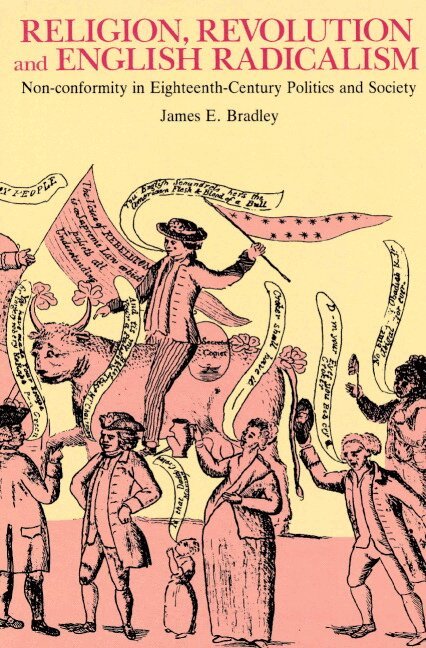
In the age of the American Revolution, the political issues surrounding John Wilkes, the colonies, and parliamentary reform agitated the nation, and recent studies of party ideology and voting behavior have shown how these national issues divided England. But subsequent work on the peerage and Anglican political theory has depicted a more placid, deferential populace. This book engages the discussion by drawing attention to the social and political activities of the English Dissenters. The Nonconformists' legal standing, social status, and political behavior help illumine a number of unexamined causes for both the social stability and the political stresses of Hanoverian England. Legal inequities provoked strong opposition to the government's American policy from the dissenting elite, and while the ministers' publications suggest the depth of popular discontent, previous accounts have been unable to show how popular sentiment was transformed into radical behavior. By comparing sermons, political pamphlets, and election ephemera to poll books, city directories, and baptismal registers, this book offers an integrated approach to the study of ideology and behavior.
411 kr
Skickas inom 3-6 vardagar
345 kr
Skickas inom 3-6 vardagar