Dale R. Herspring – författare
Visar alla böcker från författaren Dale R. Herspring. Handla med fri frakt och snabb leverans.
7 produkter
7 produkter
328 kr
Skickas inom 10-15 vardagar
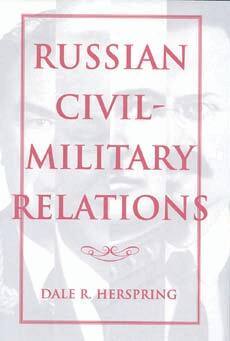
". . . a volume that provides both solid historical background for the novice reader and provocative and thoughtful material for the more advanced scholar. It should find wide classroom use at all levels and will be an important addition to the bookshelf of any analyst of post-Soviet security affairs." —Slavic Review"The history is both fascinating and timely . . ." —European Security"When military reform returns to its deservedly prominent place in the Russian political agenda, Herspring's book will offer invaluable guidance." —Mark von HagenDale Herspring analyzes three key periods of change in civil-military relations in the Soviet Union and postcommunist Russia: the Bolshevik construction of the communist Red Army in the 1920s; the era of perestroika, when Mikhail Gorbachev attempted to implement a more benign military doctrine and force posture; and the Yeltsin era, when a new civilian and military leadership set out to restructure civil-military relations. The book concludes with a timely discussion of the relationship of the military to the current political struggle in Russia.
2 113 kr
Skickas inom 10-15 vardagar
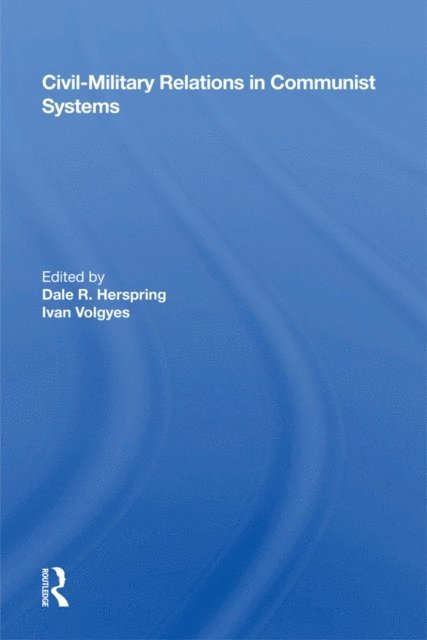
This book represents the first attempt to deal with the problem of how to conceptualize the civil-military relations of communist systems within a common intellectual framework. The opening chapters present three major constructs originally designed for analyzing civil-military relations in the USSR: the interest group approach, the institutional congruence approach, and the participatory model. In subsequent chapters the utility of these approaches is tested against a wide variety of communist systems, including those of Cuba, the USSR, China, Romania, Hungary, the GDR, and Poland. In probing these issues for the first time, the authors shed considerable light on the transnational differences and similarities among communist systems, and the dynamics of civil-military relations in all communist systems.
618 kr
Skickas inom 10-15 vardagar
This book represents the first attempt to deal with the problem of how to conceptualize the civil-military relations of communist systems within a common intellectual framework. It presents major constructs originally designed for analyzing civil-military relations in the USSR. .
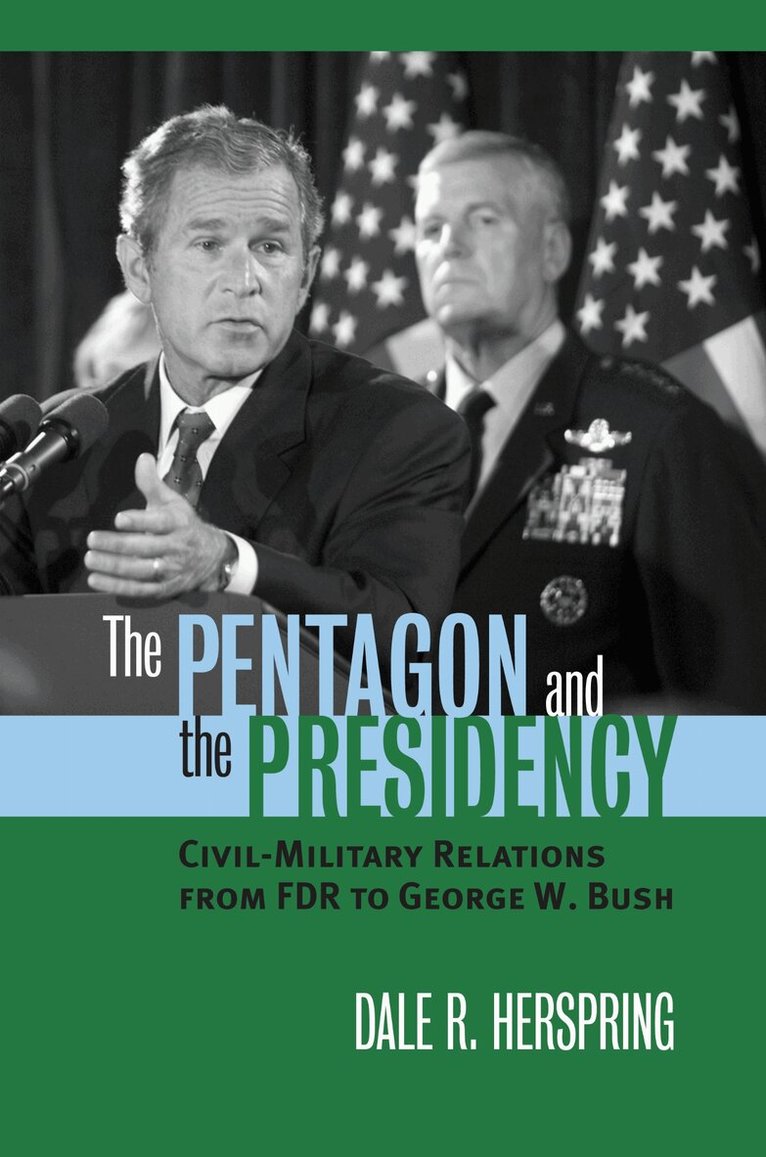
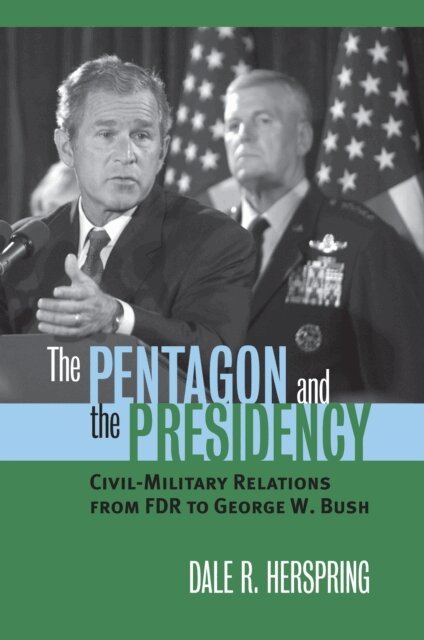
Pentagon and the Presidency
Civil-military Relations from FDR to George W. Bush
Häftad, Engelska, 2005
448 kr
Skickas inom 10-15 vardagar
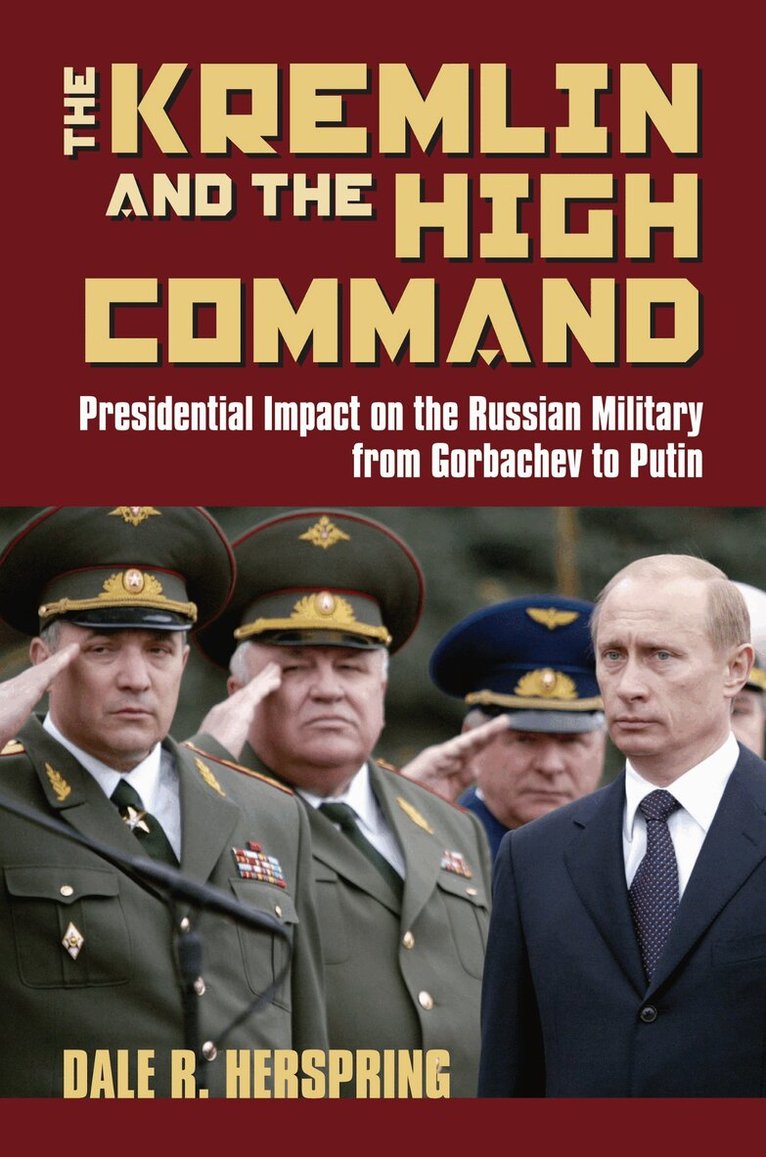
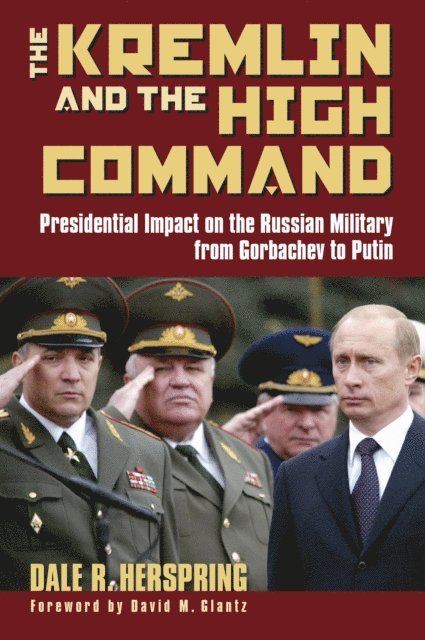
Kremlin and the High Command
Presidential Impact on the Russian Military from Gorbachev to Putin
Häftad, Engelska, 2006
296 kr
Skickas inom 10-15 vardagar
Choice Outstanding TitleThroughout its existence, the Red Army was viewed as a formidable threat. By the end of the Cold War, however, it had become the weakest link in the Soviet Union’s power structure. Always subordinate to the Communist Party, the military in 1991 suddenly found itself answering instead to the president of a democratic state. Dale Herspring closely examines how that relationship influenced the military’s viability in the new Russian Federation.Herspring’s book is the first to assess the relationship between the Russian military and the political leadership under Presidents Mikhail Gorbachev, Boris Yeltsin, and Vladimir Putin. He depicts an outmoded and demoralized military force still struggling to free itself from Cold War paradigms, while failing to confront not only debacles in Afghanistan and Chechnya but also a rise in crime and corruption within the ranks. He reveals how Gorbachev neglected the military to save Russia from internal collapse and Yeltsin reneged on continuing promises of support. And, while Putin claims a better understanding of the armed forces, he has severely tightened his control over the military while monitoring its struggle toward modernization.Herspring argues that presidential leadership—or a significant lack thereof—has been the key variable determining the kind of military Russia puts in the field. It has been up to the president to ensure that the high command makes a successful transition to the new polity—otherwise combat readiness will decline and generals and admirals could become politicized. By focusing on how the high command has reacted to each president’s decisions and leadership style, Herspring shows that, in spite of the continued importance of the military’s bureaucratic structure, personality factors have assumed a much more important role than in the past.The Kremlin and the High Command provides the most complete analysis to date of the Russian president’s influence on the Russian officer corps, the soldiers they lead, and their army’s combat readiness. Shedding light on the chaos that has plagued the USSR and Russia over the past 25 years, it also suggests how the often fraught relationship between the president and the high command must evolve if the Russian Federation is to evolve into a truly democratic nation.
695 kr
Skickas inom 10-15 vardagar
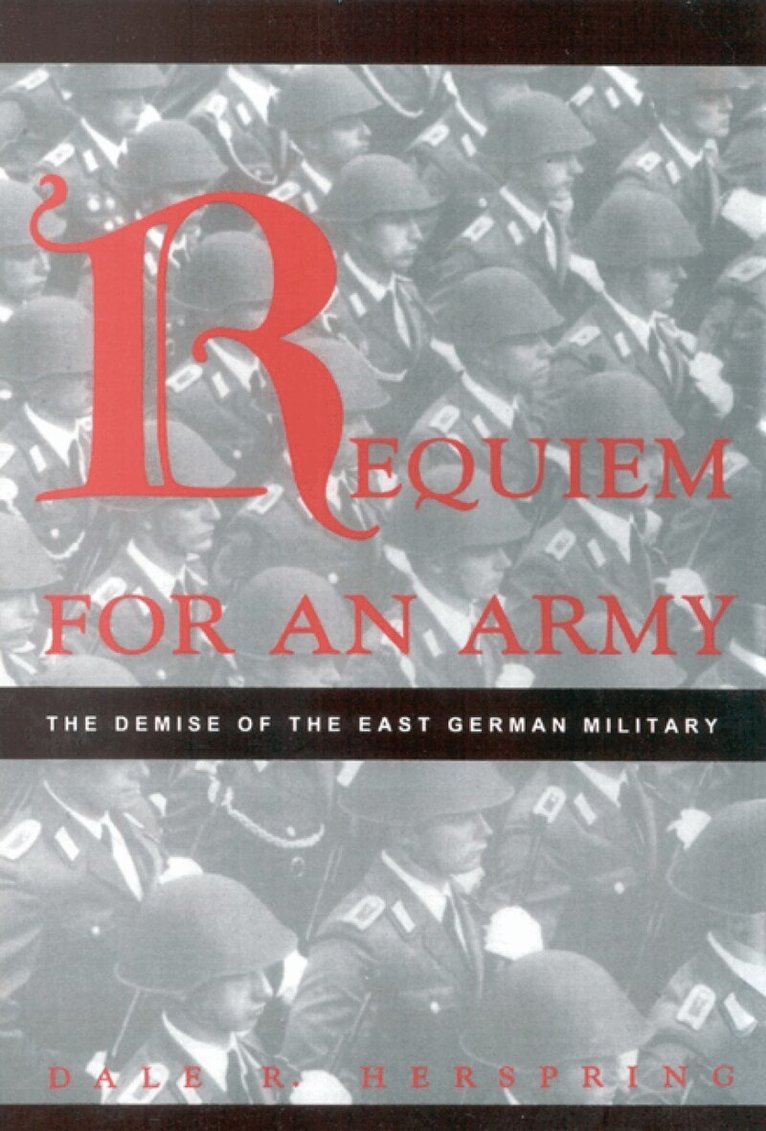
Building on a strong foundation of primary sources, this unique study traces the role of East Germany's military (NVA) in the country's unification with West Germany. Utilizing interviews with and questionnaires from NVA officers, Herspring unravels the puzzle of the NVA's decision against using force to save the political system it was sworn to serve. The author also examines the integration of a select minority of officers and NCOs into the Bundeswehr. Illuminating the problems encountered by the Bundeswehr as it incorporated these individuals, Herspring constructs an ideal type of officer in one of the most politicized and tightly controlled of all communist militaries. His findings will be invaluable for all military-political specialists and for anyone interested in the process of transition from authoritarian/totalitarian to democratic systems.
665 kr
Tillfälligt slut
Dale R. Herspring considers the factors that allow some civilian and military organizations to operate more productively in a political context than others, bringing into comparative study for the first time the military organizations of the U.S., Russia, Germany, and Canada. Refuting the work of scholars such as Samuel P. Huntington and Michael C. Desch, Civil-Military Relations and Shared Responsibility approaches civil-military relations from a new angle, military culture, arguing that the optimal form of civil-military relations is one of shared responsibility between the two groups. Herspring outlines eight factors that contribute to conditions that promote and support shared responsibility among civilian officials and the military, including such prerequisites as civilian leaders not interfering in the military's promotion process and civilian respect for military symbols and traditions. He uses these indicators in his comparative treatment of the U.S., Russian, German, and Canadian militaries. Civilian authorities are always in charge and the decision on how to treat the military is a civilian decision.However, Herspring argues, failure by civilians to respect military culture will antagonize senior military officials, who will feel less free to express their views, thus depriving senior civilian officials, most of whom have no military experience, of the expert advice of those most capable of assessing the far-reaching forms of violence. This issue of civilian respect for military culture and operations plays out in Herspring's country case studies. Scholars of civil-military relations will find much to debate in Herspring's framework, while students of civil-military and defense policy will appreciate Herspring's brief historical tour of each countries' post-World War II political and policy landscapes.