Dale W. Tomich - Böcker
Visar alla böcker från författaren Dale W. Tomich. Handla med fri frakt och snabb leverans.
15 produkter
15 produkter
1 610 kr
Skickas inom 5-8 vardagar
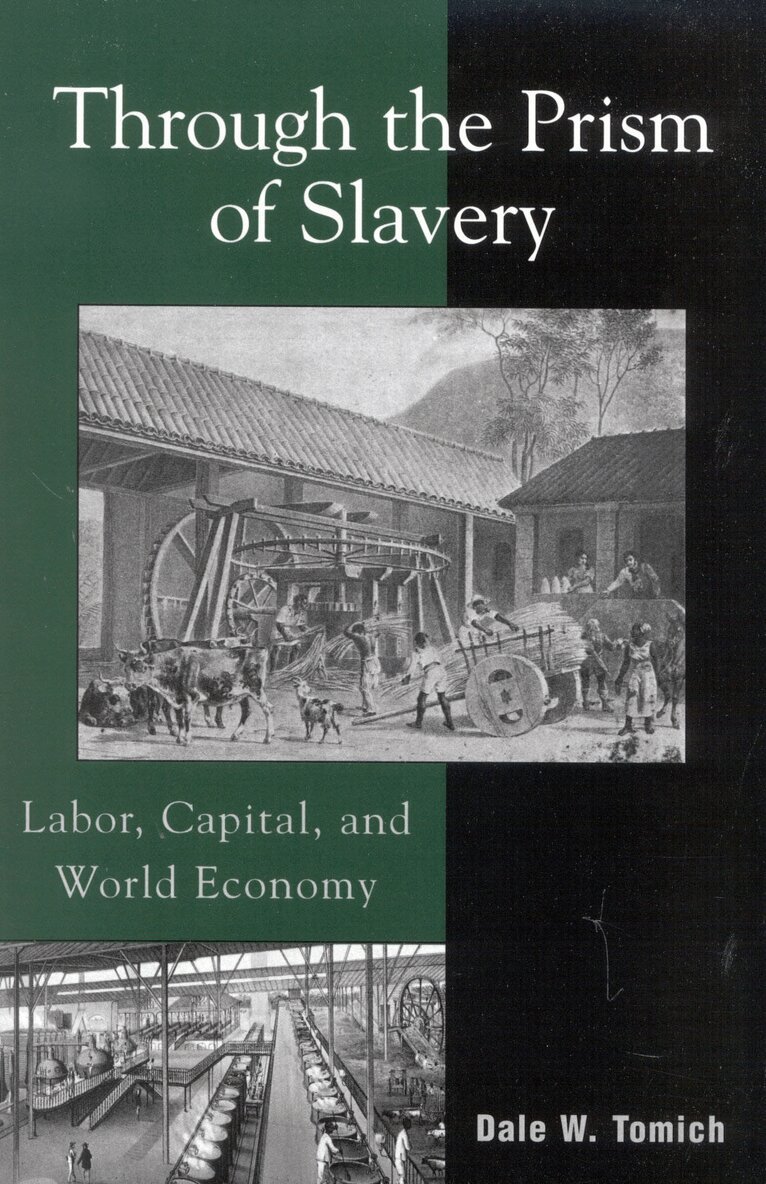
In this thoughtful book, Dale W. Tomich explores the contested relationship between slavery and capitalism. Tracing slavery's integral role in the formation of a capitalist world economy, he reinterprets the development of the world economy through the "prism of slavery." Through a sustained critique of Marxism, world-systems theory, and new economic history, Tomich develops an original conceptual framework for answering theoretical and historical questions about the nexus between slavery and the world economy. The author explores how particular slave systems were affected by their integration into the world market, the international division of labor, and the interstate system. He further examines the ways that the particular "local" histories of such slave regimes illuminate processes of world economic change. His deft use of specific New World examples of slave production as local sites of global transformation highlights the influence of specific geographies and local agency in shaping different slave zones. Tomich's cogent analysis of the struggles over the organization of work and labor discipline in the French West Indian colony of Martinique vividly illustrates the ways that day-to-day resistance altered the relationship between master and slave, precipitated crises in sugar cultivation, and created the local conditions for the transition to a post-slavery economy and society.
637 kr
Skickas inom 5-8 vardagar
In this thoughtful book, Dale W. Tomich explores the contested relationship between slavery and capitalism. Tracing slavery's integral role in the formation of a capitalist world economy, he reinterprets the development of the world economy through the "prism of slavery." Through a sustained critique of Marxism, world-systems theory, and new economic history, Tomich develops an original conceptual framework for answering theoretical and historical questions about the nexus between slavery and the world economy. The author explores how particular slave systems were affected by their integration into the world market, the international division of labor, and the interstate system. He further examines the ways that the particular "local" histories of such slave regimes illuminate processes of world economic change. His deft use of specific New World examples of slave production as local sites of global transformation highlights the influence of specific geographies and local agency in shaping different slave zones. Tomich's cogent analysis of the struggles over the organization of work and labor discipline in the French West Indian colony of Martinique vividly illustrates the ways that day-to-day resistance altered the relationship between master and slave, precipitated crises in sugar cultivation, and created the local conditions for the transition to a post-slavery economy and society.
1 088 kr
Skickas inom 5-8 vardagar
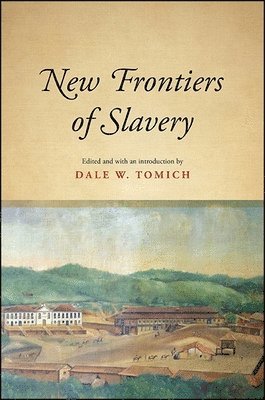
Essays challenging conventional understandings of the slave economy of the nineteenth century.The essays presented in New Frontiers of Slavery represent new analytical and interpretive approaches to the crisis of Atlantic slavery during the nineteenth century. By treating slavery within the framework of the modern world economy, they call attention to new zones of slave production that were formed as part of processes of global economic and political restructuring. Chapters by a group of international historians, economists, and sociologists examine both the global dynamics of the new slavery, and various aspects of economy-society and master-slave relations in the new zones. They emphasize the ways in which certain slave regimes, particularly in Cuba and Brazil, were formed as specific local responses to global processes, industrialization, urbanization, market integration, the formation of national states, and the emergence of liberal ideologies and institutions. These essays thus challenge conventional understandings of slavery, which often regard it as incompatible with modernity.This book is freely available in an open access edition thanks to Knowledge Unlatched – an initiative that provides libraries and institutions with a centralized platform to support OA collections and from leading publishing houses and OA initiatives. Learn more at the Knowledge Unlatched website at: https://www.knowledgeunlatched.org/, and access the book online at the SUNY Open Access Repository at https://soar.suny.edu/handle/20.500.12648/1707.
394 kr
Tillfälligt slut
Essays challenging conventional understandings of the slave economy of the nineteenth century.The essays presented in New Frontiers of Slavery represent new analytical and interpretive approaches to the crisis of Atlantic slavery during the nineteenth century. By treating slavery within the framework of the modern world economy, they call attention to new zones of slave production that were formed as part of processes of global economic and political restructuring. Chapters by a group of international historians, economists, and sociologists examine both the global dynamics of the new slavery, and various aspects of economy-society and master-slave relations in the new zones. They emphasize the ways in which certain slave regimes, particularly in Cuba and Brazil, were formed as specific local responses to global processes, industrialization, urbanization, market integration, the formation of national states, and the emergence of liberal ideologies and institutions. These essays thus challenge conventional understandings of slavery, which often regard it as incompatible with modernity.This book is freely available in an open access edition thanks to Knowledge Unlatched – an initiative that provides libraries and institutions with a centralized platform to support OA collections and from leading publishing houses and OA initiatives. Learn more at the Knowledge Unlatched website at: https://www.knowledgeunlatched.org/, and access the book online at the SUNY Open Access Repository at https://soar.suny.edu/handle/20.500.12648/1707.
449 kr
Tillfälligt slut
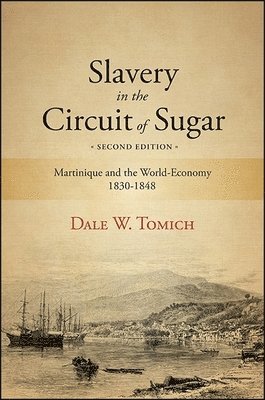
Traces the historical development of slave labor and plantation agriculture in nineteenth-century Martinique.A classic text long out of print, Slavery in the Circuit of Sugar traces the historical development of slave labor and plantation agriculture in Martinique during the period immediately preceding slave emancipation in 1848. Interpreting these events against the broader background of the world-economy, Dale W. Tomich analyzes the importance of topics such as British hegemony in the nineteenth century, related developments of the French economy, and competition from European beet sugar producers. He shows how slaves' adaptation-and resistance-to changing working conditions transformed the plantation labor regime and the very character of slavery itself. Based on archival sources in France and Martinique, Slavery in the Circuit of Sugar offers a vivid reconstruction of the complex and contradictory interrelations among the world market, the material processes of sugar production, and the social relations of slavery. In this second edition, Tomich includes a new introduction in which he offers an explicit discussion of the methodological and theoretical issues entailed in developing and extending the world-systems perspective and clarifies the importance of the approach for the study of particular histories.This book is freely available in an open access edition thanks to Knowledge Unlatched-an initiative that provides libraries and institutions with a centralized platform to support OA collections and from leading publishing houses and OA initiatives. Learn more at the Knowledge Unlatched website at https://www.knowledgeunlatched.org/.
1 513 kr
Skickas inom 3-6 vardagar
Traces the historical development of slave labor and plantation agriculture in nineteenth-century Martinique.A classic text long out of print, Slavery in the Circuit of Sugar traces the historical development of slave labor and plantation agriculture in Martinique during the period immediately preceding slave emancipation in 1848. Interpreting these events against the broader background of the world-economy, Dale W. Tomich analyzes the importance of topics such as British hegemony in the nineteenth century, related developments of the French economy, and competition from European beet sugar producers. He shows how slaves' adaptation-and resistance-to changing working conditions transformed the plantation labor regime and the very character of slavery itself. Based on archival sources in France and Martinique, Slavery in the Circuit of Sugar offers a vivid reconstruction of the complex and contradictory interrelations among the world market, the material processes of sugar production, and the social relations of slavery. In this second edition, Tomich includes a new introduction in which he offers an explicit discussion of the methodological and theoretical issues entailed in developing and extending the world-systems perspective and clarifies the importance of the approach for the study of particular histories.This book is freely available in an open access edition thanks to Knowledge Unlatched-an initiative that provides libraries and institutions with a centralized platform to support OA collections and from leading publishing houses and OA initiatives. Learn more at the Knowledge Unlatched website at https://www.knowledgeunlatched.org/.
394 kr
Tillfälligt slut
Sheds new light on both pro and antislavery politics in the nineteenth-century Americas.The creation of new frontiers of slave commodity production and the expansion and intensification of slavery in Brazil, Cuba, and the southern United States were an integral part of the expansion of the world economy during the nineteenth century. Beginning from this vantage point, The Politics of the Second Slavery brings together a group of international scholars to reinterpret pro- and antislavery politics both globally and nationally as part of the forces that were restructuring Atlantic slavery. Individual chapters shed new light on the decolonization and nationalization of slavery in the Americas, the politics of proslavery elites both within particular countries and across the Atlantic region, the abolition of the international slave trade, and slave resistance.
1 088 kr
Tillfälligt slut
Sheds new light on both pro and antislavery politics in the nineteenth-century Americas.The creation of new frontiers of slave commodity production and the expansion and intensification of slavery in Brazil, Cuba, and the southern United States were an integral part of the expansion of the world economy during the nineteenth century. Beginning from this vantage point, The Politics of the Second Slavery brings together a group of international scholars to reinterpret pro- and antislavery politics both globally and nationally as part of the forces that were restructuring Atlantic slavery. Individual chapters shed new light on the decolonization and nationalization of slavery in the Americas, the politics of proslavery elites both within particular countries and across the Atlantic region, the abolition of the international slave trade, and slave resistance.
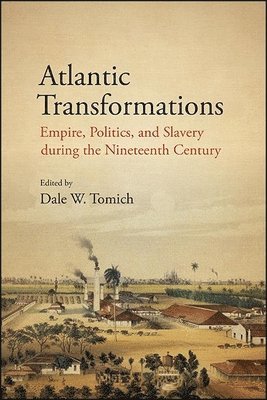
Atlantic Transformations
Empire, Politics, and Slavery during the Nineteenth Century
Häftad, Engelska, 2021
454 kr
Skickas inom 5-8 vardagar
Calls attention to the political, economic, and cultural interdependence and interaction of global and local forces shaping the Atlantic world of the nineteenth century.This book presents a new approach to nineteenth-century Atlantic history by extending the analytical perspective of the second slavery to questions of empire, colonialism, and slavery. With a focus on Latin America, Brazil, the Spanish Caribbean, and the United States, international scholars examine relations among empires, between empires and colonies, and within colonies as parts of processes of global economic and political restructuring. By treating metropolis-colony relations within the framework of the modern world-economy, the contributors call attention to the political, economic, and cultural interdependence and interaction of global and local forces shaping the Atlantic world. They reinterpret as specific local responses to global processes the conflicts between empires, within imperial relations, the formation of national states, the creation of new zones of agricultural production and the decline of old ones, and the emergence of liberal ideologies and institutions.
Atlantic Transformations
Empire, Politics, and Slavery during the Nineteenth Century
Inbunden, Engelska, 2020
1 499 kr
Skickas inom 3-6 vardagar
Calls attention to the political, economic, and cultural interdependence and interaction of global and local forces shaping the Atlantic world of the nineteenth century.This book presents a new approach to nineteenth-century Atlantic history by extending the analytical perspective of the second slavery to questions of empire, colonialism, and slavery. With a focus on Latin America, Brazil, the Spanish Caribbean, and the United States, international scholars examine relations among empires, between empires and colonies, and within colonies as parts of processes of global economic and political restructuring. By treating metropolis-colony relations within the framework of the modern world-economy, the contributors call attention to the political, economic, and cultural interdependence and interaction of global and local forces shaping the Atlantic world. They reinterpret as specific local responses to global processes the conflicts between empires, within imperial relations, the formation of national states, the creation of new zones of agricultural production and the decline of old ones, and the emergence of liberal ideologies and institutions.
1 499 kr
Skickas inom 3-6 vardagar
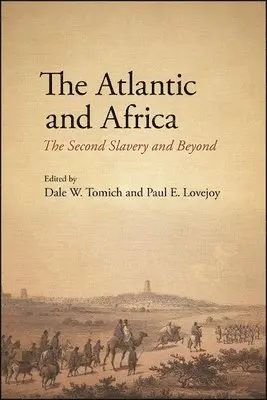
Traces the inner connections between the second slavery in the Americas, slavery in Africa, the abolition of the Atlantic slave trade, and the "Great Transformation" of the nineteenth century world economy.The Atlantic and Africa breaks new ground by exploring the connections between two bodies of scholarship that have developed separately from one another. On the one hand, the "second slavery" perspective that has reinterpreted the relation of Atlantic slavery and capitalism by emphasizing the extraordinary expansion of new frontiers of slave commodity production and their role in the economic, social, and political transformations of the nineteenth-century world-economy. On the other hand, Africanist scholarship that has established the importance of slavery and slave trading in Africa to the political, economic and social organization of African societies during the nineteenth century. Taken together, these two movements enable us to delineate the processes forming the capitalist world-economy, establish its specific geographical and historical structure, and reintegrates Africa into the transformations in the world economy. This volume explores this paradigm at diverse levels ranging from state formation and the reorganization of world markets to the creation of new social roles and identities.
611 kr
Skickas inom 3-6 vardagar
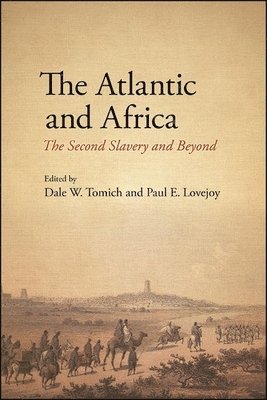
Traces the inner connections between the second slavery in the Americas, slavery in Africa, the abolition of the Atlantic slave trade, and the "Great Transformation" of the nineteenth century world economy.The Atlantic and Africa breaks new ground by exploring the connections between two bodies of scholarship that have developed separately from one another. On the one hand, the "second slavery" perspective that has reinterpreted the relation of Atlantic slavery and capitalism by emphasizing the extraordinary expansion of new frontiers of slave commodity production and their role in the economic, social, and political transformations of the nineteenth-century world-economy. On the other hand, Africanist scholarship that has established the importance of slavery and slave trading in Africa to the political, economic and social organization of African societies during the nineteenth century. Taken together, these two movements enable us to delineate the processes forming the capitalist world-economy, establish its specific geographical and historical structure, and reintegrates Africa into the transformations in the world economy. This volume explores this paradigm at diverse levels ranging from state formation and the reorganization of world markets to the creation of new social roles and identities.
1 520 kr
Skickas inom 10-15 vardagar
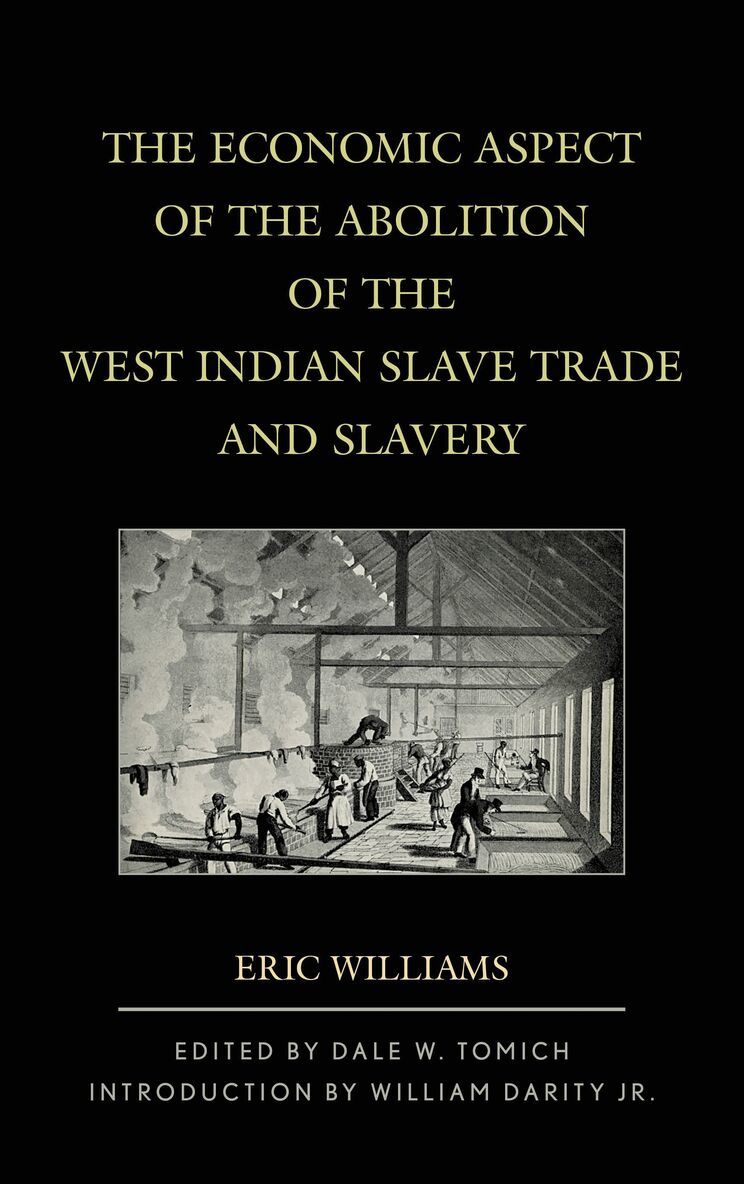
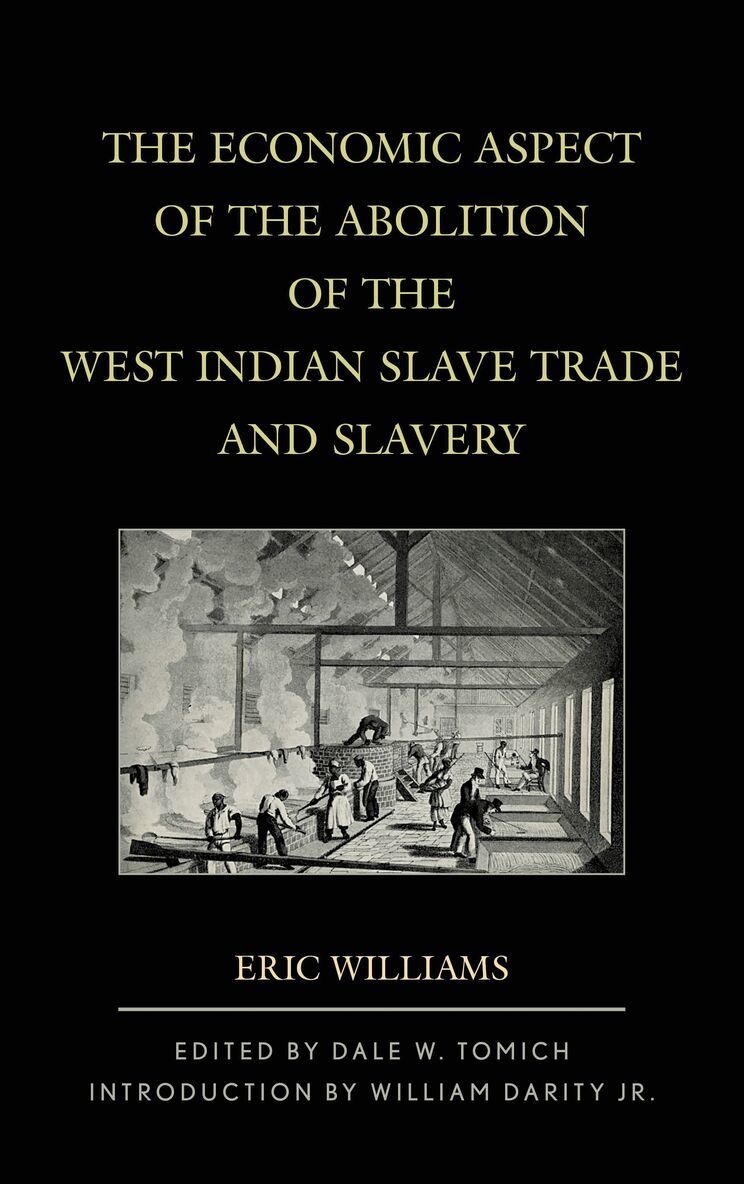
In his influential and widely debated Capitalism and Slavery, Eric Williams examined the relation of capitalism and slavery in the British West Indies. Binding an economic view of history with strong moral argument, his study of the role of slavery in financing the Industrial Revolution refuted traditional ideas of economic and moral progress and firmly established the centrality of the African slave trade in European economic development. He also showed that mature industrial capitalism in turn helped destroy the slave system. Establishing the exploitation of commercial capitalism and its link to racial attitudes, Williams employed a historicist vision that has set the tone for an entire field. Williams’s profound critique became the foundation for studies of imperialism and economic development and has been widely debated since the book’s initial publication in 1944. The Economic Aspect of the Abolition of the West Indian Slave Trade and Slavery now makes available in book form for the first time his dissertation, on which Capitalism and Slavery was based. The significant differences between his two works allow us to rethink questions that were considered resolved and to develop fresh problems and hypotheses. It offers the possibility of a much deeper reconsideration of issues that have lost none of their urgency—indeed, whose importance has increased.
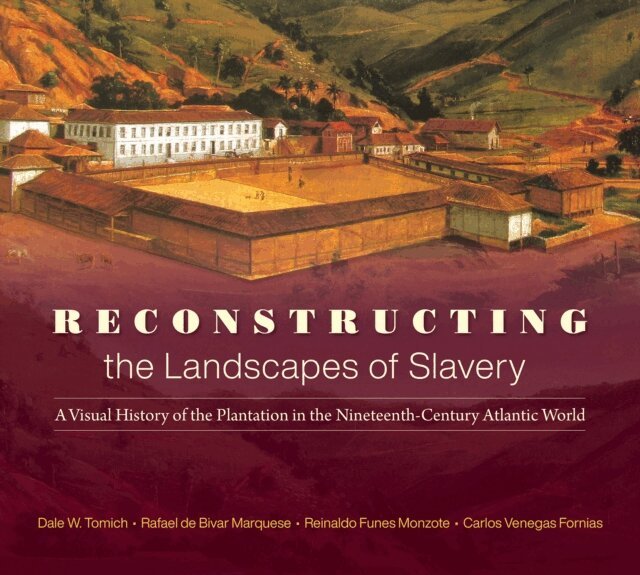
Reconstructing the Landscapes of Slavery
A Visual History of the Plantation in the Nineteenth-Century Atlantic World
Häftad, Engelska, 2021
346 kr
Skickas inom 7-10 vardagar
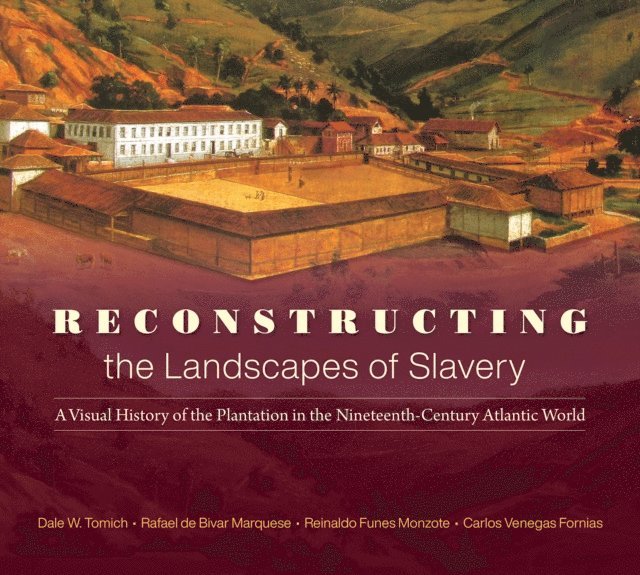
Assessing a unique collection of more than eighty images, this innovative study of visual culture reveals the productive organization of plantation landscapes in the nineteenth-century Atlantic world. These landscapes-from cotton fields in the Lower Mississippi Valley to sugar plantations in western Cuba and coffee plantations in Brazil's Paraiba Valley-demonstrate how the restructuring of the capitalist world economy led to the formation of new zones of commodity production. By extension, these environments radically transformed slave labor and the role such labor played in the expansion of the global economy.Artists and mapmakers documented in surprising detail how the physical organization of the landscape itself made possible the increased exploitation of enslaved labor. Reading these images today, one sees how technologies combined with evolving conceptions of plantation management that reduced enslaved workers to black bodies. Planter control of enslaved people's lives and labor maximized the production of each crop in a calculated system of production. Nature, too, was affected: the massive increase in the scale of production and new systems of cultivation increased the land's output. Responding to world economic conditions, the replication of slave-based commodity production became integral to the creation of mass markets for cotton, sugar, and coffee, which remain at the center of contemporary life.
502 kr
Skickas inom 10-15 vardagar
In his influential and widely debated Capitalism and Slavery, Eric Williams examined the relation of capitalism and slavery in the British West Indies. Binding an economic view of history with strong moral argument, his study of the role of slavery in financing the Industrial Revolution refuted traditional ideas of economic and moral progress and firmly established the centrality of the African slave trade in European economic development. He also showed that mature industrial capitalism in turn helped destroy the slave system. Establishing the exploitation of commercial capitalism and its link to racial attitudes, Williams employed a historicist vision that has set the tone for an entire field. Williams’s profound critique became the foundation for studies of imperialism and economic development and has been widely debated since the book’s initial publication in 1944. The Economic Aspect of the Abolition of the West Indian Slave Trade and Slavery now makes available in book form for the first time his dissertation, on which Capitalism and Slavery was based. The significant differences between his two works allow us to rethink questions that were considered resolved and to develop fresh problems and hypotheses. It offers the possibility of a much deeper reconsideration of issues that have lost none of their urgency—indeed, whose importance has increased.