Dalia Judovitz - Böcker
Visar alla böcker från författaren Dalia Judovitz. Handla med fri frakt och snabb leverans.
5 produkter
5 produkter
398 kr
Skickas inom 7-10 vardagar
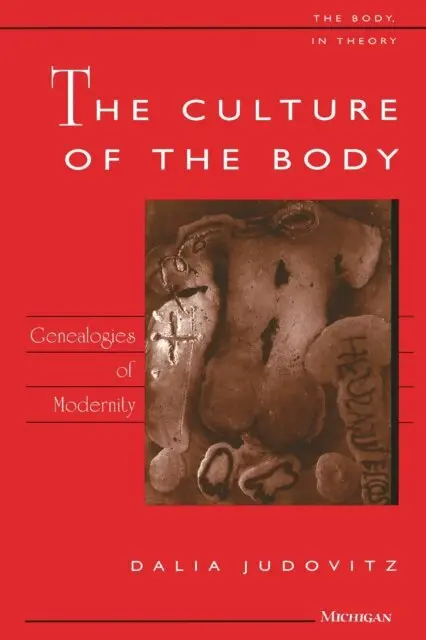
What is the body? How was it culturally constructed, conceived, and cultivated before and after the advent of rationalism and modern science? This interdisciplinary study elaborates a cultural genealogy of the body and its legacies to modernity by tracing its crucial redefinition from a live anatomical entity to disembodied, mechanical and virtual analogs.The study ranges from Baroque, pre-Cartesian interpretations of body and embodiment, to the Cartesian elaboration of ontological difference and mind-body dualism, and it concludes with the parodic and violent aftermath of this legacy to the French Enlightenment. It engages work by philosophical authors such as Montaigne, Descartes and La Mettrie, as well as literary works by d'Urfé, Corneille and the Marquis de Sade. The examination of sexuality and the emergence of sexual difference as a dominant mode of embodiment are central to the book's overall design. The work is informed by philosophical accounts of the body (Nietzsche, Foucault, Merleau-Ponty), by feminist theory (Butler, Irigaray, Bordo), as well as by literary and cultural historians (Scarry, Stewart, Bynum, etc.) and historians of science (Canguilhem, Pagel, and Temkin), among others. It will appeal to scholars of literature, philosophy, French studies, critical theory, feminist theory, cultural historians and historians of science and technology.Dalia Judovitz is Professor of French, Emory University. She is also author of Unpacking Duchamp: Art in Transit and Subjectivity and Representation in Decartes: The Origins of Modernity.
684 kr
Skickas inom 3-6 vardagar
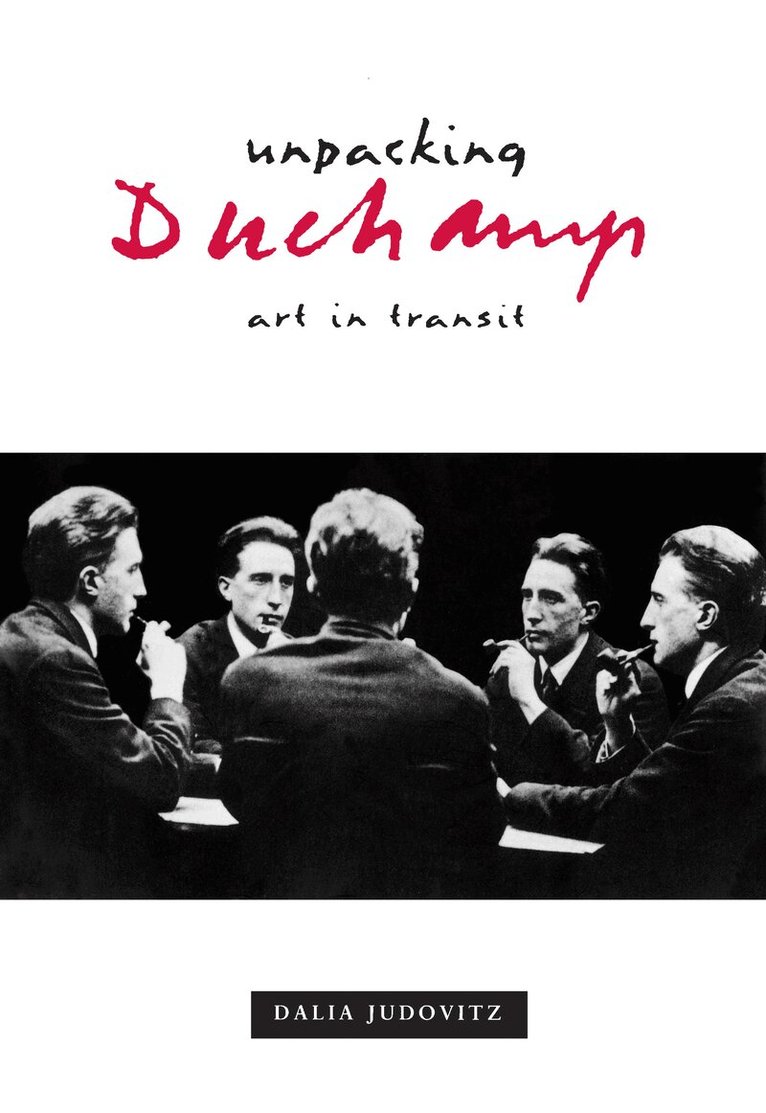
Perhaps no twentieth-century artist utilized puns and linguistic ambiguity with greater effect - and greater controversy - than Marcel Duchamp. Through a careful 'unpacking' of his major works, Dalia Judovitz finds that Duchamp may well have the last laugh. She examines how he interpreted notions of mechanical reproduction in order to redefine the meaning and value of the art object, the artist, and artistic production. Judovitz begins with Duchamp's supposed abandonment of painting and his subsequent return to material that mimics art without being readily classifiable as such. Her book questions his paradoxical renunciation of pictorial and artistic conventions while continuing to evoke and speculatively draw upon them. She offers insightful analyses of his major works including "The Large Glass", "Fountain" and "Given - the waterfall, the illuminating gas". Duchamp, a poser and solver of problems, occupied himself with issues of genre, gender, and representation. His puns, double entendres, and word games become poetic machines, all part of his intellectual quest for the very limits of nature, culture, and perception.Judovitz demonstrates how Duchamp's redefinition of artistic modes of production through reproduction opens up modernism to more speculative explorations, while clearing the ground for the aesthetic of appropriation central to postmodernism.
463 kr
Tillfälligt slut
Dialectic and narrative reflect the respective inclinations of philosophy and literature as disciplines that fix one another in a Sartrean gaze, admixing envy with suspicion. Ever since Plato and Aristotle distinguished scientific knowledge (episteme) from opinion (doxa) and valued demonstration through formal final causes over emplotment (mythos), the palm has been awarded to dialectic as the proper instrument of rational discourse, the arbiter of coherence, consistency, and ultimately of truth.The matter becomes more complicated when we recognize the various uses of the term "dialectic" in the tradition, some of which complement and even overlap the narrative domain. By confronting these concepts with one another, either de facto or ex professo, the following essays not only raise anew the ancient questions of the identities of philosophy and literature, but do so in the context of recent "postmodern" challenges to their relative autonomy.
264 kr
Skickas inom 7-10 vardagar
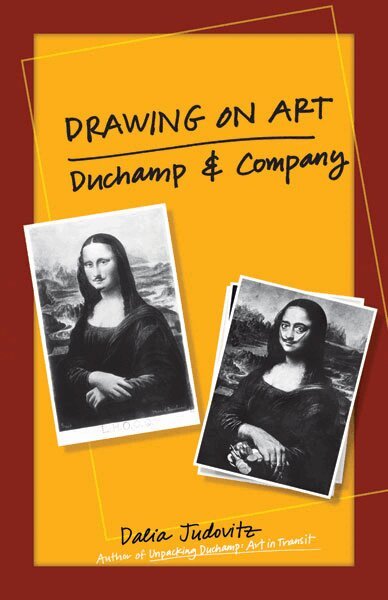
Marcel Duchamp’s 1919 readymade, L.H.O.O.Q., which he created by drawing a moustache and goatee on a commercial reproduction of the Mona Lisa, precipitated a radical reevaluation of the meaning of art, the process of art making, and the role of the artist. In Drawing on Art, Dalia Judovitz explores the central importance of appropriation, collaboration, influence, and play in Duchamp’s work-and in Dada and Surrealist art more broadly-to show how the concept of art itself became the critical fuel and springboard for questioning art’s fundamental premises. Judovitz argues that rather than simply negating art, Duchamp’s readymades and later works, including films and conceptual pieces, demonstrate the impossibility of defining art in the first place. Through his readymades, for instance, Duchamp explicitly critiqued the commodification of art and inaugurated a profound shift from valuing art for its visual appearance to understanding the significance of its mode of public presentation. And if Duchamp literally drew on art, he also did so figuratively, thus raising questions of creativity and artistic influence. Equally destabilizing, Judovitz writes, was Duchamp’s idea that viewers actively participate in the creation of the art they are viewing. In addition to close readings ranging across Duchamp’s oeuvre, even his neglected works on chess, Judovitz provides interpretations of works by other figures who affected Duchamp’s thinking and collaborated with him, notably Francis Picabia, Man Ray, and Salvador DalÍ, as well as artists who later appropriated and redeployed these gestures, such as Enrico Baj, Gordon Matta-Clark, and Richard Wilson. As Judovitz makes clear, these associations become paradigmatic of a new, collective way of thinking about artistic production that decisively overturns the myth of artistic genius.
340 kr
Skickas inom 10-15 vardagar
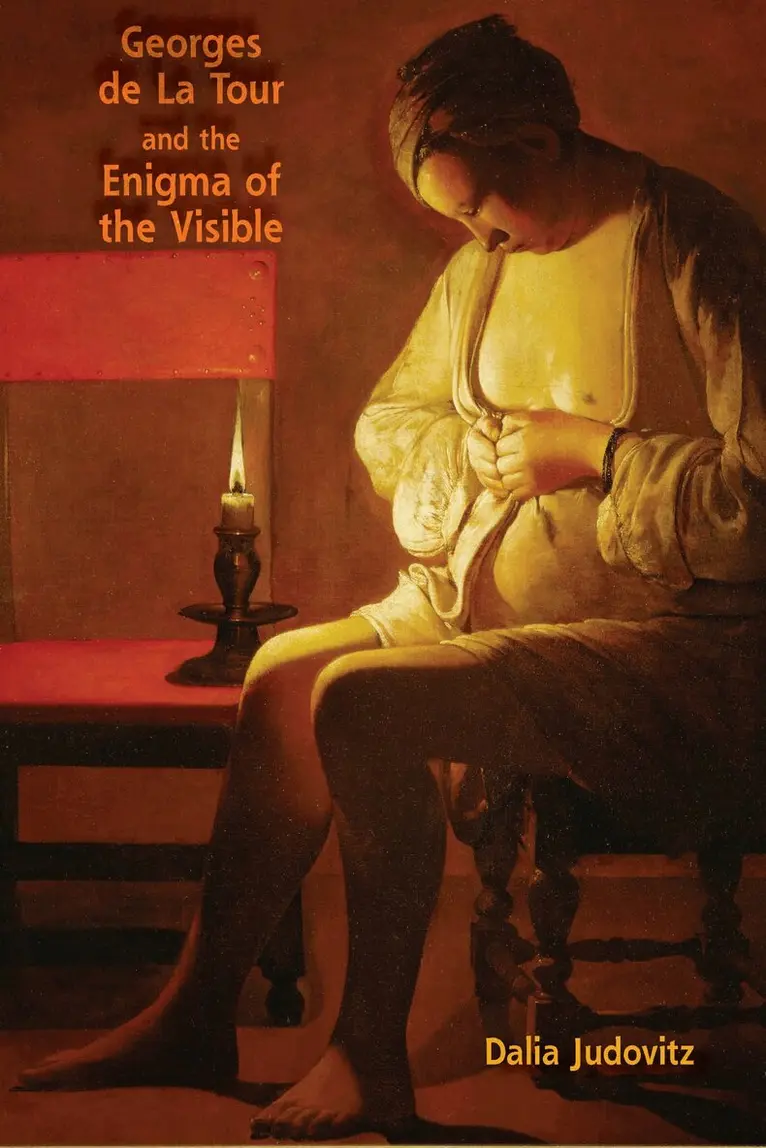
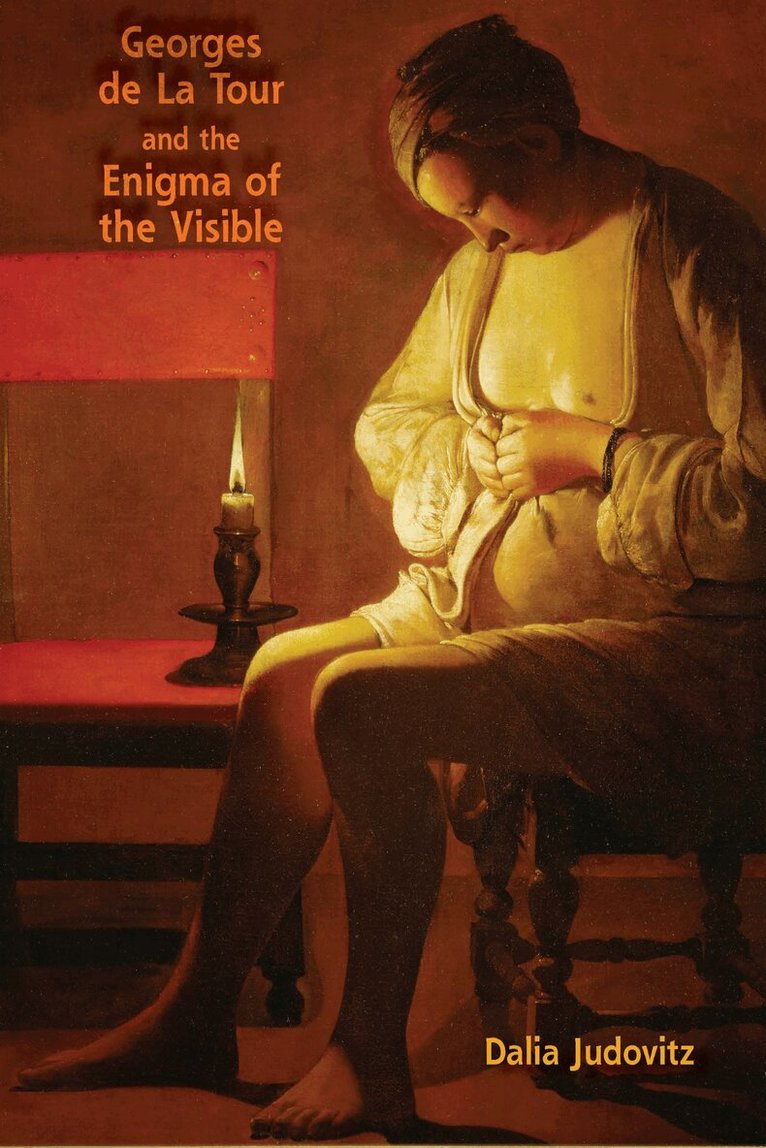
Not rediscovered until the twentieth century, the works of Georges de La Tour retain an aura of mystery. At first sight, his paintings suggest a veritable celebration of light and the visible world, but this is deceptive. The familiarity of visual experience blinds the beholder to a deeper understanding of the meanings associated with vision and the visible in the early modern period.By exploring the representations of light, vision, and the visible in La Tour's works, this interdisciplinary study examines the nature of painting and its artistic, religious, and philosophical implications. In the wake of iconoclastic outbreaks and consequent Catholic call for the revitalization of religious imagery, La Tour paints familiar objects of visible reality that also serve as emblems of an invisible, spiritual reality. Like the books in his paintings, asking to be read, La Tour's paintings ask not just to be seen as visual depictions but to be deciphered as instruments of insight. In figuring faith as spiritual passion and illumination, La Tour's paintings test the bounds of the pictorial image, attempting to depict what painting cannot ultimately show: words, hearing, time, movement, changes of heart.La Tour's emphasis on spiritual insight opens up broader artistic, philosophical, and conceptual reflections on the conditions of possibility of the pictorial medium. By scrutinizing what is seen and how, and by questioning the position of the beholder, his works revitalize critical discussion of the nature of painting and its engagements with the visible world.