Dallas G. Denery – författare
Visar alla böcker från författaren Dallas G. Denery. Handla med fri frakt och snabb leverans.
4 produkter
4 produkter
339 kr
Skickas inom 7-10 vardagar
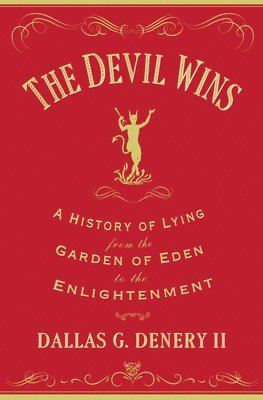
Is it ever acceptable to lie? This question plays a surprisingly important role in the story of Europe's transition from medieval to modern society. According to many historians, Europe became modern when Europeans began to lie--that is, when they began to argue that it is sometimes acceptable to lie. This popular account offers a clear trajectory of historical progression from a medieval world of faith, in which every lie is sinful, to a more worldly early modern society in which lying becomes a permissible strategy for self-defense and self-advancement. Unfortunately, this story is wrong. For medieval and early modern Christians, the problem of the lie was the problem of human existence itself. To ask "Is it ever acceptable to lie?" was to ask how we, as sinners, should live in a fallen world. As it turns out, the answer to that question depended on who did the asking. The Devil Wins uncovers the complicated history of lying from the early days of the Catholic Church to the Enlightenment, revealing the diversity of attitudes about lying by considering the question from the perspectives of five representative voices--the Devil, God, theologians, courtiers, and women.Examining works by Augustine, Bonaventure, Martin Luther, Madeleine de Scudery, Jean-Jacques Rousseau, and a host of others, Dallas G. Denery II shows how the lie, long thought to be the source of worldly corruption, eventually became the very basis of social cohesion and peace.
244 kr
Skickas inom 7-10 vardagar
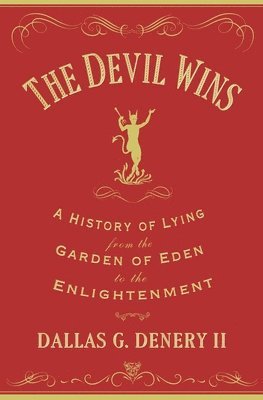
Is it ever acceptable to lie? This question plays a surprisingly important role in the story of Europe's transition from medieval to modern society. According to many historians, Europe became modern when Europeans began to lie--that is, when they began to argue that it is sometimes acceptable to lie. This popular account offers a clear trajectory of historical progression from a medieval world of faith, in which every lie is sinful, to a more worldly early modern society in which lying becomes a permissible strategy for self-defense and self-advancement. Unfortunately, this story is wrong. For medieval and early modern Christians, the problem of the lie was the problem of human existence itself. To ask "Is it ever acceptable to lie?" was to ask how we, as sinners, should live in a fallen world. As it turns out, the answer to that question depended on who did the asking. The Devil Wins uncovers the complicated history of lying from the early days of the Catholic Church to the Enlightenment, revealing the diversity of attitudes about lying by considering the question from the perspectives of five representative voices--the Devil, God, theologians, courtiers, and women.Examining works by Augustine, Bonaventure, Martin Luther, Madeleine de Scudery, Jean-Jacques Rousseau, and a host of others, Dallas G. Denery II shows how the lie, long thought to be the source of worldly corruption, eventually became the very basis of social cohesion and peace.
1 025 kr
Skickas inom 7-10 vardagar
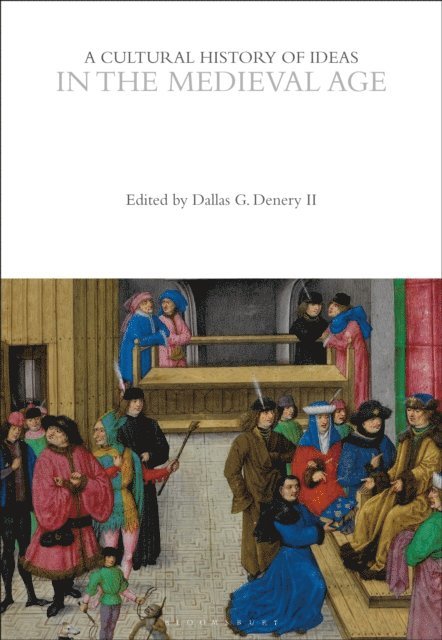
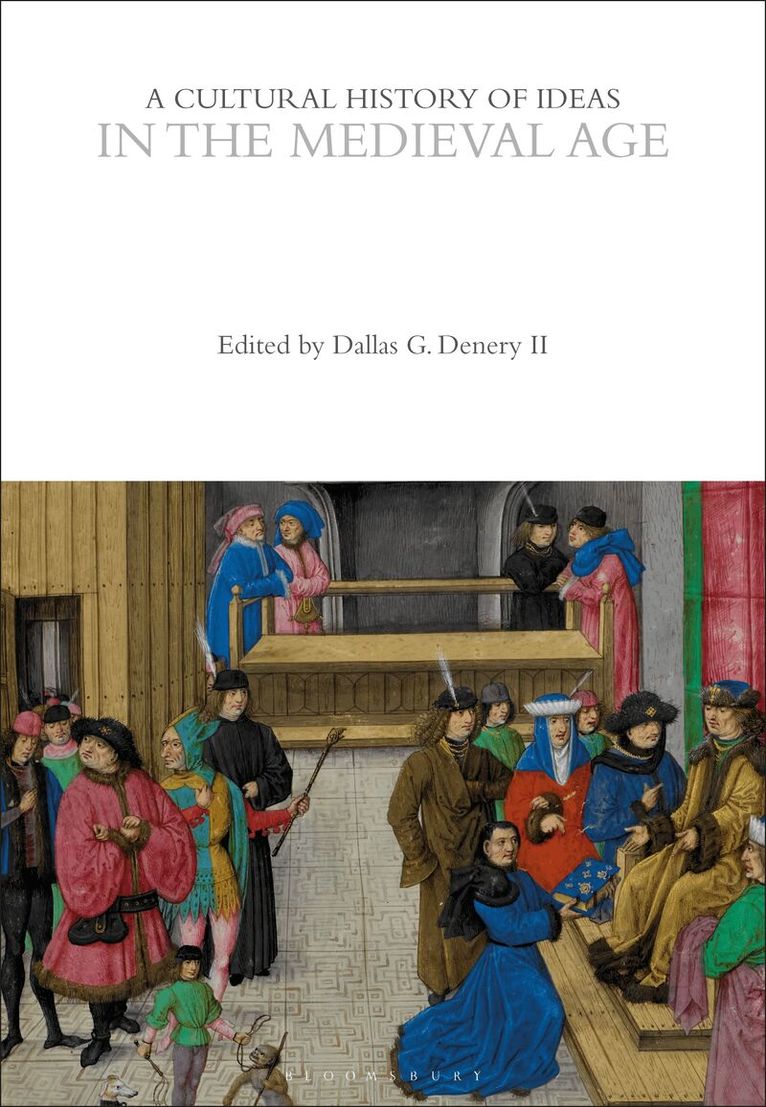
PRAISE FOR A CULTURAL HISTORY OF IDEAS: VOLUMES 1-6A 2024 CHOICE OUTSTANDING ACADEMIC TITLE2023 AAP PROSE AWARDS WINNER: BEST HUMANITIES REFERENCE WORKThis volume of A Cultural History of Ideas examines the roughly thousand years, from the end of the Roman Empire to the cusp of the Reformation, which make up the Middle Ages. Each chapter investigates the ideas and practices associated with a specific theme— knowledge, the human self, ethics, politics, nature, religion, rhetoric, art, and history—in order to reveal the tangle of social, cultural, and religious factors that shaped, and were shaped by, medieval intellectual life. Central to this project is the need to read against the grain, revealing the limits and suppressions in both the medieval sources themselves and more recent scholarship on the period. Taken together, these nine essays, written from a variety of disciplinary perspectives, depict the complexities of medieval life and thought, their unique characteristics, and their influence on subsequent centuries.The 6-volume set A Cultural History of Ideas is part of The Cultural Histories Series. Titles are available in print for individuals or for libraries needing just one subject or preferring a tangible reference for their shelves or as part of a fully-searchable digital library. The digital product is available to institutions by annual subscription or on perpetual access via www.bloomsburyculturalhistory.com. Individual volumes for academics and researchers interested in specific historical periods are also available in print or digitally via www.bloomsburycollections.com.
448 kr
Kommande
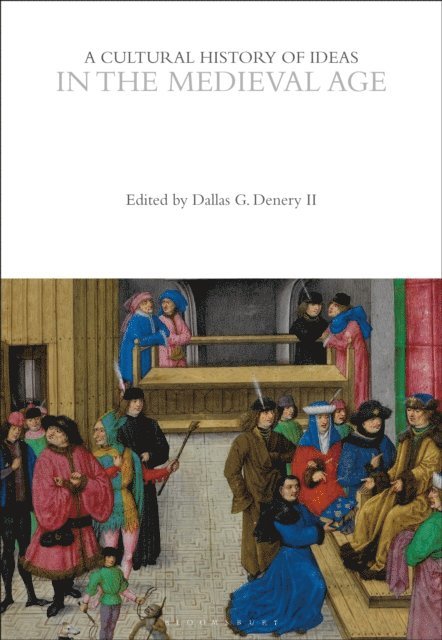
PRAISE FOR A CULTURAL HISTORY OF IDEAS: VOLUMES 1-6A 2024 CHOICE OUTSTANDING ACADEMIC TITLE2023 AAP PROSE AWARDS WINNER: BEST HUMANITIES REFERENCE WORKThis volume of A Cultural History of Ideas examines the roughly thousand years, from the end of the Roman Empire to the cusp of the Reformation, which make up the Middle Ages. Each chapter investigates the ideas and practices associated with a specific theme— knowledge, the human self, ethics, politics, nature, religion, rhetoric, art, and history—in order to reveal the tangle of social, cultural, and religious factors that shaped, and were shaped by, medieval intellectual life. Central to this project is the need to read against the grain, revealing the limits and suppressions in both the medieval sources themselves and more recent scholarship on the period. Taken together, these nine essays, written from a variety of disciplinary perspectives, depict the complexities of medieval life and thought, their unique characteristics, and their influence on subsequent centuries.The 6-volume set A Cultural History of Ideas is part of The Cultural Histories Series. Titles are available in print for individuals or for libraries needing just one subject or preferring a tangible reference for their shelves or as part of a fully-searchable digital library. The digital product is available to institutions by annual subscription or on perpetual access via www.bloomsburyculturalhistory.com. Individual volumes for academics and researchers interested in specific historical periods are also available in print or digitally via www.bloomsburycollections.com.