Damien Kempf - Böcker
Visar alla böcker från författaren Damien Kempf. Handla med fri frakt och snabb leverans.
5 produkter
5 produkter
607 kr
Skickas inom 10-15 vardagar
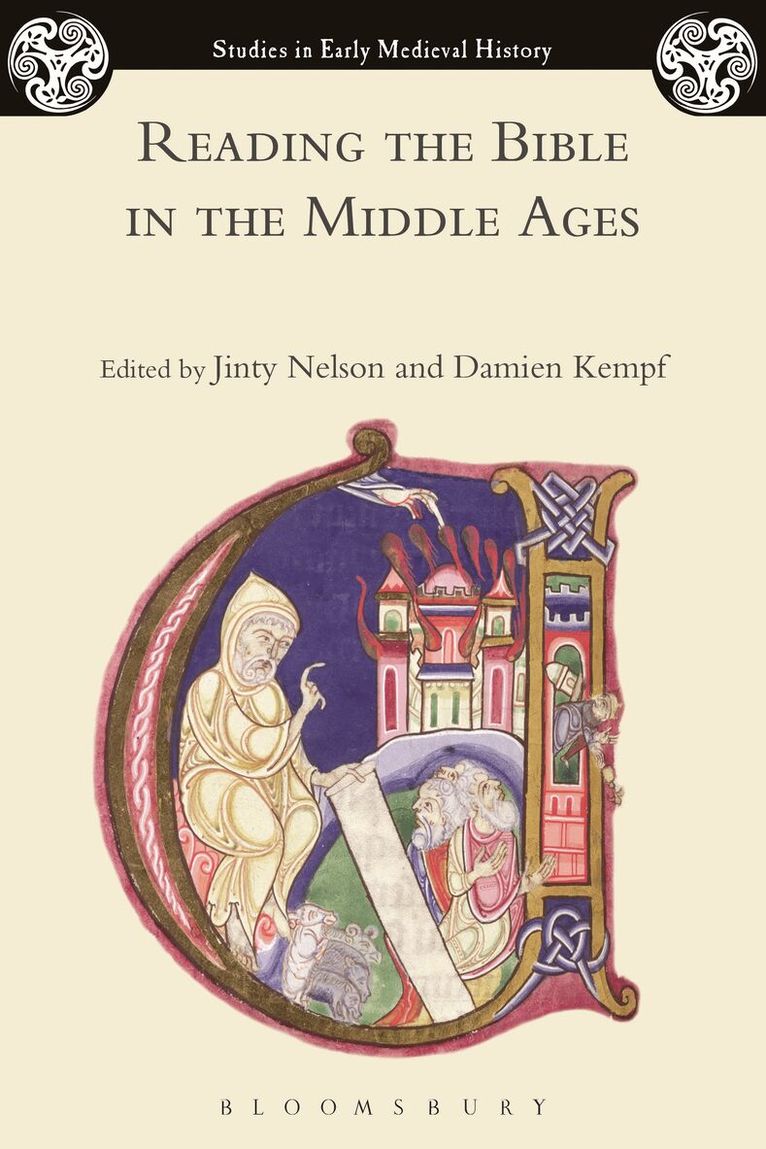
For earlier medieval Christians, the Bible was the book of guidance above all others, and the route to religious knowledge, used for all kinds of practical purposes, from divination to models of government in kingdom or household. This book’s focus is on how medieval people accessed Scripture by reading, but also by hearing and memorizing sound-bites from the liturgy, chants and hymns, or sermons explicating Scripture in various vernaculars. Time, place and social class determined access to these varied forms of Scripture. Throughout the earlier medieval period, the Psalms attracted most readers and searchers for meanings.This book’s contributors probe readers’ motivations, intellectual resources and religious concerns. They ask for whom the readers wrote, where they expected their readers to be located and in what institutional, social and political environments they belonged; why writers chose to write about, or draw on, certain parts of the Bible rather than others, and what real-life contexts or conjunctures inspired them; why the Old Testament so often loomed so large, and how its law-books, its histories, its prophetic books and its poetry were made intelligible to readers, hearers and memorizers. This book’s contributors, in raising so many questions, do justice to both uniqueness and diversity.
1 833 kr
Skickas inom 10-15 vardagar
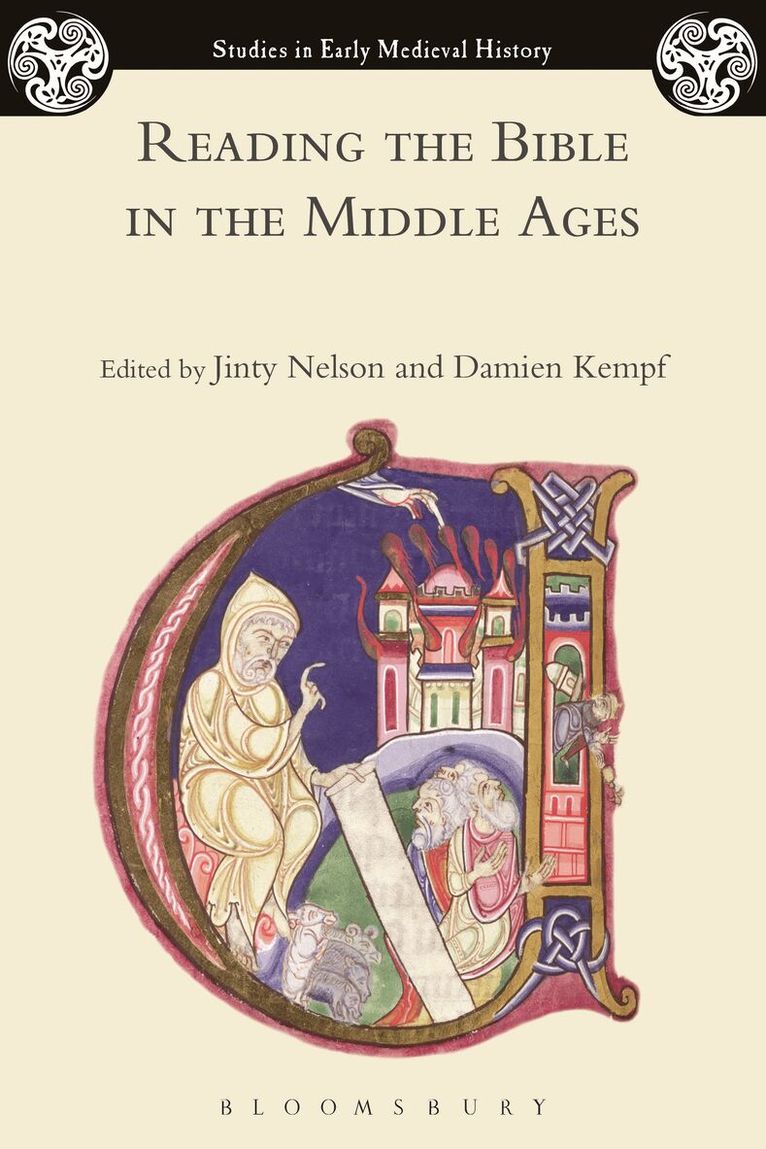
For earlier medieval Christians, the Bible was the book of guidance above all others, and the route to religious knowledge, used for all kinds of practical purposes, from divination to models of government in kingdom or household. This book’s focus is on how medieval people accessed Scripture by reading, but also by hearing and memorizing sound-bites from the liturgy, chants and hymns, or sermons explicating Scripture in various vernaculars. Time, place and social class determined access to these varied forms of Scripture. Throughout the earlier medieval period, the Psalms attracted most readers and searchers for meanings.This book’s contributors probe readers’ motivations, intellectual resources and religious concerns. They ask for whom the readers wrote, where they expected their readers to be located and in what institutional, social and political environments they belonged; why writers chose to write about, or draw on, certain parts of the Bible rather than others, and what real-life contexts or conjunctures inspired them; why the Old Testament so often loomed so large, and how its law-books, its histories, its prophetic books and its poetry were made intelligible to readers, hearers and memorizers. This book’s contributors, in raising so many questions, do justice to both uniqueness and diversity.
318 kr
Skickas inom 7-10 vardagar
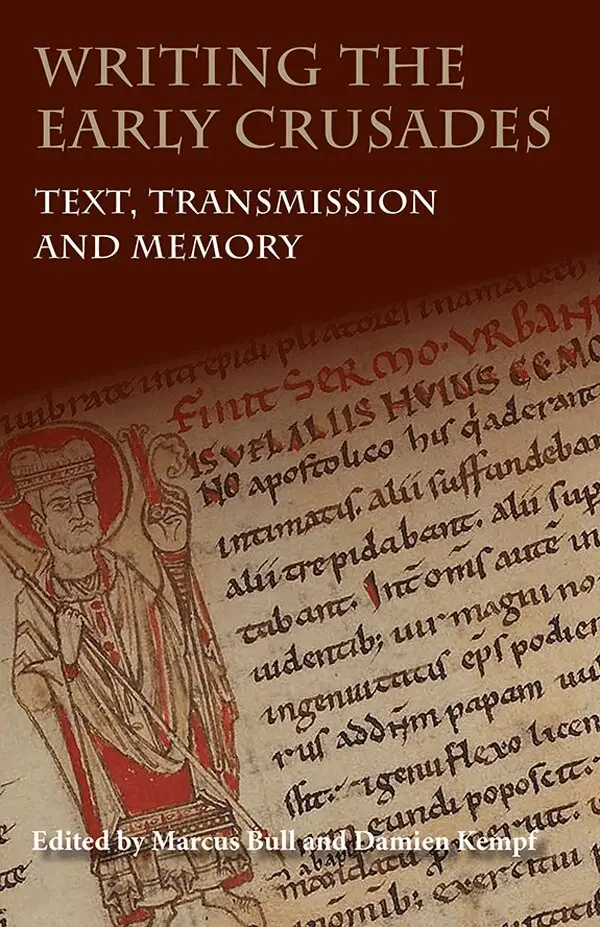
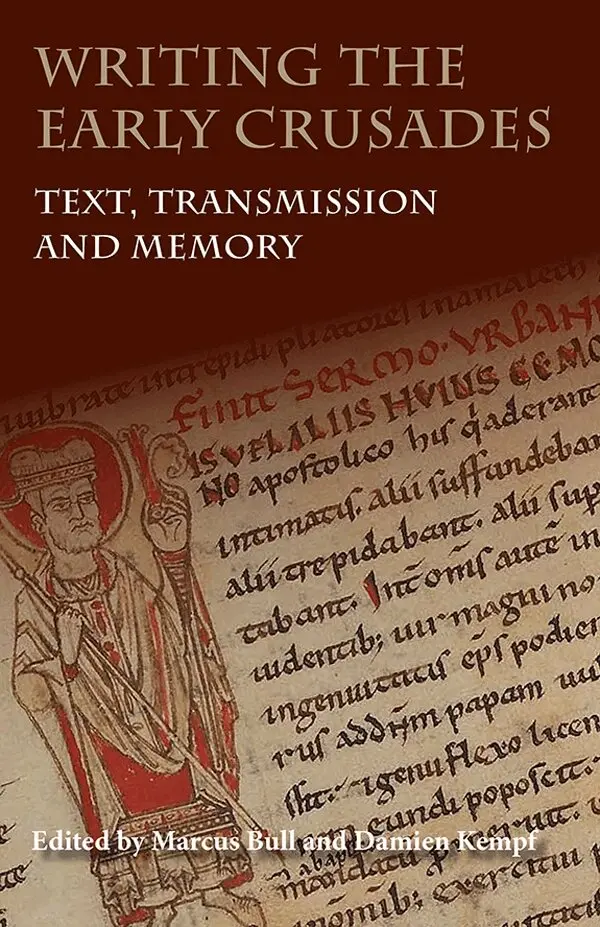
A pioneering approach to contemporary historical writing on the First Crusade, looking at the texts as cultural artefacts rather than simply for the evidence they contain.The First Crusade (1095-1101) was the stimulus for a substantial boom in Western historical writing in the first decades of the twelfth century, beginning with the so-called "eyewitness" accounts of the crusade and extending to numerous second-hand treatments in prose and verse. From the time when many of these accounts were first assembled in printed form by Jacques Bongars in the early seventeenth century, and even more so since their collective appearance in the great nineteenth-century compendium of crusade texts, the Recueil des historiens des croisades, narrative histories have come to be regarded as the single most important resource for the academic study of the early crusade movement. But our understanding of these texts is still far from satisfactory.This ground-breaking volume draws together the work of an international team of scholars. It tackles the disjuncture between the study of the crusades and the study of medieval history-writing, setting the agenda for future research into historical narratives about or inspired by crusading. The basic premise that informs all the papers is that narrative accounts of crusades and analogous texts should not be primarily understood as repositories of data that contribute to a reconstruction of events, but as cultural artefacts that can be interrogated from a wide range of theoretical, methodological and thematic perspectives.MARCUS BULL is Andrew W Mellon Distinguished Professor of Medieval and Early Modern Studies at the University of North Carolina at Chapel Hill; DAMIEN KEMPF is Senior Lecturer in Medieval History at the University of Liverpool.Contributors: Laura Ashe, Steven Biddlecombe, Marcus Bull, Peter Frankopan, Damian Kempf, James Naus, Léan Ní Chléirigh, Nicholas Paul, William J. Purkis, Luigi Russo, Jay Rubenstein, Carol Sweetenham,
1 195 kr
Skickas inom 7-10 vardagar
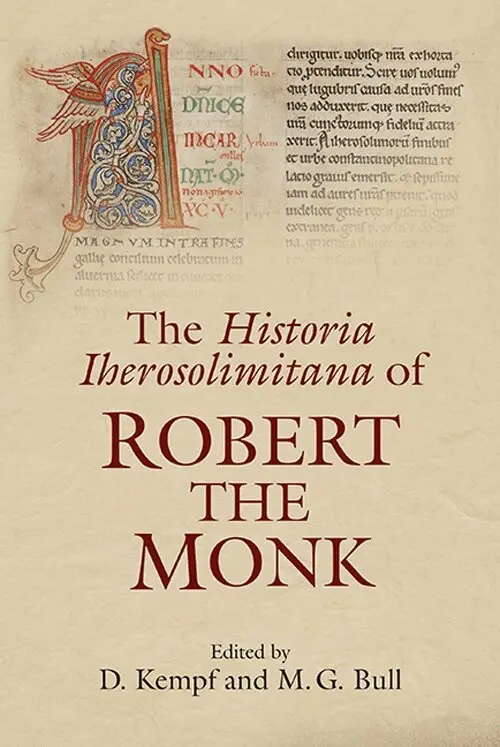
First modern critical edition of one of the most important and popular texts on the Crusades to survive.Robert the Monk's history of the First Crusade (1095-99), which was probably completed c. 1110, was in the nature of a medieval "bestseller", proving by far the most popular narrative of the crusade's events; the number of surviving manuscript copies far exceeds those of the many other accounts of the crusades written in the early decades of the twelfth century, when literary retellings of the crusaders' exploits were much in vogue.This volume presents the first critical edition to be published since the 1860s, grounded in a close study of the more than 80 manuscripts of the text that survive in libraries and archives across Europe. In their detailed introduction the editorsexplore the vexed problem of the author's identity, as well as the date of the text, its manuscript transmission, and the reasons for its success, for example among monasteries belonging to the Cistercian order in southern Germany.Damien Kempf is Lecturer in Medieval History at the University of Liverpool; Marcus Bull is Andrew W. Mellon Distinguished Professor of Medieval and Early Modern Studies at the University of North Carolina, Chapel Hill.
820 kr
Skickas inom 7-10 vardagar
A pioneering approach to contemporary historical writing on the First Crusade, looking at the texts as cultural artefacts rather than simply for the evidence they contain.The First Crusade (1095-1101) was the stimulus for a substantial boom in Western historical writing in the first decades of the twelfth century, beginning with the so-called "eyewitness" accounts of the crusade and extending to numerous second-hand treatments in prose and verse. From the time when many of these accounts were first assembled in printed form by Jacques Bongars in the early seventeenth century, and even more so since their collective appearance in the great nineteenth-century compendium of crusade texts, the Recueil des historiens des croisades, narrative histories have come to be regarded as the single most important resource for the academic study of the early crusade movement. But our understanding of these texts is still far from satisfactory.This ground-breaking volume draws together the work of an international team of scholars. It tackles the disjuncture between the study of the crusades and the study of medieval history-writing, setting the agenda for future research into historical narratives about or inspired by crusading. The basic premise that informs all the papers is that narrative accounts of crusades and analogous texts should not be primarily understood as repositories of data that contribute to a reconstruction of events, but as cultural artefacts that can be interrogated from a wide range of theoretical, methodological and thematic perspectives.MARCUS BULL is Andrew W. Mellon Distinguished Professor of Medieval and Early Modern Studies at the University of North Carolina at Chapel Hill; DAMIEN KEMPF is Senior Lecturer in Medieval History at the University of Liverpool.Contributors: Laura Ashe, Steven Biddlecombe, Marcus Bull, Peter Frankopan, Damian Kempf, James Naus, Léan Ní Chléirigh, Nicholas Paul, William J. Purkis, Luigi Russo, Jay Rubenstein, Carol Sweetenham,