Dan Merkur - Böcker
Visar alla böcker från författaren Dan Merkur. Handla med fri frakt och snabb leverans.
13 produkter
13 produkter
1 383 kr
Skickas inom 10-15 vardagar
In Relating to God: Clinical Psychoanalysis, Spirituality, and Theism, Dan Merkur conceptualizes religious discourse within psychoanalysis. He proposes that God be treated as a transferential figure whose analysis leads to a reduction of the parental content that is projected onto God. Merkur notes that religious conversion experiences regularly involve theological intuitions that are either rational or, owing to morbid complications, have undergone displacement into irrational symbolism. Analysis renders the religiosity more wholesome.Traditionally, psychoanalytic thought has been dismissive of religion. Freud is on record, however, as having called psychoanalysis a neutral procedure. He argued that religion, with its dependency on a providential God who punishes disobedience, imagines spirituality on the model of human parents and fails to approach spirituality in an appropriately scientific manner. He wrote little of spiritual phenomena, but mentioned both the rationality of the universe and the parapsychological occurrence of thought transference.Occasionally, later psychoanalysts used different language in order to contrast wholesome and morbid forms of religion. Erich Fromm distinguished authoritarian and humanistic religions, while D. W. Winnicott condemned fetishistic behavior while approving of playful illusions that require “belief-in.” These formulations constructed a middle position for clinicians, neither categorically opposed to religion as classical psychoanalysis was, nor do they embrace cultural relativity as “spiritually oriented” psychotherapists are currently advocating.What sorts of spiritual practices does psychoanalysis find unobjectionable? As examples of humanistic religion, Fromm named Zen Buddhism, Buddhist mindfulness meditation, and the via negativa or “way of negating” that some Christian and Jewish mystics have followed. Because the Bible-based approaches are little known, Merkur discusses their histories, procedures, and psychoanalytic understanding.
1 057 kr
Tillfälligt slut
Traces the use of powerful gnostic visionary techniques from Hellenistic Gnosticism and Jewish merkabah mysticism, through Muhammad, the Ismaeilis, and theosophical Sufism to medieval neoplatonism, and renaissance alchemy.Gnosis traces the use of powerful gnostic visionary techniques from Hellenistic Gnosticism and Jewish merkabah mysticism, through Muhammad, the Ismaeilis, and theosophical Sufism to medieval neoplatonism, and renaissance alchemy.
594 kr
Skickas inom 3-6 vardagar
Traces the use of powerful gnostic visionary techniques from Hellenistic Gnosticism and Jewish merkabah mysticism, through Muhammad, the Ismaeilis, and theosophical Sufism to medieval neoplatonism, and renaissance alchemy.Gnosis traces the use of powerful gnostic visionary techniques from Hellenistic Gnosticism and Jewish merkabah mysticism, through Muhammad, the Ismaeilis, and theosophical Sufism to medieval neoplatonism, and renaissance alchemy.
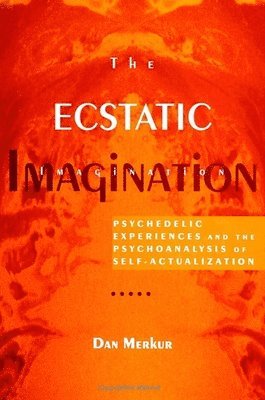
Ecstatic Imagination
Psychedelic Experiences and the Psychoanalysis of Self-Actualization
Häftad, Engelska, 1998
372 kr
Tillfälligt slut
Presents the first comprehensive survey of the varieties of psychedelic experience since 1975.The Ecstatic Imagination provides the first general theory of psychedelic experiences. Merkur refutes several theories that have been used to explain single categories of psychedelic experience, and offers instead a unitary theory that is applicable to all varieties. The book treats self-reports of psychedelic experiences as a wealth of neglected data which forms the basis to expand the psychoanalytic model of human imagination. An exhaustive phenomenology of the varieties of LSD, mescaline, and psilocybin experiences in Western and Native American cultures is joined together with psychoanalytic theories drawn from the classical, ego psychological, and object relations schools. Where existing theories prove inadequate to the discussion of data, original formulations are offered. The result is a rigorously psychoanalytic approach to the process of self-actualization.
376 kr
Tillfälligt slut
Provides an alternative to the traditional psychoanalytic explanation of mystical experience by viewing unitive thinking as a line of cognitive development and mystical moments as creative inspirations on unitive ideas.Merkur proposes an alternative to the traditional psychoanalytic explanation of mystical experiences as regression to the solipsism of earliest infancy. He does this by viewing unitive thinking as a line of cognitive development, and mystical moments as creative inspirations on unitive topics. Utilizing classical self-reports by Christian, Jewish, and Muslim mystics, Patanjali's Yoga Sutras, and modern Western peak experiences, Merkur argues that experiences of mystical union are manifestations of a broader category of psychological processes that manifest in scientific and moral thought, as well as in mysticism. Unconscious as well as conscious, unitive thinking is sometimes realistic and sometimes fantastic, in patterns that are consistent with cognitive development in general. Mystical moments of unitive thinking may be considered moments of creative inspiration that happen to make use of unitive ideas. Building on the psychoanalytic object-relations theory that the self is always in relationship with an object, Merkur argues that the solipsism of some varieties of mystical union always implies unconscious ideas of a love object who is transcendent.
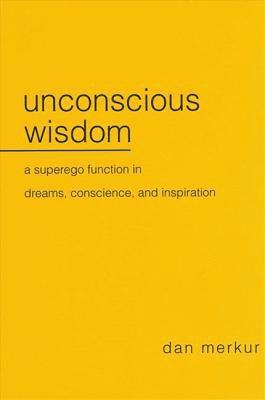
Unconscious Wisdom
A Superego Function in Dreams, Conscience, and Inspiration
Inbunden, Engelska, 2001
1 027 kr
Tillfälligt slut
Contra both Freud and Jung, argues that the unconscious is not exclusively irrational.In a detailed engagement with the psychoanalytic theories of dreams, conscience, empathy, and creativity, Dan Merkur argues that the superego is an unconscious reasoning process, dedicated to the representation of the loved object. The superego's access to the repressed and devotion of time to single topics make it both more knowledgeable and more intelligent than the conscious ego. This is the final installment in Merkur's three-volume exploration of the psychoanalysis of religious experiences-volumes one and two are The Ecstatic Imagination: Psychedelic Experiences and the Psychoanalysis of Self-Actualization and Mystical Moments and Unitive Thinking, also published by SUNY Press.
365 kr
Tillfälligt slut
Contra both Freud and Jung, argues that the unconscious is not exclusively irrational.In a detailed engagement with the psychoanalytic theories of dreams, conscience, empathy, and creativity, Dan Merkur argues that the superego is an unconscious reasoning process, dedicated to the representation of the loved object. The superego's access to the repressed and devotion of time to single topics make it both more knowledgeable and more intelligent than the conscious ego. This is the final installment in Merkur's three-volume exploration of the psychoanalysis of religious experiences-volumes one and two are The Ecstatic Imagination: Psychedelic Experiences and the Psychoanalysis of Self-Actualization and Mystical Moments and Unitive Thinking, also published by SUNY Press.
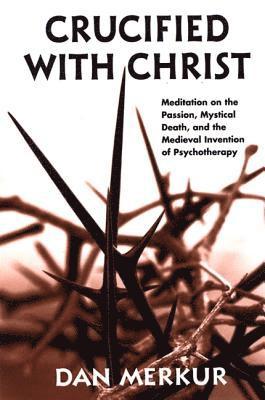
Crucified with Christ
Meditations on the Passion, Mystical Death, and the Medieval Invention of Psychotherapy
Inbunden, Engelska, 2007
1 057 kr
Tillfälligt slut
Delineates how medieval meditation on the passion of Christ was intended to transform personality—a practice with affinity for the goals of modern psychotherapy.Crucified with Christ offers a fascinating study of the psychoanalytic character of medieval meditation. Most meditation practitioners imagined themselves in the place of an eyewitness to the passion; however, some, including Bernard of Clairvaux, Francis of Assisi, and Bonaventure, introduced meditation from the perspective of Jesus. They felt the imagined crucifixion, passion, and death as experiences of their own and understood them in Pauline terms as "crucifixions with Christ." As knowledge of mystical death experiences accumulated over the centuries, it was noted that repeated mystical unions with Christ in his death could create personality change, imparting the sweetness of Jesus' personality to the meditators.Author Dan Merkur illustrates that in both its details and its goal, the meditative process meets contemporary psychoanalytic criteria for psychotherapeutic change. The medieval practice of meditation, Merkur writes, is comprehensible as guided imagery therapy that takes the meditator from fear of death to forgiveness of persecutors-in psychoanalytic terms, dissolving resistance through a capacity for concern and relationality.
Crucified with Christ
Meditations on the Passion, Mystical Death, and the Medieval Invention of Psychotherapy
Häftad, Engelska, 2008
376 kr
Tillfälligt slut
Delineates how medieval meditation on the passion of Christ was intended to transform personality—a practice with affinity for the goals of modern psychotherapy.Crucified with Christ offers a fascinating study of the psychoanalytic character of medieval meditation. Most meditation practitioners imagined themselves in the place of an eyewitness to the passion; however, some, including Bernard of Clairvaux, Francis of Assisi, and Bonaventure, introduced meditation from the perspective of Jesus. They felt the imagined crucifixion, passion, and death as experiences of their own and understood them in Pauline terms as "crucifixions with Christ." As knowledge of mystical death experiences accumulated over the centuries, it was noted that repeated mystical unions with Christ in his death could create personality change, imparting the sweetness of Jesus' personality to the meditators.Author Dan Merkur illustrates that in both its details and its goal, the meditative process meets contemporary psychoanalytic criteria for psychotherapeutic change. The medieval practice of meditation, Merkur writes, is comprehensible as guided imagery therapy that takes the meditator from fear of death to forgiveness of persecutors-in psychoanalytic terms, dissolving resistance through a capacity for concern and relationality.
2 222 kr
Skickas inom 10-15 vardagar
This volume presents the first organized study of Jung's ethics. Drawing on direct quotes from all of his collected works, interviews, and seminars, psychoanalyst and religious scholar Dan Merkur provides a compendium of Jung’s thoughts on various topics and themes that comprise his theoretical corpus—from the personal unconscious, repression, dreams, good and evil, and the shadow, to collective phenomena such as the archetypes, synchronicity, the psychoid, the paranormal, God, and the Self, as well as his contributions to clinical method and technique including active imagination, inner dialogue, and the process of individuation and consciousness expansion. The interconnecting thread in Merkur's approach to the subject matter is to read Jung’s work through an ethical lens. What comes to light is how Merkur systematically portrays Jung as a moralist, but also as a complex thinker who situates the human being as an instinctual animal struggling with internal conflict and naturalized sin. Merkur exposes the tension and development in Jung’s thinking by exploring his innovative clinical-technical methods and experimentation, such as through active imagination, inner dialogue, and expressive therapies, hence underscoring unconscious creativity in dreaming, symbol formation, engaging the paranormal, and artistic productions leading to expansions of consciousness, which becomes a necessary part of individuation or the working through process in pursuit of self-actualization and wholeness. In the end, we are offered a unique presentation of Jung’s core theoretical and clinical ideas centering on an ethical fulcrum, whereby his moral psychology leads to a cure of souls. Jung’s Ethics will be of interest to academics, scholars, researchers, and practitioners in the fields of Jungian studies and analytical psychology, ethics, moral psychology, philosophy, religious studies, and mental health professionals focusing on the integration of humanities and psychoanalysis.
712 kr
Skickas inom 10-15 vardagar
This volume presents the first organized study of Jung's ethics. Drawing on direct quotes from all of his collected works, interviews, and seminars, psychoanalyst and religious scholar Dan Merkur provides a compendium of Jung’s thoughts on various topics and themes that comprise his theoretical corpus—from the personal unconscious, repression, dreams, good and evil, and the shadow, to collective phenomena such as the archetypes, synchronicity, the psychoid, the paranormal, God, and the Self, as well as his contributions to clinical method and technique including active imagination, inner dialogue, and the process of individuation and consciousness expansion. The interconnecting thread in Merkur's approach to the subject matter is to read Jung’s work through an ethical lens. What comes to light is how Merkur systematically portrays Jung as a moralist, but also as a complex thinker who situates the human being as an instinctual animal struggling with internal conflict and naturalized sin. Merkur exposes the tension and development in Jung’s thinking by exploring his innovative clinical-technical methods and experimentation, such as through active imagination, inner dialogue, and expressive therapies, hence underscoring unconscious creativity in dreaming, symbol formation, engaging the paranormal, and artistic productions leading to expansions of consciousness, which becomes a necessary part of individuation or the working through process in pursuit of self-actualization and wholeness. In the end, we are offered a unique presentation of Jung’s core theoretical and clinical ideas centering on an ethical fulcrum, whereby his moral psychology leads to a cure of souls. Jung’s Ethics will be of interest to academics, scholars, researchers, and practitioners in the fields of Jungian studies and analytical psychology, ethics, moral psychology, philosophy, religious studies, and mental health professionals focusing on the integration of humanities and psychoanalysis.
1 057 kr
Tillfälligt slut
Explores the unacknowledged psychological element in Maimonides' work, one which prefigures the latter insights of Freud.Is Moses Maimonides an unacknowledged ancestor of the psychoanalytic movement? In this book, David Bakan, Dan Merkur, and David S. Weiss look at the great medieval Jewish philosopher's prescription for the cure of souls and its psychological significance. In the Guide of the Perplexed, Maimonides, who was also a physician, describes the soul's illness: when sinners rationalize evil as good, they limit their capacities to reason, imagine, and behave well, which also produces physical symptoms. The cure depends on repentance in love and fear of God that is attained through philosophical knowledge, the interpretation of dreams and visions, and mystical contemplation. The authors look at the Aristotelian background of Maimonides' psychology, Maimonidean mysticism, his beliefs about prophecy and sexuality, and what is known of Maimonides' client population. A final chapter discusses Maimonides and Freud, noting that many distinctive features of the cure of souls are shared by Freud's original formulation of psychoanalysis. Indeed, the many points of convergence suggest Freud's direct or indirect contact with Maimonides' legacy.
441 kr
Skickas inom 5-8 vardagar
Explores the unacknowledged psychological element in Maimonides' work, one which prefigures the latter insights of Freud.Is Moses Maimonides an unacknowledged ancestor of the psychoanalytic movement? In this book, David Bakan, Dan Merkur, and David S. Weiss look at the great medieval Jewish philosopher's prescription for the cure of souls and its psychological significance. In the Guide of the Perplexed, Maimonides, who was also a physician, describes the soul's illness: when sinners rationalize evil as good, they limit their capacities to reason, imagine, and behave well, which also produces physical symptoms. The cure depends on repentance in love and fear of God that is attained through philosophical knowledge, the interpretation of dreams and visions, and mystical contemplation. The authors look at the Aristotelian background of Maimonides' psychology, Maimonidean mysticism, his beliefs about prophecy and sexuality, and what is known of Maimonides' client population. A final chapter discusses Maimonides and Freud, noting that many distinctive features of the cure of souls are shared by Freud's original formulation of psychoanalysis. Indeed, the many points of convergence suggest Freud's direct or indirect contact with Maimonides' legacy.