Jon Mills – författare
1 986 kr
Skickas inom 10-15 vardagar
1 986 kr
Skickas inom 10-15 vardagar
1 763 kr
Skickas inom 10-15 vardagar
442 kr
Skickas inom 10-15 vardagar
1 816 kr
Skickas inom 10-15 vardagar
499 kr
Skickas inom 10-15 vardagar
2 423 kr
Skickas inom 10-15 vardagar
527 kr
Skickas inom 10-15 vardagar
2 105 kr
Skickas inom 10-15 vardagar
513 kr
Skickas inom 10-15 vardagar
2 114 kr
Skickas inom 10-15 vardagar
709 kr
Skickas inom 10-15 vardagar
2 355 kr
Skickas inom 10-15 vardagar
689 kr
Skickas inom 10-15 vardagar
521 kr
Läs direkt efter köp
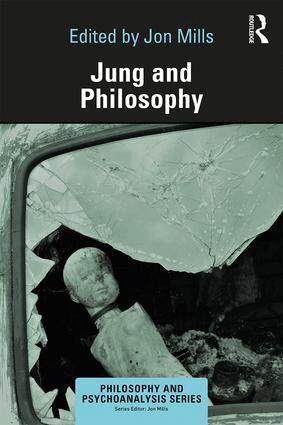
Although the works of C.G. Jung have received worldwide attention, there has been surprisingly little engagement by philosophers. In this volume, internationally recognized philosophers, Jungian analysts, and scholars attempt to fill this void in the literature. Although Jung did not have a formalized, systematic philosophy, the philosophical implications of his thought are explored in relation to his key theoretical postulates on archetypes, the collective unconscious, the mind-body problem, phenomenology, epistemology, psychology of religion, alchemy, myth, ethics, aesthetics, and the question of transcendence. Through analyzing Jung philosophically, new vistas emerge for enhanced explication, theoretical refinement, revision, and redirecting shifts in emphasis that lend more proper cohesion to Jung’s philosophy.
For the first time we may observe philosophers attempting to unpack the philosophical consequences of Jung’s thought applied to many traditional topics covered in the humanities and the social sciences. Given that Jung has not been historically taken up by philosophers, critiqued, nor applied to contemporary theories of mind, culture, and human nature, this is the first book of its kind. It is argued that a new generation of research in analytical psychology can benefit from philosophical scrutiny and theoretical fortification.
Jung and Philosophy will be of interest to psychoanalysts, philosophers, cultural theorists, religious scholars, and the disciplines of depth psychology and post-Jungian studies.
521 kr
Läs direkt efter köp
Although the works of C.G. Jung have received worldwide attention, there has been surprisingly little engagement by philosophers. In this volume, internationally recognized philosophers, Jungian analysts, and scholars attempt to fill this void in the literature. Although Jung did not have a formalized, systematic philosophy, the philosophical implications of his thought are explored in relation to his key theoretical postulates on archetypes, the collective unconscious, the mind-body problem, phenomenology, epistemology, psychology of religion, alchemy, myth, ethics, aesthetics, and the question of transcendence. Through analyzing Jung philosophically, new vistas emerge for enhanced explication, theoretical refinement, revision, and redirecting shifts in emphasis that lend more proper cohesion to Jung’s philosophy.
For the first time we may observe philosophers attempting to unpack the philosophical consequences of Jung’s thought applied to many traditional topics covered in the humanities and the social sciences. Given that Jung has not been historically taken up by philosophers, critiqued, nor applied to contemporary theories of mind, culture, and human nature, this is the first book of its kind. It is argued that a new generation of research in analytical psychology can benefit from philosophical scrutiny and theoretical fortification.
Jung and Philosophy will be of interest to psychoanalysts, philosophers, cultural theorists, religious scholars, and the disciplines of depth psychology and post-Jungian studies.
668 kr
Läs direkt efter köp
This is the first book of its kind that attempts to distill Lacan’s views on psychosis for both a specialized and non-specialized audience. An attempt is made to present Lacan’s unorganized theories to apply to conceptual paradigms in psychoanalysis and the humanities as well as applied clinical practice. This effort is in the spirit of fostering dialogue and educating different theoretical orientations within psychoanalysis on what Lacan and his followers have contributed to emerging contemporary perspectives on psychotic phenomena in both normative and pathological populations.
Within Lacanian circles there is debate over what constitutes psychosis, including defining the ordinary from pathological variants that have historically defined the phenomena as a mental illness. Here psychosis is not defined by hegemonic authoritarian psychiatry, but rather as a conceptual framework or philosophical perspective supported by descriptive narrative and symptomatic phenomenology that challenges preconceived notions of what we typically consider psychosis to entail.
In this book a variety of perspectives are presented by internationally respected scholars and clinicians who examine what Lacan had to say about psychosis, from his nuanced theories represented in select texts, including omissions, extrapolations, and new applications, as well as how clinical methodology and technique have been adapted and advanced by practitioners treating psychotic individuals.
Lacan on Psychosis will be of interest to academics, scholars, researchers, and practitioners in the fields of psychoanalysis, psychotherapy, philosophy, cultural theory, the humanities, and the behavioral sciences.
668 kr
Läs direkt efter köp
This is the first book of its kind that attempts to distill Lacan’s views on psychosis for both a specialized and non-specialized audience. An attempt is made to present Lacan’s unorganized theories to apply to conceptual paradigms in psychoanalysis and the humanities as well as applied clinical practice. This effort is in the spirit of fostering dialogue and educating different theoretical orientations within psychoanalysis on what Lacan and his followers have contributed to emerging contemporary perspectives on psychotic phenomena in both normative and pathological populations.
Within Lacanian circles there is debate over what constitutes psychosis, including defining the ordinary from pathological variants that have historically defined the phenomena as a mental illness. Here psychosis is not defined by hegemonic authoritarian psychiatry, but rather as a conceptual framework or philosophical perspective supported by descriptive narrative and symptomatic phenomenology that challenges preconceived notions of what we typically consider psychosis to entail.
In this book a variety of perspectives are presented by internationally respected scholars and clinicians who examine what Lacan had to say about psychosis, from his nuanced theories represented in select texts, including omissions, extrapolations, and new applications, as well as how clinical methodology and technique have been adapted and advanced by practitioners treating psychotic individuals.
Lacan on Psychosis will be of interest to academics, scholars, researchers, and practitioners in the fields of psychoanalysis, psychotherapy, philosophy, cultural theory, the humanities, and the behavioral sciences.
635 kr
Läs direkt efter köp
In today''s world where every form of transgression enjoys a psychological motive and rational justification, psychoanalysis stands alone in its ability to uncover the hidden motives that inform individual and social collective behaviour. Both in theory and practice, it bears witness to the impact of anonymity on the potential for perpetration, especially when others are experienced as faceless, disposable objects whose otherness is, at bottom, but a projection, displacement, and denial of our own interiority-in short, the evil within. In keeping with this perspective, Ethics of Evil rejects facile rationalizations of violence; it also rejects the idea that evil, as a concept, is inscrutable or animated by demonic forces. Instead, it evaluates the moral framework in which evil is situated, providing a descriptive understanding of it as a plurality and a depth psychological perspective on the threat it poses for our well-being and ways of life. In so doing, it also fashions and articulates an ethical stance that recognizes the intrinsic link between human freedom and the potential for evil.
727 kr
Läs direkt efter köp
635 kr
Läs direkt efter köp
In today''s world where every form of transgression enjoys a psychological motive and rational justification, psychoanalysis stands alone in its ability to uncover the hidden motives that inform individual and social collective behaviour. Both in theory and practice, it bears witness to the impact of anonymity on the potential for perpetration, especially when others are experienced as faceless, disposable objects whose otherness is, at bottom, but a projection, displacement, and denial of our own interiority-in short, the evil within. In keeping with this perspective, Ethics of Evil rejects facile rationalizations of violence; it also rejects the idea that evil, as a concept, is inscrutable or animated by demonic forces. Instead, it evaluates the moral framework in which evil is situated, providing a descriptive understanding of it as a plurality and a depth psychological perspective on the threat it poses for our well-being and ways of life. In so doing, it also fashions and articulates an ethical stance that recognizes the intrinsic link between human freedom and the potential for evil.
727 kr
Läs direkt efter köp
55 kr
Läs direkt efter köp
1 485 kr
Skickas inom 10-15 vardagar
1 485 kr
Skickas inom 10-15 vardagar
813 kr
Skickas inom 10-15 vardagar
975 kr
Läs direkt efter köp
1 439 kr
Skickas inom 3-6 vardagar
422 kr
Skickas inom 5-8 vardagar
450 kr
Skickas inom 5-8 vardagar