Daniel B. Schwartz - Böcker
Visar alla böcker från författaren Daniel B. Schwartz. Handla med fri frakt och snabb leverans.
4 produkter
4 produkter
350 kr
Skickas inom 10-15 vardagar
Just as European Jews were being emancipated and ghettos in their original form—compulsory, enclosed spaces designed to segregate—were being dismantled, use of the word ghetto surged in Europe and spread around the globe. Tracing the curious path of this loaded word from its first use in sixteenth-century Venice to the present turns out to be more than an adventure in linguistics.Few words are as ideologically charged as ghetto. Its early uses centered on two cities: Venice, where it referred to the segregation of the Jews in 1516, and Rome, where the ghetto survived until the fall of the Papal States in 1870, long after it had ceased to exist elsewhere.Ghetto: The History of a Word offers a fascinating account of the changing nuances of this slippery term, from its coinage to the present day. It details how the ghetto emerged as an ambivalent metaphor for “premodern” Judaism in the nineteenth century and how it was later revived to refer to everything from densely populated Jewish immigrant enclaves in modern cities to the hypersegregated holding pens of Nazi-occupied Eastern Europe. We see how this ever-evolving word traveled across the Atlantic Ocean, settled into New York’s Lower East Side and Chicago’s Near West Side, then came to be more closely associated with African Americans than with Jews.Chronicling this sinuous transatlantic odyssey, Daniel B. Schwartz reveals how the history of ghettos is tied up with the struggle and argument over the meaning of a word. Paradoxically, the term ghetto came to loom larger in discourse about Jews when Jews were no longer required to live in legal ghettos. At a time when the Jewish associations have been largely eclipsed, Ghetto retrieves the history of a disturbingly resilient word.
541 kr
Skickas inom 7-10 vardagar
Pioneering biblical critic, theorist of democracy, and legendary conflater of God and nature, Jewish philosopher Baruch Spinoza (1632-1677) was excommunicated by the Sephardic Jews of Amsterdam in 1656 for his "horrible heresies" and "monstrous deeds." Yet, over the past three centuries, Spinoza's rupture with traditional Jewish beliefs and practices has elevated him to a prominent place in genealogies of Jewish modernity. The First Modern Jew provides a riveting look at how Spinoza went from being one of Judaism's most notorious outcasts to one of its most celebrated, if still highly controversial, cultural icons, and a powerful and protean symbol of the first modern secular Jew. Ranging from Amsterdam to Palestine and back again to Europe, the book chronicles Spinoza's posthumous odyssey from marginalized heretic to hero, the exemplar of a whole host of Jewish identities, including cosmopolitan, nationalist, reformist, and rejectionist.Daniel Schwartz shows that in fashioning Spinoza into "the first modern Jew," generations of Jewish intellectuals--German liberals, East European maskilim, secular Zionists, and Yiddishists--have projected their own dilemmas of identity onto him, reshaping the Amsterdam thinker in their own image. The many afterlives of Spinoza are a kind of looking glass into the struggles of Jewish writers over where to draw the boundaries of Jewishness and whether a secular Jewish identity is indeed possible. Cumulatively, these afterlives offer a kaleidoscopic view of modern Jewish cultureand a vivid history of an obsession with Spinoza that continues to this day.
553 kr
Skickas inom 3-6 vardagar
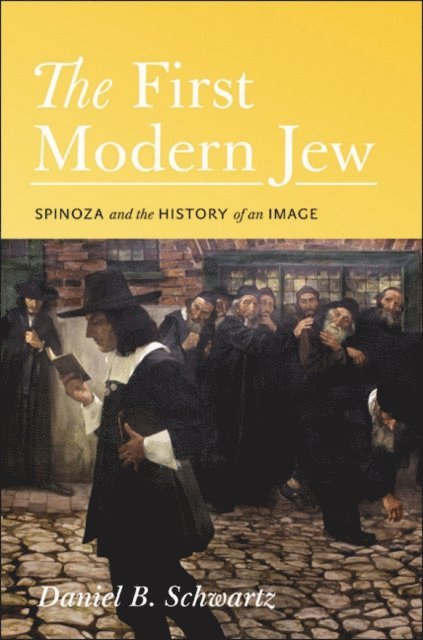
Pioneering biblical critic, theorist of democracy, and legendary conflater of God and nature, Jewish philosopher Baruch Spinoza (1632-1677) was excommunicated by the Sephardic Jews of Amsterdam in 1656 for his "horrible heresies" and "monstrous deeds." Yet, over the past three centuries, Spinoza's rupture with traditional Jewish beliefs and practices has elevated him to a prominent place in genealogies of Jewish modernity. The First Modern Jew provides a riveting look at how Spinoza went from being one of Judaism's most notorious outcasts to one of its most celebrated, if still highly controversial, cultural icons, and a powerful and protean symbol of the first modern secular Jew. Ranging from Amsterdam to Palestine and back again to Europe, the book chronicles Spinoza's posthumous odyssey from marginalized heretic to hero, the exemplar of a whole host of Jewish identities, including cosmopolitan, nationalist, reformist, and rejectionist.Daniel Schwartz shows that in fashioning Spinoza into "the first modern Jew," generations of Jewish intellectuals--German liberals, East European maskilim, secular Zionists, and Yiddishists--have projected their own dilemmas of identity onto him, reshaping the Amsterdam thinker in their own image. The many afterlives of Spinoza are a kind of looking glass into the struggles of Jewish writers over where to draw the boundaries of Jewishness and whether a secular Jewish identity is indeed possible. Cumulatively, these afterlives offer a kaleidoscopic view of modern Jewish cultureand a vivid history of an obsession with Spinoza that continues to this day.
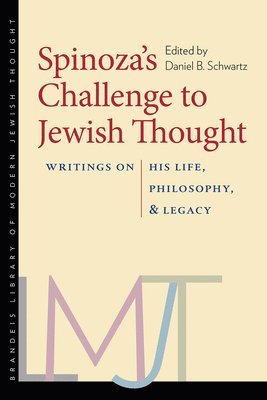
Spinoza′s Challenge to Jewish Thought – Writings on His Life, Philosophy, and Legacy
Häftad, Engelska, 2019
203 kr
Skickas inom 7-10 vardagar
Arguably, no historical thinker has had as varied and fractious a reception within modern Judaism as Baruch (Benedict) Spinoza (1632–77), the seventeenth-century philosopher, pioneering biblical critic, and Jewish heretic from Amsterdam. Revered in many circles as the patron saint of secular Jewishness, he has also been branded as the worst traitor to the Jewish people in modern times. Jewish philosophy has cast Spinoza as marking a turning point between the old and the new, as a radicalizer of the medieval tradition and table setter for the modern. He has served as a perennial landmark and point of reference in the construction of modern Jewish identity. This volume brings together excerpts from central works in the Jewish response to Spinoza. True to the diversity of Spinoza's Jewish reception, it features a mix of genres, from philosophical criticism to historical fiction, from tributes to diary entries, providing the reader with a sense of the overall historical development of Spinoza's posthumous legacy.