Daniel H. Usner Jr. – Författare
Visar alla böcker från författaren Daniel H. Usner Jr.. Handla med fri frakt och snabb leverans.
3 produkter
3 produkter
707 kr
Skickas inom 10-15 vardagar
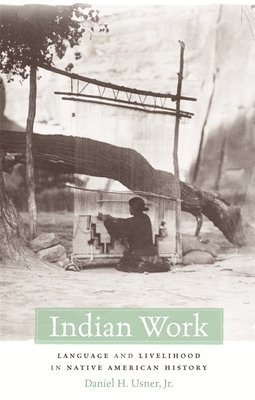
Representations of Indian economic life have played an integral role in discourses about poverty, social policy, and cultural difference but have received surprisingly little attention. Daniel Usner dismantles ideological characterizations of Indian livelihood to reveal the intricacy of economic adaptations in American Indian history.Officials, reformers, anthropologists, and artists produced images that exacerbated Indians’ economic uncertainty and vulnerability. From Jeffersonian agrarianism to Jazz Age primitivism, European American ideologies not only obscured Indian struggles for survival but also operated as obstacles to their success. Diversification and itinerancy became economic strategies for many Indians, but were generally maligned in the early United States. Indians repeatedly found themselves working in spaces that reinforced misrepresentation and exploitation. Taking advantage of narrow economic opportunities often meant risking cultural integrity and personal dignity: while sales of baskets made by Louisiana Indian women contributed to their identity and community, it encouraged white perceptions of passivity and dependence. When non-Indian consumption of Indian culture emerged in the early twentieth century, even this friendlier market posed challenges to Indian labor and enterprise. The consequences of this dilemma persist today.Usner reveals that Indian engagement with commerce has consistently defied the narrow choices that observers insisted upon seeing.
333 kr
Skickas inom 7-10 vardagar
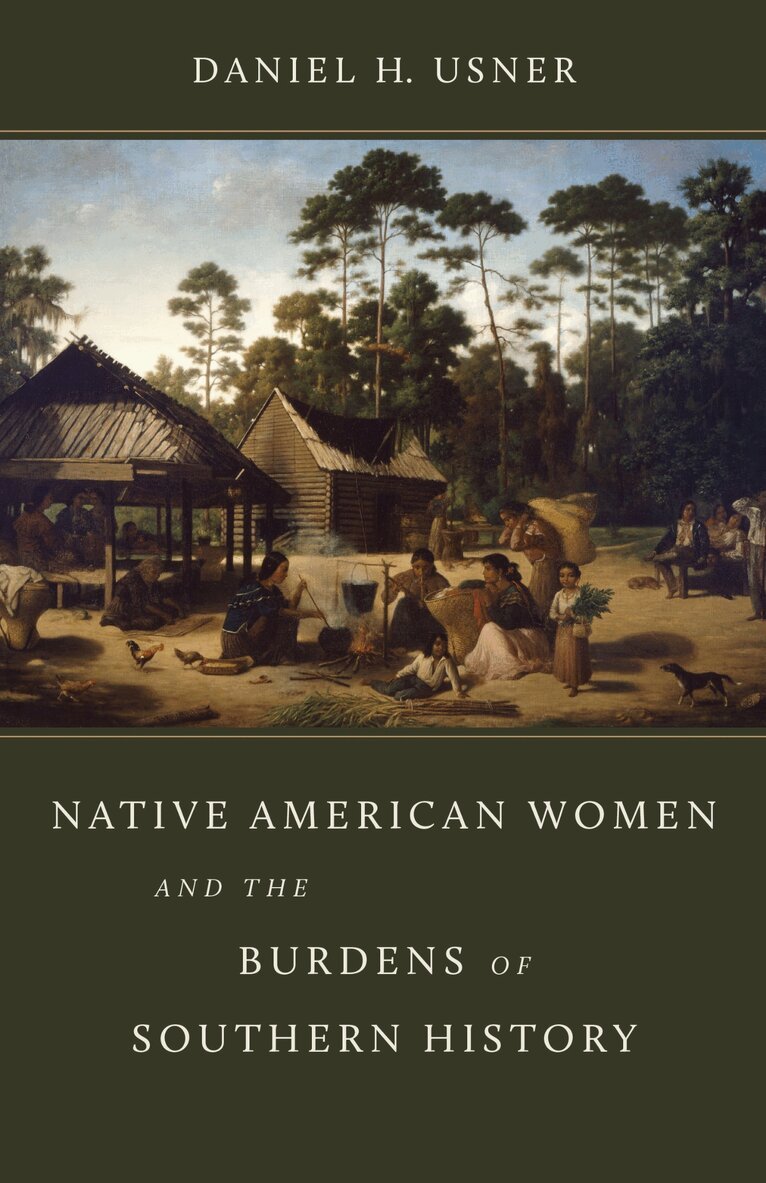
Though long neglected, the history and experiences of Indigenous women offer a deeper, more complex understanding of southern history and culture. In Native American Women and the Burdens of Southern History, Daniel H. Usner explores the dynamic role of Native American women in the South as they confronted waves of colonization, European imperial invasion, plantation encroachment, and post–Civil War racialization. In the process, he reveals the distinct form their means of adaptation and resistance took.While drawing attention to existing scholarship on Native American women, Usner also uses original research and diverse sources, including visual images and material culture, to advance a new line of inquiry. Focusing on women's responses and initiatives across centuries, he shows how their agency shaped and reshaped their communities' relations with non-Native southerners. Exploring basketry in the Lower Mississippi Valley and Gulf Coastal South, Usner emphasizes the essential role women played in ongoing efforts at resistance and survival, even in the face of epidemics, violence, and enslavement unleashed by early colonizers. Foods and medicines that Native women gathered, carried, stored, and peddled in baskets proved integral in forming the region's frontier exchange economy. Later, as the plantation economy threatened to envelop their communities, Indigenous women adapted to change and resisted disappearance by perpetuating exchange with non-Native neighbors and preserving a deep attachment to the land. By the start of the twentieth century, facing a new round of lethal attacks on Indigenous territory, identity, and sovereignty in the Jim Crow South, Native women's resilient and resourceful skill as makers of basketry became a crucial instrument in their nations' political diplomacy.Overall, Usner's work underscores how central Indigenous women have been in struggles for Native American territory and sovereignty throughout southern history.
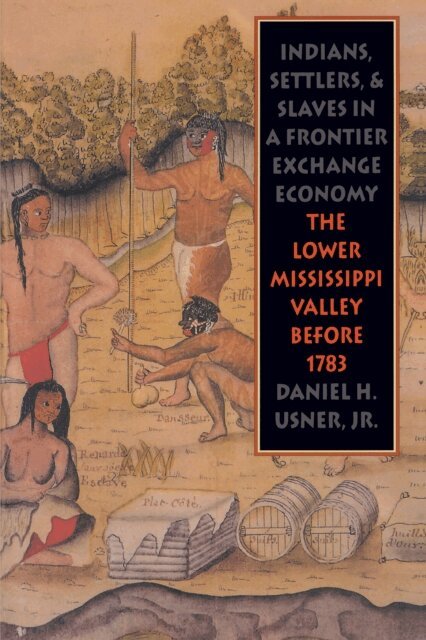
Indians, Settlers, and Slaves in a Frontier Exchange Economy
The Lower Mississippi Valley Before 1783
Häftad, Engelska, 1992
462 kr
Skickas inom 10-15 vardagar
In this pioneering book Daniel Usner examines the economic and cultural interactions among the Indians, Europeans, and African slaves of colonial Louisiana, including the province of West Florida. Rather than focusing on a single cultural group or on a particular economic activity, this study traces the complex social linkages among Indian villages, colonial plantations, hunting camps, military outposts, and port towns across a large region of pre-cotton South. Usner begins by providing a chronological overview of events from French settlement of the area in 1699 to Spanish acquisition of West Florida after the Revolution. He then shows how early confrontations and transactions shaped the formation of Louisiana into a distinct colonial region with a social system based on mutual needs of subsistence. Usner's focus on commerce allows him to illuminate the motives in the contest for empire among the French, English, and Spanish, as well as to trace the personal networks of communication and exchange that existed among the territory's inhabitants. By revealing the economic and social world of early Louisianians, he lays the groundwork for a better understanding of later Southern society.