Daniel Heath Justice - Böcker
Visar alla böcker från författaren Daniel Heath Justice. Handla med fri frakt och snabb leverans.
9 produkter
9 produkter
738 kr
Skickas inom 5-8 vardagar
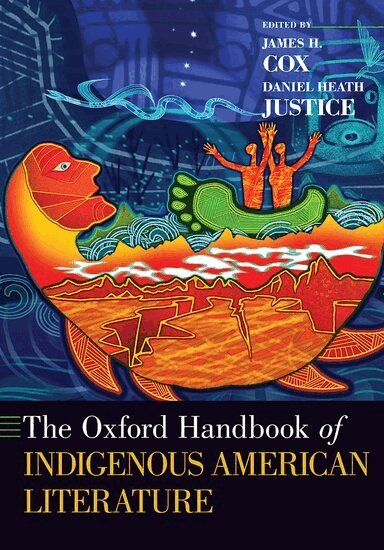
Over the course of the last twenty years, Native American and Indigenous American literary studies has experienced a dramatic shift from a critical focus on identity and authenticity to the intellectual, cultural, political, historical, and tribal nation contexts from which these Indigenous literatures emerge. The Oxford Handbook of Indigenous American Literature reflects on these changes and provides a complete overview of the current state of the field.The Handbook's forty-three essays, organized into four sections, cover oral traditions, poetry, drama, non-fiction, fiction, and other forms of Indigenous American writing from the seventeenth through the twenty-first century. Part I attends to literary histories across a range of communities, providing, for example, analyses of Inuit, Chicana/o, Anishinaabe, and Métis literary practices. Part II draws on earlier disciplinary and historical contexts to focus on specific genres, as authors discuss Indigenous non-fiction, emergent trans-Indigenous autobiography, Mexicanoh and Spanish poetry, Native drama in the U.S. and Canada, and even a new Indigenous children's literature canon. The third section delves into contemporary modes of critical inquiry to expound on politics of place, comparative Indigenism, trans-Indigenism, Native rhetoric, and the power of Indigenous writing to communities of readers. A final section thoroughly explores the geographical breadth and expanded definition of Indigenous American through detailed accounts of literature from Indian Territory, the Red Atlantic, the far North, Yucatán, Amerika Samoa, and Francophone Quebec.Together, the volume is the most comprehensive and expansive critical handbook of Indigenous American literatures published to date. It is the first to fully take into account the last twenty years of recovery and scholarship, and the first to most significantly address the diverse range of texts, secondary archives, writing traditions, literary histories, geographic and political contexts, and critical discourses in the field.
2 903 kr
Skickas inom 7-10 vardagar
Over the course of the last twenty years, Native American and Indigenous American literary studies has experienced a dramatic shift from a critical focus on identity and authenticity to the intellectual, cultural, political, historical, and tribal nation contexts from which these Indigenous literatures emerge. The Oxford Handbook of Indigenous American Literature reflects on these changes and provides a complete overview of the current state of the field.The Handbook's forty-three essays, organized into four sections, cover oral traditions, poetry, drama, non-fiction, fiction, and other forms of Indigenous American writing from the seventeenth through the twenty-first century. Part I attends to literary histories across a range of communities, providing, for example, analyses of Inuit, Chicana/o, Anishinaabe, and Métis literary practices. Part II draws on earlier disciplinary and historical contexts to focus on specific genres, as authors discuss Indigenous non-fiction, emergent trans-Indigenous autobiography, Mexicanoh and Spanish poetry, Native drama in the U.S. and Canada, and even a new Indigenous children's literature canon. The third section delves into contemporary modes of critical inquiry to expound on politics of place, comparative Indigenism, trans-Indigenism, Native rhetoric, and the power of Indigenous writing to communities of readers. A final section thoroughly explores the geographical breadth and expanded definition of Indigenous American through detailed accounts of literature from Indian Territory, the Red Atlantic, the far North, Yucatán, Amerika Samoa, and Francophone Quebec.Together, the volume is the most comprehensive and expansive critical handbook of Indigenous American literatures published to date. It is the first to fully take into account the last twenty years of recovery and scholarship, and the first to most significantly address the diverse range of texts, secondary archives, writing traditions, literary histories, geographic and political contexts, and critical discourses in the field.
356 kr
Skickas inom 7-10 vardagar
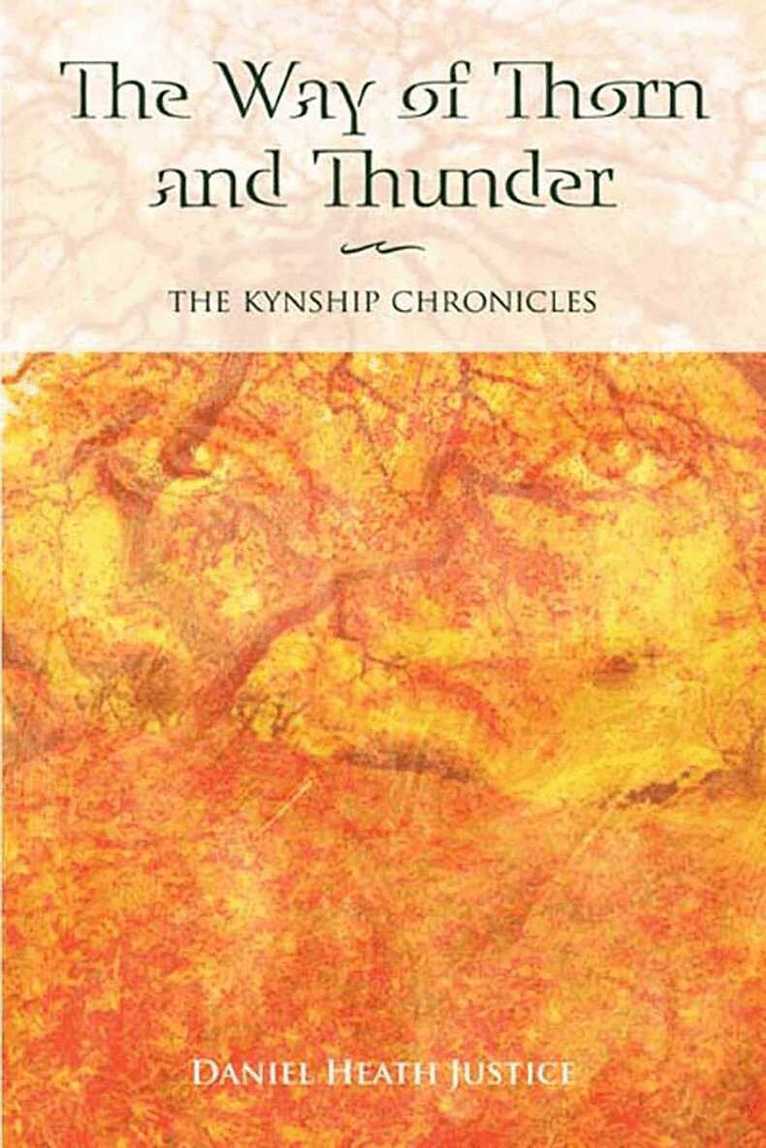
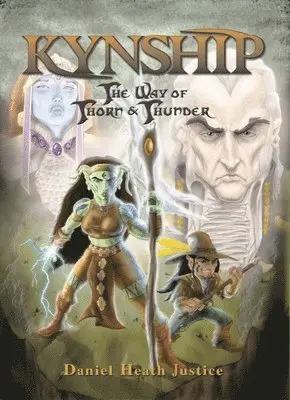
Taking fantasy literature beyond the stereotypes, Daniel Heath Justice’s acclaimed Thorn and Thunder novels are set in a world resembling eighteenth-century North America. The original trilogy is available here for the first time as a fully revised one-volume novel. The story of the struggle for the green world of the Everland, home of the forest-dwelling Kyn, is an adventure tale that bends genre and gender.
190 kr
Skickas inom 3-6 vardagar
1 226 kr
Skickas inom 7-10 vardagar
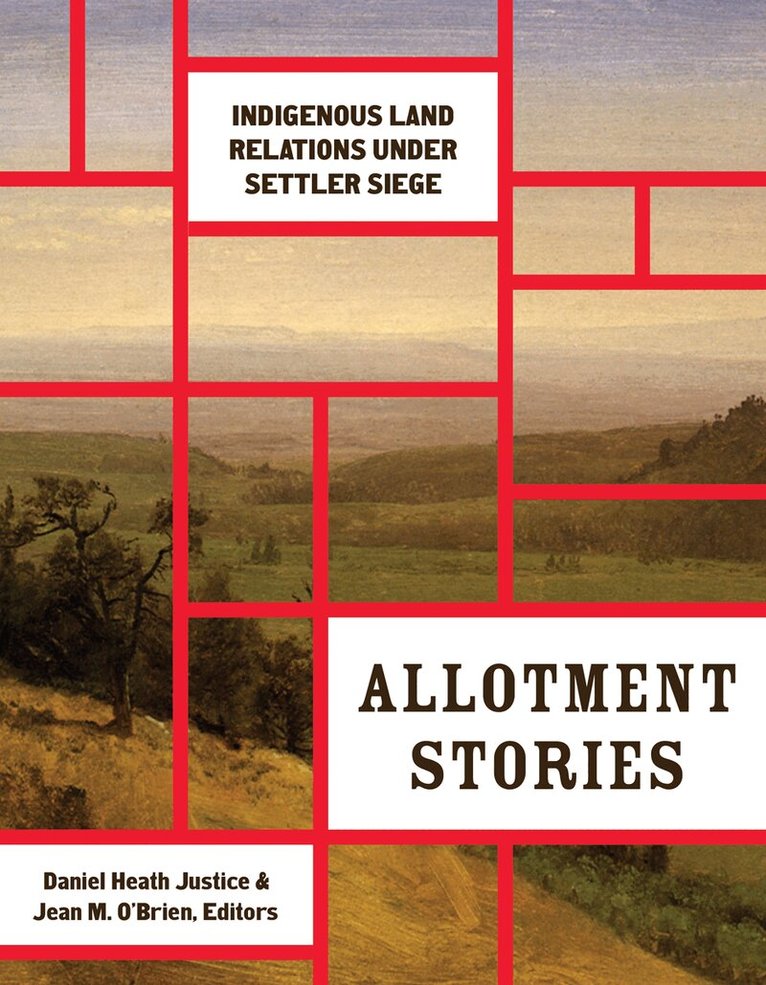
More than two dozen stories of Indigenous resistance to the privatization and allotment of Indigenous landsLand privatization has been a longstanding and ongoing settler colonial process separating Indigenous peoples from their traditional homelands, with devastating consequences. Allotment Stories delves into this conflict, creating a complex conversation out of narratives of Indigenous communities resisting allotment and other dispossessive land schemes.From the use of homesteading by nineteenth-century Anishinaabe women to maintain their independence to the role that roads have played in expropriating Guam’s Indigenous heritage to the links between land loss and genocide in California, Allotment Stories collects more than two dozen chronicles of white imperialism and Indigenous resistance. Ranging from the historical to the contemporary and grappling with Indigenous land struggles around the globe, these narratives showcase both scholarly and creative forms of expression, constructing a multifaceted book of diverse disciplinary perspectives. Allotment Stories highlights how Indigenous peoples have consistently used creativity to sustain collective ties, kinship relations, and cultural commitments in the face of privatization. At once informing readers while provoking them toward further research into Indigenous resilience, this collection pieces back together some of what the forces of allotment have tried to tear apart.Contributors: Jennifer Adese, U of Toronto Mississauga; Megan Baker, U of California, Los Angeles; William Bauer Jr., U of Nevada, Las Vegas; Christine Taitano DeLisle, U of Minnesota–Twin Cities; Vicente M. Diaz, U of Minnesota–Twin Cities; Sarah Biscarra Dilley, U of California, Davis; Marilyn Dumont, U of Alberta; Munir Fakher Eldin, Birzeit U, Palestine; Nick Estes, U of New Mexico; Pauliina Feodoroff; Susan E. Gray, Arizona State U; J. Kēhaulani Kauanui, Wesleyan U; Rauna Kuokkanen, U of Lapland and U of Toronto; Sheryl R. Lightfoot, U of British Columbia; Kelly McDonough, U of Texas at Austin; Ruby Hansen Murray; Tero Mustonen, U of Eastern Finland; Darren O’Toole, U of Ottawa; Shiri Pasternak, Ryerson U; Dione Payne, Te Whare Wānaka o Aoraki–Lincoln U; Joseph M. Pierce, Stony Brook U; Khal Schneider, California State U, Sacramento; Argelia Segovia Liga, Colegio de MichoacÁn; Leanne Betasamosake Simpson; Jameson R. Sweet, Rutgers U; Michael P. Taylor, Brigham Young U; Candessa Tehee, Northeastern State U; Benjamin Hugh Velaise, Google American Indian Network.
292 kr
Skickas inom 7-10 vardagar
More than two dozen stories of Indigenous resistance to the privatization and allotment of Indigenous landsLand privatization has been a longstanding and ongoing settler colonial process separating Indigenous peoples from their traditional homelands, with devastating consequences. Allotment Stories delves into this conflict, creating a complex conversation out of narratives of Indigenous communities resisting allotment and other dispossessive land schemes.From the use of homesteading by nineteenth-century Anishinaabe women to maintain their independence to the role that roads have played in expropriating Guam’s Indigenous heritage to the links between land loss and genocide in California, Allotment Stories collects more than two dozen chronicles of white imperialism and Indigenous resistance. Ranging from the historical to the contemporary and grappling with Indigenous land struggles around the globe, these narratives showcase both scholarly and creative forms of expression, constructing a multifaceted book of diverse disciplinary perspectives. Allotment Stories highlights how Indigenous peoples have consistently used creativity to sustain collective ties, kinship relations, and cultural commitments in the face of privatization. At once informing readers while provoking them toward further research into Indigenous resilience, this collection pieces back together some of what the forces of allotment have tried to tear apart.Contributors: Jennifer Adese, U of Toronto Mississauga; Megan Baker, U of California, Los Angeles; William Bauer Jr., U of Nevada, Las Vegas; Christine Taitano DeLisle, U of Minnesota–Twin Cities; Vicente M. Diaz, U of Minnesota–Twin Cities; Sarah Biscarra Dilley, U of California, Davis; Marilyn Dumont, U of Alberta; Munir Fakher Eldin, Birzeit U, Palestine; Nick Estes, U of New Mexico; Pauliina Feodoroff; Susan E. Gray, Arizona State U; J. Kēhaulani Kauanui, Wesleyan U; Rauna Kuokkanen, U of Lapland and U of Toronto; Sheryl R. Lightfoot, U of British Columbia; Kelly McDonough, U of Texas at Austin; Ruby Hansen Murray; Tero Mustonen, U of Eastern Finland; Darren O’Toole, U of Ottawa; Shiri Pasternak, Ryerson U; Dione Payne, Te Whare Wānaka o Aoraki–Lincoln U; Joseph M. Pierce, Stony Brook U; Khal Schneider, California State U, Sacramento; Argelia Segovia Liga, Colegio de MichoacÁn; Leanne Betasamosake Simpson; Jameson R. Sweet, Rutgers U; Michael P. Taylor, Brigham Young U; Candessa Tehee, Northeastern State U; Benjamin Hugh Velaise, Google American Indian Network.
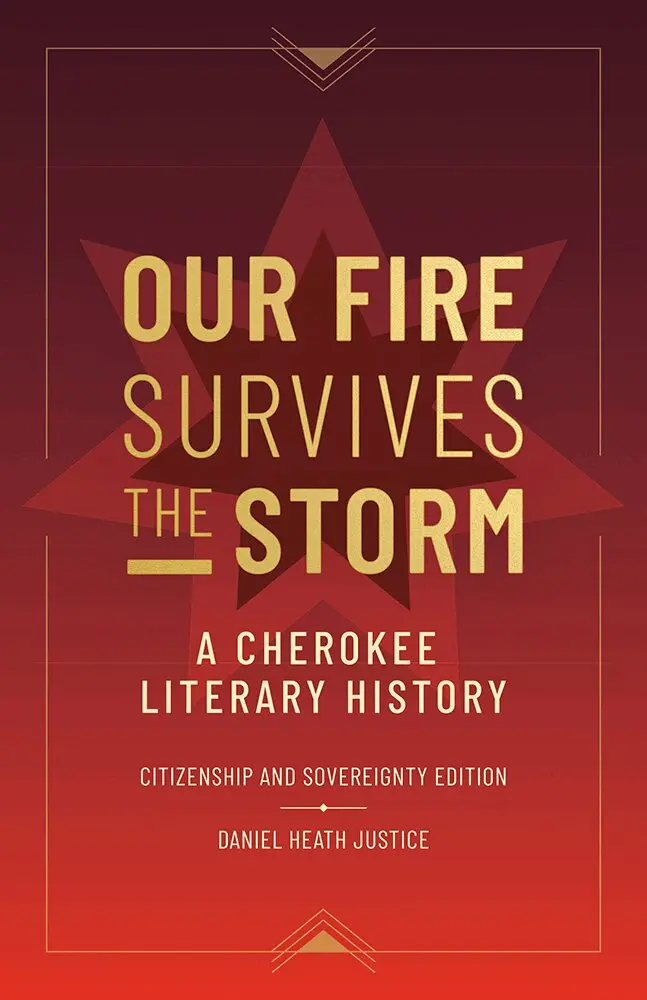
Our Fire Survives the Storm
A Cherokee Literary History, Citizenship and Sovereignty Edition
Häftad, Engelska, 2026
310 kr
Skickas inom 7-10 vardagar
The twentieth-anniversary edition of the path-clearing study of Cherokee writing in English, with an emphatic refocus on voices from the three Cherokee tribal nationsThis Citizenship and Sovereignty Edition of Our Fire Survives the Storm is a thoroughly updated, nationhood-focused, twentieth-anniversary revision of Daniel Heath Justice’s influential study of Cherokee writing in English. Through politically astute and historically grounded readings of diverse texts by citizens of the Cherokee Nation, United Keetoowah Band of Cherokee Indians, and Eastern Band of Cherokee Indians, Justice connects Cherokee literature to Indigenous sovereignty, nationhood, and collective futurity. Guided by a reparative vision that directly contends with the outdated literary legacies of the book’s first edition, this revision confronts the ongoing harms of unsubstantiated and false Cherokee heritage claims on literary studies, replacing readings of primary texts by unverified claimants with those of Cherokee citizen writers. As Justice addresses issues of accountability, he engages with the past two decades of Indigenous scholarship, fully updating terminology, concepts, and scholarly resources. He expands and deepens the intellectual and historical context for Cherokee literary production introduced in the first edition, and he discusses Cherokee writing and community in the mid-twentieth century, the Cherokee Freedmen’s long struggle for justice, and the future of Cherokee nationhood. Highlighting the work of authors who illustrate the transformative collective discourses of what it means to be Cherokee, Justice examines the richness of Cherokee literary expression through motifs of roots, removal, and nationhood in traditional stories, speeches, legal and governance documents, memoirs, short stories, novels, and plays. An invitation to reflective criticism, this new edition of Our Fire Survives the Storm is grounded in the belief that Indigenous nationhood is a necessary ethical response to the violence of the settler imaginary. Retail e-book files for this title are screen-reader friendly with images accompanied by short alt text and/or extended descriptions.
295 kr
Skickas inom 7-10 vardagar
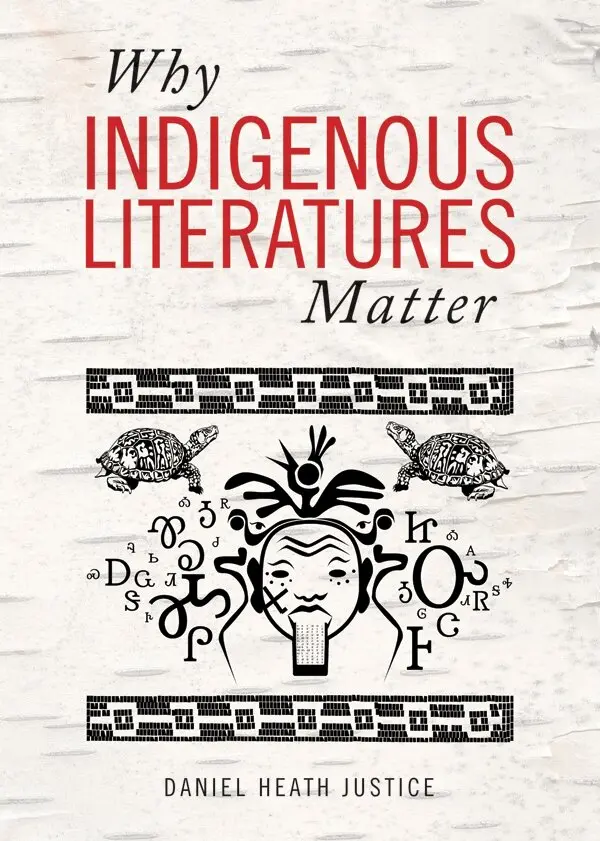
Part survey of the field of Indigenous literary studies, part cultural history, and part literary polemic, Why Indigenous Literatures Matter asserts the vital significance of literary expression to the political, creative, and intellectual efforts of Indigenous peoples today. In considering the connections between literature and lived experience, this book contemplates four key questions at the heart of Indigenous kinship traditions: How do we learn to be human? How do we become good relatives? How do we become good ancestors? How do we learn to live together? Blending personal narrative and broader historical and cultural analysis with close readings of key creative and critical texts, Justice argues that Indigenous writers engage with these questions in part to challenge settler-colonial policies and practices that have targeted Indigenous connections to land, history, family, and self. More importantly, Indigenous writers imaginatively engage the many ways that communities and individuals have sought to nurture these relationships and project them into the future.This provocative volume challenges readers to critically consider and rethink their assumptions about Indigenous literature, history, and politics while never forgetting the emotional connections of our shared humanity and the power of story to effect personal and social change. Written with a generalist reader firmly in mind, but addressing issues of interest to specialists in the field, this book welcomes new audiences to Indigenous literary studies while offering more seasoned readers a renewed appreciation for these transformative literary traditions.
157 kr
Skickas
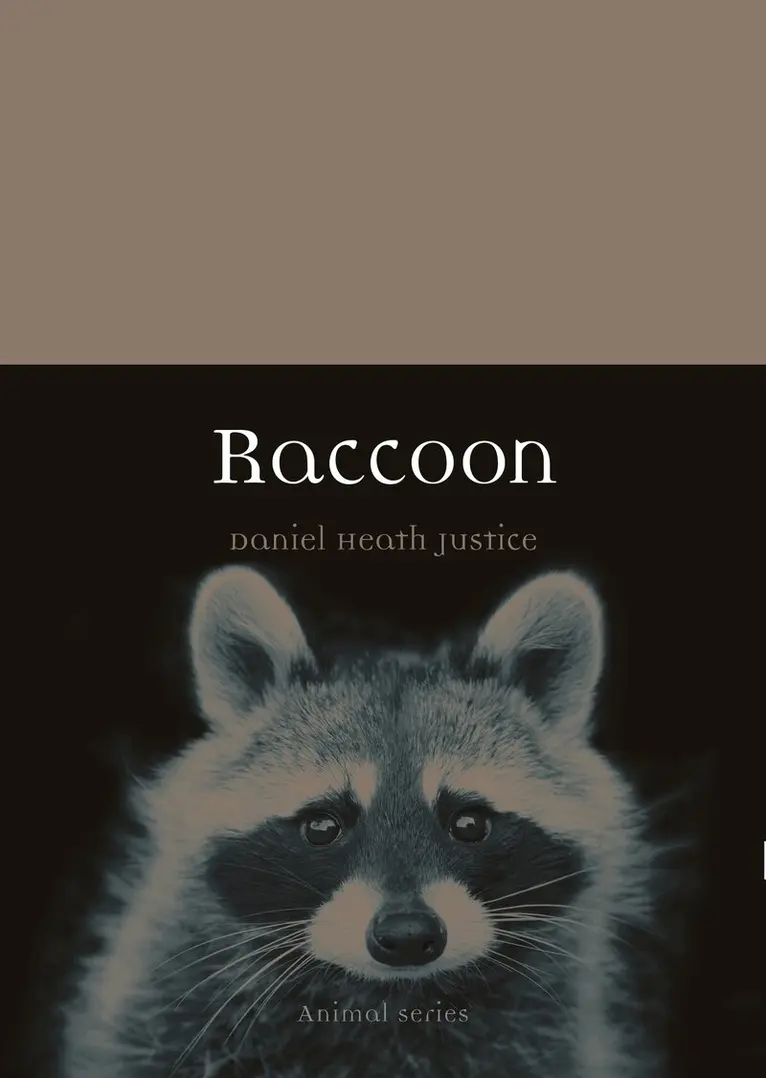
Masked bandits of the night, raiders of farm crops and rubbish bins, raccoons are notorious for their indifference to human property and propriety, yet they are also admired for their intelligence, dexterity and determination. Raccoons have also thoroughly adapted to human-dominated environments; they are thriving in numbers greater than at any point of their evolutionary history... including in new habitats.Raccoon surveys the natural and cultural history of this opportunistic omnivore, tracing its biological evolution, social significance, and image in a range of media and political contexts. From intergalactic misanthropes and despoilers of ancient temples to coveted hunting quarry, unpredictable pet, and symbols of wilderness and racial stereotype alike, Raccoon offers a lively consideration of this misunderstood outlaw species.