Daniel Lederman - Böcker
Visar alla böcker från författaren Daniel Lederman. Handla med fri frakt och snabb leverans.
9 produkter
9 produkter
780 kr
Skickas inom 10-15 vardagar
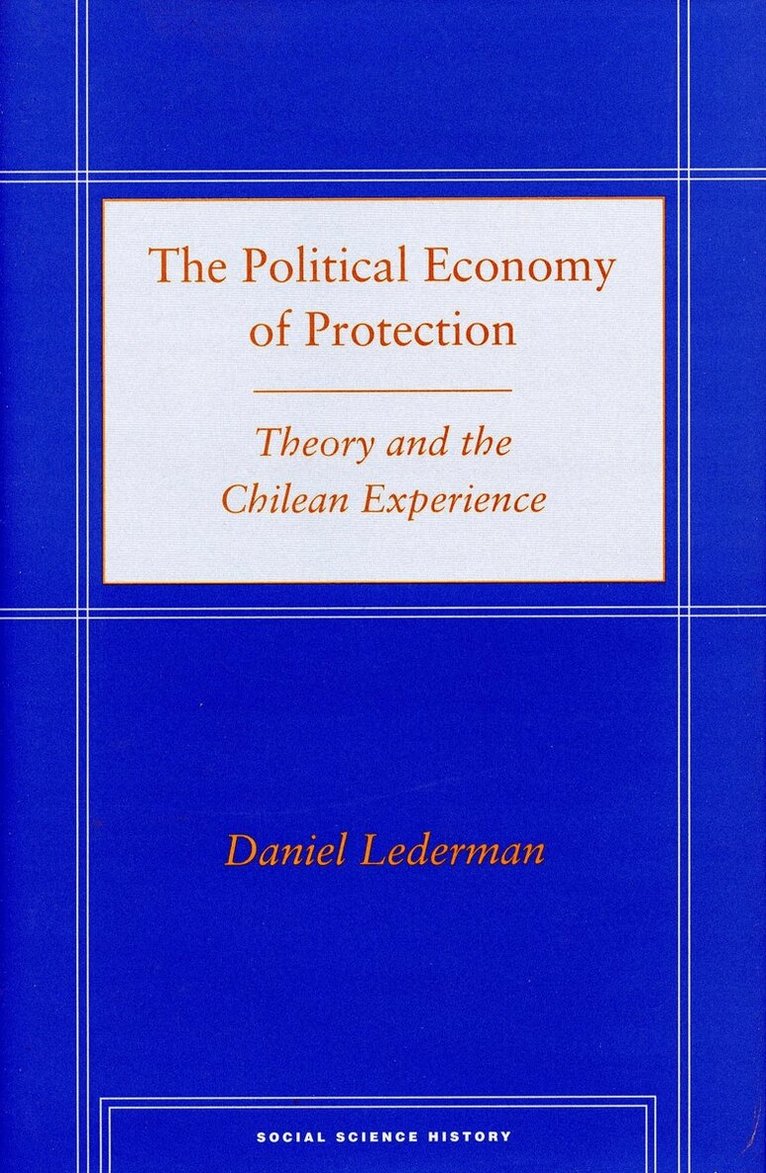
The Political Economy of Protection explains why countries, especially developing countries, change their trade policies over the course of history. It does so through an interdisciplinary approach, which borrows analyses from both political science and economics. While the central focus of this book is to explain historical changes in trade policy in one country, Chile, it is broadly relevant for students, scholars, and trade specialists interested in gaining a deeper understanding of the politics and economics of international trade. Given the intensifying public debates about the benefits of globalization, the author provides a uniquely rigorous yet interdisciplinary analysis of the forces that shape trade policy decisions, not just in Chile, but throughout the world.
2 658 kr
Skickas inom 3-6 vardagar
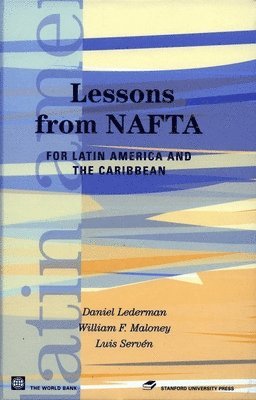
Analyzing the experience of Mexico under the North American Free Trade Agreement (NAFTA), the authors draw lessons for other countries considering free trade agreements with the United States. The authors conclude that NAFTA raised external trade and foreign investment inflows and had a modest effect on Mexico's average income per person. It is likely that NAFTA also helped achieve a modest reduction in poverty and an improvement in job quality. However, major obstacles remain to Mexico's long term development-NAFTA is not enough. The main lesson for other countries is that free trade agreements offer opportunities to accelerate economic growth, but do not guarantee it.
557 kr
Skickas inom 3-6 vardagar
Analyzing the experience of Mexico under the North American Free Trade Agreement (NAFTA), the authors draw lessons for other countries considering free trade agreements with the United States. The authors conclude that NAFTA raised external trade and foreign investment inflows and had a modest effect on Mexico's average income per person. It is likely that NAFTA also helped achieve a modest reduction in poverty and an improvement in job quality. However, major obstacles remain to Mexico's long term development-NAFTA is not enough. The main lesson for other countries is that free trade agreements offer opportunities to accelerate economic growth, but do not guarantee it.
3 136 kr
Skickas inom 3-6 vardagar
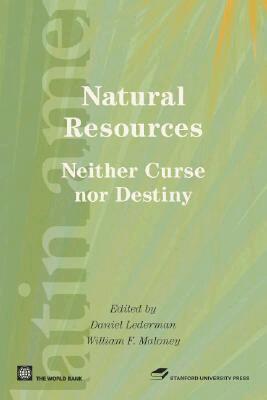
For almost as long as economics has been a profession, the role of natural resources in the promotion of economic growth has been among the core issues of development theory. Some newer theories suggest that natural riches produce institutional weaknesses as various social groups attempt to capture the economic rents derived from the exploitation of natural resources. Since the 1960s, some analysts have argued that resource-rich developing countries have grown more slowly than other developing countries. Nevertheless, we find ourselves in a time when conventional wisdom again postulates that natural resources are indeed riches. This book brings together a variety of analytical perspectives, ranging from econometric analyses of economic growth to historical studies of successful development experiences in countries with abundant natural resources. The evidence suggests that natural resources are neither a curse nor destiny. Natural resources can actually spur economic development when combined with the accumulation of knowledge for economic innovation.Furthermore, natural resource abundance need not be the only determinant of the structure of trade in developing countries. In fact, the accumulation of knowledge, infrastructure, and the quality of governance all seem to determine not only what countries produce and export, but how firms and workers produce any good.
643 kr
Skickas inom 3-6 vardagar
329 kr
Skickas inom 10-15 vardagar
'Natural Resources: Neither Course nor Destiny' brings together a variety of analytical perspectives, ranging from econometric analyses of economic growth to historical studies of successful development experiences in countries with abundant natural resources. The evidence suggests that natural resources are neither a curse nor destiny. Natural resources can actually spur economic development when combined with the accumulation of knowledge for economic innovation. Furthermore, natural resource abundance need not be the only determinant of the structure of trade in developing countries. In fact, the accumulation of knowledge, infrastructure, and the quality of governance all seem to determine not only what countries produce and export, but also how firms and workers produce any good.
Does What You Export Matter?
In Search of Empirical Guidance for Industrial Policies
Häftad, Engelska, 2012
449 kr
Skickas inom 10-15 vardagar
Does what economies export matter for development? If so, can industrial policies improve on the export basket generated by the market? This book approaches these questions from a variety of conceptual and policy viewpoints. Reviewing the theoretical arguments in favor of industrial policies, the authors first ask whether existing indicators allow policy makers to identify growth-promoting sectors with confidence. To this end, they assess, and ultimately cast doubt upon, the reliability of many popular indicators advocated by proponents of industrial policy.
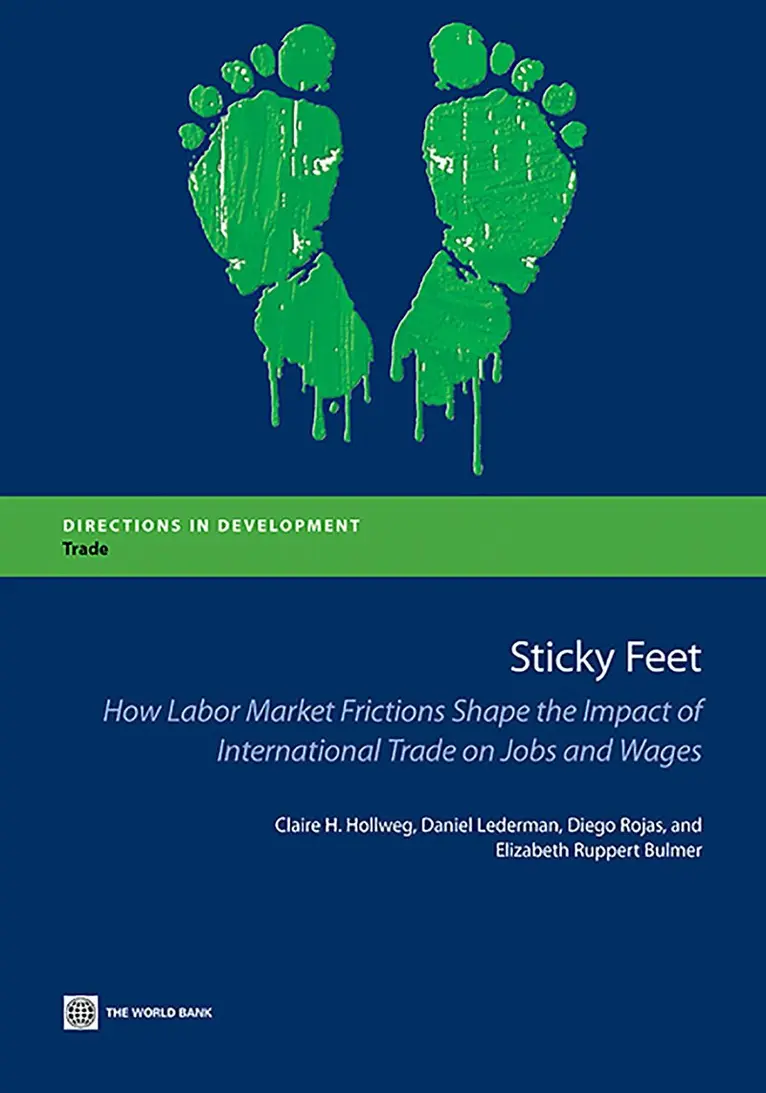
Sticky Feet
How Labor Market Frictions Shape the Impact of International Trade on Jobs and Wages
Häftad, Engelska, 2014
283 kr
Skickas inom 10-15 vardagar
This report quantifies labor mobility costs in developing countries and simulates the implied adjustment paths of employment and wages following a change in trade policy. High mobility costs are shown to reduce the potential gains to trade reform.
394 kr
Skickas inom 10-15 vardagar
In the 1960s, economic development was thought to be shaped by unlimited supplies of labour. Unlimited labour supply implies that wages would remain stagnant even when economies grow. In the 21st Century, the evidence is clear: the correlation between changes in wages and changes in Gross Domestic Product (GDP) per capita is high and close to one across economies of various sizes. Economic Development with Limited Supplies of Labor argues that the size of an economy’s labour force does condition development. It studies the challenges of small economies by systematically analysing correlates of labour-force size.The export structures of small economies are concentrated in a few products or services and in a small number of export destinations. In turn, export concentration is associated with terms of trade volatility, which combined with high exposure to international trade, implies that domestic economies also tend to be volatile as external volatility permeates national economic life.Moreover, limited territory plays a role in shaping how economies are affected by natural disasters, even when the probability of facing such disasters is not necessarily higher among small than among large economies. The combination of large governments with macroeconomic volatility seems to be associated with low national savings rates in small economies. This combination could be a challenge for long-term growth if productivity growth and foreign investment do not compensate for low domestic savings.