Daniel Todman - Böcker
Visar alla böcker från författaren Daniel Todman. Handla med fri frakt och snabb leverans.
5 produkter
5 produkter
214 kr
Skickas
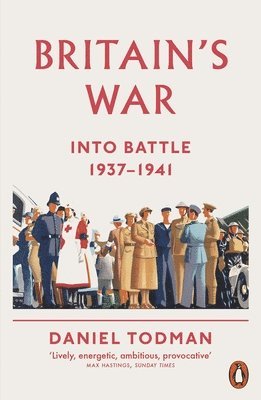
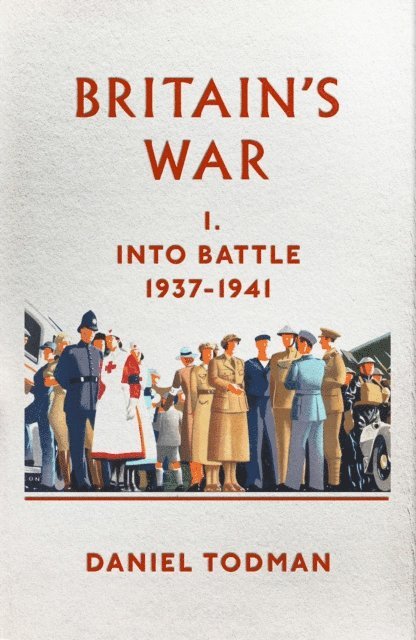
'An energetic, ambitious, provocative work by a young historian of notable gifts, which deserves a wide readership' Max Hastings, The Sunday Times'Bold and breathtaking... I have never read a more daringly panoramic survey of the period' Jonathan Wright, Herald ScotlandThe most terrible emergency in Britain's history, the Second World War required an unprecedented national effort. An exhausted country had to fight an unexpectedly long war and found itself much diminished amongst the victors. Yet the outcome of the war was nonetheless a triumph, not least for a political system that proved well adapted to the demands of a total conflict and for a population who had to make many sacrifices but who were spared most of the horrors experienced in the rest of Europe.Britain's War is a narrative of these epic events, an analysis of the myriad factors that shaped military success and failure, and an explanation of what the war tells us about the history of modern Britain. As compelling on the major military events as he is on the experience of ordinary people living through exceptional times, Todman suffuses his extraordinary book with a vivid sense of a struggle which left nobody unchanged - and explores why, despite terror, separation and deprivation, Britons were overwhelmingly willing to pay the price of victory.This volume begins with the coronation of George VI and ends with the disasters in the Far East in December 1941. A second volume will tell the story from 1942 to Indian independence in 1947.
204 kr
Skickas
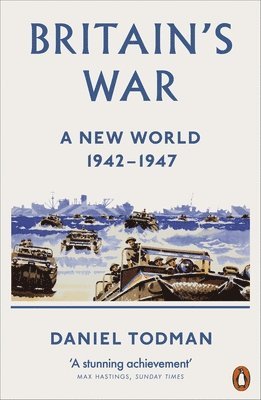
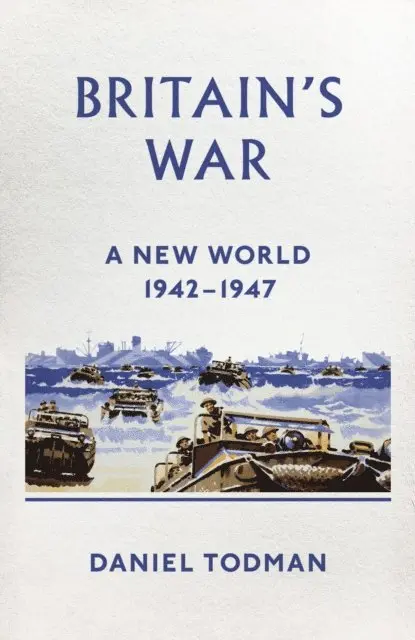
WINNER OF THE TEMPLER MEDAL BOOK PRIZE 2020A SPECTATOR, FINANCIAL TIMES AND DAILY TELEGRAPH BOOK OF THE YEAR 2020'A stunning achievement' Max Hastings, Sunday TimesPart Two of Daniel Todman's epic history of the Second World War opens with one of the greatest disasters in British military history - the fall of Singapore in February 1942. Unlike the aftermath of Dunkirk, there was no redeeming narrative available here - Britain had been defeated by a far smaller Japanese force in her grandly proclaimed, invincible Asian 'fortress'.The unique skill of Daniel Todman's history lies in its never losing sight of the inter-connectedness of the British experience. The agony of Singapore, for example, is seen through the eyes of its inhabitants, of its defenders, of Churchill's Cabinet and of ordinary people at home. Each stage of the war, from the nadir of early 1942 to the great series of victories in 1944-5 and on to Indian independence, is described both as it was understood at the time and in the light of the very latest historical research.Britain's War is a triumph of narrative, empathy and research, as gripping in its handling of individual witnesses to the war - those doomed to struggle with bombing, rationing, exhausting work and above all the absence of millions of family members - as of the gigantic military, social, technological and economic forces that swept the conflict along. It is the definitive account of a drama which reshaped our country.'I cannot recommend this history highly enough' Keith Lowe, Literary Review
441 kr
Skickas inom 3-6 vardagar
485 kr
Skickas inom 3-6 vardagar
715 kr
Skickas inom 3-6 vardagar
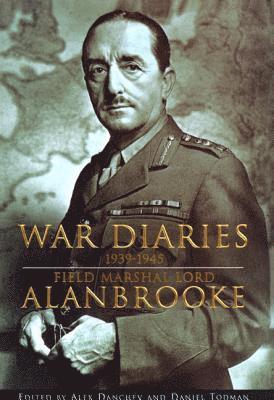
For most of the Second World War, General Sir Alan Brooke (1883-1963), later Field Marshal Lord Alanbrooke, was Britain's Chief of the Imperial General Staff (CIGS) and Winston Churchill's principal military adviser, and antagonist, in the inner councils of war. He is commonly considered the greatest CIGS in the history of the British Army. His diaries--published here for the first time in complete and unexpurgated form--are one of the most important and the most controversial military diaries of the modern era. The last great chronicle of the Second World War, they provide a riveting blow-by-blow account of how the war was waged and eventually won--including the controversies over the Second Front and the desperate search for a strategy, the Allied bomber offensive, the Italian campaign, the D-day landings, the race for Berlin, the divisions of Yalta, and the postwar settlement. Beginning in September 1939, the diaries were written up each night in the strictest secrecy and against all regulations.Alanbrooke's mask of command was legendary but these diaries tell us what he really saw and felt: moments of triumph and exhilaration, but also frustration, depression, betrayal, and doubt. They expose the gulf between the military and the politicians of the War Cabinet, and how often military strategy was misguided and nearly derailed by political prejudices. They also reveal the incredible strain on Alanbrooke of the Allied conferences in Washington, Moscow, Casablanca, Quebec, and Tehran, as he tried after intense and exhausting argument (not least with Churchill) to match Allied strategy with the reality of British military power and the fragility of the British Empire. These diaries demonstrate the true depth of Alanbrooke's rage and despair at Churchill's failure to grasp overall strategy. This was particularly acute in the winter of 1943-44 when Churchill, fueled by medicine and alcohol, no longer seemed master of himself.