Dannagal Goldthwaite Young - Böcker
Visar alla böcker från författaren Dannagal Goldthwaite Young. Handla med fri frakt och snabb leverans.
4 produkter
4 produkter
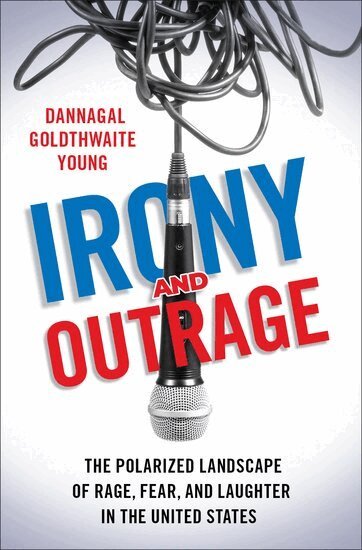
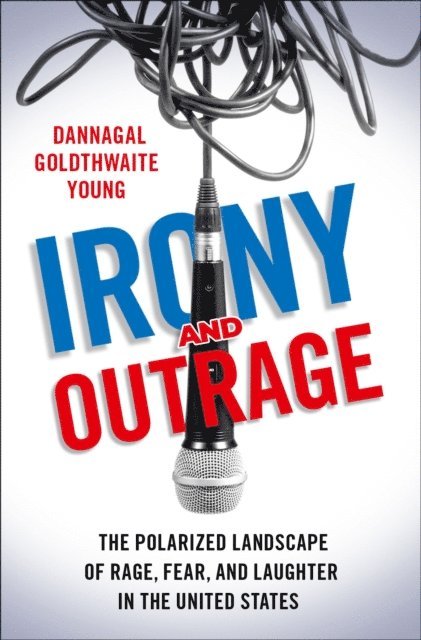
Irony and Outrage
The Polarized Landscape of Rage, Fear, and Laughter in the United States
Inbunden, Engelska, 2020
340 kr
Skickas inom 5-8 vardagar
For almost a decade, journalists and pundits have been asking why we don't see successful examples of political satire from conservatives or of opinion talk radio from liberals. This book turns that question on its head to argue that opinion talk is the political satire of the right and political satire is the opinion programming of the left. They look and feel like two different animals because their audiences are literally, two different animals. In Irony and Outrage, political and media psychologist Dannagal Goldthwaite Young explores the aesthetics, underlying logics, and histories of these two seemingly distinct genres, making the case that they should be thought of as the logical extensions of the psychology of the left and right, respectively. One genre is guided by ambiguity, play, deliberation, and openness, while the other is guided by certainty, vigilance, instinct, and boundaries. While the audiences for Sean Hannity and John Oliver come from opposing political ideologies, both are high in political interest, knowledge, and engagement, and both lack faith in many of our core democratic institutions. Young argues that the roles that these two genres play for their viewers are strikingly similar: galvanizing the opinion of the left or the right, mobilizing citizens around certain causes, and expressing a frustration with traditional news coverage while offering alternative sources of information and meaning. One key way in which they differ, however, concludes Young, is in their capacity to be exploited by special interests and political elites. Drawing on decades of research on political and media psychology and media effects, as well as historical accounts and interviews with comedians and comedy writers, Young unpacks satire's liberal "bias" and juxtaposes it with that of outrage's conservative "bias." She details how traits like tolerance for ambiguity and the motivation to engage with complex ideas shape our preferences for art, music, and literature; and how those same traits correlate with political ideology. In turn, she illustrates how these traits help explain why liberals and conservatives vary in the genres of political information they prefer to create and consume.
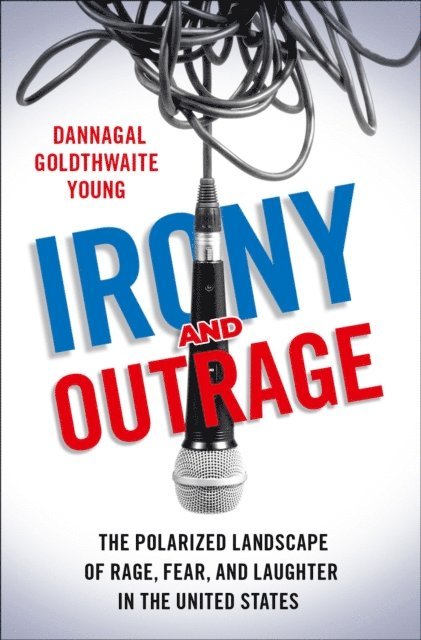
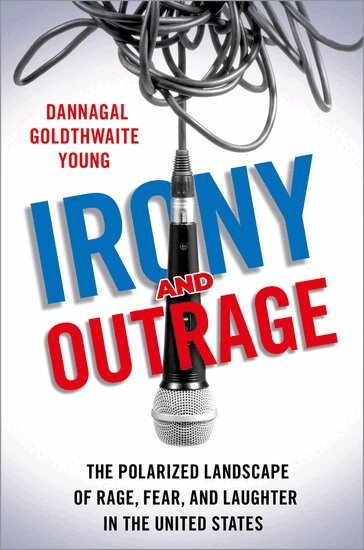
Irony and Outrage
The Polarized Landscape of Rage, Fear, and Laughter in the United States
Häftad, Engelska, 2021
441 kr
Skickas inom 3-6 vardagar
For almost a decade, journalists and pundits have been asking why we don't see successful examples of political satire from conservatives or of opinion talk radio from liberals. This book turns that question on its head to argue that opinion talk is the political satire of the right and political satire is the opinion programming of the left. They look and feel like two different animals because their audiences are literally, two different animals. In Irony and Outrage, political and media psychologist Dannagal Goldthwaite Young explores the aesthetics, underlying logics, and histories of these two seemingly distinct genres, making the case that they should be thought of as the logical extensions of the psychology of the left and right, respectively. One genre is guided by ambiguity, play, deliberation, and openness, while the other is guided by certainty, vigilance, instinct, and boundaries. While the audiences for Sean Hannity and John Oliver come from opposing political ideologies, both are high in political interest, knowledge, and engagement, and both lack faith in many of our core democratic institutions. Young argues that the roles that these two genres play for their viewers are strikingly similar: galvanizing the opinion of the left or the right, mobilizing citizens around certain causes, and expressing a frustration with traditional news coverage while offering alternative sources of information and meaning. One key way in which they differ, however, concludes Young, is in their capacity to be exploited by special interests and political elites. Drawing on decades of research on political and media psychology and media effects, as well as historical accounts and interviews with comedians and comedy writers, Young unpacks satire's liberal "bias" and juxtaposes it with that of outrage's conservative "bias." She details how traits like tolerance for ambiguity and the motivation to engage with complex ideas shape our preferences for art, music, and literature; and how those same traits correlate with political ideology. In turn, she illustrates how these traits help explain why liberals and conservatives vary in the genres of political information they prefer to create and consume.
2 113 kr
Skickas inom 10-15 vardagar
The state of political discourse in the United States today has been a subject of concern for many Americans. Political incivility is not merely a problem for political elites; political conversations between American citizens have also become more difficult and tense. The 2016 presidential elections featured campaign rhetoric designed to inflame the general public. Yet the 2016 election was certainly not the only cause of incivility among citizens. There have been many instances in recent years where reasoned discourse in our universities and other public venues has been threatened.This book was undertaken as a response to these problems. It presents and develops a more robust discussion of what civility is, why it matters, what factors might contribute to it, and what its consequences are for democratic life. The authors included here pursue three major questions: Is the state of American political discourse today really that bad, compared to prior eras; what lessons about civility can we draw from the 2016 election; and how have changes in technology such as the development of online news and other means of mediated communication changed the nature of our discourse? This book seeks to develop a coherent, civil conversation between divergent contemporary perspectives in political science, communications, history, sociology, and philosophy. This multidisciplinary approach helps to reflect on challenges to civil discourse, define civility, and identify its consequences for democratic life in a digital age. In this accessible text, an all-star cast of contributors tills the earth in which future discussion on civility will be planted.
686 kr
Skickas inom 10-15 vardagar
The state of political discourse in the United States today has been a subject of concern for many Americans. Political incivility is not merely a problem for political elites; political conversations between American citizens have also become more difficult and tense. The 2016 presidential elections featured campaign rhetoric designed to inflame the general public. Yet the 2016 election was certainly not the only cause of incivility among citizens. There have been many instances in recent years where reasoned discourse in our universities and other public venues has been threatened.This book was undertaken as a response to these problems. It presents and develops a more robust discussion of what civility is, why it matters, what factors might contribute to it, and what its consequences are for democratic life. The authors included here pursue three major questions: Is the state of American political discourse today really that bad, compared to prior eras; what lessons about civility can we draw from the 2016 election; and how have changes in technology such as the development of online news and other means of mediated communication changed the nature of our discourse? This book seeks to develop a coherent, civil conversation between divergent contemporary perspectives in political science, communications, history, sociology, and philosophy. This multidisciplinary approach helps to reflect on challenges to civil discourse, define civility, and identify its consequences for democratic life in a digital age. In this accessible text, an all-star cast of contributors tills the earth in which future discussion on civility will be planted.