Timothy J. Shaffer - Böcker
Visar alla böcker från författaren Timothy J. Shaffer. Handla med fri frakt och snabb leverans.
8 produkter
8 produkter
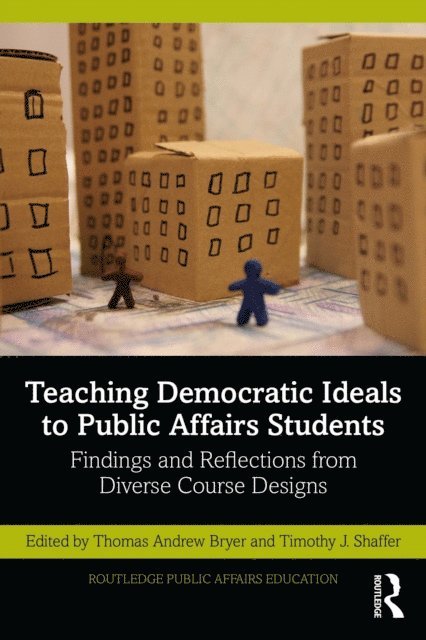
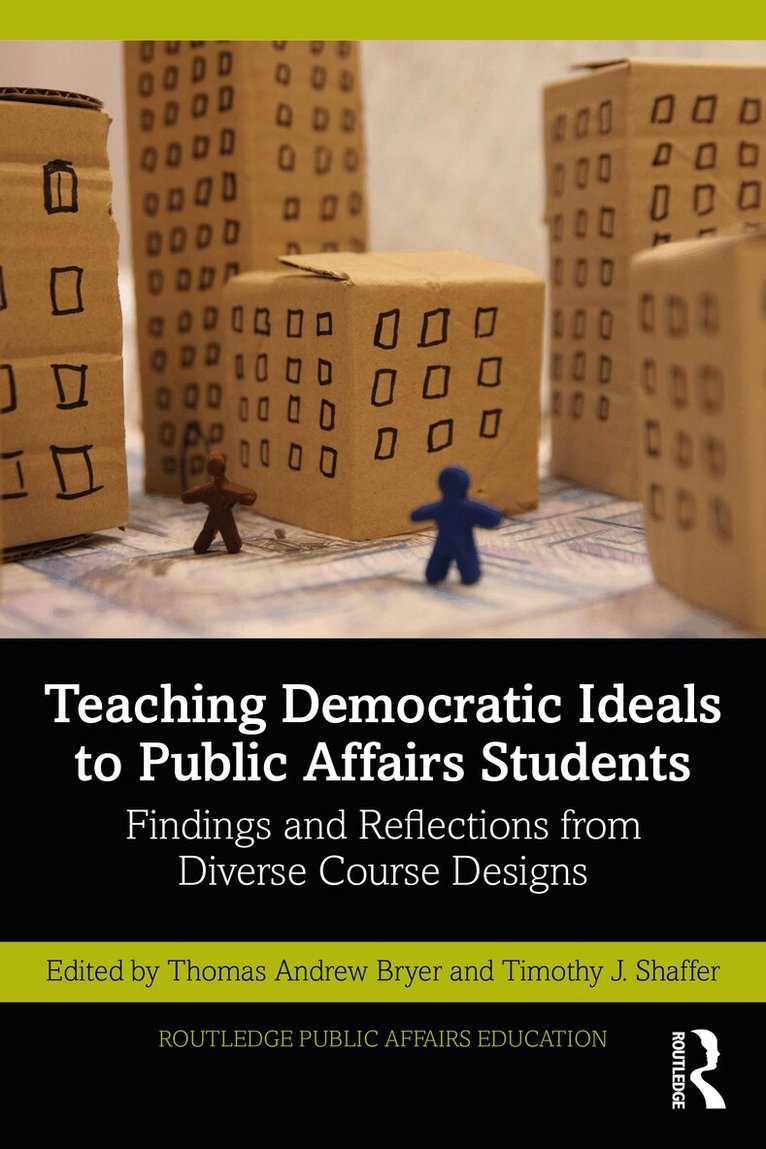
Teaching Democratic Ideals to Public Affairs Students
Findings and Reflections from Diverse Course Designs
Häftad, Engelska, 2023
563 kr
Skickas inom 10-15 vardagar
Contemporary public policy challenges are increasingly called “wicked problems,” or problems that cannot be solved by one sector or one agency of government alone. Solutions to wicked problems often further require the recognition and acceptance of tradeoffs or drawbacks, which might include a cost or sacrifice for the whole of society or a subsection of society. Based on the premise that government of, by, and for the people is not sufficient to rise to and meet wicked public policy problems, this volume provides strategies and ideas for public administration educators across diverse environments, as well as undergraduate and graduate education, to include and integrate the principles of “with the people” in public administration education and practice.This book explores the ways that notions of governing with citizens can be integrated into courses that focus on public administration and policy. It invites instructors to think about what it means to be educators within higher education institutions in a democratic society, championing deliberation and engagement as a way to prepare students for professional roles in their communities. Each chapter is written by a contributor who has road-tested the inclusion of democratic ideals and principles in their own classrooms, and each chapter therefore provides blueprints, curriculum plans, and lesson plans for the integration of democratic principles in public administration education and practice. Teaching Democratic Ideals to Public Affairs Students is essential reading for faculty in public administration, public policy, and political science departments, and it will also be a useful guidebook for practicing public administrators, as well as those who provide training to practicing administrators and leaders.
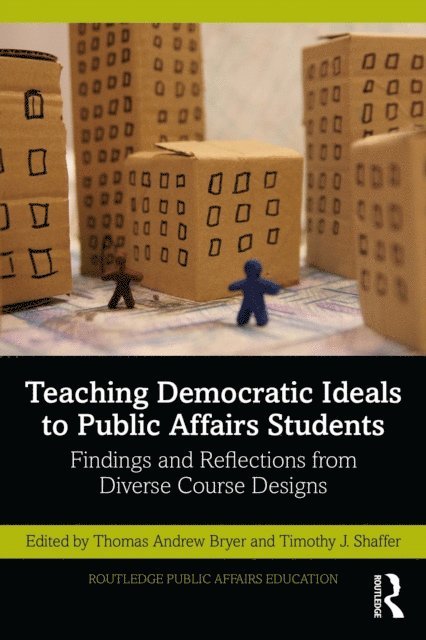
Teaching Democratic Ideals to Public Affairs Students
Findings and Reflections from Diverse Course Designs
Inbunden, Engelska, 2023
1 954 kr
Skickas inom 10-15 vardagar
Contemporary public policy challenges are increasingly called “wicked problems,” or problems that cannot be solved by one sector or one agency of government alone. Solutions to wicked problems often further require the recognition and acceptance of tradeoffs or drawbacks, which might include a cost or sacrifice for the whole of society or a subsection of society. Based on the premise that government of, by, and for the people is not sufficient to rise to and meet wicked public policy problems, this volume provides strategies and ideas for public administration educators across diverse environments, as well as undergraduate and graduate education, to include and integrate the principles of “with the people” in public administration education and practice.This book explores the ways that notions of governing with citizens can be integrated into courses that focus on public administration and policy. It invites instructors to think about what it means to be educators within higher education institutions in a democratic society, championing deliberation and engagement as a way to prepare students for professional roles in their communities. Each chapter is written by a contributor who has road-tested the inclusion of democratic ideals and principles in their own classrooms, and each chapter therefore provides blueprints, curriculum plans, and lesson plans for the integration of democratic principles in public administration education and practice. Teaching Democratic Ideals to Public Affairs Students is essential reading for faculty in public administration, public policy, and political science departments, and it will also be a useful guidebook for practicing public administrators, as well as those who provide training to practicing administrators and leaders.
2 088 kr
Skickas inom 10-15 vardagar
The state of political discourse in the United States today has been a subject of concern for many Americans. Political incivility is not merely a problem for political elites; political conversations between American citizens have also become more difficult and tense. The 2016 presidential elections featured campaign rhetoric designed to inflame the general public. Yet the 2016 election was certainly not the only cause of incivility among citizens. There have been many instances in recent years where reasoned discourse in our universities and other public venues has been threatened.This book was undertaken as a response to these problems. It presents and develops a more robust discussion of what civility is, why it matters, what factors might contribute to it, and what its consequences are for democratic life. The authors included here pursue three major questions: Is the state of American political discourse today really that bad, compared to prior eras; what lessons about civility can we draw from the 2016 election; and how have changes in technology such as the development of online news and other means of mediated communication changed the nature of our discourse? This book seeks to develop a coherent, civil conversation between divergent contemporary perspectives in political science, communications, history, sociology, and philosophy. This multidisciplinary approach helps to reflect on challenges to civil discourse, define civility, and identify its consequences for democratic life in a digital age. In this accessible text, an all-star cast of contributors tills the earth in which future discussion on civility will be planted.
685 kr
Skickas inom 10-15 vardagar
The state of political discourse in the United States today has been a subject of concern for many Americans. Political incivility is not merely a problem for political elites; political conversations between American citizens have also become more difficult and tense. The 2016 presidential elections featured campaign rhetoric designed to inflame the general public. Yet the 2016 election was certainly not the only cause of incivility among citizens. There have been many instances in recent years where reasoned discourse in our universities and other public venues has been threatened.This book was undertaken as a response to these problems. It presents and develops a more robust discussion of what civility is, why it matters, what factors might contribute to it, and what its consequences are for democratic life. The authors included here pursue three major questions: Is the state of American political discourse today really that bad, compared to prior eras; what lessons about civility can we draw from the 2016 election; and how have changes in technology such as the development of online news and other means of mediated communication changed the nature of our discourse? This book seeks to develop a coherent, civil conversation between divergent contemporary perspectives in political science, communications, history, sociology, and philosophy. This multidisciplinary approach helps to reflect on challenges to civil discourse, define civility, and identify its consequences for democratic life in a digital age. In this accessible text, an all-star cast of contributors tills the earth in which future discussion on civility will be planted.
785 kr
Skickas inom 7-10 vardagar
Grassroots Engagement and Social Justice through Cooperative Extension grows out of a commitment to the belief that Cooperative Extension professionals can and should be deeply engaged with the communities they work in to improve life—individually and collectively. Rooted in an understanding of the history and development of Extension, the authors focus on contemporary efforts to address systemic inequities. They offer an alternative to the “expert” model that would have Extension educators provide information detached from the difficult and sometimes contentious issues that shape community work. These essays highlight Extension’s role in and responsibility for culturally relevant community education that is rooted in democratic practices and social justice. The ultimate aim of this book is to offer a vision for the future of Extension as its practitioners continue to reach for cultural competence necessary to address issues of systemic injustice in the communities they serve and of which they are a part.
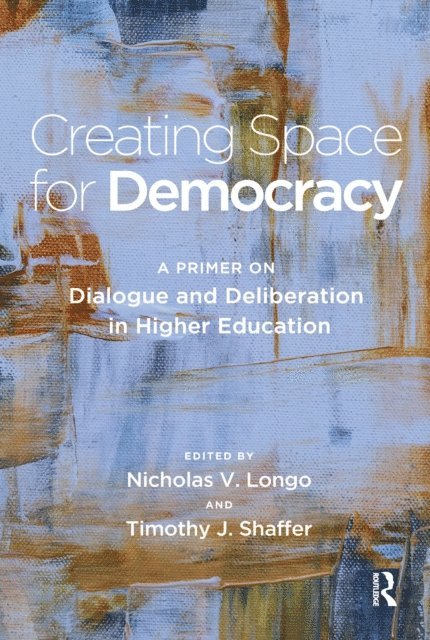
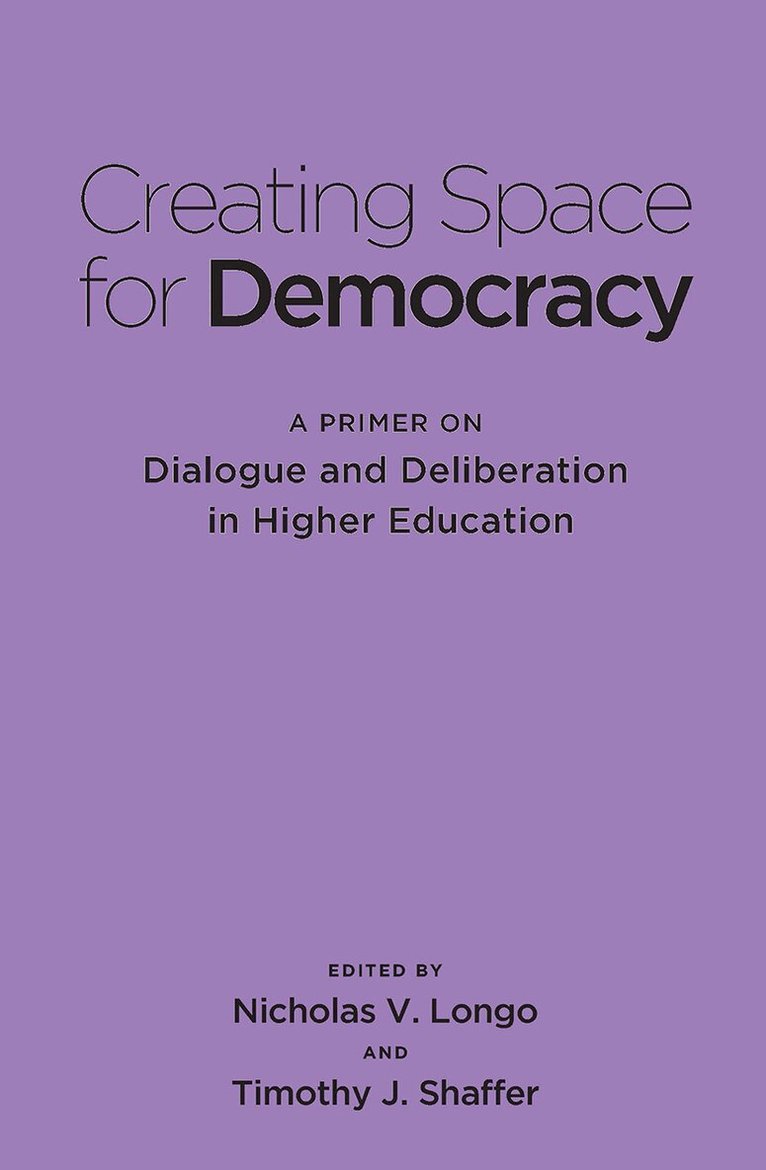
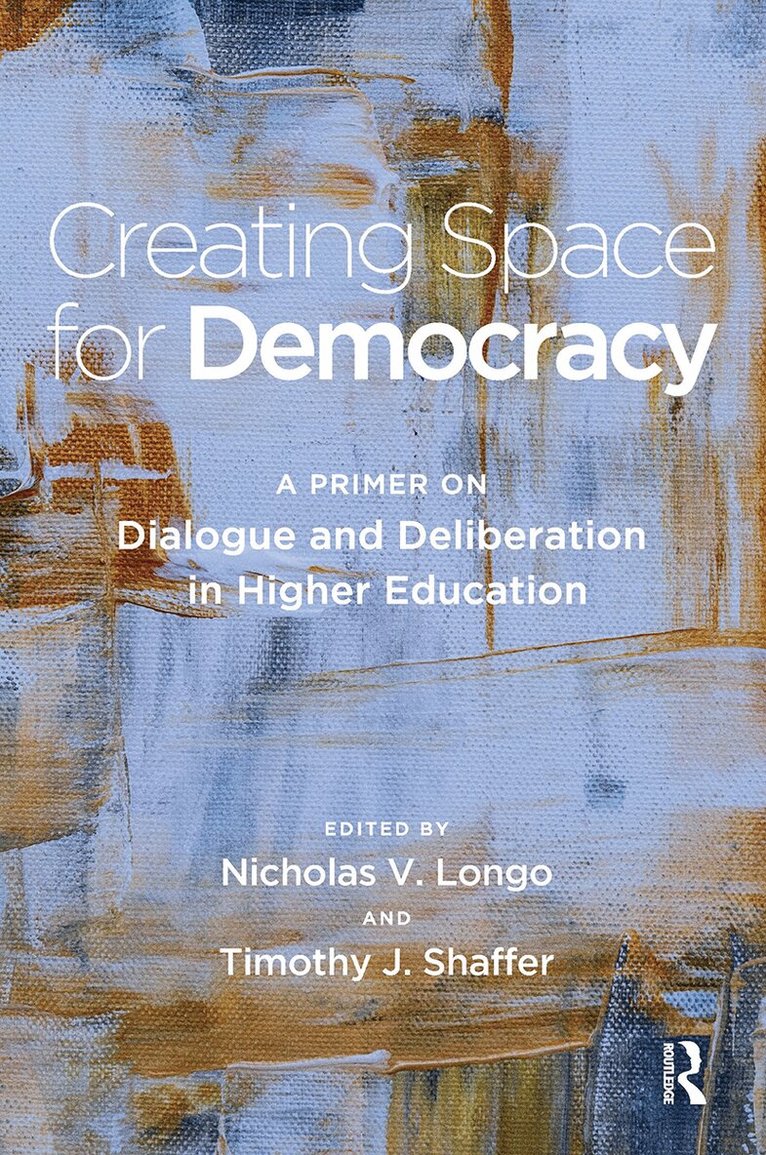
Creating Space for Democracy
A Primer on Dialogue and Deliberation in Higher Education
Inbunden, Engelska, 2019
2 030 kr
Skickas inom 10-15 vardagar
We live in divisive and polarizing times, often remaining in comfortable social bubbles and experiencing few genuine interactions with people who are different or with whom we disagree. Stepping out and turning to one another is difficult but necessary. For our democracy to thrive at a time when we face wicked problems that involve tough trade-offs it is vital that all citizens participate fully in the process. We need to learn to listen, think, and act with others to solve public problems. This collaborative task begins with creating space for democracy.This book provides a guide for doing so on campus through deliberation and dialogue. At the most basic level, this book describes collaborative and relational work to engage with others and co-create meaning. Specifically, dialogue and deliberation are processes in which a diverse group of people moves toward making a collective decision on a difficult public issue. This primer offers a blueprint for achieving the civic mission of higher education by incorporating dialogue and deliberation into learning at colleges and universities. It opens by providing a conceptual framework, with leading voices in the dialogue and deliberation field providing insights on issues pertinent to college campuses, from free speech and academic freedom to neutrality and the role of deliberation in civic engagement. Subsequent sections describe a diverse range of methods and approaches used by several organizations that pioneered and sustained deliberative practices; outline some of the many ways in which educators and institutions are using dialogue and deliberation in curricular, co-curricular, and community spaces, including venues such as student centers, academic libraries, and residence halls. All of the chapters, including a Resource Section, provide readers with a starting point for conceptualizing and implementing their own deliberation and dialogue initiatives.This book, intended for all educators who are concerned about democracy, imparts the power and impact of public talk, offers the insights and experiences of leading practitioners, and provides the grounding to adopt or adapt the models in their own settings to create educative spaces and experiences that are humanizing, authentic, and productive. It is an important resource for campus leaders, student affairs practitioners, librarians, and centers of institutional diversity, community engagement, teaching excellence and service-learning, as well as faculty, particularly those in the fields of communication studies, education, and political science.A Co-Publication with AAC&U and Campus Compact
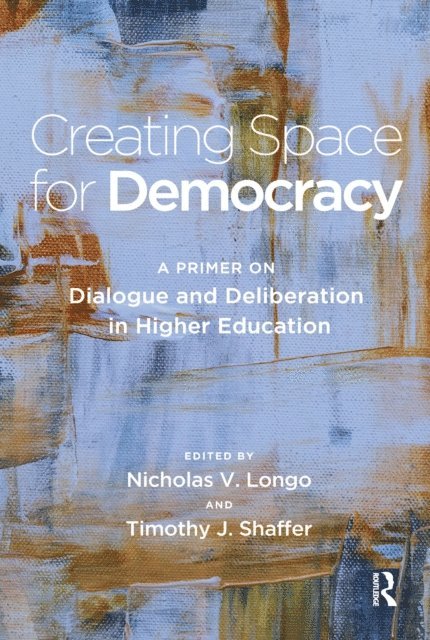
Creating Space for Democracy
A Primer on Dialogue and Deliberation in Higher Education
Häftad, Engelska, 2019
481 kr
Skickas inom 10-15 vardagar
We live in divisive and polarizing times, often remaining in comfortable social bubbles and experiencing few genuine interactions with people who are different or with whom we disagree. Stepping out and turning to one another is difficult but necessary. For our democracy to thrive at a time when we face wicked problems that involve tough trade-offs it is vital that all citizens participate fully in the process. We need to learn to listen, think, and act with others to solve public problems. This collaborative task begins with creating space for democracy.This book provides a guide for doing so on campus through deliberation and dialogue. At the most basic level, this book describes collaborative and relational work to engage with others and co-create meaning. Specifically, dialogue and deliberation are processes in which a diverse group of people moves toward making a collective decision on a difficult public issue. This primer offers a blueprint for achieving the civic mission of higher education by incorporating dialogue and deliberation into learning at colleges and universities. It opens by providing a conceptual framework, with leading voices in the dialogue and deliberation field providing insights on issues pertinent to college campuses, from free speech and academic freedom to neutrality and the role of deliberation in civic engagement. Subsequent sections describe a diverse range of methods and approaches used by several organizations that pioneered and sustained deliberative practices; outline some of the many ways in which educators and institutions are using dialogue and deliberation in curricular, co-curricular, and community spaces, including venues such as student centers, academic libraries, and residence halls. All of the chapters, including a Resource Section, provide readers with a starting point for conceptualizing and implementing their own deliberation and dialogue initiatives.This book, intended for all educators who are concerned about democracy, imparts the power and impact of public talk, offers the insights and experiences of leading practitioners, and provides the grounding to adopt or adapt the models in their own settings to create educative spaces and experiences that are humanizing, authentic, and productive. It is an important resource for campus leaders, student affairs practitioners, librarians, and centers of institutional diversity, community engagement, teaching excellence and service-learning, as well as faculty, particularly those in the fields of communication studies, education, and political science.A Co-Publication with AAC&U and Campus Compact
257 kr
Skickas inom 5-8 vardagar