Darin Barney - Böcker
Visar alla böcker från författaren Darin Barney. Handla med fri frakt och snabb leverans.
10 produkter
10 produkter
592 kr
Skickas inom 3-6 vardagar
944 kr
Skickas inom 5-8 vardagar
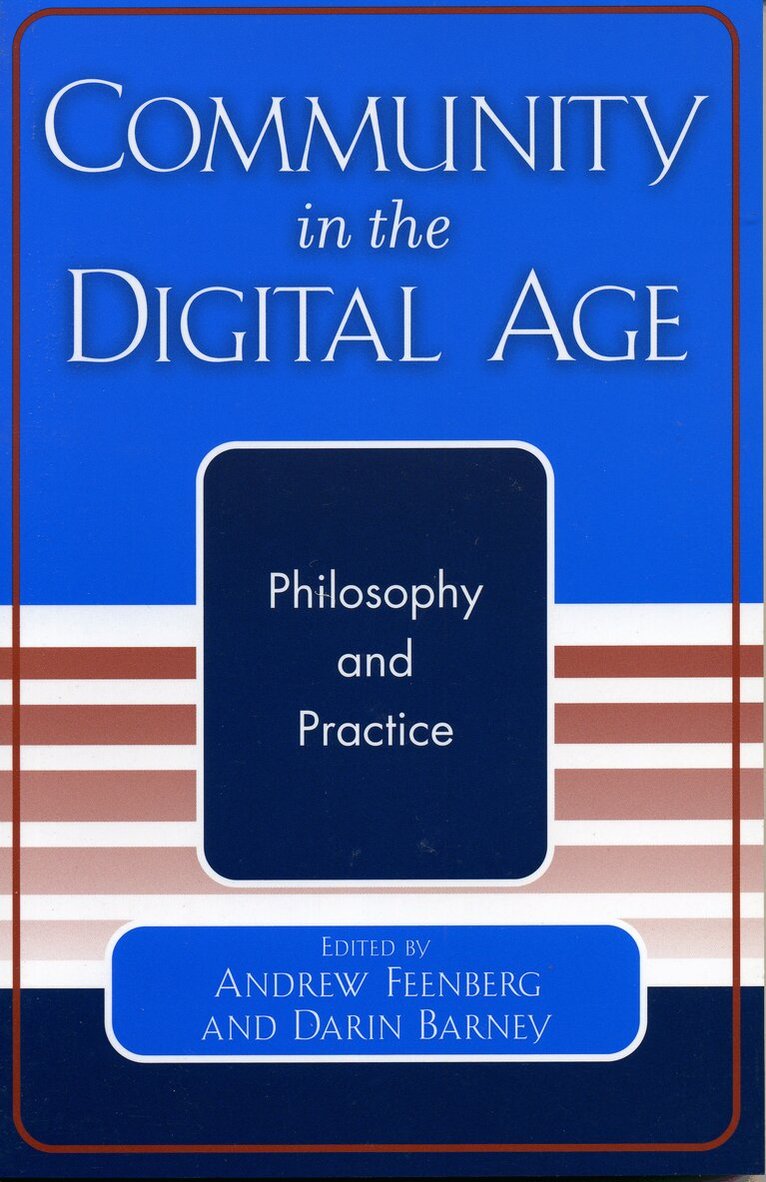
Is the Internet the key to a reinvigorated public life? Or will it fragment society by enabling citizens to associate only with like-minded others? Online community has provided social researchers with insights into our evolving social life. As suburbanization and the breakdown of the extended family and neighborhood isolate individuals more and more, the Internet appears as a possible source for reconnection. Are virtual communities 'real' enough to support the kind of personal commitment and growth we associate with community life, or are they fragile and ultimately unsatisfying substitutes for human interaction? Community in the Digital Age features the latest, most challenging work in an important and fast-changing field, providing a forum for some of the leading North American social scientists and philosophers concerned with the social and political implications of this new technology. Their provocative arguments touch on all sides of the debate surrounding the Internet, community, and democracy.
650 kr
Skickas inom 7-10 vardagar
In The Network Society, Darin Barney provides a compelling examination of the social, political and economic implications of network technologies and their application across a wide range of practices and institutions. Are we in the midst of a digital revolution? Have new information and communication technologies given birth to a new form of society, or do they reinforce and extend existing patterns and relationships? This book provides a clear and engaging discussion of these and other questions. Using a sophisticated model of the relationship between technology and society, Barney investigates both what has changed, and what has remained the same, in the age of the Internet. Among the issues discussed are debates concerning the emergence of a 'knowledge economy'; digital restructuring of employment and work; globalization and the status of the nation-state; the prospects of digital democracy; the digital divide; new social movements; and culture, community and identity in the age of new media.This book provides an accessible resource for a thoughtful engagement with life in the network society. It will be essential reading for students in sociology and media and communication studies. This will be a valuable textbook for undergraduate students of sociology and media and communication studies.
226 kr
Skickas inom 7-10 vardagar
In The Network Society, Darin Barney provides a compelling examination of the social, political and economic implications of network technologies and their application across a wide range of practices and institutions. Are we in the midst of a digital revolution? Have new information and communication technologies given birth to a new form of society, or do they reinforce and extend existing patterns and relationships? This book provides a clear and engaging discussion of these and other questions. Using a sophisticated model of the relationship between technology and society, Barney investigates both what has changed, and what has remained the same, in the age of the Internet. Among the issues discussed are debates concerning the emergence of a 'knowledge economy'; digital restructuring of employment and work; globalization and the status of the nation-state; the prospects of digital democracy; the digital divide; new social movements; and culture, community and identity in the age of new media.This book provides an accessible resource for a thoughtful engagement with life in the network society. It will be essential reading for students in sociology and media and communication studies. This will be a valuable textbook for undergraduate students of sociology and media and communication studies.
471 kr
Skickas inom 7-10 vardagar
From all sides, we hear that computer technology, with its undeniable power to disseminate information and connect individuals, holds enormous potential for a reinvigoration of political life. But will the Internet really spark a democratic revolution? And will the changes it brings be so profound that past political thought will be of little use in helping us to understand them?In Prometheus Wired, Darin Barney debunks claims that a networked society will provide the infrastructure for a political revolution and shows that the resources we need for understanding and making sound judgments about this new technology are surprisingly close at hand. By looking to thinkers who grappled with the relationship of society and technology, such as Plato, Aristotle, Marx, and Heidegger, Barney critically examines such assertions about the character of digital networks.Along the way, Barney offers an eye-opening history of digital networks and then explores a wide range of contemporary issues, such as electronic commerce, telecommuting, privacy, virtual community, digital surveillance, and the possibility of sovereign governance in an age of global networks. Ultimately, Barney argues that instead of placing power back in the hands of the public, a networked economy seems to exacerbate the worst features of industrial capitalism, and, in terms of the surveillance and control it exerts, reduces our political freedom.Of vital interest to politicians, communicators, and anyone concerned about the future of democracy in the digital age, Prometheus Wired adds a provocative new voice to the debate swirling around "the Net" and the ways in which it will, or will not, change our political lives.
280 kr
Skickas inom 7-10 vardagar
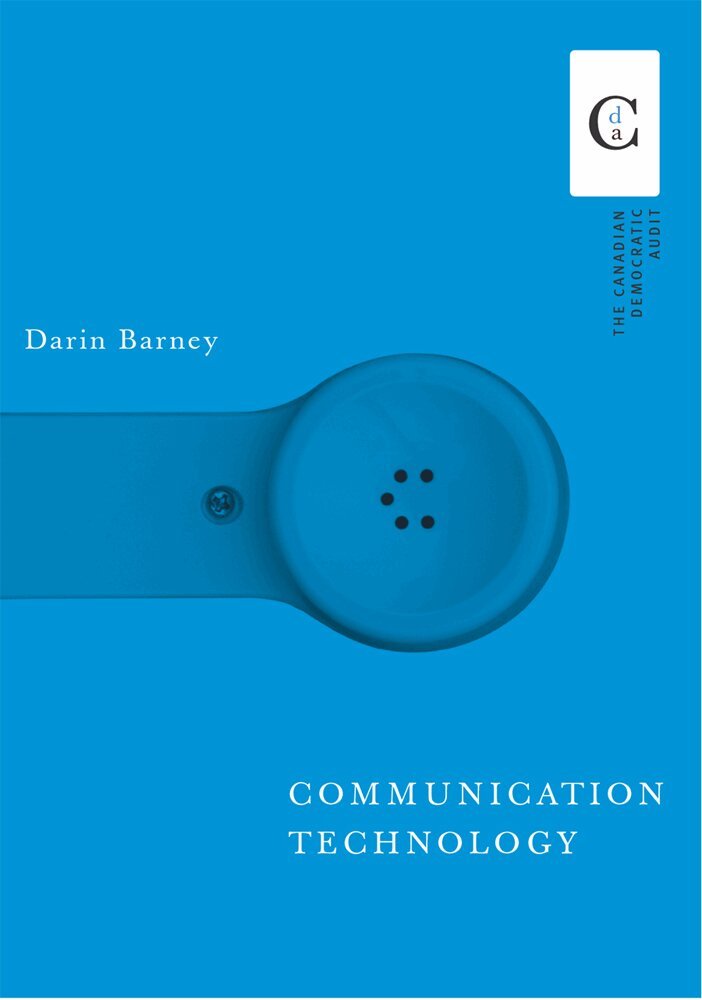
When the Internet began to emerge as a popular new mode ofcommunication, many political scientists and social commentatorsbelieved that it would revolutionize our democratic institutions.Today, voter turnout is at an historic low and Internet usage is at anall-time high. Can we still make the claim that new information andcommunication technologies (ICTs) enhance democratic life in Canada?What effect does the technological mediation of political communicationhave on the practice of Canadian politics? How have such technologiesaffected the distribution of power in society?Darin Barney investigates the links between ICTs and democraticprocesses, arguing that the potential of digital technologies tocontribute to a more democratic political system will remain largelyuntapped unless the more conventional dimensions of Canadian politics,the economy, and modes of governance are reoriented.
285 kr
Skickas inom 7-10 vardagar
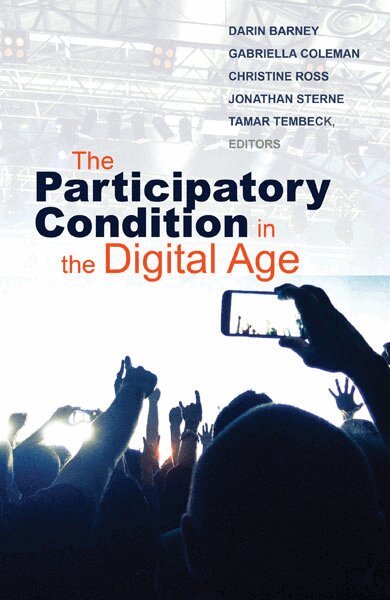
Just what is the participatory condition? It is the situation in which taking part in something with others has become both environmental and normative. The fact that we have always participated does not mean we have always lived under the participatory condition. What is distinctive about the present is the extent to which the everyday social, economic, cultural, and political activities that comprise simply being in the world have been thematized and organized around the priority of participation. Structured along four axes investigating the relations between participation and politics, surveillance, openness, and aesthetics, The Participatory Condition in the Digital Age comprises fifteen essays that explore the promises, possibilities, and failures of contemporary participatory media practices as related to power, Occupy Wall Street, the Arab Spring uprisings, worker-owned cooperatives for the post-Internet age; paradoxes of participation, media activism, open source projects; participatory civic life; commercial surveillance; contemporary art and design; and education. This book represents the most comprehensive and transdisciplinary endeavor to date to examine the nature, place, and value of participation in the digital age. Just as in 1979, when Jean-Frane7ois Lyotard proposed that the postmodern conditionwas characterized by the questioning of historical grand narratives, The Participatory Condition in the Digital Age investigates how participation has become a central preoccupation of our time. Contributors: Mark Andrejevic, Pomona College; Bart Cammaerts, London School of Economics and Political Science (LSE); Nico Carpentier, Vrije Universiteit Brussel (VUB Free University of Brussels) and Charles University in Prague; Julie E. Cohen, Georgetown University; Kate Crawford, MIT; Alessandro Delfanti, University of Toronto; Christina Dunbar-Hester, University of Southern California; Rudolf Frieling, California College of Arts and the San Francisco Art Institute; Salvatore Iaconesi, La Sapienza University of Rome and ISIA Design Florence; Jason Edward Lewis, Concordia University; Rafael Lozano-Hemmer; Graham Pullin, University of Dundee; Trebor Scholz, The New School in New York City; Cayley Sorochan, McGill University; Bernard Stiegler, Institute for Research and Innovation in Paris; Krzysztof Wodiczko, Harvard Graduate School of Design; Jillian C. York.
1 278 kr
Skickas inom 7-10 vardagar
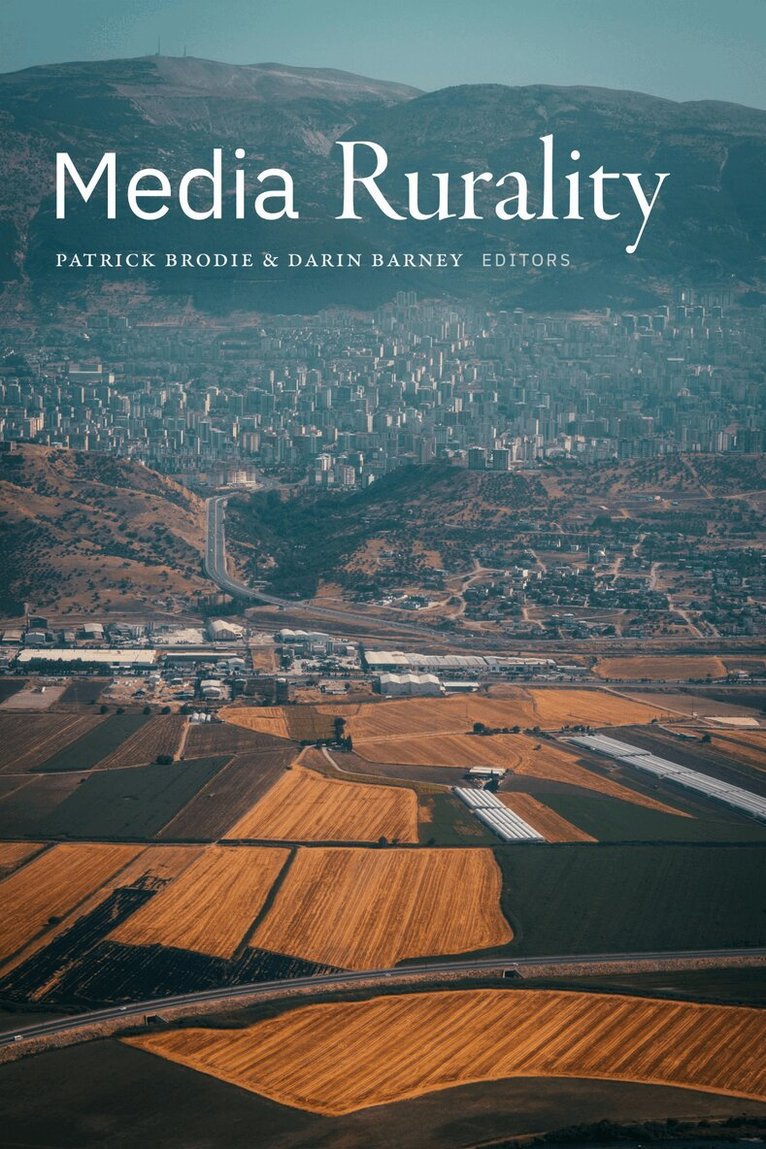
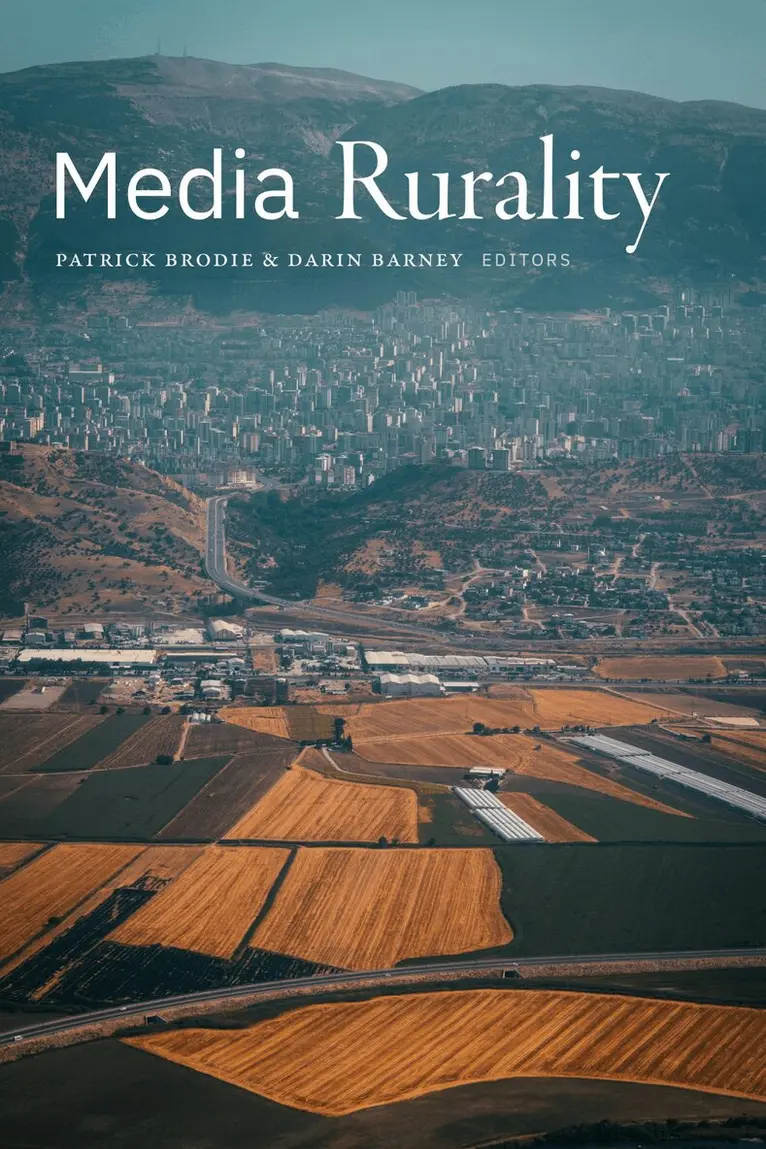
Media Rurality investigates the centrality of rural places and people within the media systems and technologies that shape daily life in and across rural and urban settings alike. From the boglands of Ireland to data centers in the Oregon countryside to the homemade media systems of rural Tanzania, the contributors to this volume show how rural territories are highly mediated, technologized spaces profoundly enmeshed with global capitalism and colonialism. Approaching the study of rurality through a materialist lens that foregrounds infrastructure, this collection shows how rural spaces often bear the environmental brunt of capitalist development while being relegated to the economic and cultural periphery.Contributors. Christopher Ali, Patrick Bresnihan, Patrick Brodie, Darin Barney, Jenna Burrell, Jordan B. Kinder, BurÇ KÖstem, Cindy Lin, Emily Ng, Lisa Parks, Anne Pasek, Esther Peeren, Nicole Starosielski, Ishita Tiwary, Hunter Vaughan, Ayesha Vemuri, Megan Wiessner, Assatu Wisseh
309 kr
Skickas
Media Rurality investigates the centrality of rural places and people within the media systems and technologies that shape daily life in and across rural and urban settings alike. From the boglands of Ireland to data centers in the Oregon countryside to the homemade media systems of rural Tanzania, the contributors to this volume show how rural territories are highly mediated, technologized spaces profoundly enmeshed with global capitalism and colonialism. Approaching the study of rurality through a materialist lens that foregrounds infrastructure, this collection shows how rural spaces often bear the environmental brunt of capitalist development while being relegated to the economic and cultural periphery.Contributors. Christopher Ali, Patrick Bresnihan, Patrick Brodie, Darin Barney, Jenna Burrell, Jordan B. Kinder, Burç Köstem, Cindy Lin, Emily Ng, Lisa Parks, Anne Pasek, Esther Peeren, Nicole Starosielski, Ishita Tiwary, Hunter Vaughan, Ayesha Vemuri, Megan Wiessner, Assatu Wisseh
126 kr
Skickas inom 7-10 vardagar
A collective engages and mirrors the critical need for energy justice and transformation Solarities considers the possibilities of organizing societies and economies around solar energy, and the challenges of a just and equitable transition away from fossil fuels. Far from presenting solarity as a utopian solution to the climate crisis, it critically examines the ambiguous potentials of solarities: plural, situated, and often contradictory. Here, a diverse collective of activists, scholars, and practitioners critically engage a wide range of relationships and orientations to the sun. They consider the material and infrastructural dimensions of solar power, the decolonial and feminist promises of decentralized energy, solarian relations with more-than-human kin, and the problem of oppressive and weaponized solarities. Solarities imagines-and demands- possibilities for energy justice in this transition.