Andrew Feenberg – författare
Visar alla böcker från författaren Andrew Feenberg. Handla med fri frakt och snabb leverans.
33 produkter
New Lukács
Introduction to History & Class Consciousness
Häftad, 2027
239 kr
Kommande
Though notoriously challenging, Georg Lukács's History and Class Consciousness is nonetheless an essential work in the canon of Marxist philosophy. Andrew Feenberg unwraps and elucidates the central Lukácsian concepts of reification, totality, and praxis. He makes the text accessible to a new …
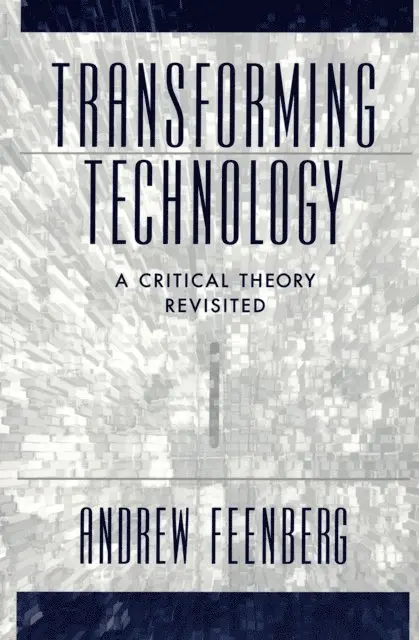
Transforming Technology
A Critical Theory Revisited
E-bok, 2002
424 kr
Lägg i varukorg
Thoroughly revised, this new edition of Critical Theory of Technology rethinks the relationships between technology, rationality, and democracy, arguing that the degradation of labor--as well as of many environmental, educational, and political systems--is rooted in the social values that preside …
Transforming Technology
A Critical Theory Revisited
Häftad, 2002
829 kr
Lägg i varukorg
Thoroughly revised, this new edition of Critical Theory of Technology rethinks the relationships between technology, rationality, and democracy, arguing that the degradation of labor--as well as of many environmental, educational, and political systems--is rooted in the social values that preside …
Transforming Technology
A Critical Theory Revisited
E-bok, 2002
424 kr
Lägg i varukorg
Thoroughly revised, this new edition of Critical Theory of Technology rethinks the relationships between technology, rationality, and democracy, arguing that the degradation of labor--as well as of many environmental, educational, and political systems--is rooted in the social values that preside …
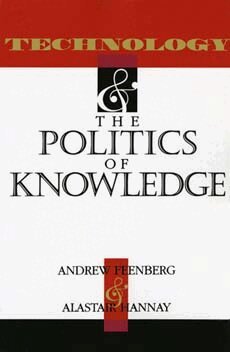
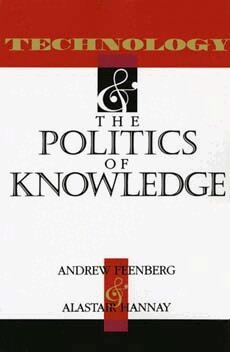
Technology and the Politics of Knowledge
Av Andrew Feenberg, Alastair Hannay
Häftad, 1995
285 kr
Lägg i varukorg
"This fine collection of essays from a diverse group of authors expounding on a wide variety of subjects presents a generous sampling of the new philosophy of technology." —Choice" . . . informative, original, and provocative. . . . Many of the writers are major players in defining the contested …
Technology and the Politics of Knowledge
Av Andrew Feenberg, Alastair Hannay
Inbunden, 1995
405 kr
Lägg i varukorg
"This fine collection of essays from a diverse group of authors expounding on a wide variety of subjects presents a generous sampling of the new philosophy of technology." —Choice" . . . informative, original, and provocative. . . . Many of the writers are major players in defining the contested …
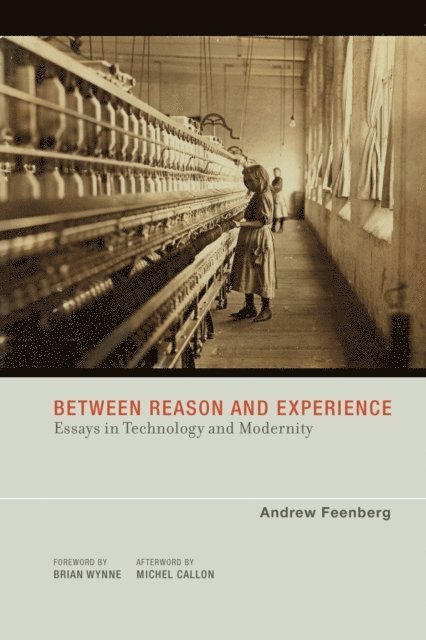
Between Reason and Experience
E-bok, 2010
481 kr
Lägg i varukorg
A leading philosopher of technology calls for the democratic coordination of technical rationality with everyday experience. The technologies, markets, and administrations of today''s knowledge society are in crisis. We face recurring disasters in every domain: climate change, energy shortages, …
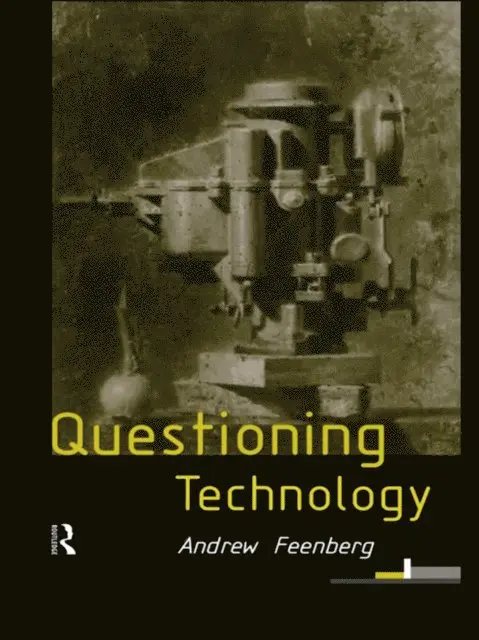
Questioning Technology
Inbunden, 1999
2516 kr
Lägg i varukorg
In this extraordinary introduction to the study of the philosophy of technology, Andrew Feenberg argues that techonological design is central to the social and political structure of modern societies. Environmentalism, information technology, and medical advances testify to technology's crucial …
Questioning Technology
Häftad, 1999
634 kr
Lägg i varukorg
In this extraordinary introduction to the study of the philosophy of technology, Andrew Feenberg argues that techonological design is central to the social and political structure of modern societies. Environmentalism, information technology, and medical advances testify to technology's crucial …
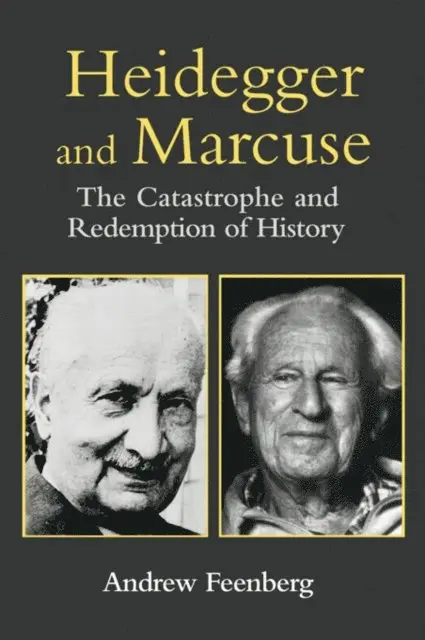
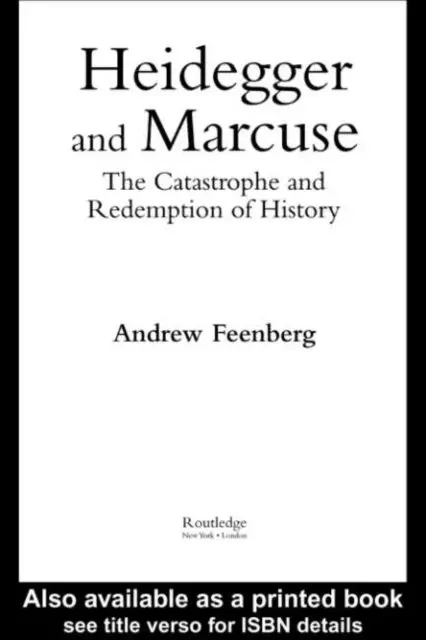
Heidegger and Marcuse
The Catastrophe and Redemption of History
Inbunden, 2004
2516 kr
Lägg i varukorg
First published in 2005. Herbert Marcuse was Martin Heidegger’s most famous student. He claimed to have left existentialism behind in 1933 when Heidegger was declared first Nazi rector of Freiburg University and Marcuse fled into exile.The contentious relations between these two thinkers reflected …
Heidegger and Marcuse
The Catastrophe and Redemption of History
Häftad, 2004
649 kr
Lägg i varukorg
First published in 2005. Herbert Marcuse was Martin Heidegger’s most famous student. He claimed to have left existentialism behind in 1933 when Heidegger was declared first Nazi rector of Freiburg University and Marcuse fled into exile.The contentious relations between these two thinkers reflected …
Technosystem
The Social Life of Reason
Inbunden, 2017
419 kr
Lägg i varukorg
We live in a world of technical systems designed in accordance with technical disciplines and operated by personnel trained in those disciplines. This is a unique form of social organization that largely determines our way of life, but the actions of individuals and social protest still play a role …
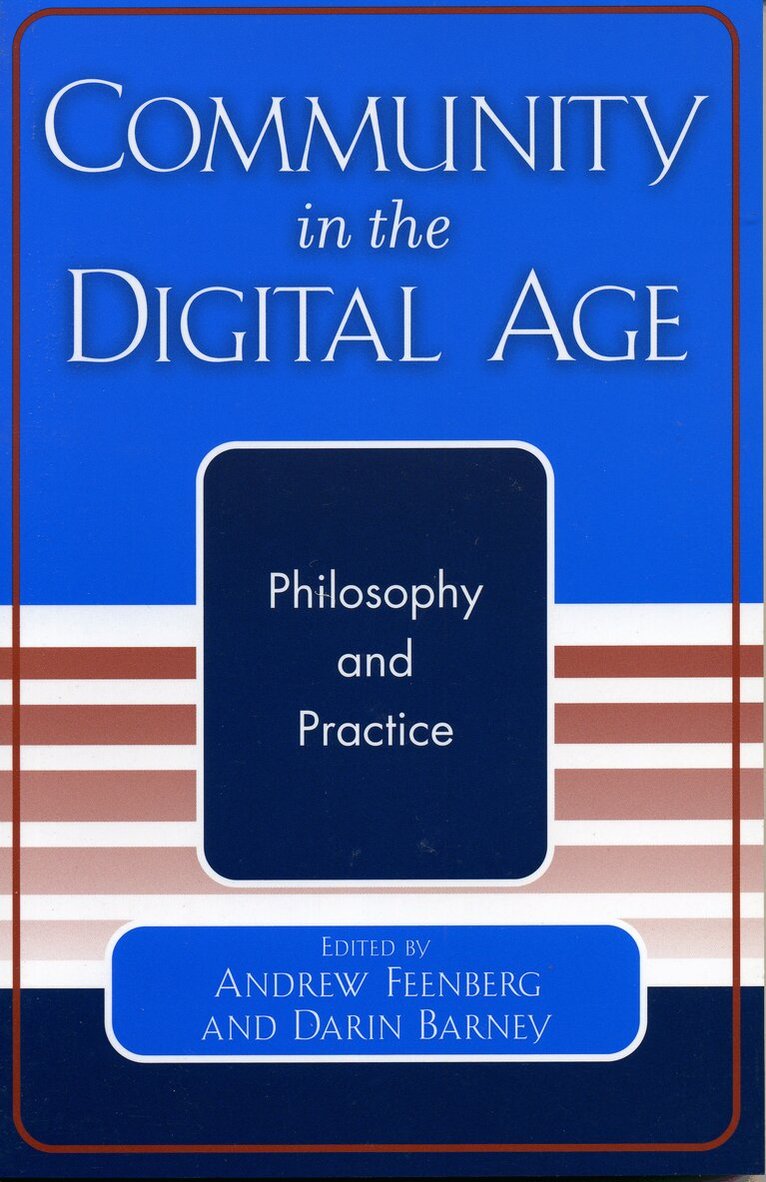
Community in the Digital Age
Philosophy and Practice
Av Andrew Feenberg, Darin Barney
Häftad, 2004
856 kr
Lägg i varukorg
Is the Internet the key to a reinvigorated public life? Or will it fragment society by enabling citizens to associate only with like-minded others? Online community has provided social researchers with insights into our evolving social life. As suburbanization and the breakdown of the extended …
Community in the Digital Age
Philosophy and Practice
Av Andrew Feenberg, Darin Barney
E-bok, 2004
935 kr
Lägg i varukorg
Is the Internet the key to a reinvigorated public life? Or will it fragment society by enabling citizens to associate only with like-minded others? Online community has provided social researchers with insights into our evolving social life. As suburbanization and the breakdown of the extended …
When Poetry Ruled the Streets
The French May Events of 1968
Av Andrew Feenberg, Jim Freedman
Häftad, 2001
477 kr
Lägg i varukorg
Offers a complete survey of the French May Events of 1968 through narrative, analysis, and documents.More than a history, this book is a passionate reliving of the French May Events of 1968. The authors, ardent participants in the movement in Paris, documented the unfolding events as they pelted …
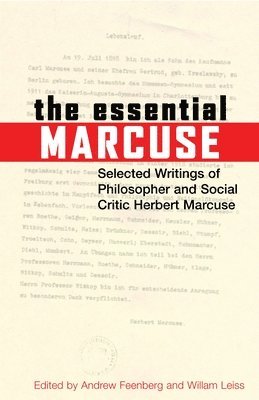
The Essential Marcuse: Selected Writings of Philosopher and Social Critic Herbert Marcuse
Av Herbert Marcuse, Andrew Feenberg
Häftad
448 kr
Lägg i varukorg
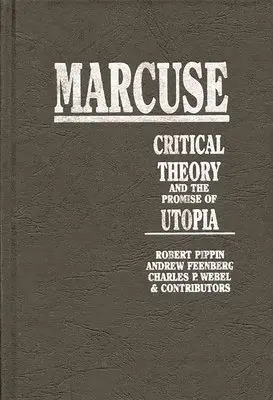
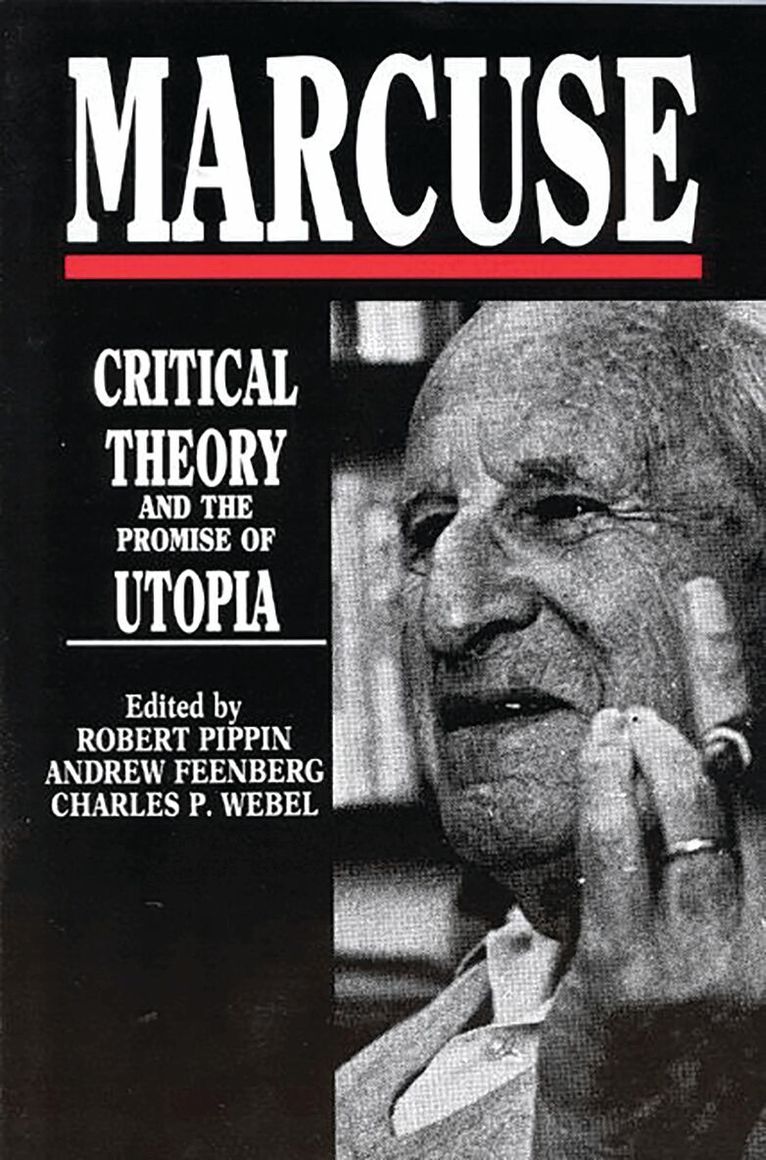
Marcuse
Critical Theory and the Promise of Utopia
Av Andrew Feenberg, Robert Pippin m. fl.
Inbunden, 1987
1070 kr
Lägg i varukorg
Distinguished scholars--Jurgen Habermas, Claus Offe, Douglas Kellner, and Martin Jay, among others--draw upon historical, theoretical, and biographical information to assess Marcuse's philosophy, from its grounding in classical German idealism, through the break with Heidegger, to his role in the …
Marcuse
Critical Theory and the Promise of Utopia
Av Andrew Feenberg, Robert Pippin m. fl.
Häftad, 1987
517 kr
Lägg i varukorg
Distinguished scholars--Jurgen Habermas, Claus Offe, Douglas Kellner, and Martin Jay, among others--draw upon historical, theoretical, and biographical information to assess Marcuse's philosophy, from its grounding in classical German idealism, through the break with Heidegger, to his role in the …
Questioning Technology
E-bok, 2012
729 kr
Lägg i varukorg
In this extraordinary introduction to the study of the philosophy of technology, Andrew Feenberg argues that techonological design is central to the social and political structure of modern societies. Environmentalism, information technology, and medical advances testify to technology''s crucial …
Questioning Technology
E-bok, 2012
729 kr
Lägg i varukorg
In this extraordinary introduction to the study of the philosophy of technology, Andrew Feenberg argues that techonological design is central to the social and political structure of modern societies. Environmentalism, information technology, and medical advances testify to technology''s crucial …
Heidegger and Marcuse
The Catastrophe and Redemption of History
E-bok, 2004
762 kr
Lägg i varukorg
First published in 2005. Herbert Marcuse was Martin Heidegger’s most famous student. He claimed to have left existentialism behind in 1933 when Heidegger was declared first Nazi rector of Freiburg University and Marcuse fled into exile.The contentious relations between these two thinkers reflected …
Heidegger and Marcuse
The Catastrophe and Redemption of History
E-bok, 2004
746 kr
Lägg i varukorg
First published in 2005. Herbert Marcuse was Martin Heidegger’s most famous student. He claimed to have left existentialism behind in 1933 when Heidegger was declared first Nazi rector of Freiburg University and Marcuse fled into exile.The contentious relations between these two thinkers reflected …
Philosophy of Praxis
Marx, Lukács and the Frankfurt School
Häftad, 2014
297 kr
Lägg i varukorg
The early Marx called for the "realization of philosophy" through revolution. Revolution thus becomes a critical philosophical concept for Marxism, a view elaborated in the later praxis philosophies of Lukács, and the Frankfurt School. These philosophers argue that fundamental philosophical …
Philosophy of Praxis
Marx, Lukács and the Frankfurt School
E-bok, 2014
174 kr
Lägg i varukorg
The early Marx called for the "realization of philosophy" through revolution. Revolution thus becomes a critical philosophical concept for Marxism, a view elaborated in the later praxis philosophies of Luk�cs, and the Frankfurt School. These philosophers argue that fundamental philosophical …
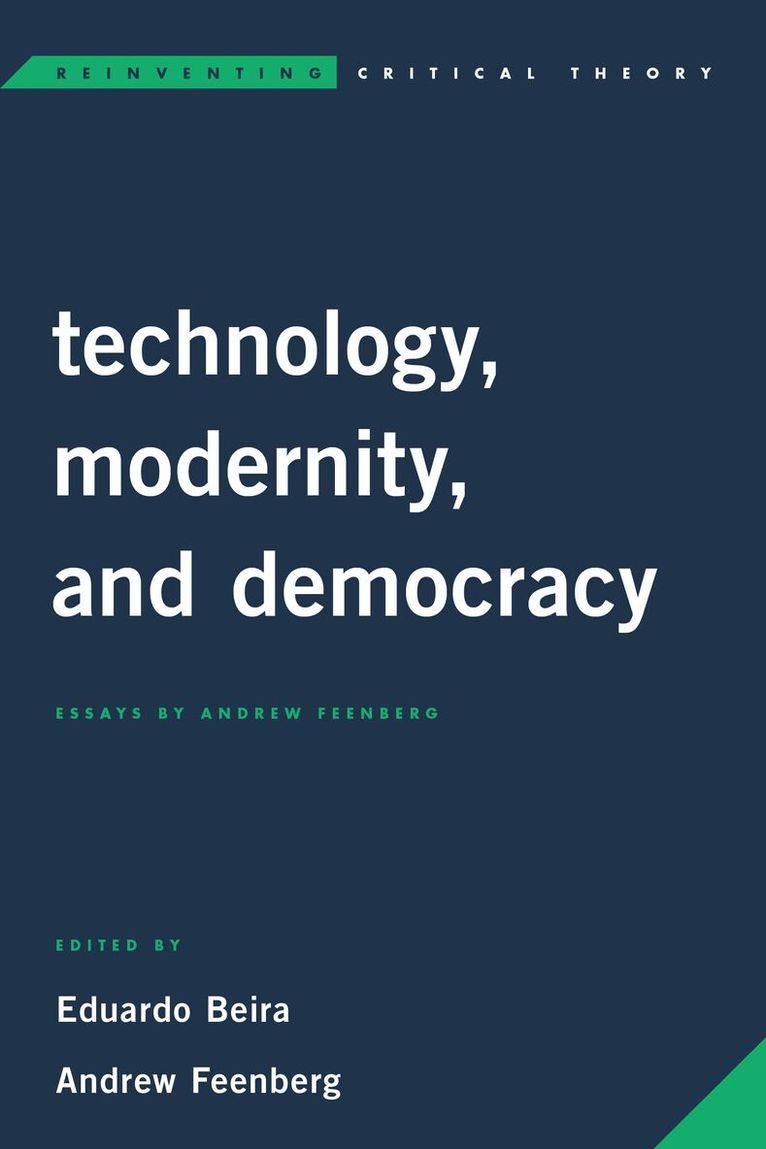
Technology, Modernity, and Democracy
Essays by Andrew Feenberg
Av Eduardo Beira, Andrew Feenberg
Inbunden, 2018
1708 kr
Lägg i varukorg
This important collection of essays by Andrew Feenberg presents his critical theory of technology, an innovative approach to philosophy and sociology of technology based on a synthesis of ideas drawn from STS and Frankfurt School Critical Theory.According to critical theory of technology, …
Technology, Modernity, and Democracy
Essays by Andrew Feenberg
Av Eduardo Beira, Andrew Feenberg
E-bok, 2018
624 kr
Lägg i varukorg
This important collection of essays by Andrew Feenberg presents his critical theory of technology, an innovative approach to philosophy and sociology of technology based on a synthesis of ideas drawn from STS and Frankfurt School Critical Theory. According to critical theory of technology, …
Technology, Modernity, and Democracy
Essays by Andrew Feenberg
Av Eduardo Beira, Andrew Feenberg
Häftad, 2018
574 kr
Lägg i varukorg
This important collection of essays by Andrew Feenberg presents his critical theory of technology, an innovative approach to philosophy and sociology of technology based on a synthesis of ideas drawn from STS and Frankfurt School Critical Theory.According to critical theory of technology, …
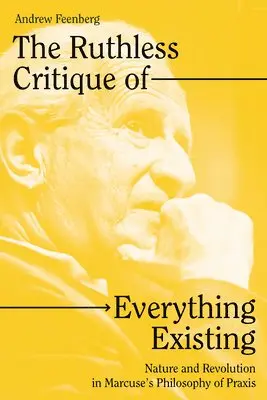
The Ruthless Critique of Everything Existing
Nature and Revolution in Marcuse's Philosophy of Praxis
Häftad, 2023
220 kr
Lägg i varukorg
For several years after 1968, Herbert Marcuse was one of the most famous philosophers in the world. He became the face of Frankfurt School Critical Theory for a generation in turmoil. His fame rested on two remarkable books, Eros and Civilization and One-Dimensional Man. These two books represent …