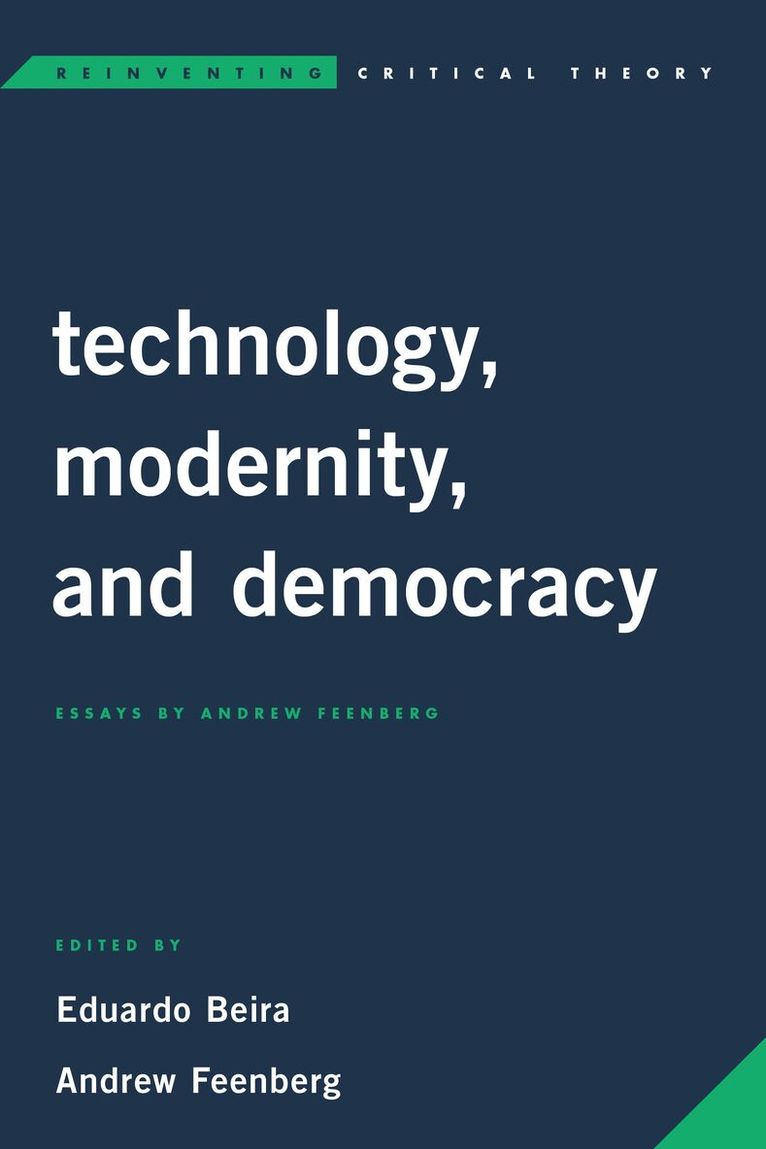
Häftad, Engelska, 2018
Technology, Modernity, and Democracy
Essays by Andrew Feenberg
Av Eduardo Beira, Andrew Feenberg
Del i serien Reinventing Critical Theory
574 kr
Beställningsvara. Skickas inom 10-15 vardagar. Fri frakt över 249 kr.
Fler format och utgåvor
Beskrivning
Produktinformation
- Utgivningsdatum: 2018-05-18
- Mått: 150 x 223 x 14 mm
- Vikt: 367 g
- Format: Häftad
- Språk: Engelska
- Serie: Reinventing Critical Theory
- Antal sidor: 172
- Förlag: Bloomsbury Publishing PLC
- ISBN: 9781786607218
Utforska kategorier
Mer om författaren
Andrew Feenberg is Canada Research Chair in Philosophy of Technology in the School of Communication, Simon Fraser University, where he directs the Applied Communication and Technology Lab. His many publications include Lukács, Marx and the Sources of Critical Theory (1981 and 1986), Critical Theory of Technology (1991 and 2002), Alternative Modernity (1995), Questioning Technology (1999), Heidegger and Marcuse: The Catastrophe and Redemption of History (2005), Between Reason and Experience: Essays in Technology and Modernity (2010), The Philosophy of Praxis: Marx, Lukács and the Frankfurt School (2014) and Technosystem: The Social Life of Reason (2017). Eduardo Beira is an engineer teaching at the University of Minho and the MIT Portugal Program.
Recensioner i media
Part of what makes Feenberg’s work philosophically significant is his style as a writer. He is able to craft sentences and paragraphs to reveal a lifetime’s worth of philosophical insights presented in a way that is accessible but not patronizing. Amongst the essays found in this collection, there are a few that stand out. ‘Ten paradoxes of technology’ is an excellent introduction to the discipline of the philosophy of technology that would benefit undergraduate students, ‘Agency and citizenship in a technological society’ serves as a concise summary of Feenberg’s argument for the democratization of technology and ‘The politics of meaning: modernity, technology, and rationality’ provides a thorough intellectual history of the critique of instrumental and technological rationality. More intriguing than these individual essays, though, are the hints towards a social theory of rationality that accounts for the ways in which technologies, organizations, forms of administration and markets share the same form of rationality.
Betyg & recensioner
0 recensioner
Inga recensioner tillgängliga.