Dave Beech - Böcker
Visar alla böcker från författaren Dave Beech. Handla med fri frakt och snabb leverans.
7 produkter
7 produkter
668 kr
Skickas inom 10-15 vardagar
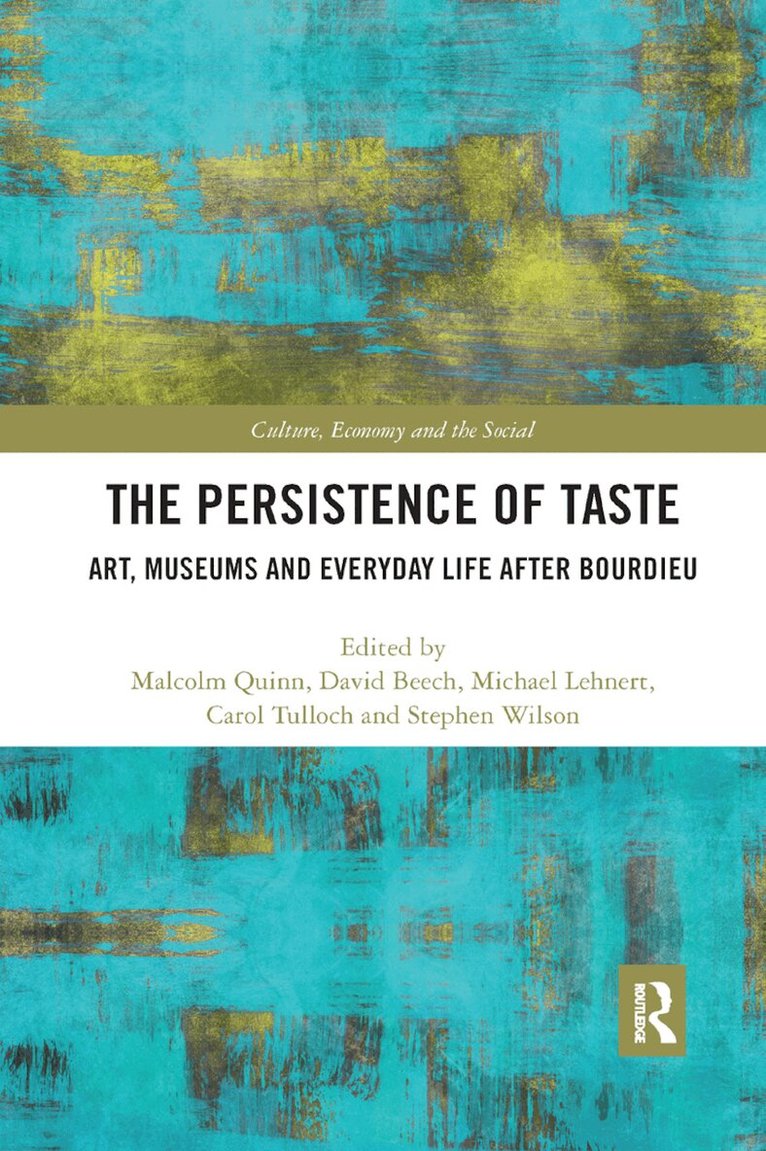
This book offers an interdisciplinary analysis of the social practice of taste in the wake of Pierre Bourdieu’s sociology of taste. For the first time, this book unites sociologists and other social scientists with artists and curators, art theorists and art educators, and art, design and cultural historians who engage with the practice of taste as it relates to encounters with art, cultural institutions and the practices of everyday life, in national and transnational contexts.The volume is divided into four sections. The first section on ‘Taste and art’, shows how art practice was drawn into the sphere of ‘good taste’, contrasting this with a post-conceptualist critique that offers a challenge to the social functions of good taste through an encounter with art. The next section on ‘Taste making and the museum’ examines the challenges and changing social, political and organisational dynamics propelling museums beyond the terms of a supposedly universal institution and language of taste. The third section of the book, ‘Taste after Bourdieu in Japan’ offers a case study of the challenges to the cross-cultural transmission and local reproduction of ‘good taste’, exemplified by the complex cultural context of Japan. The final section on ‘Taste, the home and everyday life’ juxtaposes the analysis of the reproduction of inequality and alienation through taste, with arguments on how the legacy of ideas of ‘good taste’ have extended the possibilities of experience and sharpened our consciousness of identity.As the first book to bring together arts practitioners and theorists with sociologists and other social scientists to examine the legacy and continuing validity of Pierre Bourdieu’s sociology of taste, this publication engages with the opportunities and problems involved in understanding the social value and the cultural dispositions of taste ‘after Bourdieu’. It does so at a moment when the practice of taste is being radically changed by the globa
258 kr
Skickas inom 7-10 vardagar
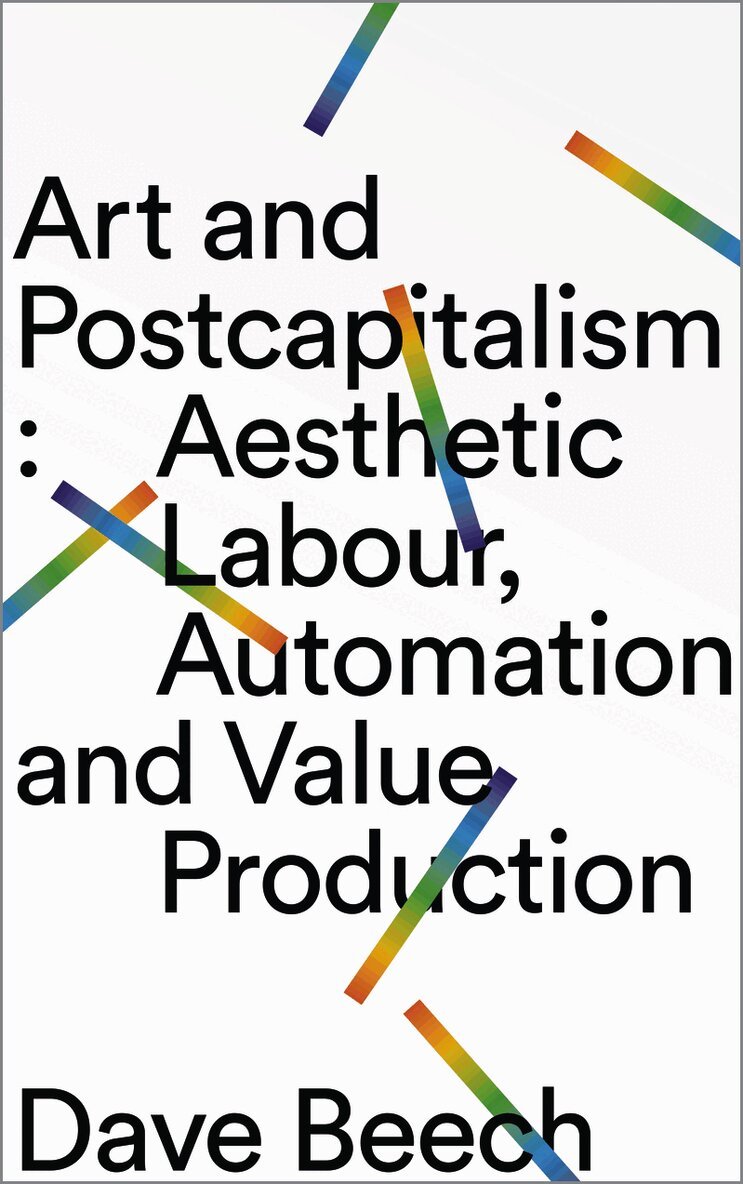
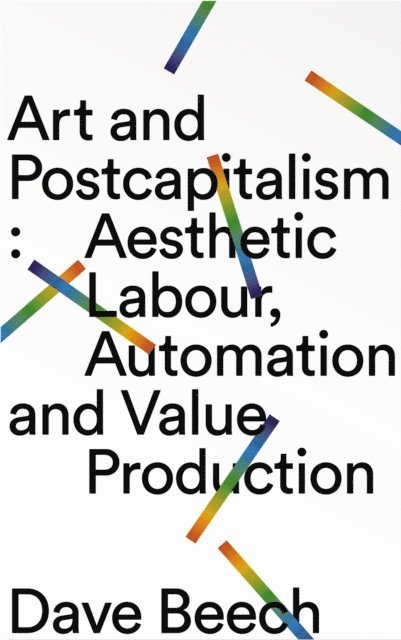
Artistic labour was exemplary for Utopian Socialist theories of 'attractive labour', and Marxist theories of 'nonalienated labour', but the rise of the anti-work movement and current theories of 'fully automated luxury communism' have seen art topple from its privileged place within the left's political imaginary as the artist has been reconceived as a prototype of the precarious 24/7 worker.Art and Postcapitalism argues that art remains essential for thinking about the intersection of labour, capitalism and postcapitalism not insofar as it merges work and pleasure but as an example of noncapitalist production. Reassessing the contemporary politics of work by revisiting debates about art, technology and in the nineteenth and twentieth century, Dave Beech challenges the aesthetics of labour in John Ruskin, William Morris and Oscar Wilde with a value theory of the supersession of capitalism that sheds light on the anti-work theory by Silvia Federici, Andre Gorz, Kathi Weeks and Maurizio Lazzarato, as well as the technological Cockayne of Srnicek and Williams and Paul Mason.Formulating a critique of contemporary postcapitalism, and developing a new understanding of art and labour within the political project of the supersession of value production, this book is essential for activists, scholars and anyone interested in the real and imagined escape routes from capitalism.
909 kr
Skickas inom 7-10 vardagar
Artistic labour was exemplary for Utopian Socialist theories of 'attractive labour', and Marxist theories of 'nonalienated labour', but the rise of the anti-work movement and current theories of 'fully automated luxury communism' have seen art topple from its privileged place within the left's political imaginary as the artist has been reconceived as a prototype of the precarious 24/7 worker.Art and Postcapitalism argues that art remains essential for thinking about the intersection of labour, capitalism and postcapitalism not insofar as it merges work and pleasure but as an example of noncapitalist production. Reassessing the contemporary politics of work by revisiting debates about art, technology and in the nineteenth and twentieth century, Dave Beech challenges the aesthetics of labour in John Ruskin, William Morris and Oscar Wilde with a value theory of the supersession of capitalism that sheds light on the anti-work theory by Silvia Federici, Andre Gorz, Kathi Weeks and Maurizio Lazzarato, as well as the technological Cockayne of Srnicek and Williams and Paul Mason.Formulating a critique of contemporary postcapitalism, and developing a new understanding of art and labour within the political project of the supersession of value production, this book is essential for activists, scholars and anyone interested in the real and imagined escape routes from capitalism.
2 103 kr
Skickas inom 10-15 vardagar
This book offers an interdisciplinary analysis of the social practice of taste in the wake of Pierre Bourdieu’s sociology of taste. For the first time, this book unites sociologists and other social scientists with artists and curators, art theorists and art educators, and art, design and cultural historians who engage with the practice of taste as it relates to encounters with art, cultural institutions and the practices of everyday life, in national and transnational contexts.The volume is divided into four sections. The first section on ‘Taste and art’, shows how art practice was drawn into the sphere of ‘good taste’, contrasting this with a post-conceptualist critique that offers a challenge to the social functions of good taste through an encounter with art. The next section on ‘Taste making and the museum’ examines the challenges and changing social, political and organisational dynamics propelling museums beyond the terms of a supposedly universal institution and language of taste. The third section of the book, ‘Taste after Bourdieu in Japan’ offers a case study of the challenges to the cross-cultural transmission and local reproduction of ‘good taste’, exemplified by the complex cultural context of Japan. The final section on ‘Taste, the home and everyday life’ juxtaposes the analysis of the reproduction of inequality and alienation through taste, with arguments on how the legacy of ideas of ‘good taste’ have extended the possibilities of experience and sharpened our consciousness of identity.As the first book to bring together arts practitioners and theorists with sociologists and other social scientists to examine the legacy and continuing validity of Pierre Bourdieu’s sociology of taste, this publication engages with the opportunities and problems involved in understanding the social value and the cultural dispositions of taste ‘after Bourdieu’. It does so at a moment when the practice of taste is being radically changed by the global expansion of cultural choices, and the emergence of deploying impersonal algorithms as solutions to cultural and creative decision-making.
Art And Value: Art's Economic Exceptionalism In Classical, Neoclassical And Marxist Economics
Historical Materialism, Volume 94
Häftad, Engelska, 2016
413 kr
Skickas inom 5-8 vardagar
Art and Value is the first comprehensive analysis of art's political economy throughout classical, neoclassical and Marxist economics. It provides a critical-historical survey of the theories of art's economic exceptionalism, of art as a merit good, and of the theories of art's commodification, the culture industry and real subsumption. Key debates on the economics of art are examined in detail. Subjecting mainstream and Marxist theories of art's economics to an exacting critique, Art and Value concludes with a new Marxist theory of art's economic exceptionalism.
Art and Labour
On the Hostility to Handicraft, Aesthetic Labour and the Politics of Work in Art
Häftad, Engelska, 2021
356 kr
Skickas inom 5-8 vardagar
This book provides a ground breaking re-examination of the changing relationship between art, craft, and industry focusing on the transition from workshop to studio, apprentice to pupil, guild to gallery and artisan to artist. Responding to the question whether the artist is a relic of the feudal mode of production or is a commodity producer corresponding to the capitalist mode of cultural production, Beech reveals, instead, that the history of the formation of art as distinct from handicraft, commerce, and industry can be traced back to the dissolution of the dual system of guild and court. This essential history needs to be revisited in order to rethink the categories of aesthetic labour, attractive labour, alienated labour, nonalienated labour and unwaged labour that shape the modern and contemporary politics of work in art.
232 kr
Tillfälligt slut
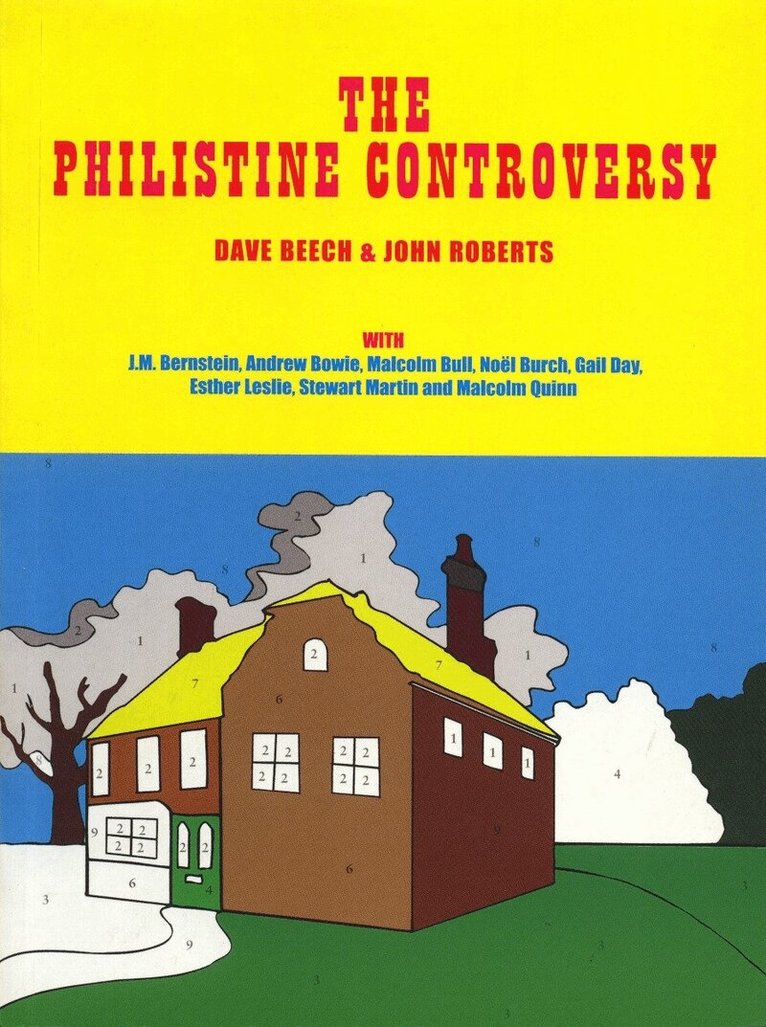
In this fascinating study, Dave Beech and John Roberts develop what they call a 'counter-intuitive' notion of the philistine, claiming that what the philistine tells us about cultural division and exclusion is more persuasive than the theories of the popular and the 'otherly-cultured' in cultural studies and postmodernism. The 'counter-intuitive' philistine, they contest, returns the cultural debate to the problems of the persistence of power, privilege and symbolic violence. Asserting that the relations between power and art have been untheorized in recent studies, Beech and Roberts find their critical resources in the least likely place: not in the 'best of things', but in that which has 'no proper place'.The book also includes several in-depth responses to the Beech and Roberts thesis by leading scholars in the field of cultural theory, together with the authors' replies to their critics.