David Albertson - Böcker
Visar alla böcker från författaren David Albertson. Handla med fri frakt och snabb leverans.
6 produkter
6 produkter
1 349 kr
Skickas inom 5-8 vardagar
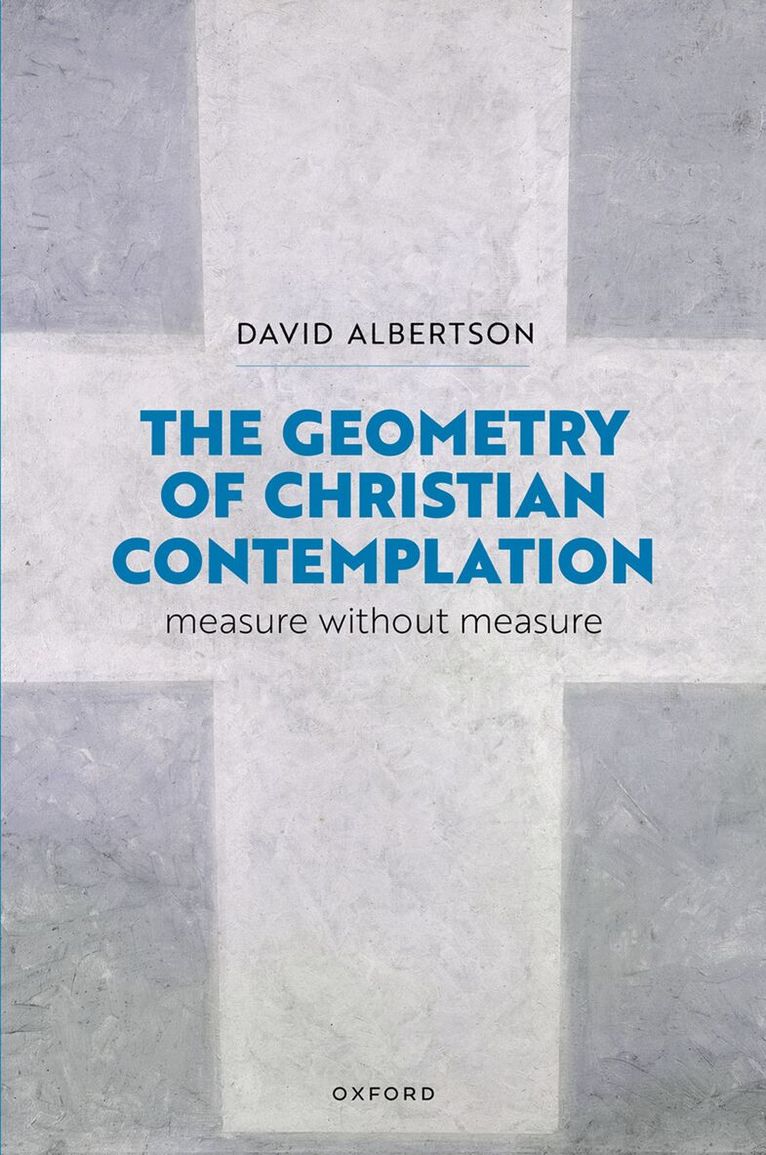
The writings of ancient and medieval Christian mystics were rediscovered in the twentieth century, and today they are read more widely than ever before. But do modern assumptions about religious experience influence how we hear those premodern voices? Do we do them justice by thinking of mysticism as interior and ineffable? Or can mystical experience intersect with the natural environment, and indeed the cosmos, which science calculates with precise quantities? David Albertson's The Geometry of Christian Contemplation: Measure without Measure suggests a fresh approach to the history of mystical theology that is oriented toward exteriority more than interiority, and toward the measurable world outside more than the invisible world within. The ancient Greek philosopher Plotinus had taught contemplatives to close their eyes and withdraw into the soul. Most Christians followed his directions, but others dissented. In three critical episodes, an alternative model of Christian contemplation began to emerge: from Dionysius the Areopagite, to the Byzantine monks John of Damascus and Theodore the Studite, to eccentric humanists in medieval Paris. Together these episodes add up to a very different theological aesthetics, one that can enliven the modern study of mysticism and correct some of its imbalances. For in the centuries before the scientific revolution and the secularization of nature, Christians still saw God in the exterior world, not only the interior soul. God was not an ineffable and formless Absolute, immeasurable as the soul, but an infinite Measure who leaves behind geometrical traces in the figures of the world. The God who became a human body in the Incarnation not only entered time and matter, but also spatial extension, and with it the conditions of measure: points, lines, curves, shapes, planes, dimensions, and magnitudes. Today the wisdom of this counter-tradition can strengthen the study of mysticism, not only by supplementing our contemporary fascination with negative theology by redefining what it means to name God positively, but by suggesting a new connection between Christian mysticism and the hyper-measured, hyper-technologized world that surrounds us.
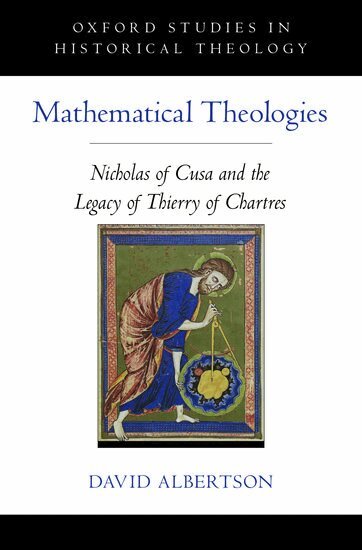
Mathematical Theologies
Nicholas of Cusa and the Legacy of Thierry of Chartres
Inbunden, Engelska, 2014
1 339 kr
Skickas inom 5-8 vardagar
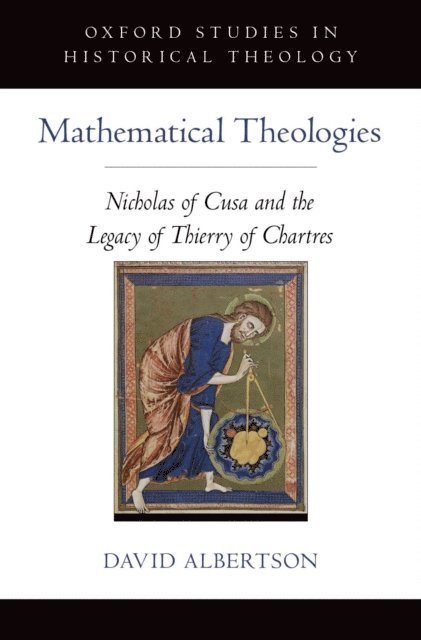
The writings of theologians Thierry of Chartres (d. 1157) and Nicholas of Cusa (d. 1464) represent a lost history of momentous encounters between Christianity and Pythagorean ideas before the Renaissance. Their robust Christian Neopythagoreanism reconceived the Trinity and the Incarnation within the framework of Greek number theory, challenging our contemporary assumptions about the relation of religion and modern science. David Albertson surveys the slow formation of theologies of the divine One from the Old Academy through ancient Neoplatonism into the Middle Ages. Against this backdrop, Thierry of Chartres's writings stand out as the first authentic retrieval of Neopythagoreanism within western Christianity. By reading Boethius and Augustine against the grain, Thierry reactivated a suppressed potential in ancient Christian traditions that harmonized the divine Word with notions of divine Number. Despite achieving fame during his lifetime, Thierry's ideas remained well outside the medieval mainstream. Three centuries later Nicholas of Cusa rediscovered anonymous fragments of Thierry and his medieval readers, and drew on them liberally in his early works. Yet tensions among this collection of sources forced Cusanus to reconcile their competing understandings of Word and Number. Over several decades Nicholas eventually learned how to articulate traditional Christian doctrines within a fully mathematized cosmologyanticipating the situation of modern Christian thought after the seventeenth century. Mathematical Theologies skillfully guides readers through the newest scholarship on Pythagoreanism, the school of Chartres, and Cusanus, while revising some of the categories that have separated those fields in the past.
335 kr
Kommande
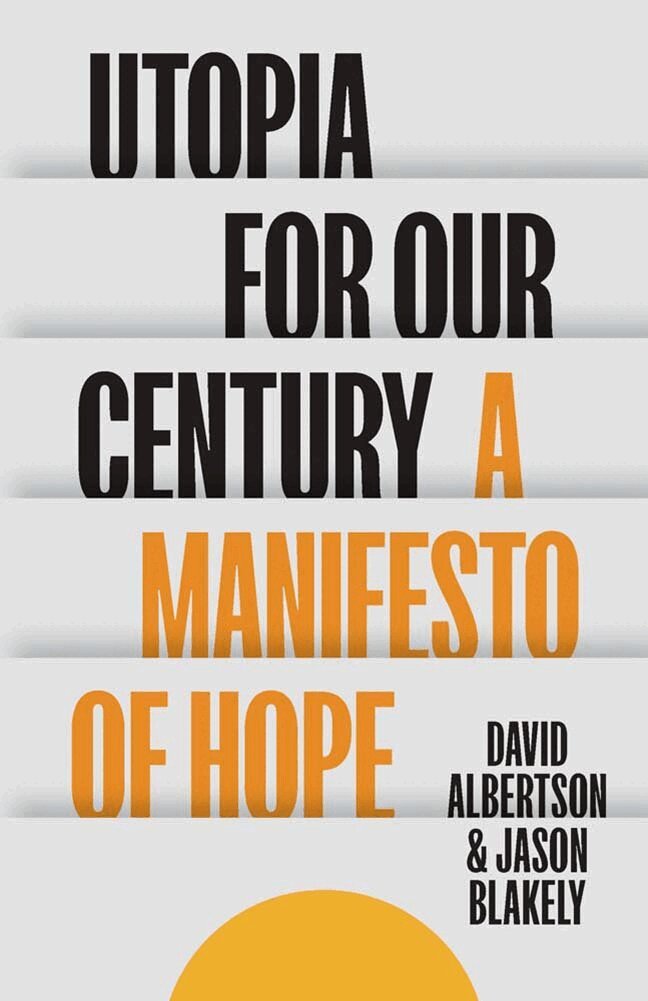
Inspired by the humanist and Catholic martyr Thomas More, David Albertson and Jason Blakely imagine a new politics of hope In Thomas More’s Utopia, a traveler from the New World delivers a shocking message: on a lost island beyond the horizon, people live far better lives than in Europe. A leading intellectual of his day, More was murdered by Henry VIII in 1535 for refusing to sign a loyalty oath, but his utopian vision inspired some of the most consequential movements in the modern world. In their provocative manifesto, David Albertson and Jason Blakely retrieve More’s insights and apply them to our moment. Amid the decline of liberalism and the rise of authoritarianism, Albertson and Blakely resist the dystopian fears taking root in the twenty-first century. Utopian politics, they argue, can help us break free of today’s entrenched polarities and recast what is possible. They return to the “virtuoso dreamers,” ranging from Plato and Saint Augustine to Dorothy Day and Martin Luther King, Jr., who faced dire circumstances yet were buoyed by indestructible hopes. Channeling More’s spirit of experimentation, creativity, and levity, their utopianism is invested in making new worlds—the most serious kind of play. Social reality, they remind us, has an irreducible imaginative component. Inviting us to dream more boldly, this book offers a radical alternative to the ecological, political, and spiritual crises that plague our world.
901 kr
Skickas inom 7-10 vardagar
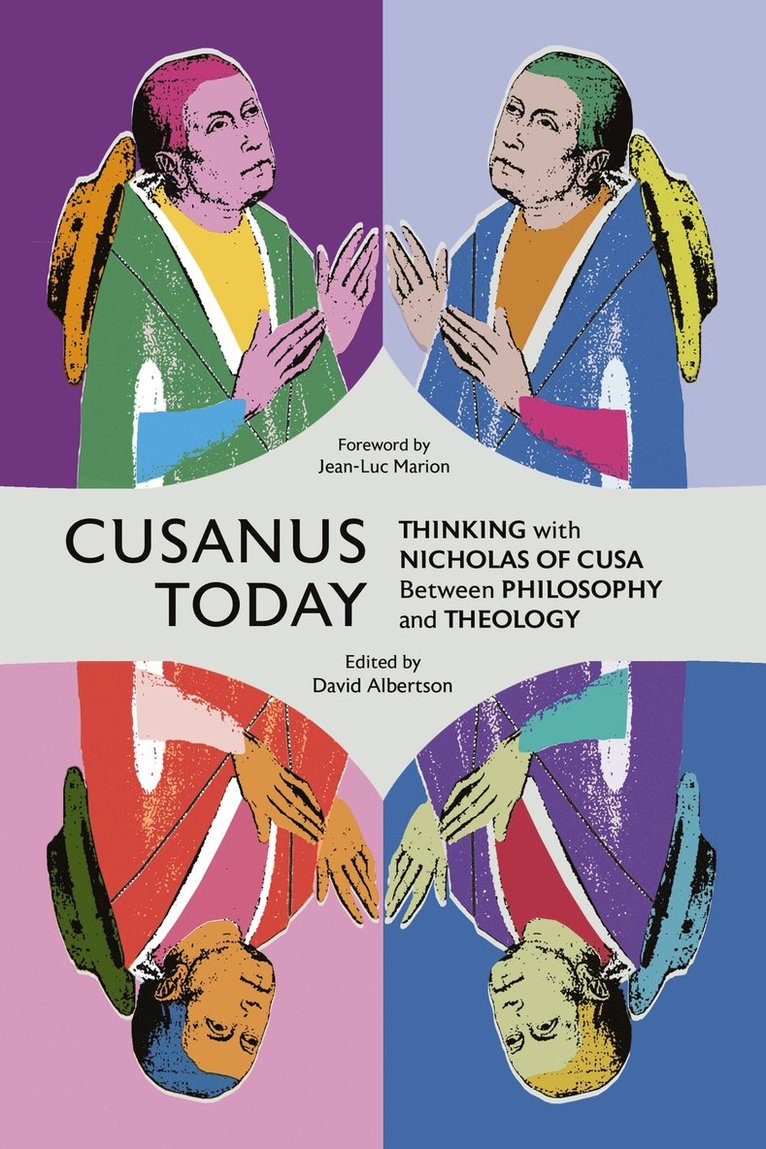
At the end of the nineteenth century, German theologians and philosophers rediscovered the Renaissance cardinal Nicholas of Cusa (1401-1464). Immediately they hailed Cusanus as the first modern thinker, a brilliant German rival to the French Descartes. But since the founding of the Cusanus critical edition in 1927 up to its conclusion in 2005, historians have gradually learned that Nicholas was more of a medieval preacher and contemplative than a modern philosopher.Yet over the same century, modern German and French readers were already digging into Nicholas's many works. There they encountered an exciting voice with fresh perspectives about God's immanence in the cosmos and the awesome capacities of the human mind. Leading philosophers and theologians from Erich Przywara to Karl Jaspers to Hans-Georg Gadamer, and from Gilles Deleuze to Jacques Lacan to Michel de Certeau, found their own thinking stimulated by the cardinal's innovative concepts and interdisciplinary style. Even as Nicholas shifted from modern to medieval among historians, he was emerging as a contemporary interlocutor for moderns and postmoderns. Who could have guessed that the first debate between Jean-Luc Marion and Emmanuel Falque would take place over the fifteenth-century mystical dialogue, De visione dei?If Meister Eckhart found his moment amidst Deconstruction in prior decades, Nicholas of Cusa is our thinker for today. His interests anticipate themes in continental philosophy of religion, whether alterity, invisibility, the fold, or the icon. His habit of interweaving philosophy and theology anticipates current debates on the thresholds of phenomenology. Our volume first maps the contours of modern receptions of Nicholas of Cusa in French and German spheres, and then beyond Europe to the Americas and Japan. Then we host the next chapter of engagement by some of today's most original Christian thinkers: Emmanuel Falque, John Milbank, and David Bentley Hart.
1 234 kr
Skickas inom 10-15 vardagar
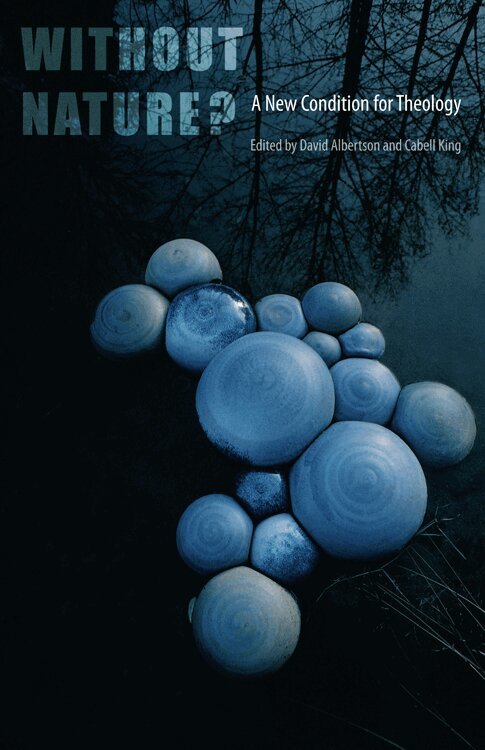
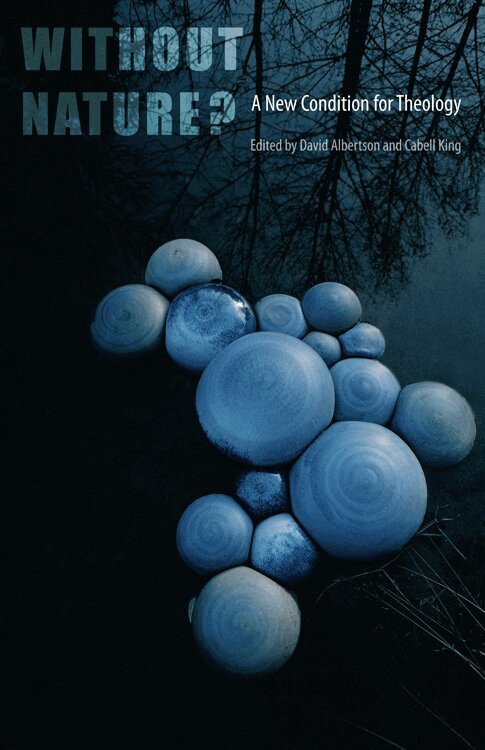
Does "nature" still exist? Common wisdom now acknowledges the malleability of nature, the complex reality that circumscribes and constitutes the human. Weather patterns, topographical contours, animal populations, and even our own genetic composition—all of which previously marked the boundary of human agency—now appear subject to our intervention. Some thinkers have suggested that nature has disappeared entirely and that we have entered a postnatural era; others note that nature is an ineradicable context for life.Christian theology, in particular, finds itself in an awkward position. Its Western traditions have long relied upon a static "nature" to express the dynamism of "grace," making nature a foundational category within theology itself. This means that any theological inquiry into the changing face of nature must be reflexive and radically interdisciplinary.This book brings leading natural and social scientists into conversation with prominent Christian theologians and ethicists to wrestle collectively with difficult questions. Is nature undergoing fundamental change? What role does nature play in theological ethics? How might ethical deliberation proceed "without nature" in the future? What does the religious drive to transform human nature have to do with the technological quest to transcend human limits? Would the end of nature make grace less comprehensible?
507 kr
Skickas inom 7-10 vardagar
Does "nature" still exist? Common wisdom now acknowledges the malleability of nature, the complex reality that circumscribes and constitutes the human. Weather patterns, topographical contours, animal populations, and even our own genetic composition—all of which previously marked the boundary of human agency—now appear subject to our intervention. Some thinkers have suggested that nature has disappeared entirely and that we have entered a postnatural era; others note that nature is an ineradicable context for life.Christian theology, in particular, finds itself in an awkward position. Its Western traditions have long relied upon a static "nature" to express the dynamism of "grace," making nature a foundational category within theology itself. This means that any theological inquiry into the changing face of nature must be reflexive and radically interdisciplinary.This book brings leading natural and social scientists into conversation with prominent Christian theologians and ethicists to wrestle collectively with difficult questions. Is nature undergoing fundamental change? What role does nature play in theological ethics? How might ethical deliberation proceed "without nature" in the future? What does the religious drive to transform human nature have to do with the technological quest to transcend human limits? Would the end of nature make grace less comprehensible?