David Cantor - Böcker
Visar alla böcker från författaren David Cantor. Handla med fri frakt och snabb leverans.
9 produkter
9 produkter
2 144 kr
Skickas inom 5-8 vardagar
The displacement of people within their own countries due to crises such as conflicts, disasters, and the effects of climate change is a major contemporary challenge, eliciting global concern about how to protect the displaced. The vast scale of this 'internal displacement' poses far-reaching questions for key debates around humanitarian aid, development, migration, sovereignty, rights, citizenship, identity, and social change. Yet knowledge of the issue is fragmented and highly dispersed across a range of academic and policy domains. Bringing together 45 contributions by leading researchers and practitioners, the Oxford Handbook of Internal Displacement provides an essential point of reference for advancing these debates and raising the profile of internal displacement as a vital concern for research and policy agendas. The Handbook addresses eight major areas of debate in this field of research and practice. Part I presents different conceptual understandings of internal displacement from a range of the most relevant disciplinary perspectives, including philosophy and political theory, history, law, geography, and forced migration studies. Part II of the Handbook explores the different drivers of internal displacement, embedding them in their broader social, political, and historical context. Part III addresses major internal displacement dynamics and population trends in different regions of the world. Part IV highlights the material, social and economic consequences of displacement, in terms of poverty, health, education, and housing land for the displaced. Part V addresses lived experiences of internal displacement, underscoring the agency of displaced persons in making sense of and dealing with internal displacement. Part VI of the Handbook addresses key aspects of IDP assistance and protection, including legal and policy frameworks, institutional responses, and policy and operational issues arising in this response. Part VII addresses the 'end' of internal displacement and so-called 'durable solutions' for internally displaced persons, offering compelling insights into how long-term solutions have been handled and hindered in practice. Finally, Part VIII outlines the crucial role of data in understanding and responding to internal displacement.
2 151 kr
Skickas inom 10-15 vardagar
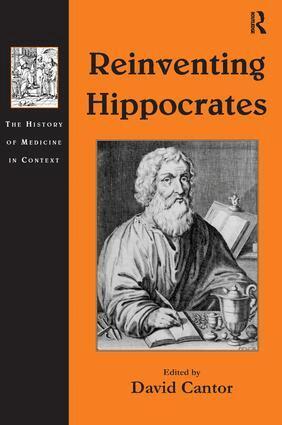
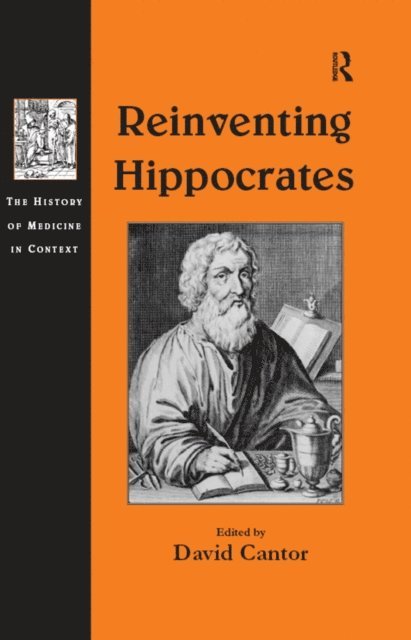
The name of Hippocrates has been invoked as an inspiration of medicine since antiquity, and medical practitioners have turned to Hippocrates for ethical and social standards. While most modern commentators accept that medicine has sometimes fallen short of Hippocratic ideals, these ideals are usually portrayed as having a timeless appeal, departure from which is viewed as an aberration that only a return to Hippocratic values will correct. Recent historical work has begun to question such an image of Hippocrates and his medicine. Instead of examining Hippocratic ideals and values as an unchanging legacy passed to us from antiquity, historians have increasingly come to explore the many different ways in which Hippocrates and his medicine have been constructed and reconstructed over time. Thus scholars have tended to abandon attempts to extract a real Hippocrates from the mass of conflicting opinions about him. Rather, they tend to ask why he was portrayed in particular ways, by particular groups, at particular times. This volume explores the multiple uses, constructions, and meanings of Hippocrates and Hippocratic medicine since the Renaissance, and elucidates the cultural and social circumstances that shaped their development. Recent research has suggested that whilst the process of constructing and reconstructing Hippocrates began during antiquity, it was during the sixteenth century that the modern picture emerged. Many scholastic endeavours today, it is claimed, are attempts to answer Hippocratic questions first posed in the sixteenth century. This book provides an opportunity to begin to evaluate such claims, and to explore their relevance in areas beyond those of classical scholarship.
422 kr
Skickas inom 5-8 vardagar
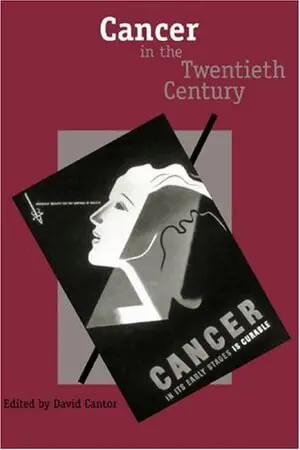
This collection of essays explores efforts to control and prevent cancer in North America and Europe. On both sides of the Atlantic, control programs emerged in the early twentieth century, and most were focused on early detection and treatment. Yet, those initiatives took very different forms in different countries. Experts disagreed on how to persuade the public to go to their doctors, what should be the role of public education, how cancer services should be delivered, who should provide them, which forms of therapy were most appropriate to particular cancers, and where to draw the line between therapy and prevention. Focusing on the United States and Britain, this volume examines why these differences emerged, how they shaped national programs of control, and how control programs in the early twentieth century presaged and set the conditions for the emergence of prevention-oriented programs in the 1960s and 1970s.Featuring works by leading medical historians on subjects such as the portrayal of cancer in the movies, feminist surgeons, risk factors for breast cancer, and the emergence of clinical trials, Cancer in the Twentieth Century will engage historians of medicine and public health as well as health policy analysts, medical sociologists and anthropologists, and medical researchers and practitioners.
845 kr
Skickas inom 10-15 vardagar
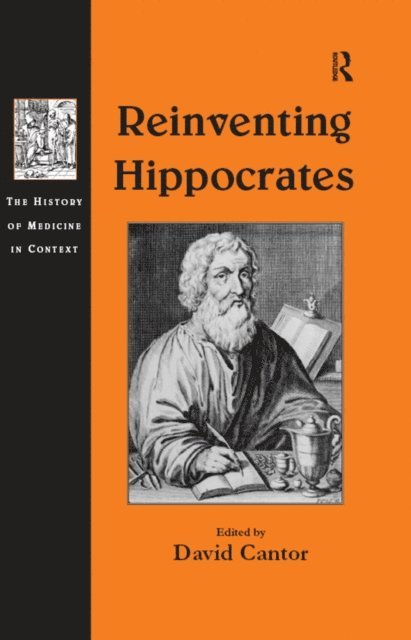
The name of Hippocrates has been invoked as an inspiration of medicine since antiquity, and medical practitioners have turned to Hippocrates for ethical and social standards. While most modern commentators accept that medicine has sometimes fallen short of Hippocratic ideals, these ideals are usually portrayed as having a timeless appeal, departure from which is viewed as an aberration that only a return to Hippocratic values will correct. Recent historical work has begun to question such an image of Hippocrates and his medicine. Instead of examining Hippocratic ideals and values as an unchanging legacy passed to us from antiquity, historians have increasingly come to explore the many different ways in which Hippocrates and his medicine have been constructed and reconstructed over time. Thus scholars have tended to abandon attempts to extract a real Hippocrates from the mass of conflicting opinions about him. Rather, they tend to ask why he was portrayed in particular ways, by particular groups, at particular times. This volume explores the multiple uses, constructions, and meanings of Hippocrates and Hippocratic medicine since the Renaissance, and elucidates the cultural and social circumstances that shaped their development. Recent research has suggested that whilst the process of constructing and reconstructing Hippocrates began during antiquity, it was during the sixteenth century that the modern picture emerged. Many scholastic endeavours today, it is claimed, are attempts to answer Hippocratic questions first posed in the sixteenth century. This book provides an opportunity to begin to evaluate such claims, and to explore their relevance in areas beyond those of classical scholarship.
747 kr
Skickas inom 10-15 vardagar
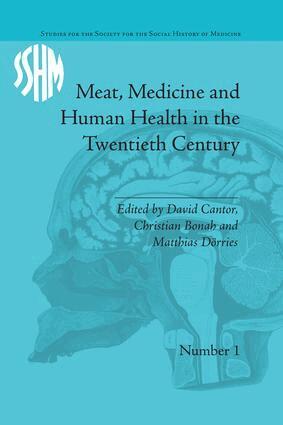
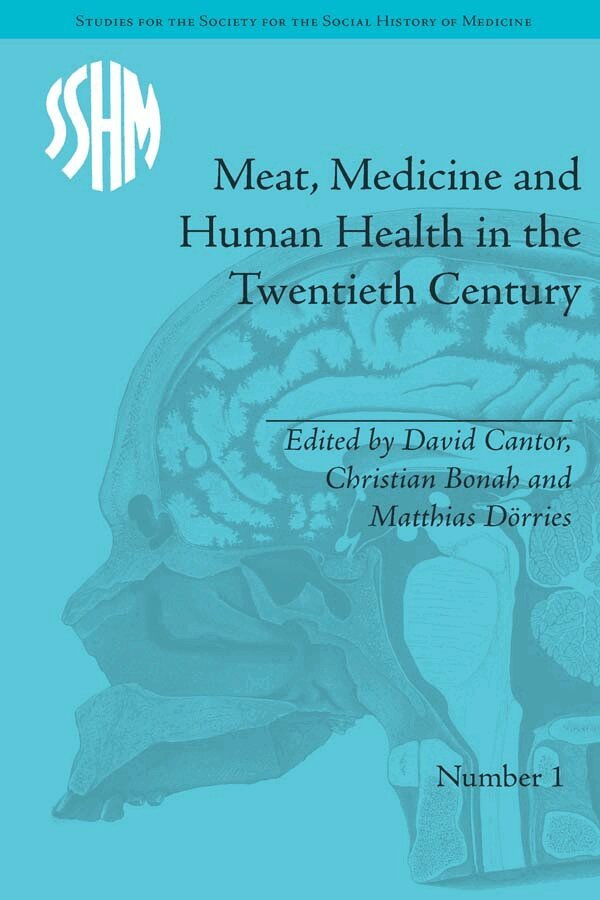
This collection of essays explores some of the complex relations between meat and health in the twentieth century. It highlights a complicated array of contradictory attitudes towards meat and human health. They show how meat came to be regarded as a central part of a modern healthy diet and trace critiques of meat-eating and the meat industry.
Del 28 - Rochester Studies in Medical History
Stress, Shock, and Adaptation in the Twentieth Century
Inbunden, Engelska, 2014
1 466 kr
Skickas inom 10-15 vardagar
This edited volume brings together leading scholars to explore the emergence of the stress concept and its ever-changing definitions since the 1940s.Stress is one of the most widely utilized medical concepts in modern society. Originally used to describe physiological responses to trauma, it is now applied in a variety of other fields and contexts, such as in the constructionand expression of personal identity, social relations, building and engineering, and the various complexities of the competitive capitalist economy. In addition, scientists and medical experts use the concept to explore the relationship between an ever-increasing number of environmental stressors and the evolution of an expanding range of mental and chronic organic diseases, such as hypertension, gastric ulcers, arthritis, allergies, and cancer.Thisedited volume brings together leading scholars to explore the emergence and development of the stress concept and its definitions as they have changed over time. It examines how stress and closely related concepts have been used to connect disciplines such as architecture, ecology, physiology, psychiatry, psychology, public health, urban planning, and a range of social sciences; its application in different settings such as the battlefield, workplace, clinic, hospital, and home; and the advancement of techniques of stress management in a number of different national, sociocultural, and scientific locations.Contributors: Theodore M. Brown, David Cantor, Otniel E. Dror, Rhodri Hayward, Mark Jackson, Robert G. W. Kirk, Junko Kitanaka, Tulley Long, Joseph Melling, Edmund Ramsden, Elizabeth Siegel Watkins, Allan Young.David Cantor is acting director, Office of History, National Institutesof Health. Edmund Ramsden is Wellcome Trust University Award Research Fellow at the School of History, Queen Mary, University of London.
Del 43 - Rochester Studies in Medical History
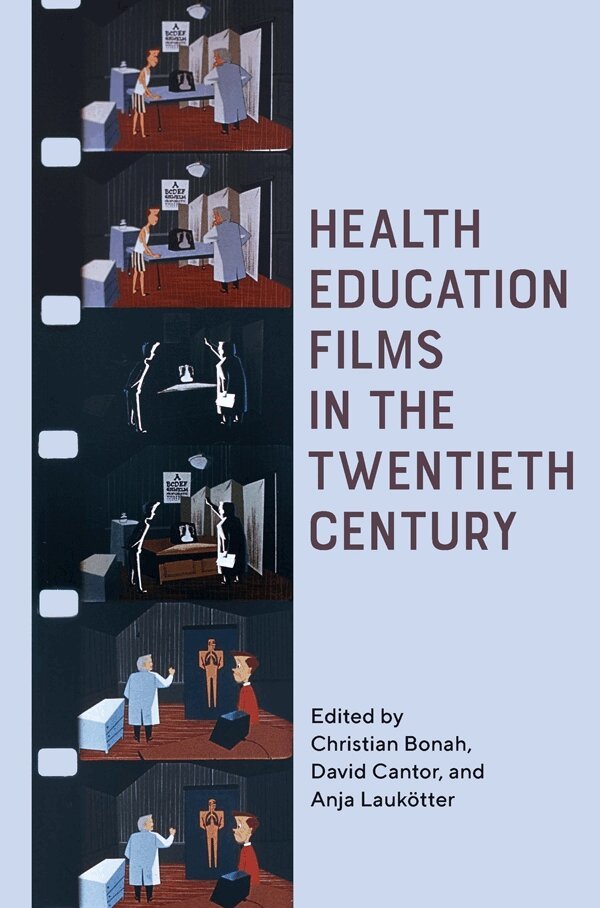
Health Education Films in the Twentieth Century
Inbunden, Engelska, 2018
1 466 kr
Skickas inom 10-15 vardagar
Examines the impact and importance of the health education film in Europe and North America in the first half of the twentieth century.During the twentieth century, film came to be seen as a revolutionary technology that could entertain, document, instruct, and transform a mass audience. In the fields of medicine and public health, doctors, educators, health advocates, and politicians were especially enthusiastic about the potential of the motion picture for communicating about health-related topics, including sexually transmitted diseases, cancer, tuberculosis, smoking, alcoholism, and contraception.Focusing on the period from the 1910s to the 1960s, this book is the first collection to examine the history of the public health education film in Europe and North America. It explores how a variety of commercial, governmental, medical, and public health organizations in Europe and North America turned to movies to educate the public, reform their health behaviors, and manage their anxieties and hopes about health, illness, and medical and public health interventions. Moreover, by looking at categories of movies as well as individual examples, the book tackles questions of the representativeness of individual films and the relationship between the publichealth film and other forms of motion picture.CONTRIBUTORS: Christian Bonah, Tim Boon, David Cantor, Ursula von Keitz, Anja Laukötter, Elizabeth Lebas, Vincent Lowy, Kirsten Ostherr, Miriam Posner, Alexandre SumpfChristian Bonah is a professor of the history of health and life sciences at the University of Strasbourg. David Cantor is a historian at the National Institutes of Health and the School of Public Health, University of Maryland, College Park. Anja Laukötter is a historian at the Center for the History of Emotions at the Max Planck Institute for Human Development, Berlin.
Del 50 - Rochester Studies in Medical History
Cancer, Research, and Educational Film at Midcentury
The Making of the Movie Challenge: Science Against Cancer
Häftad, Engelska, 2022
366 kr
Skickas inom 7-10 vardagar
The story of a forgotten health education film, Challenge: Science Against Cancer (1950), and what it tells us about mid-twentieth century North American cancer research, medical filmmaking, and health education campaigns.In 1949 the U.S. National Cancer Institute (NCI) and the Canadian Department of National Health and Welfare (DNHW) commissioned a film, eventually called Challenge. Science Against Cancer, as part of a major effort to recruit young scientists into cancer research. Both organizations feared that poor recruitment would stifle the development of the field at a time when funding for research was growing dramatically. The fear was that there would not be enough new young scientists to meet the demand, and that the shortfall would undermine cancer research and the hopes invested in it. Challenge aimed to persuade young scientists to think of cancer research as a career. This book is the story of that forgotten film and what it tells us about mid-twentieth century American and Canadian cancer research, educational filmmaking, and health education campaigns. It explores why Canadian and American health agencies turned to film to address the problem of scientist recruitment; how filmmakers turned such recruitment concerns into something they thought would work as a film; and how information officers at the NCI and DNHW sought to shape the impact of Challenge by embedding it in a broader educational and propaganda program. It is, in short, an account of the important, but hitherto undocumented, roles of filmmakers and information officers in the promotion of post-Second World War cancer research.This book is openly available in digital formats, under Creative Commons license CC BY-ND, thanks to a generous grant from the Andrew W. Mellon Foundation.
2 220 kr
Skickas inom 10-15 vardagar
This collection of essays explores some of the complex relations between meat and health in the twentieth century. It highlights a complicated array of contradictory attitudes towards meat and human health. They show how meat came to be regarded as a central part of a modern healthy diet and trace critiques of meat-eating and the meat industry.