David Carey Jr - Böcker
Visar alla böcker från författaren David Carey Jr. Handla med fri frakt och snabb leverans.
10 produkter
10 produkter
2 299 kr
Skickas inom 10-15 vardagar
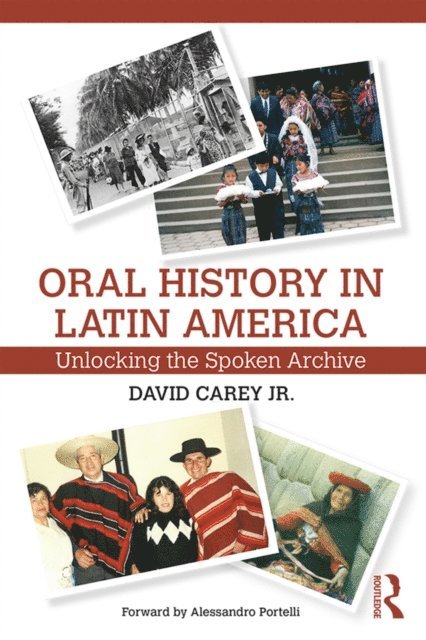
This field guide to oral history in Latin America addresses methodological, ethical, and interpretive issues arising from the region’s unique milieu. With careful consideration of the challenges of working in Latin America – including those of language, culture, performance, translation, and political instability – David Carey Jr. provides guidance for those conducting oral history research in the postcolonial world. In regions such as Latin America, where nations that have been subjected to violent colonial and neocolonial forces continue to strive for just and peaceful societies, decolonizing research and analysis is imperative. Carey deploys case studies and examples in ways that will resonate with anyone who is interested in oral history.
652 kr
Skickas inom 10-15 vardagar
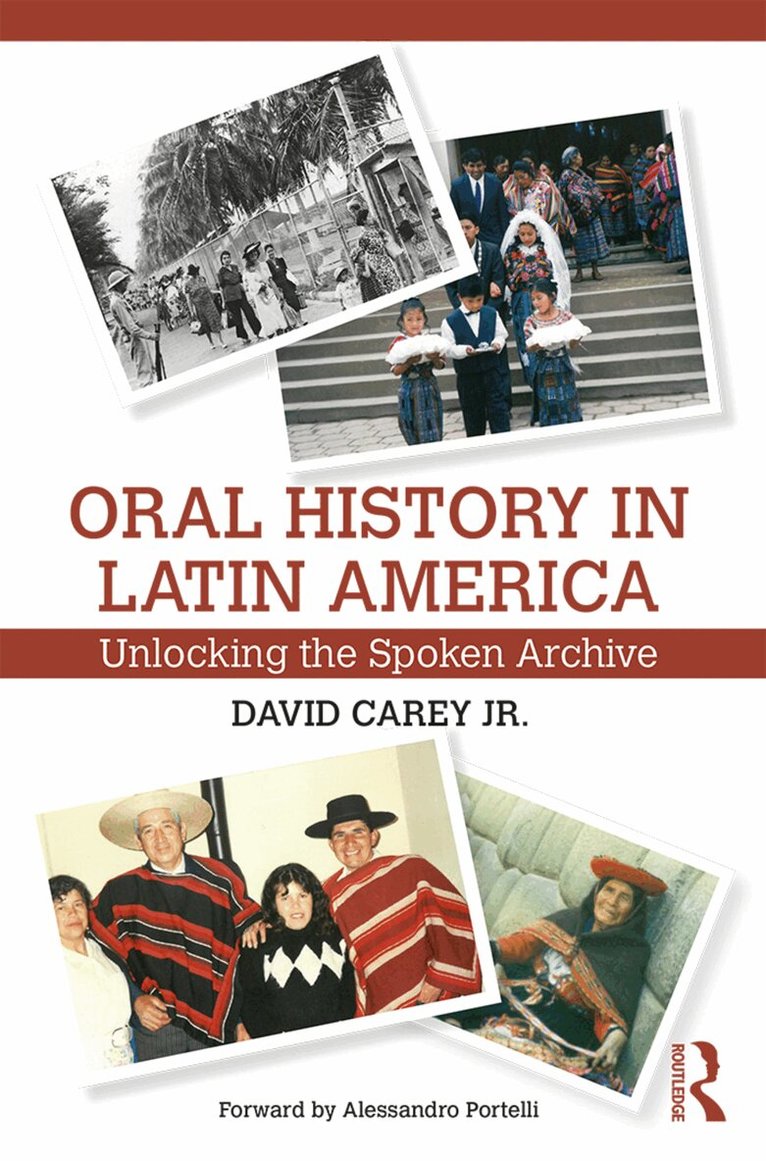
This field guide to oral history in Latin America addresses methodological, ethical, and interpretive issues arising from the region’s unique milieu. With careful consideration of the challenges of working in Latin America – including those of language, culture, performance, translation, and political instability – David Carey Jr. provides guidance for those conducting oral history research in the postcolonial world. In regions such as Latin America, where nations that have been subjected to violent colonial and neocolonial forces continue to strive for just and peaceful societies, decolonizing research and analysis is imperative. Carey deploys case studies and examples in ways that will resonate with anyone who is interested in oral history.
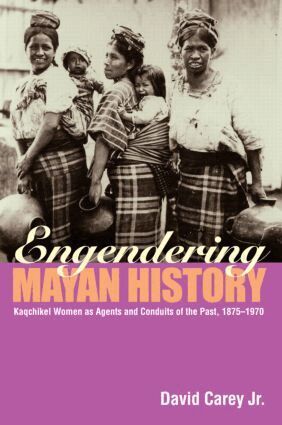
Engendering Mayan History
Kaqchikel Women as Agents and Conduits of the Past, 1875-1970
Inbunden, Engelska, 2005
2 793 kr
Skickas inom 3-6 vardagar
Presenting Mayan history from the perspective of Mayan women--whose voices until now have not been documented--David Carey allows these women to present their worldviews in their native language, adding a rich layer to recent Latin American historiography, and increasing our comprehension of indigenous perspectives of the past.Drawing on years of research among the Maya that specifically documents women's oral histories, Carey gives Mayan women a platform to discuss their views on education, migrant labor, work in the home, female leadership, and globalization. These oral histories present an ideal opportunity to understand indigenous women's approach to history, the apparent contradictions in gender roles in Mayan communities, and provide a distinct conceptual framework for analyzing Guatamalan, Mayan, and Latin American history.
Engendering Mayan History
Kaqchikel Women as Agents and Conduits of the Past, 1875-1970
Häftad, Engelska, 2005
596 kr
Skickas inom 10-15 vardagar
Presenting Mayan history from the perspective of Mayan women--whose voices until now have not been documented--David Carey allows these women to present their worldviews in their native language, adding a rich layer to recent Latin American historiography, and increasing our comprehension of indigenous perspectives of the past.Drawing on years of research among the Maya that specifically documents women's oral histories, Carey gives Mayan women a platform to discuss their views on education, migrant labor, work in the home, female leadership, and globalization. These oral histories present an ideal opportunity to understand indigenous women's approach to history, the apparent contradictions in gender roles in Mayan communities, and provide a distinct conceptual framework for analyzing Guatamalan, Mayan, and Latin American history.
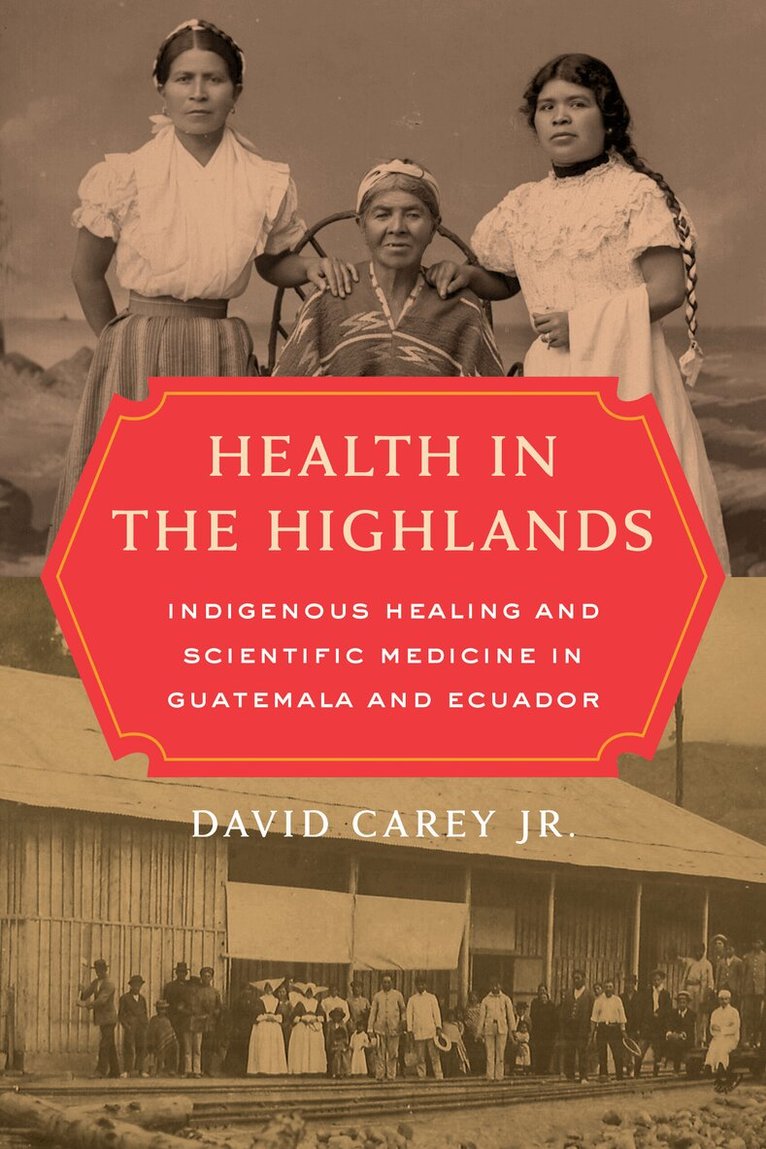
Health in the Highlands
Indigenous Healing and Scientific Medicine in Guatemala and Ecuador
Inbunden, Engelska, 2023
780 kr
Skickas inom 7-10 vardagar
Populated by curanderos, midwives, bonesetters, witches, doctors, nurses, and the indigenous people they served, this nuanced history demonstrates how cultural and political history, misogyny, racism, and racialization influence public health. In the first half of the twentieth century, the governments of Ecuador and Guatemala sought to spread scientific medicine to their populaces, working to prevent and treat malaria, typhus, and typhoid; to boost infant and maternal well-being; and to improve overall health. Drawing on extensive, original archival research, David Carey Jr. shows that highland indigenous populations in the two countries tended to embrace a syncretic approach to health, combining traditional and new practices. At times, both governments encouraged—or at least allowed—such a synthesis: even what they saw as "nonscientific" care was better than none. Yet both, especially Guatemala's, also wrote off indigenous lifeways and practices with both explicit and implicit racism, going so far as to criminalize native medical providers and to experiment on indigenous people without their consent. Both nations had authoritarian rule, but Guatemala's was outright dictatorial, tending to treat both women and indigenous people as subjects to be controlled and policed. Ecuador, on the other hand, advanced a more pluralistic vision of national unity, and had somewhat better outcomes as a result.
Health in the Highlands
Indigenous Healing and Scientific Medicine in Guatemala and Ecuador
Häftad, Engelska, 2023
292 kr
Skickas inom 7-10 vardagar
Populated by curanderos, midwives, bonesetters, witches, doctors, nurses, and the indigenous people they served, this nuanced history demonstrates how cultural and political history, misogyny, racism, and racialization influence public health. In the first half of the twentieth century, the governments of Ecuador and Guatemala sought to spread scientific medicine to their populaces, working to prevent and treat malaria, typhus, and typhoid; to boost infant and maternal well-being; and to improve overall health. Drawing on extensive, original archival research, David Carey Jr. shows that highland indigenous populations in the two countries tended to embrace a syncretic approach to health, combining traditional and new practices. At times, both governments encouraged—or at least allowed—such a synthesis: even what they saw as "nonscientific" care was better than none. Yet both, especially Guatemala's, also wrote off indigenous lifeways and practices with both explicit and implicit racism, going so far as to criminalize native medical providers and to experiment on indigenous people without their consent. Both nations had authoritarian rule, but Guatemala's was outright dictatorial, tending to treat both women and indigenous people as subjects to be controlled and policed. Ecuador, on the other hand, advanced a more pluralistic vision of national unity, and had somewhat better outcomes as a result.
1 057 kr
Tillfälligt slut
Compelling stories and striking photographs illustrate the challenges and highlights of Latino/a life in Portland, Maine.Latinos-those born in the United States as well as those who immigrated later in life-are not only transforming the country and cities, they are also transforming themselves in a difficult process of community making. This book tells the story of how a diverse group of immigrants have adapted to dramatic changes in the largely Anglo setting of Portland, Maine, building bridges instead of walls. The Latino storytellers included here address multiple challenges of discrimination, language barriers, cultural retention and adaptation, and speak of their strengths-strong family ties, a connection to the environment, and an expanding sense of home-to illustrate how they have emerged not only with hopes and dreams intact, but also with a resilience built upon fluid and flexible identities.
255 kr
Tillfälligt slut
Compelling stories and striking photographs illustrate the challenges and highlights of Latino/a life in Portland, Maine.Latinos-those born in the United States as well as those who immigrated later in life-are not only transforming the country and cities, they are also transforming themselves in a difficult process of community making. This book tells the story of how a diverse group of immigrants have adapted to dramatic changes in the largely Anglo setting of Portland, Maine, building bridges instead of walls. The Latino storytellers included here address multiple challenges of discrimination, language barriers, cultural retention and adaptation, and speak of their strengths-strong family ties, a connection to the environment, and an expanding sense of home-to illustrate how they have emerged not only with hopes and dreams intact, but also with a resilience built upon fluid and flexible identities.
242 kr
Skickas inom 10-15 vardagar
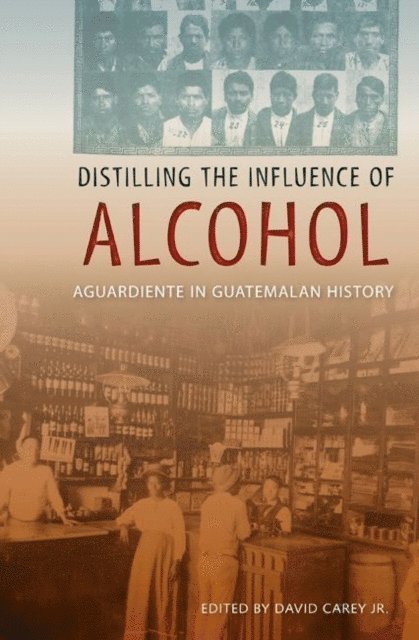
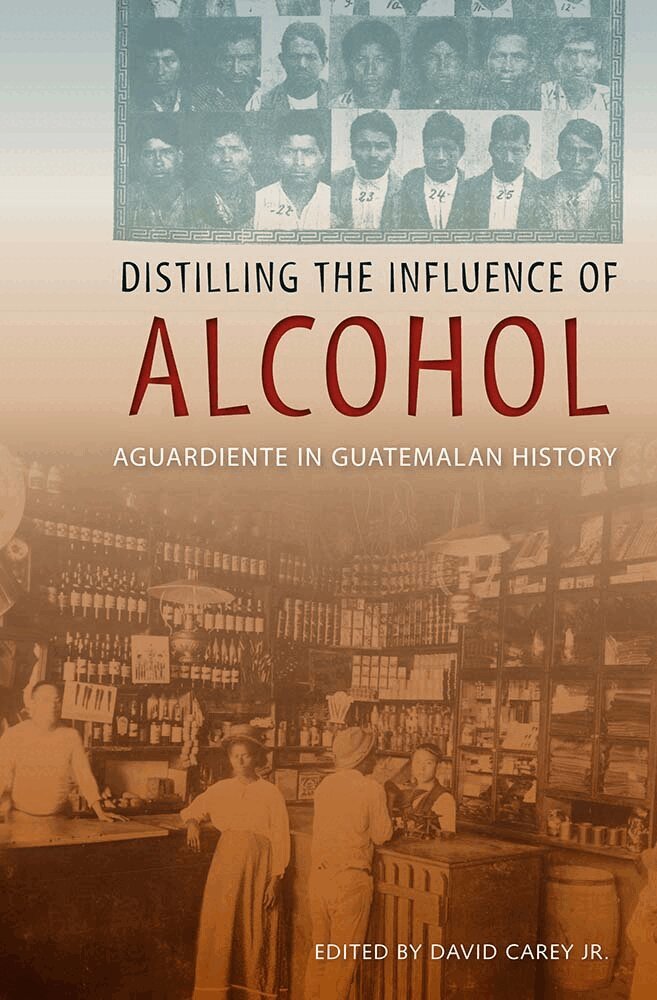
Sugar, coffee, corn, and chocolate have long dominated the study of Central American commerce, and researchers tend to overlook one other equally significant commodity: alcohol. Often illicitly produced and consumed, aguardiente (distilled sugar cane spirits or rum) was central to Guatemalan daily life, though scholars have often neglected its fundamental role in the country's development.Throughout world history, alcohol has helped build family livelihoods, boost local economies, and forge nations. The alcohol economy also helped shape Guatemala's turbulent categories of ethnicity, race, class, and gender, as these essays demonstrate. Established and emerging Guatemalan historians investigate aguardiente's role from the colonial era to the twentieth century, drawing from archival documents, oral histories, and ethnographic sources. Topics include women in the alcohol trade, taverns as places of social unrest, and tension between Maya and State authority.By tracing Guatemala's past, people, and national development through the channel of an alcoholic beverage, Distilling the Influence of Alcohol opens new directions for Central American historical and anthropological research.
712 kr
Skickas inom 7-10 vardagar
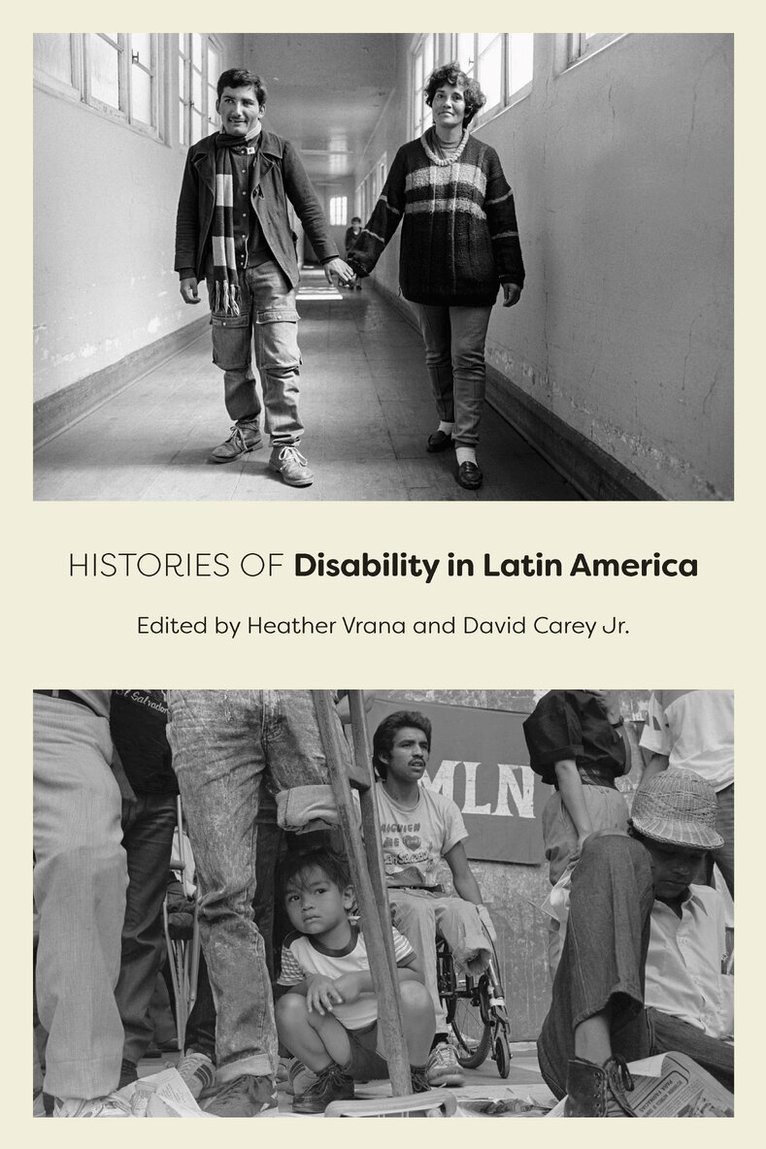
Reframing disability, power, and identity in Latin America's complex histories.Histories of Disability in Latin America offers a sweeping reexamination of disability's place in the region's past, bringing together original scholarship by historians and anthropologists to illuminate how bodies, minds, and the concept of difference have been understood across centuries of Latin American history. Edited by Heather Vrana and David Carey Jr., this volume foregrounds the lived experiences, agency, and social meanings of disability in a region too often marginalized in global disability studies. With contributions and case studies based on archival and ethnographic research, the book illustrates how colonialism, slavery, war, industrialization, imperialism, and revolution have generated both disability and distinctive conceptions of disability. Rather than applying rigid Western frameworks, contributors examine Indigenous and Afro–Latin American terminologies and epistemologies to explore how societies have made sense of bodily difference, care, and capacity. In doing so, they critically engage medicalized and deficit-based interpretations that have long dominated historical and scholarly narratives. This collection shifts the center of inquiry to Latin America, interrogates presentist assumptions, and reconsiders the historical emergence of disability through the prisms of race, class, gender, and power. Histories of Disability in Latin America engages and expands key debates in both disability studies and Latin American historiography. This book invites readers to rethink what disability has meant—and continues to mean—across time and place. It is essential reading for those interested in the entanglements of embodiment, identity, and the historical forces that have shaped life in the Americas.