David Ewing Duncan - Böcker
Visar alla böcker från författaren David Ewing Duncan. Handla med fri frakt och snabb leverans.
12 produkter
12 produkter
125 kr
Skickas inom 5-8 vardagar
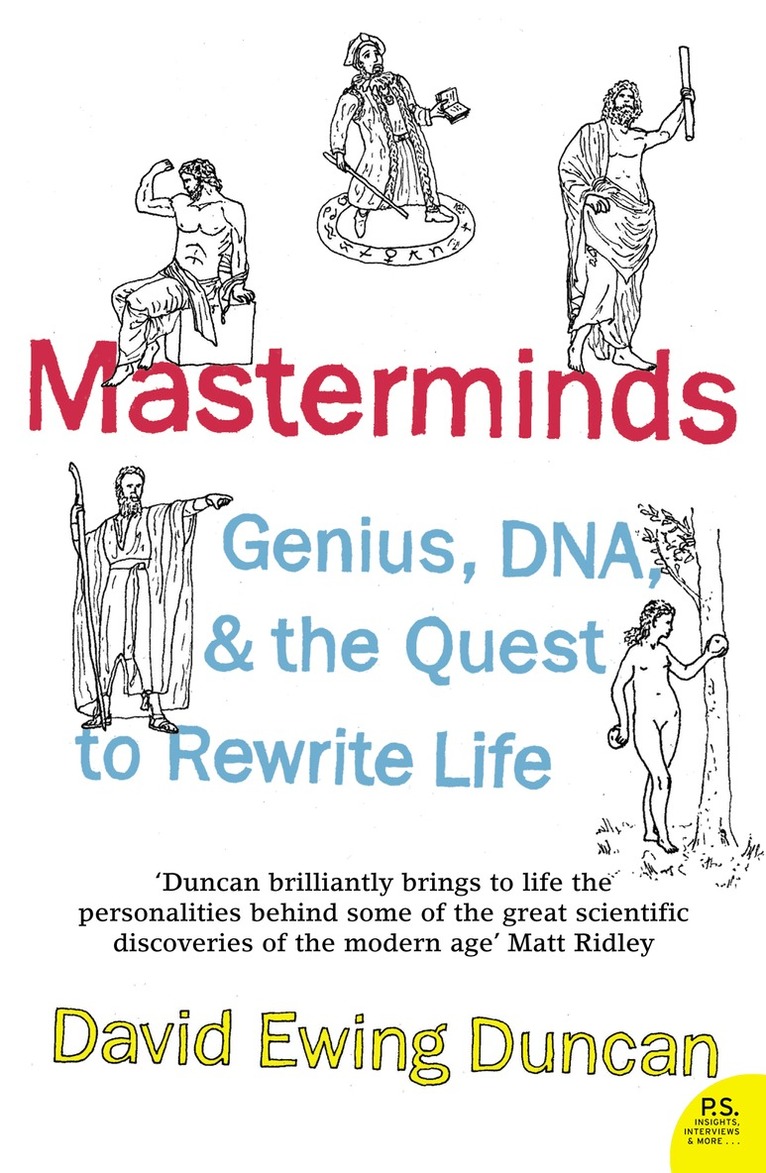
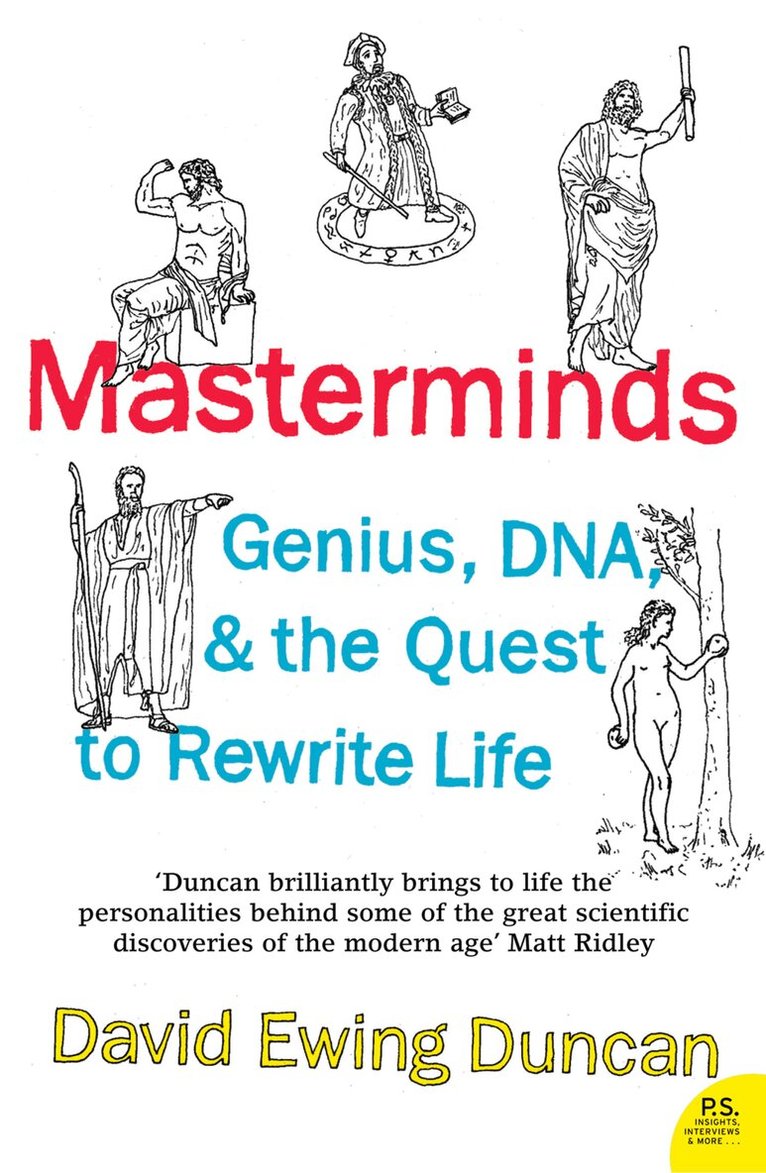
Combining myth, biography, and wit, this is a highly original depiction of cutting-edge science and its profound implications, told through the scientists who are rewriting life on earth.Throughout history, the scientists’ personalities have astonished us. From Galileo to Jonas Salk, they push and stretch society’s boundaries though their great leaps of imagination and originality, providing us with everything from the wheel to rocket ships and penicillin. Today's masterminds in biotechnology promise lifespans up to 400 years, cures for cancer, and an end to pollution. But they are also capable of causing social upheavals with Frankenstein-like nightmare creations, as well as bioweapons.Award-winning writer David Ewing Duncan has written a startling narrative about science and personality, delving into stem cells, cloning, bioengineering, and genetics by telling the stories of the characters at the fulcrum of the science. He uses a unique method of tying in age-old stories and myths – from Prometheus and Eve to Faustus and Frankenstein – to ask the question: can we trust these scientists?
254 kr
Skickas inom 3-6 vardagar
174 kr
Skickas inom 5-8 vardagar
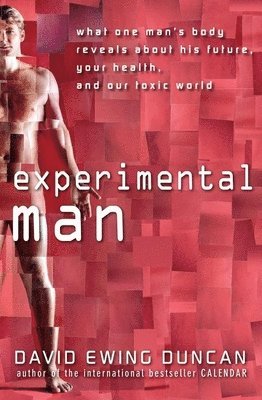
Experimental Man: What One Man's Body Reveals about His Future, Your Health, and Our Toxic World
Inbunden, Engelska, 2009
432 kr
Skickas inom 3-6 vardagar
The Voyage of Sorcerer II: The Expedition That Unlocked the Secrets of the Ocean's Microbiome
Häftad, Engelska, 2026
292 kr
Kommande
198 kr
Skickas inom 7-10 vardagar
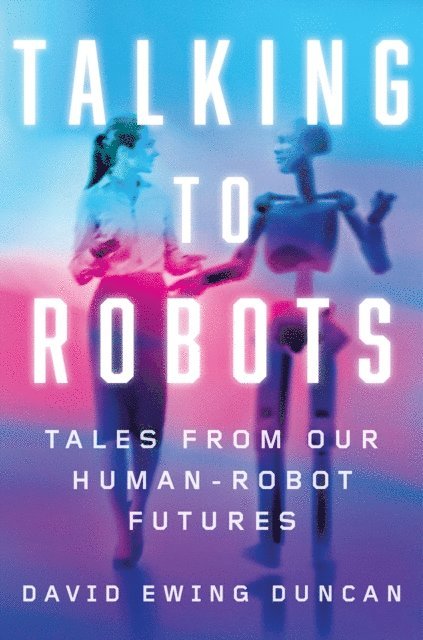
One of Time magazine's '32 Books You Need to Read This Summer' -- 'a riveting read'.'Intensely readable, downright terrifying, and surprisingly uplifting.'Vanity Fair'A fascinating work of imaginative futurology, a science journalist takes a look at our current technologies and anticipates the human-robot future that could await us - one full of warrior bots, politician bots, doctor bots and sex bots.'One of Barbara VanDenburgh's '5 Books Not to Miss', USA TodayOne of the best summer reads of 2019, according to top authors David Baldacci and Elizabeth Acevedo on USA Today's Today programme. 'A refreshing variation on the will-intelligent-robots-bring-Armageddon genre . . . this colorful mixture of expert futurology and quirky speculation does not disappoint'Kirkus ReviewsWhat robot and AI systems are being built and imagined right now? What do they say about us, their creators? Will they usher in a fantastic new future, or destroy us? What do some of our greatest thinkers, from physicist Brian Greene and futurist Kevin Kelly to inventor Dean Kamen, geneticist George Church and filmmaker Tiffany Shlain, anticipate for our human-robot future? For even as robots and AI intrigue us and make us anxious about the future, our fascination with robots has always been about more than the potential of the technology - it also concerns what robots tell us about being human.From present-day Facebook and Amazon bots to near-future 'intimacy' bots and 'the robot that swiped my job' bots, bestselling American popular science writer David Ewing Duncan's Talking to Robots is a wonderfully entertaining and insightful guide to possible future scenarios about robots, both real and imagined.Featured bots include robot drivers; doc bots; politician bots; warrior bots; sex bots; syntheticbio bots; dystopic bots that are hopefully just bad dreams; and ultimately, God Bot (asdescribed by physicist Brian Greene). These scenarios are informed by discussions with well-known thinkers, engineers, scientists, artists, philosophers and others, who share with us their ideas, hopes and fears about robots. David spoke with, among others, Kevin Kelly, David Baldacci, Brian Greene, Dean Kamen, Craig Venter, Stephanie Mehta, David Eagleman, George Poste, George Church, General R. H. Latiff, Robert Seigel, Emily Morse, David Sinclair, Ken Goldberg, Sunny Bates, Adam Gazzaley, Tim O'Reilly, Tiffany Shlain, Eric Topol and Juan Enriquez.These discussions, along with some reporting on bot-tech, bot-history and real-time societal andethical issues with robots, are the launch pads for unfurling possible bot futures that are informed by how people and societies have handled new technologies in the past.The book describes how robots work, but its primary focus is on what our fixation with botsand AI says about us as humans: about our hopes and anxieties; our myths, stories, beliefs andideas about beings both real and artificial; and our attempts to attain perfection.We are at a pivotal moment when our ancient infatuation with human-like beings with certainattributes or superpowers - in mythology, religion and storytelling - is coinciding with ourability to actually build some of these entities.
158 kr
Skickas inom 7-10 vardagar
What robot and AI systems are being built and imagined right now? What do they say about us, their creators? Will they usher in a fantastic new future, or destroy us? What do some of our greatest thinkers, from physicist Brian Greene and futurist Kevin Kelly to inventor Dean Kamen, geneticist George Church, and filmmaker Tiffany Shlain, anticipate for our human-robot future? For even as robots and AI intrigue us and make us anxious about the future, our fascination with robots has always been about more than the potential of the technology - it's also about what robots tell us about being human.From present-day Facebook and Amazon bots to near-future 'intimacy' bots and 'the robot that stole my job' bots, bestselling American popular science writer David Ewing Duncan's TALKING TO ROBOTS is a wonderfully entertaining and insightful guide to possible future scenarios about robots, both real and imagined. These scenarios are informed by interviews with actual engineers, scientists, artists, philosophers, futurists and others, who share with us their ideas, hopes and fears about robots. In the future, we will all remember when the robots truly arrived. Perhaps a robot surgeon saved your child's life, or maybe your inaugural robot moment will be more banal, when you realised with relief that the machines had taken over all the tasks you used to hate - taking out the rubbish, changing nappies, paying bills . . . Perhaps your recollection will be less benign, a memory of when a robot turned against you: the robot that threatened to seize your assets over a tax dispute. You might also remember when the robots began campaigning for equal rights with humans, and for an end to robot slavery, abuse and exploitation. Or when robots became so smart that they became our benign overlords, treating us like cute and not very bright pets. Or when the robots grew tired of us and decided to destroy us, turning our own robo-powered weapons of mass destruction against us. Further into the future we will remember when robots became organic, created in a lab from living tissue to look and be just like us, only better and more resilient. Even further in the future, we will recall when we first had the option of becoming robots ourselves, by downloading our minds into organic-engineered beings that could theoretically live forever. And yet . . . will we feel that something is missing as the millennia pass? Will we grow weary of being robots, invulnerable and immortal? Mostly we love our technology as it whisks us across and over continents and oceans at 35,000 feet, or summons us rides in someone else's Prius or connects us online to long-lost friends. Yet deep down, many of us fe
122 kr
Skickas
'If you want to see what that future might look like, Duncan's book is a fun place to start'NPR'Intensely readable, downright terrifying, and surprisingly uplifting'Vanity Fair'5 books not to miss . . . A fascinating work of imaginative futurology'USA TodayOne of Time magazine's '32 Books You Need to Read This Summer' - 'a riveting read'One of David Baldacci and Elizabeth Acevedo's best summer reads, on USA Today's Today programme 'A refreshing variation on the will-intelligent-robots-bring-Armageddon genre . . . this colourful mixture of expert futurology and quirky speculation does not disappoint'Kirkus ReviewsWhat robot and AI systems are being built and imagined right now? What do they say about us, their creators? Will they usher in a fantastic new future, or destroy us? What do some of our greatest thinkers, from physicist Brian Greene and futurist Kevin Kelly to inventor Dean Kamen, geneticist George Church, and filmmaker Tiffany Shlain, anticipate about our human-robot future? For even as robots and AI intrigue us and make us anxious about the future, our fascination with robots has always been about more than the potential of the technology - it's also about what robots tell us about being human.From present-day Facebook and Amazon bots to near-future 'intimacy' bots and 'the robot that swiped my job' bots, bestselling American popular science writer David Ewing Duncan's Talking to Robots is a wonderfully entertaining and insightful guide to possible future scenarios about robots, both real and imagined.Featured bots include robot drivers; doc bots; politician bots; warrior bots; sex bots; syntheticbio bots; dystopic bots that are hopefully just bad dreams; and ultimately, God Bot (asdescribed by physicist Brian Greene).These scenarios are informed by discussions with well-known thinkers, engineers, scientists, artists, philosophers and others, who share with us their ideas, hopes and fears about robots. David spoke with, among others, Kevin Kelly, David Baldacci, Brian Greene, Dean Kamen, Craig Venter, Stephanie Mehta, David Eagleman, George Poste, George Church, General R. H. Latiff, Robert Seigel, Emily Morse, David Sinclair, Ken Goldberg, Sunny Bates, Adam Gazzaley, Tim O'Reilly, Tiffany Shlain, Eric Topol and Juan Enriquez.These discussions, along with some reporting on bot-tech, bot-history and real-time societal andethical issues with robots, are the launch pads for unfurling possible bot futures that are informed by how people and societies have handled new technologies in the past.The book describes how robots work, but its primary focus is on what our fixation with botsand AI says about us as humans: about our hopes and anxieties; our myths, stories, beliefs andideas about beings both real and artificial; and our attempts to attain perfection.We are at a pivotal moment when our ancient infatuation with human-like beings with certainattributes or superpowers - in mythology, religion and storytelling - is coinciding with ourability to actually build some of these entities.
259 kr
Skickas inom 7-10 vardagar
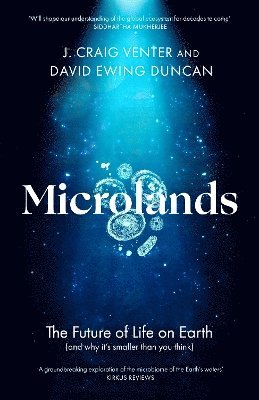
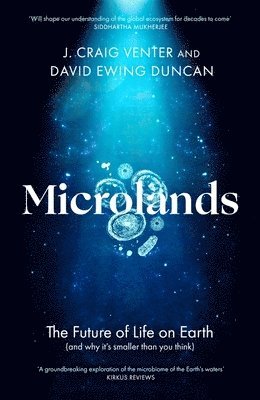
'An epic travelogue, brimming with the excitement of discovery. With characteristic panache, Venter unveils the teeming array of bacteria, viruses, and eukaryotes that crowd our planet's oceans' - Siddhartha Mukherjee'This page-turner gives . . . the thrill of seeing our planet's largest universe through the brilliant, intrepid eyes of the scientist who has done more than anyone to unlock the secrets of life' - Martine Rothblatt'A tour de force . . . Venter has expanded biology's horizons. This book explores microbial life on a global scale, providing cutting-edge solutions to problems of environmental change' - Aristides Patrinos'A ripping tale . . . to revolutionize our understanding of our bodies, the oceans, and the planet' - Jack Gilbert'An exhilarating account of how creative science is accomplished' - Sir Richard J. Roberts'[A] fascinating tour of Planet Microbe' - Bill McKibben'Venter and Duncan expand our scope of what it means to be alive' - Jamie Metzl'Inspiring ... change[s] our ideas of how biology is done' - TelegraphUpon completing his historic work on the Human Genome Project in 2002, J. Craig Venter declared that he would sequence the genetic code of all life on earth. Thus began a fifteen-year quest to collect DNA from the world's oldest and most abundant form of life: microbes. Boarding the Sorcerer II, a 100-foot sailboat turned research vessel, Venter travelled over 65,000 miles around the globe to sample ocean water and the microscopic life within.In this book, Venter and science writer David Ewing Duncan tell the remarkable story of these expeditions and of the momentous discoveries that ensued-of plant-like bacteria that get their energy from the sun, proteins that metabolize vast amounts of hydrogen, and microbes whose genes shield them from ultraviolet light. The result was a massive library of millions of unknown genes, thousands of unseen protein families, and new lineages of bacteria that revealed the unimaginable complexity of life on earth. Yet despite this exquisite diversity, Venter encountered sobering reminders of how human activity is disturbing the delicate microbial ecosystem that nurtures life on earth. In the face of unprecedented climate change, Venter and Duncan show how we can harness the microbial genome to develop alternative sources of energy, food, and medicine that might ultimately avert our destruction.A captivating story of exploration and discovery, this book restores microbes to their rightful place as crucial partners in our evolutionary past and guides to our future.
118 kr
Skickas inom 7-10 vardagar
'An epic travelogue, brimming with the excitement of discovery. With characteristic panache, Venter unveils the teeming array of bacteria, viruses, and eukaryotes that crowd our planet's oceans' - Siddhartha Mukherjee'This page-turner gives . . . the thrill of seeing our planet's largest universe through the brilliant, intrepid eyes of the scientist who has done more than anyone to unlock the secrets of life' - Martine Rothblatt'A tour de force . . . Venter has expanded biology's horizons. This book explores microbial life on a global scale, providing cutting-edge solutions to problems of environmental change' - Aristides Patrinos'A ripping tale . . . to revolutionize our understanding of our bodies, the oceans, and the planet' - Jack Gilbert'An exhilarating account of how creative science is accomplished' - Sir Richard J. Roberts'[A] fascinating tour of Planet Microbe' - Bill McKibben'Venter and Duncan expand our scope of what it means to be alive' - Jamie Metzl'Inspiring ... change[s] our ideas of how biology is done' - TelegraphUpon completing his historic work on the Human Genome Project in 2002, J. Craig Venter declared that he would sequence the genetic code of all life on earth. Thus began a fifteen-year quest to collect DNA from the world's oldest and most abundant form of life: microbes. Boarding the Sorcerer II, a 100-foot sailboat turned research vessel, Venter travelled over 65,000 miles around the globe to sample ocean water and the microscopic life within.In this book, Venter and science writer David Ewing Duncan tell the remarkable story of these expeditions and of the momentous discoveries that ensued-of plant-like bacteria that get their energy from the sun, proteins that metabolize vast amounts of hydrogen, and microbes whose genes shield them from ultraviolet light. The result was a massive library of millions of unknown genes, thousands of unseen protein families, and new lineages of bacteria that revealed the unimaginable complexity of life on earth. Yet despite this exquisite diversity, Venter encountered sobering reminders of how human activity is disturbing the delicate microbial ecosystem that nurtures life on earth. In the face of unprecedented climate change, Venter and Duncan show how we can harness the microbial genome to develop alternative sources of energy, food, and medicine that might ultimately avert our destruction.A captivating story of exploration and discovery, this book restores microbes to their rightful place as crucial partners in our evolutionary past and guides to our future.
Experimental Man
What One Man's Body Reveals about His Future, Your Health, and Our Toxic World
Häftad, Engelska, 2009
257 kr
Skickas inom 3-6 vardagar
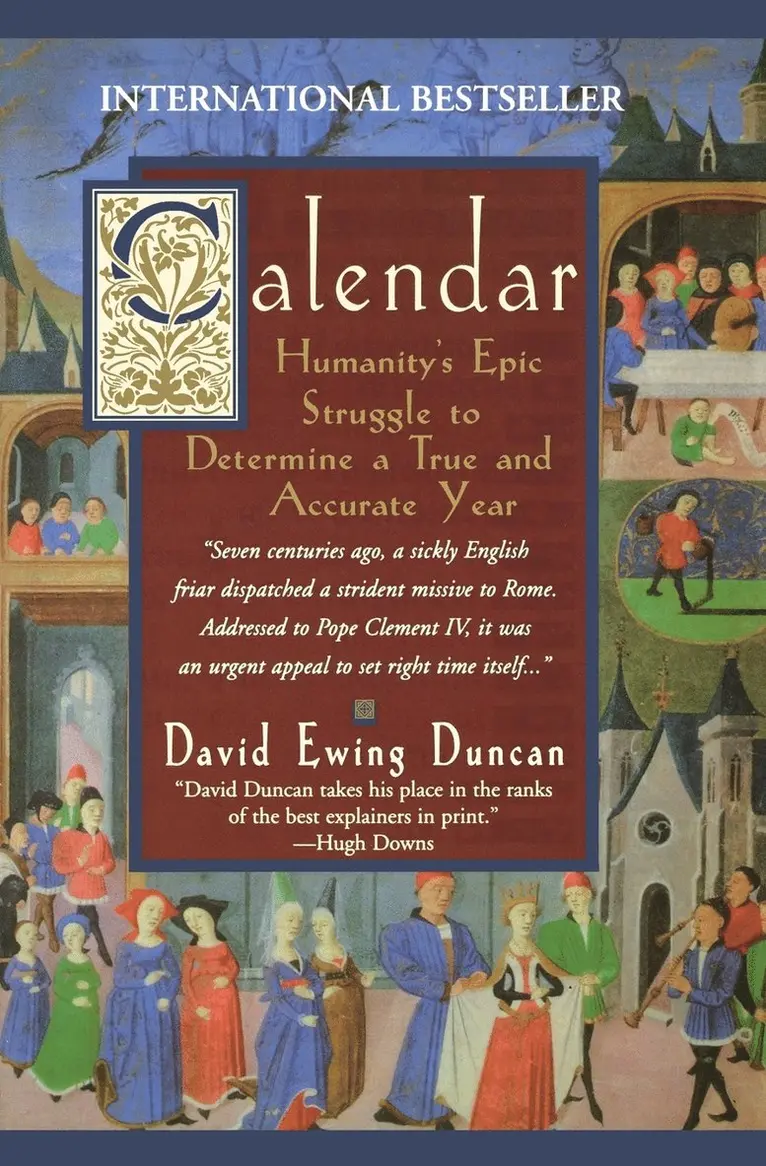
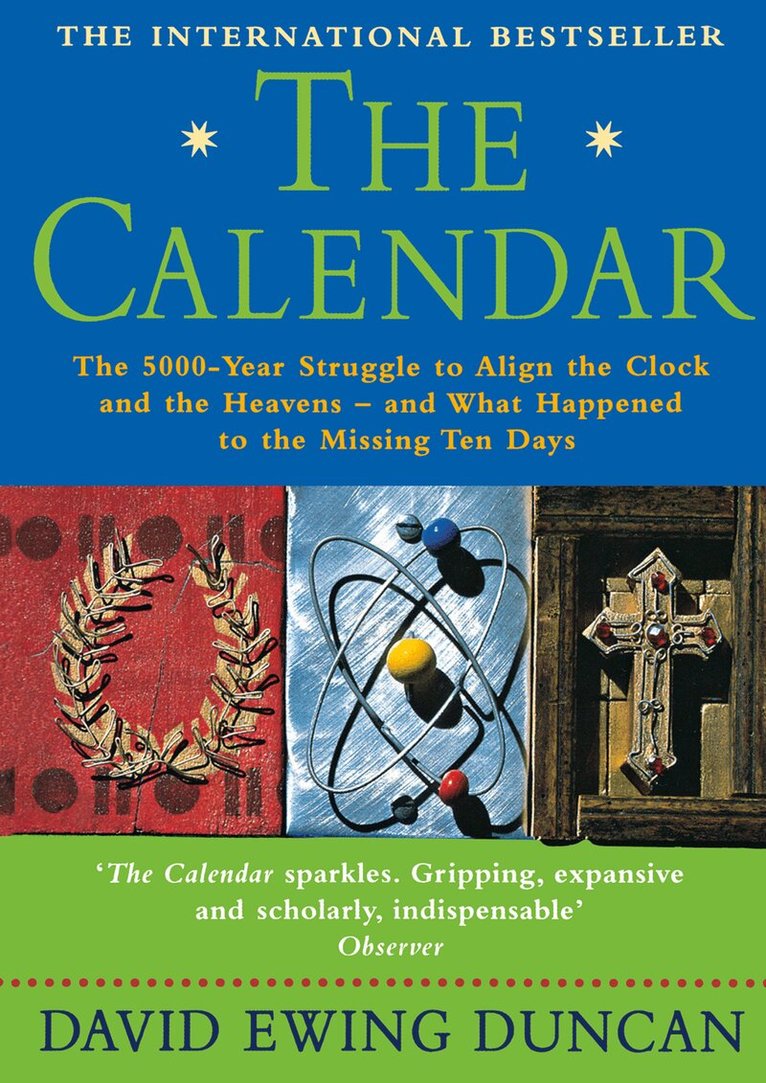
Calendar
The 5000 Year Struggle to Align the Clock and the Heavens, and What Happened to the Missing Ten Days
Häftad, Engelska, 1999
137 kr
Skickas
The 5,000-year struggle to align the heavens with the clock and what happened to the missing ten days.Measuring the daily and yearly cycle of the cosmos has never been entirely straightforward.The year 2000 is alternatively the year 2544 (Buddhist), 6236 (Ancient Egyptian), 5761 (Jewish) or simply the year of the Dragon (Chinese). The story of the creation of the Western calendar is a story of emperors and popes, mathematicians and monks, and the growth of scientific calculation to the point where, bizarrely, our measurement of time by atomic pulses is now more acurate than Time itself: the Earth is an elderly lady and slightly eccentric – she loses half a second a century. Days have been invented (Julius Caesar needed an extra 80 days in 46BC), lost (Pope Gregory XIII ditched ten days in 1582) and moved (because Julius Caesar had thirty-one in his month, Augustus determined that he should have the same, so he pinched one from February). The Calendar links politics and religion, astronomy and mathematics, Cleopatra and Stephen Hawking. And it is published as millions of computer users wonder what will happen when, after 31 December 1999, their dates run out…