David Garland - Böcker
Visar alla böcker från författaren David Garland. Handla med fri frakt och snabb leverans.
16 produkter
16 produkter
458 kr
Skickas inom 3-6 vardagar
735 kr
Skickas inom 5-8 vardagar
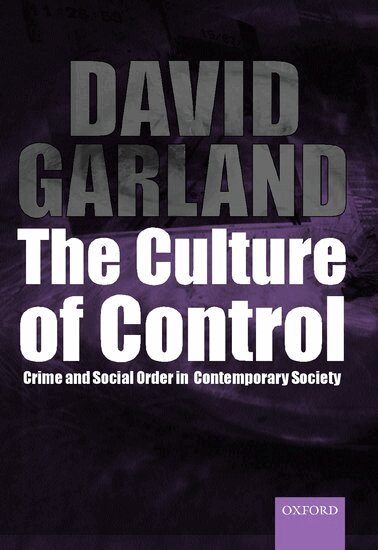
The Culture of Control charts the dramatic changes in crime control and criminal justice that have occurred in Britain and America over the last 25 years. It then explains these transformations by showing how the social organization of late modern society has prompted a series of political and cultural adaptations that alter how governments and citizens think and act in relation to crime. The book presents an original and in-depth analysis of contemporary crime control, revealing its underlying logics and rationalities, and identifying the social relations and cultural sensibilities that have produced this new culture of control. In developing a "history of the present" in the field of crime control, David Garland presents an intertwined history of the welfare state and the criminal justice state, a theory of social and penal change, and an account of how social order is constructed in late modern societies. Drawing on extensive research in the UK and the USA, he shows in detail how the social, economic and cultural forces of the late 20th century have reshaped criminological thought, public policy, and the cultural meaning of crime and criminals.The Culture of Control explains how our responses to crime and our sense of criminal justice came to be so dramatically reconfigured at the end of the 20th century. The shifting policies of crime and punishment, welfare and security - and the changing class, race and gender relations that underpin them - are viewed as aspects of the problem of governing late modern society and creating social order in a rapidly changing social world. Its theoretical scope, empirical range and interpretative insight make this book an indispensable guide to one of the central issues of our time.
459 kr
Skickas inom 5-8 vardagar
Contemporary criminology inhabits a rapidly changing world. The speed and profundity of these changes are echoed in the rapidly developing character of criminology's subject-matter, whether it is crime rates, crime policy, or the practices of policing, prevention and punishment. The questions that animate this book concern the challenges that are posed for criminology by the economic, cultural, and political transformations that have marked late twentieth-century social life. In this unique collection of essays, a diverse group of distinguished social theorists reflect upon the intellectual challenges and opportunities presented to criminology by recent transformations in the social and intellectual landscapes of contemporary societies. As each essay in its different way reveals, crime and punishment have ceased to be topics that can be contained within the bounds of any specialized discipline. Crime and punishment now play such integral roles in the politics of contemporary societies, are so densely entangled with our daily routines, so deeply lodged in our emotional lives, so vividly represented in our cultural imagination, that they easily escape any analytical box, however capacious, that criminology may develop for their containment. Several of the most persuasive sociological accounts of the present give a prominent place in their analysis to crime, fear of crime, and the calculations of risk and measures of repression to which these give rise. This collection offers a series of powerful and provocative accounts of how crime and its control mesh with the underlying social and political dynamics shaping contemporary society. It raises a series of profound questions about the political and ethical frames through which these problems ought best to be governed.
1 378 kr
Skickas inom 7-10 vardagar
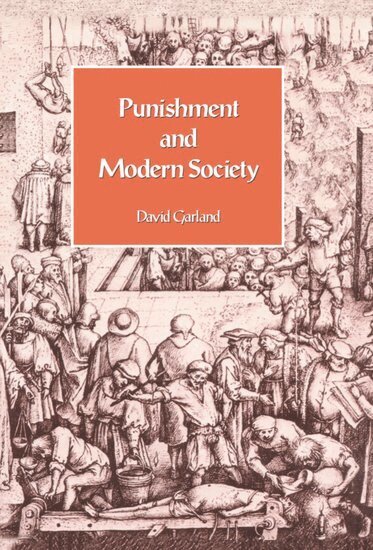
This wide-ranging study provides the first comprehensive account of the forms, functions, and significance of punishment in modern society. Arguing that penal institutions are social and cultural artefacts as well as techniques of crime control, the book explores the ways in which penality interacts with a variety of social forces, including strategies of power, socio-economic structures, and cultural sensibilities.In constructing his multi-dimensional account, the author re-assesses the interpretations of punishment offered by the Durkheimian, Marxist, and Foucauldian traditions, and goes on to add a more explicitly cultural reading of his own, drawing upon recent work in cultural anthropology and the ideas of Weber and Elias. Throughout the study, the insights of social and historical theory are brought to bear upon the details of contemporary penal practice in a way which illustrates both the particularities of punishing and the general character of modern society.The resulting synthesis is a major achievement which will allow sociologists and historians to gain a better understanding of this complex social institution and will help policy-makers to develop more realistic and appropriate objectives in the field of penal policy.
922 kr
Skickas inom 7-10 vardagar
Winner of the 1991 Distinguished Scholar Award from the American Sociological AssociationWinner of the Outstanding Scholarship Award of the Crime and Delinquency Division of the Society for the Study of Social Problems, USAThe first comprehensive account of the role of punishment in modern society, this book buils upon the work of Durkheim, Foucault, and others, and provides a fascinating interpretation of this complex social institution, showing how penal institutions interact with strategies of power, socio-economic structures, and cultural sensibilities.
883 kr
Skickas inom 5-8 vardagar
Why we punish, who we punish and how we punish are central elements of any discussion of the role of law in modern society.In this impressive and timely collection, two leading experts on the theory of punishment have selected a range of articles which have made important and influential contributions to the ways in which punishment is understood in contemporary society. The collection is introduced by a lengthy and original discussion of the key concepts of punishment, and each article is prefaced by a short introduction setting out the issues to be discussed.Throughout the book the aim of the editors is to demonstrate how complex the concept of punishment is, and to illustrate how an understanding of punishment is vitally important for students of law and society.
567 kr
Skickas
The Culture of Control charts the dramatic changes in crime control and criminal justice that have occurred in Britain and America over the last 25 years. It then explains these transformations by showing how the social organization of late modern society has prompted a series of political and cultural adaptations that alter how governments and citizens think and act in relation to crime. The book presents an original and in-depth analysis of contemporary crime control, revealing its underlying logics and rationalities, and identifying the social relations and cultural sensibilities that have produced this new culture of control. In developing a "history of the present" in the field of crime control, David Garland presents an intertwined history of the welfare state and the criminal justice state, a theory of social and penal change, and an account of how social order is constructed in late modern societies. Drawing on extensive research in the UK and the USA, he shows in detail how the social, economic and cultural forces of the late 20th century have reshaped criminological thought, public policy, and the cultural meaning of crime and criminals.The Culture of Control explains how our responses to crime and our sense of criminal justice came to be so dramatically reconfigured at the end of the 20th century. The shifting policies of crime and punishment, welfare and security - and the changing class, race and gender relations that underpin them - are viewed as aspects of the problem of governing late modern society and creating social order in a rapidly changing social world. Its theoretical scope, empirical range and interpretative insight make this book an indispensable guide to one of the central issues of our time.
555 kr
Skickas inom 5-8 vardagar
For many Europeans, the persistence of America's death penalty is a stark reminder of American otherness. The practice of state killing is an archaic relic, a hollow symbol that accomplishes nothing but reflects a puritanical, punitive culture - bloodthirsty in its pursuit of retribution. In debating capital punishment, the usual rhetoric points to America's deviance from the western norm: civilized abolition and barbaric retention; 'us' and 'them'.This remarkable new study by a leading social thinker sweeps aside the familiar story and offers a compelling interpretation of the culture of American punishment. It shows that the same forces that led to the death penalty's abolition in Europe once made America a pioneer of reform. That democracy and civilization are not the enemies of capital punishment, though liberalism and humanitarianism are. Making sense of today's differences requires a better understanding of American society and its punishments than the standard rhetoric allows.Taking us deep inside the world of capital punishment, the book offers a detailed picture of a peculiar institution - its cultural meaning and symbolic force for supporters and abolitionists, its place in the landscape of American politics and attitudes to crime, its constitutional status and the legal struggles that define it. Understanding the death penalty requires that we understand how American society is put together - the legacy of racial violence, the structures of social power, and the commitment to radical, local majority rule. Shattering current stereotypes, the book forces us to rethink our understanding of the politics of death and of punishment in America and beyond.
129 kr
Skickas inom 5-8 vardagar
Welfare states vary across nations and change over time. And the balance between markets and government; free enterprise and social protection is perennially in question. But all developed societies have welfare states of one kind or another - they are a fundamental dimension of modern government. And even after decades of free-market criticism and reform, their core institutions have proven resilient and popular. This Very Short Introduction describes the modern welfare state, explaining its historical and contemporary significance and arguing that far from being 'a failure' or 'a problem', welfare states are an essential element of contemporary capitalism, and a vital concomitant of democratic government. In this accessible and entertaining account, David Garland cuts through the fog of misunderstandings to explain in clear and simple terms, what welfare states are, how they work, and why they matter. ABOUT THE SERIES: The Very Short Introductions series from Oxford University Press contains hundreds of titles in almost every subject area. These pocket-sized books are the perfect way to get ahead in a new subject quickly. Our expert authors combine facts, analysis, perspective, new ideas, and enthusiasm to make interesting and challenging topics highly readable.
245 kr
Skickas inom 10-15 vardagar
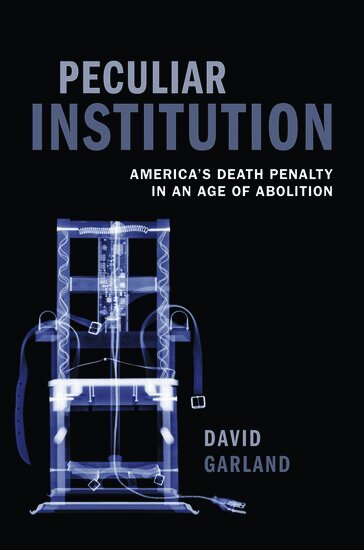
The U.S. death penalty is a peculiar institution, and a uniquely American one. Despite its comprehensive abolition elsewhere in the Western world, capital punishment continues in dozens of American states– a fact that is frequently discussed but rarely understood. The same puzzlement surrounds the peculiar form that American capital punishment now takes, with its uneven application, its seemingly endless delays, and the uncertainty of its ever being carried out in individual cases, none of which seem conducive to effective crime control or criminal justice. In a brilliantly provocative study, David Garland explains this tenacity and shows how death penalty practice has come to bear the distinctive hallmarks of America’s political institutions and cultural conflicts. America’s radical federalism and local democracy, as well as its legacy of violence and racism, account for our divergence from the rest of the West. Whereas the elites of other nations were able to impose nationwide abolition from above despite public objections, American elites are unable– and unwilling– to end a punishment that has the support of local majorities and a storied place in popular culture.In the course of hundreds of decisions, federal courts sought to rationalize and civilize an institution that too often resembled a lynching, producing layers of legal process but also delays and reversals. Yet the Supreme Court insists that the issue is to be decided by local political actors and public opinion. So the death penalty continues to respond to popular will, enhancing the power of criminal justice professionals, providing drama for the media, and bringing pleasure to a public audience who consumes its chilling tales. Garland brings a new clarity to our understanding of this peculiar institution– and a new challenge to supporters and opponents alike.
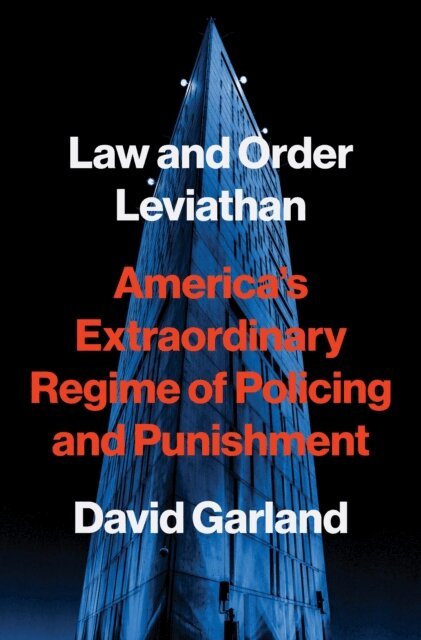
Law and Order Leviathan
America’s Extraordinary Regime of Policing and Punishment
Inbunden, Engelska, 2025
249 kr
Skickas inom 7-10 vardagar
How American-style capitalism creates a coercive state unlike any otherHow could America, that storied land of liberty, be home to mass incarceration, police killings, and racialized criminal justice? In Law and Order Leviathan, David Garland explains how America’s racialized political economy gives rise to this extraordinary outcome.The United States has long been an international outlier, with a powerful business class, a weak social state, and an exceptional gun culture. Garland shows how, after the 1960s, American-style capitalism disrupted poor communities and depleted social controls, giving rise to violence and social problems at levels altogether unknown in other affluent nations. Aggressive policing and punishment became the default response.Marshalling a wealth of evidence, Garland shows that America lags behind comparable nations in protections for working people. He identifies the structural sources of America’s penal state and the community-level processes through which political economy impacts crime and policing. He argues that there is nothing paradoxical in America’s reliance on coercive state controls; the nation’s vaunted liberalism is largely an economic liberalism devoted to free markets and corporate power rather than to individual dignity and flourishing. Fear of violent crime and distrust of others ensure public support for this coercive Leviathan; racism enables indifference to its harms.America’s carceral regime will remain an outlier until America’s economy is structurally transformed. And yet, Garland argues, there is a path to reduced violence and significant penal reform even in the absence of structural change. Law and Order Leviathan sets out a powerful theory of the relation between political economy and crime control and a realistic framework for pursuing progressive change.
948 kr
Skickas inom 10-15 vardagar
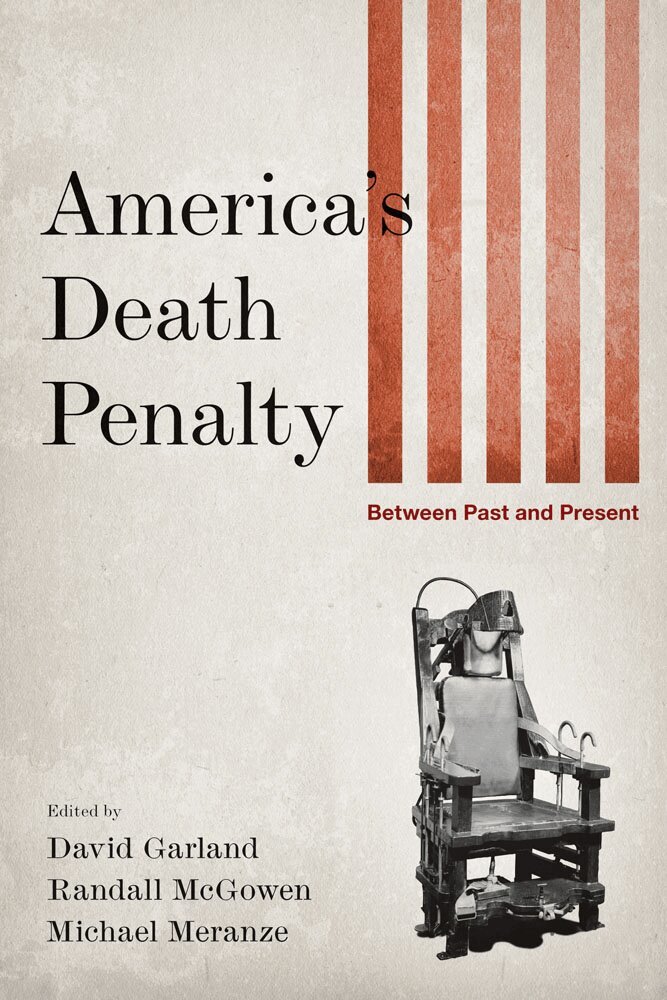
Over the past three decades, the United States has embraced the death penalty with tenacious enthusiasm. While most of those countries whose legal systems and cultures are normally compared to the United States have abolished capital punishment, the United States continues to employ this ultimate tool of punishment. The death penalty has achieved an unparalleled prominence in our public life and left an indelible imprint on our politics and culture. It has also provoked intense scholarly debate, much of it devoted to explaining the roots of American exceptionalism.America's Death Penalty takes a different approach to the issue by examining the historical and theoretical assumptions that have underpinned the discussion of capital punishment in the United States today. At various times the death penalty has been portrayed as an anachronism, an inheritance, or an innovation, with little reflection on the consequences that flow from the choice of words. This volume represents an effort to restore the sense of capital punishment as a question caught up in history. Edited by leading scholars of crime and justice, these original essays pursue different strategies for unsettling the usual terms of the debate. In particular, the authors use comparative and historical investigations of both Europe and America in order to cast fresh light on familiar questions about the meaning of capital punishment. This volume is essential reading for understanding the death penalty in America.Contributors: David Garland, Douglas Hay, Randall McGowen, Michael Meranze, Rebecca McLennan, and Jonathan Simon.
375 kr
Skickas inom 7-10 vardagar
Over the past three decades, the United States has embraced the death penalty with tenacious enthusiasm. While most of those countries whose legal systems and cultures are normally compared to the United States have abolished capital punishment, the United States continues to employ this ultimate tool of punishment. The death penalty has achieved an unparalleled prominence in our public life and left an indelible imprint on our politics and culture. It has also provoked intense scholarly debate, much of it devoted to explaining the roots of American exceptionalism.America's Death Penalty takes a different approach to the issue by examining the historical and theoretical assumptions that have underpinned the discussion of capital punishment in the United States today. At various times the death penalty has been portrayed as an anachronism, an inheritance, or an innovation, with little reflection on the consequences that flow from the choice of words. This volume represents an effort to restore the sense of capital punishment as a question caught up in history. Edited by leading scholars of crime and justice, these original essays pursue different strategies for unsettling the usual terms of the debate. In particular, the authors use comparative and historical investigations of both Europe and America in order to cast fresh light on familiar questions about the meaning of capital punishment. This volume is essential reading for understanding the death penalty in America.Contributors: David Garland, Douglas Hay, Randall McGowen, Michael Meranze, Rebecca McLennan, and Jonathan Simon.
419 kr
Skickas inom 3-6 vardagar
272 kr
Skickas inom 7-10 vardagar
Romans has been described as the theological epistle par excellence. The apostle Paul emphasizes that salvation is by God’s grace alone, and gives the assurance that freedom, hope, and the gift of righteousness are secured through Christ’s death on the cross, with the promise of a new and glorious destiny. Through the power of the Holy Spirit, believers can discern and do the will of God in everyday life. God’s purpose is to bring Jews and Gentiles together so that they may glorify the God and Father of our Lord Jesus Christ with one voice. David Garland offers clear guidance along the rewarding, though sometimes difficult, paths of this great letter.
541 kr
Skickas inom 10-15 vardagar
Situational crime prevention has drawn increasing interest in recent years,yet the debate has looked mainly at whether it 'works' to prevent crime. This volume addresses the ethics of situational crime prevention and also examines the place of situational crime prevention within criminology. The contributors are twelve distinguished criminologists who together advance our understanding of the ethical and societal questions underlying crime prevention. Contributors: Ron Clarke, Adam Crawford, Antony Duff, David Garland, Tim Hope, Richard Jones, John Kleinig, Clifford Shearing, David J. Smith, Richard Sparks, Andrew von Hirsch and Alison Wakefield. "..presents several unique questions regarding the use of crime prevention strategies." Robert Hanser writing in The Literature of Criminal Justice January 2001