David Halloran Lumsdaine – författare
Visar alla böcker från författaren David Halloran Lumsdaine. Handla med fri frakt och snabb leverans.
3 produkter
3 produkter
537 kr
Skickas inom 5-8 vardagar
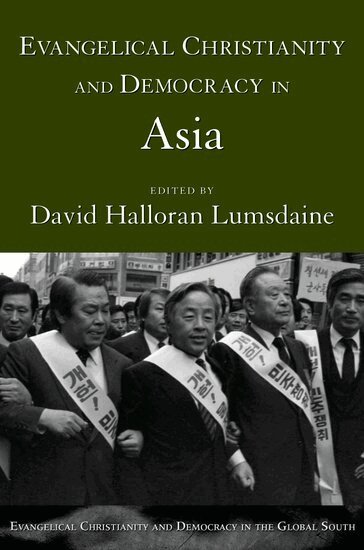
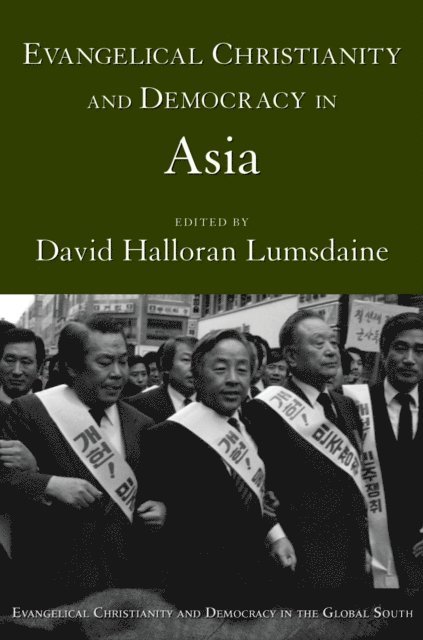
This is one of four projected volumes to emerge from a massive, Pew-funded study that sought to answer the question: What happens when a revivalist religion based on scriptural orthodoxy participates in the volatile politics of the Third World? Is the result a democratic politics of the ballot box, or is it more like an authoritarian politics of command from on high? Does the evangelical faith of the Bible hinder or promote a politics of the ballot box? At a time when the global-political impact of another revivalist and scriptural religion - Islam - fuels vexed debate among analysts the world over, these volumes offer an unusual comparative perspective on a critical issue: The often combustible interaction of resurgent religion and the developing world's unstable politics. Three of the volumes focus on particular regions (Africa, Latin America and Asia). The fourth will address the broader question of evangelical Christianity and democracy in the global setting. The present volume considers the case of Asia. In his introduction, editor David Lumsdaine offers a historical overview of evangelicalism in the region, provides a theoretical framework for understanding evangelical impact on the global south, and summarizes the findings presented in the remainder of the book. Six individual case studies follow, focusing respectively on the situation in China, Western India, Northeast India, Indonesia, South Korea, and the Philippines. The contributors, mainly younger scholars based in Asia, bring first hand-knowledge to their chapters and employ both field and archival research to develop their data and analyses. The result is a groundbreaking work that will be indispensable to everyone concerned with the future of the region.
419 kr
Skickas inom 7-10 vardagar
This is one of four projected volumes to emerge from a massive, Pew-funded study that sought to answer the question: What happens when a revivalist religion based on scriptural orthodoxy participates in the volatile politics of the Third World? Is the result a democratic politics of the ballot box, or is it more like an authoritarian politics of command from on high? Does the evangelical faith of the Bible hinder or promote a politics of the ballot box? At a time when the global-political impact of another revivalist and scriptural religion, Islam, fuels vexed debate among analysts the world over, this series offers an unusual comparative perspective on a critical issue: the often combustible interaction of resurgent religion and the developing world's unstable politics. Three of the volumes focus on particular regions (Africa, Latin America, and Asia). The fourth will address the broader question of evangelical Christianity and democracy in the global setting. The present volume considers the case of Asia.
1 122 kr
Skickas inom 3-6 vardagar
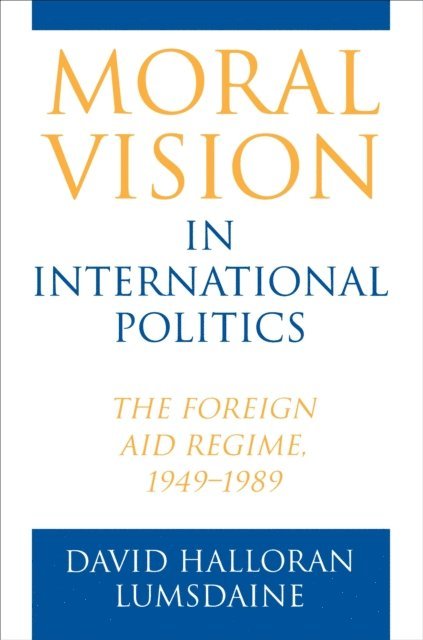
Can moral vision influence the dynamics of the world system? This inquiry into the evolving foreign aid policies of eighteen developed democracies challenges conventional international relations theory and offers a broad framework of testable hypotheses about the ways ethical commitments can help structure global politics. For forty years development assistance has been the largest and steadiest net financial flow to the Third World, far ex- ceeding investment by multinational corporations. Yet fifty years ago aid was unheard of. Investigating this sudden and widespread innovation in the postwar political economy, David Lumsdaine marshals a wealth of historical and statistical evidence to show that aid was based less on donor economic and political interests than on humanitarian convictions and the belief that peace and prosperity could be sustained only within a just international order. Lumsdaine finds the developed countries adhered to rules that, increasingly, favored the neediest aid recipients and reduced their own leverage. Furthermore, the donors most concerned about domestic poverty also gave more foreign aid: the U.S. aid effort was weaker than that of other donors.Many lines of evidence--how aid changed over time, which donors contributed heavily, where the money was spent, who supported aid efforts--converge to show how humanitarian concerns shaped aid. Seeking to bridge the gap between normative theory and empirical analysis, Lumsdaine's broad comparative study suggests that renewed moral vision is a prerequisite to devising workable institutions for a post-cold war world.