
David Laibman – författare
Visar alla böcker från författaren David Laibman. Handla med fri frakt och snabb leverans.
6 produkter
6 produkter
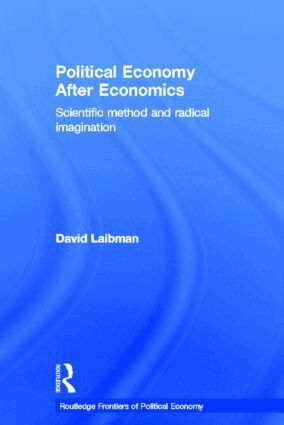
Inbunden, Engelska, 2011
2 227 kr
Skickas inom 10-15 vardagar
This re-incorporation of economics into political economy is one (small, but not insignificant) element in a larger project: to place all of the resources of present-day social-scientific research at the service of increasing democracy, in an ultimate direction toward socialism in the classic sense. An economics-enriched political economy is, above all, empowering: working people in general can calculate, build models, think theoretically, and contribute to a human-worthy future, rather than leaving all this to their "betters."
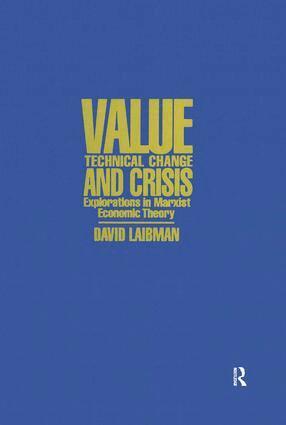
Inbunden, Engelska, 1992
2 227 kr
Skickas inom 10-15 vardagar
This text brings together studies in various aspects of the theory of the capitalist economy. It focuses on major themes of the Marxist tradition that postulate the existence and importance of social relations and structures underlying the esoteric realm of economic categories: prices, profits, wages, etc. The author takes a reappraising, critical look at the concepts of the deep structure - value, explitation, immanent crisis - using the analytical tools of modern economics to improve those concepts. The book is divided into four parts. Part 1 explores the essential nature of capitalism, re-examining problems in the theory of value and exploitation. Part 2 tackles the issue of capitalism-specific paths of growth and technical change, putting forward a rigorous theory of biased technical change and non-steady-state growth. Part 3 examines the cyclical character of capitalist growth and the theory of crises. Finally, Part 4 places capitalism in the wider framework of modes of production, considering the theory of precapitalist formations and aspects of the theory and practical experience of socialism. The guiding theme is the combination, or confrontation, of rigorous, quantitative analytical techniques with equally demanding qualitative and political-economic conceptualization. The book's premise is that this interface is essential to a progressive yet distinctively Marxist social theory.
Häftad, Engelska, 1992
825 kr
Skickas inom 10-15 vardagar
This text brings together studies in various aspects of the theory of the capitalist economy. It focuses on major themes of the Marxist tradition that postulate the existence and importance of social relations and structures underlying the esoteric realm of economic categories: prices, profits, wages, etc. The author takes a reappraising, critical look at the concepts of the deep structure - value, explitation, immanent crisis - using the analytical tools of modern economics to improve those concepts. The book is divided into four parts. Part 1 explores the essential nature of capitalism, re-examining problems in the theory of value and exploitation. Part 2 tackles the issue of capitalism-specific paths of growth and technical change, putting forward a rigorous theory of biased technical change and non-steady-state growth. Part 3 examines the cyclical character of capitalist growth and the theory of crises. Finally, Part 4 places capitalism in the wider framework of modes of production, considering the theory of precapitalist formations and aspects of the theory and practical experience of socialism. The guiding theme is the combination, or confrontation, of rigorous, quantitative analytical techniques with equally demanding qualitative and political-economic conceptualization. The book's premise is that this interface is essential to a progressive yet distinctively Marxist social theory.
Häftad, Engelska, 2014
763 kr
Skickas inom 10-15 vardagar
This re-incorporation of economics into political economy is one (small, but not insignificant) element in a larger project: to place all of the resources of present-day social-scientific research at the service of increasing democracy, in an ultimate direction toward socialism in the classic sense. An economics-enriched political economy is, above all, empowering: working people in general can calculate, build models, think theoretically, and contribute to a human-worthy future, rather than leaving all this to their "betters."
Inbunden, Engelska, 2006
1 340 kr
Tillfälligt slut
Blends insights from several disciplines to offer a general theory of social evolution.Does history have a direction? Are there principles that unify our experience and show connections among diverse places, times, and cultures? Seeking to answer these questions, Deep History offers a fresh theory of social evolution while thinking grandly about the human condition. With his theory based in the Marxian and historical materialist tradition, David Laibman starts from scratch and utilizes some of the best insights in economics and economic history, sociology, political science, anthropology, history, and philosophy to construct a new framework for understanding the most general aspects of social evolution. He then applies this framework to modern era capitalist societies and, projecting it on a postcapitalist or socialist future, captures an understanding of the core momentum that has characterized our lived experience, a momentum considerate of diversity, contingency, and the role of human consciousness over time.
Häftad, Engelska, 2008
377 kr
Tillfälligt slut
Blends insights from several disciplines to offer a general theory of social evolution.Does history have a direction? Are there principles that unify our experience and show connections among diverse places, times, and cultures? Seeking to answer these questions, Deep History offers a fresh theory of social evolution while thinking grandly about the human condition. With his theory based in the Marxian and historical materialist tradition, David Laibman starts from scratch and utilizes some of the best insights in economics and economic history, sociology, political science, anthropology, history, and philosophy to construct a new framework for understanding the most general aspects of social evolution. He then applies this framework to modern era capitalist societies and, projecting it on a postcapitalist or socialist future, captures an understanding of the core momentum that has characterized our lived experience, a momentum considerate of diversity, contingency, and the role of human consciousness over time.