David Lovelock – författare
Visar alla böcker från författaren David Lovelock. Handla med fri frakt och snabb leverans.
6 produkter
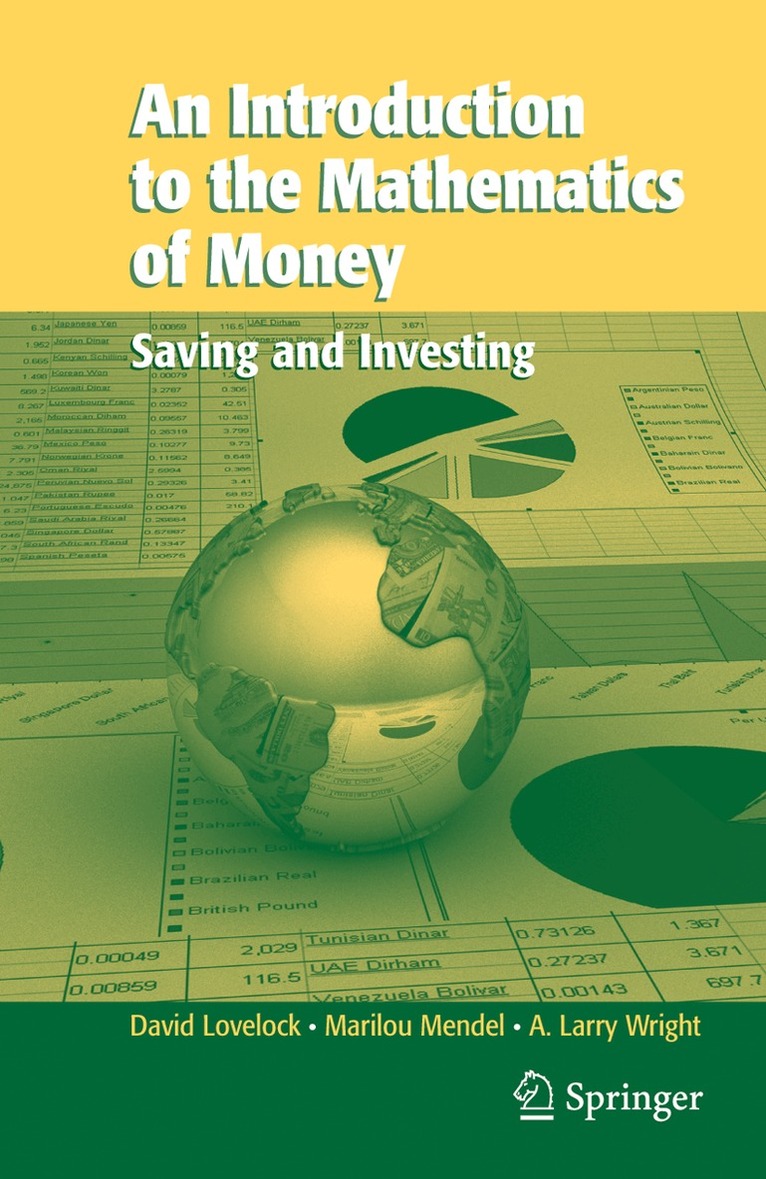
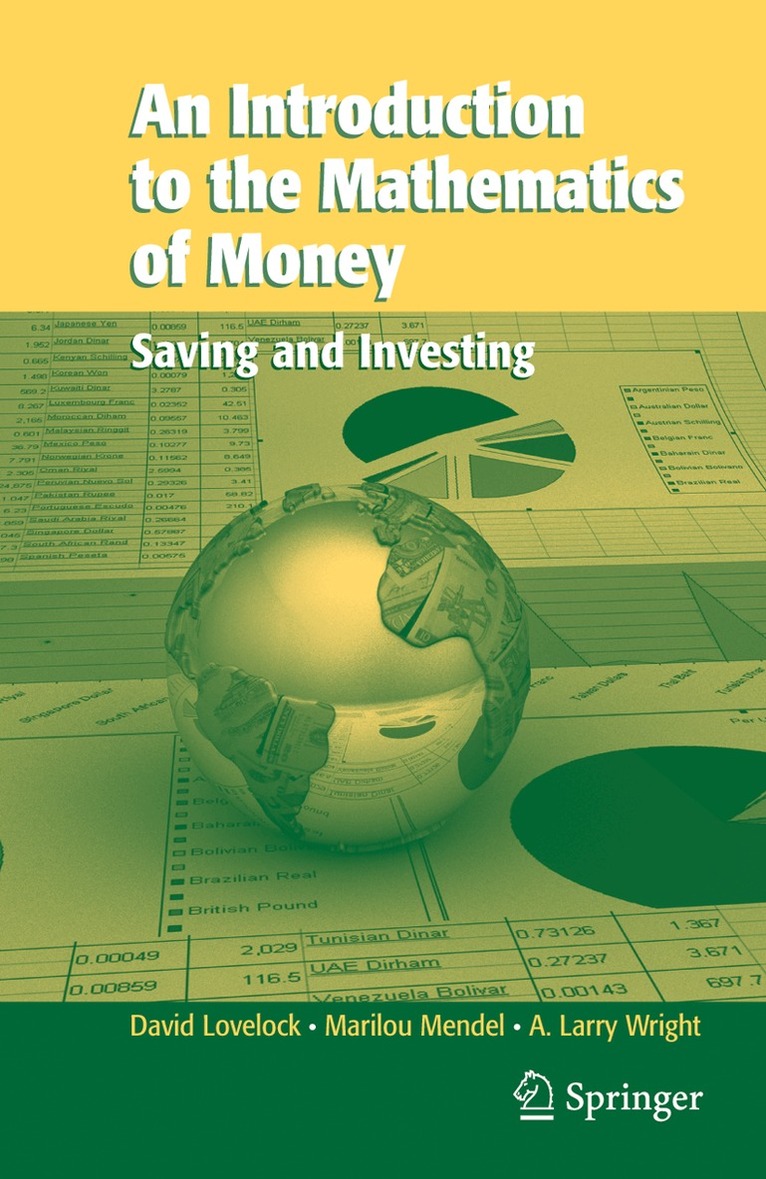
Introduction to the Mathematics of Money
Saving and Investing
Av David Lovelock, Marilou Mendel m. fl.
Inbunden, 2006
986 kr
Lägg i varukorg
Introduction Some people distinguish between savings and investments, where savings are monies placed in relatively risk-free accounts with modest rewards, and where investments involve more risk and the potential for greater rewards. In this book we do not distinguish between these ideas. We treat …
Introduction to the Mathematics of Money
Saving and Investing
Av Arthur L. Wright, Marilou Mendel m. fl.
E-bok, 2007
897 kr
Lägg i varukorg
Introduction Some people distinguish between savings and investments, where savings are monies placed in relatively risk-free accounts with modest rewards, and where investments involve more risk and the potential for greater rewards. In this book we do not distinguish between these ideas. We treat …
Differential Equations
Graphics, Models, Data
Av David O. Lomen, David Lovelock
Häftad, 1998
3796 kr
Lägg i varukorg
Lomen/Lovelock present differential equations as a natural extension of calculus, and encourage students to see them as a natural tool for investigating many aspects of science and engineering. The book provides lively reading with compelling applications, projects and experiments that supply …
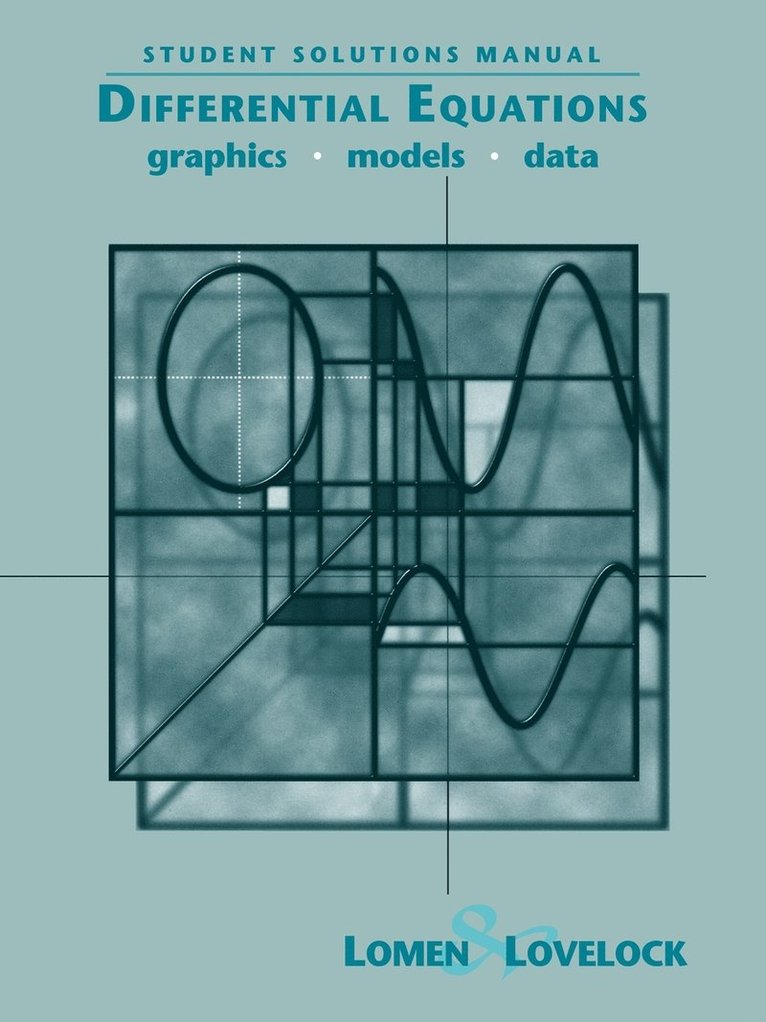
Student Solutions Manual to accompany Differential Equations: Graphics, Models, Data
Av David O. Lomen, David Lovelock
Häftad, 1998
1203 kr
Lägg i varukorg
Fully-worked solutions with clear explanationsThe Student Solutions Manual to accompany Differential Equations: Graphics, Models, Data provides fully-worked solutions to problems from the text. Clear explanations back step-by-step solutions to facilitate full understanding of the problem, approach, …
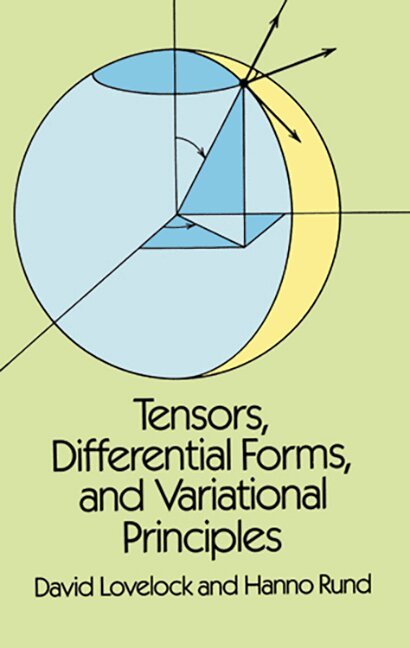
Tensors, Differential Forms and Variational Principles
Häftad, 2003
4,0 utav 5 stjärnor. Totalt antal röster: (1)
265 kr
Lägg i varukorg
Incisive, self-contained account of tensor analysis and the calculus of exterior differential forms, interaction between the concept of invariance and the calculus of variations. Emphasis is on analytical techniques, with large number of problems, from routine manipulative exercises to technically …
Introduction to the Mathematics of Money
Saving and Investing
Av David Lovelock, Marilou Mendel m. fl.
Häftad, 2010
714 kr
Lägg i varukorg
Introduction Some people distinguish between savings and investments, where savings are monies placed in relatively risk-free accounts with modest rewards, and where investments involve more risk and the potential for greater rewards. In this book we do not distinguish between these ideas. We treat …