David M. Rabban - Böcker
Visar alla böcker från författaren David M. Rabban. Handla med fri frakt och snabb leverans.
6 produkter
6 produkter
1 342 kr
Skickas inom 7-10 vardagar
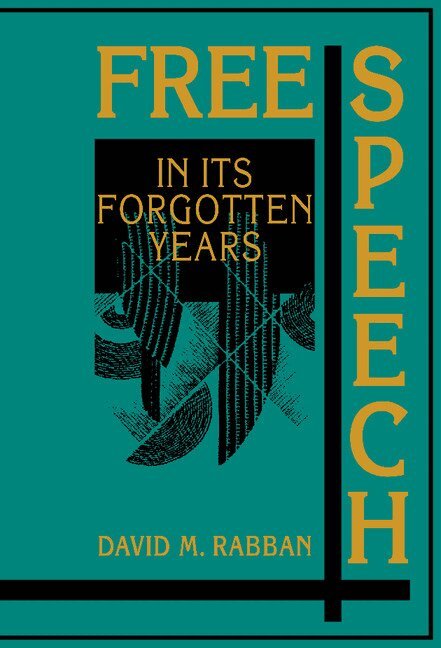
Most American historians and legal scholars incorrectly assume that controversies and litigation about free speech began abruptly during World War I. However, there was substantial debate about free speech issues between the Civil War and World War I. Important free speech controversies, often involving the activities of sex reformers and labor unions, preceded the Espionage Act of 1917. Scores of legal cases presented free speech issues to Justices Holmes and Brandeis. A significant organization, the Free Speech League, became a principled defender of free expression two decades before the establishment of the ACLU in 1920. World War I produced a major transformation in American liberalism. Progressives who had viewed constitutional rights as barriers to needed social reforms came to appreciate the value of political dissent during its wartime repression. They subsequently misrepresented the prewar judicial hostility to free speech claims and obscured prior libertarian defenses of free speech based on commitments to individual autonomy.
409 kr
Skickas inom 7-10 vardagar
Most American historians and legal scholars incorrectly assume that controversies and litigation about free speech began abruptly during World War I. However, there was substantial debate about free speech issues between the Civil War and World War I. Important free speech controversies, often involving the activities of sex reformers and labor unions, preceded the Espionage Act of 1917. Scores of legal cases presented free speech issues to Justices Holmes and Brandeis. A significant organization, the Free Speech League, became a principled defender of free expression two decades before the establishment of the ACLU in 1920. World War I produced a major transformation in American liberalism. Progressives who had viewed constitutional rights as barriers to needed social reforms came to appreciate the value of political dissent during its wartime repression. They subsequently misrepresented the prewar judicial hostility to free speech claims and obscured prior libertarian defenses of free speech based on commitments to individual autonomy.
1 106 kr
Skickas inom 7-10 vardagar
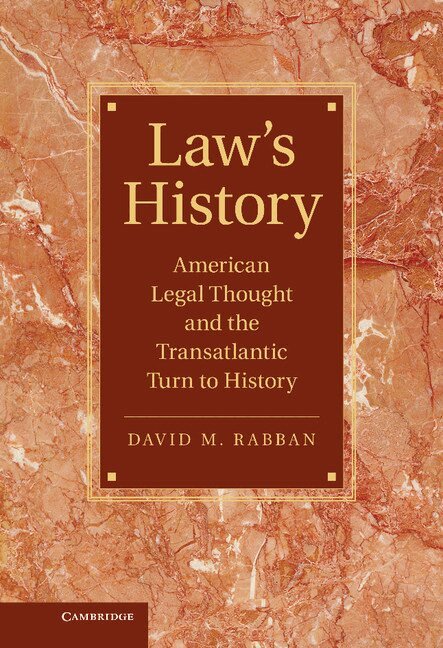
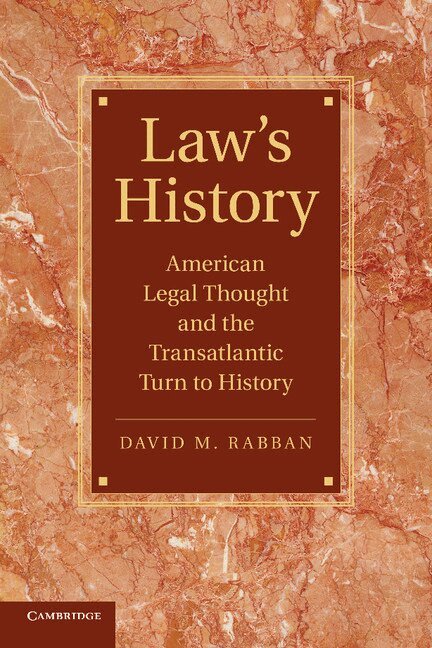
This is a study of the central role of history in late nineteenth-century American legal thought. In the decades following the Civil War, the founding generation of professional legal scholars in the United States drew from the evolutionary social thought that pervaded Western intellectual life on both sides of the Atlantic. Their historical analysis of law as an inductive science rejected deductive theories and supported moderate legal reform, conclusions that challenge conventional accounts of legal formalism. Unprecedented in its coverage and its innovative conclusions about major American legal thinkers from the Civil War to the present, the book combines transatlantic intellectual history, legal history, the history of legal thought, historiography, jurisprudence, constitutional theory and the history of higher education.
838 kr
Skickas inom 10-15 vardagar
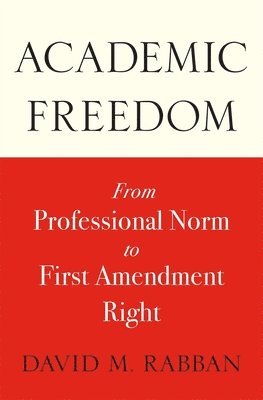
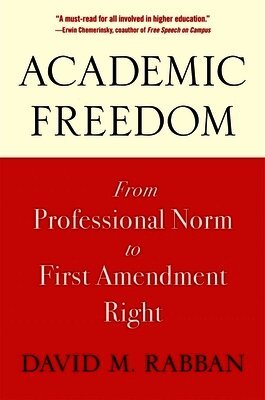
“The best kind of scholarship—deeply researched and immensely useful. Wherever you stand on issues of free speech and academic freedom, you will learn from this book.” —Michael Roth, President of Wesleyan UniversityA definitive interpretation of academic freedom as a First Amendment right, drawing on a comprehensive survey of legal cases.Is academic freedom a First Amendment right? Many think so, yet its relationship to free speech as guaranteed by the Constitution is anything but straightforward. David Rabban examines the extensive case law addressing academic freedom and free speech at American universities, developing a robust theory of academic freedom as a distinctive subset of First Amendment law.In subsuming academic freedom under the First Amendment, Rabban emphasizes the societal value of the contribution to knowledge made by the expert speech of professors, the classic justification for academic freedom in the influential 1915 Declaration of the American Association of University Professors (AAUP). Any indication that professors might be disciplined because people without academic training disagree with their scholarly views would undermine confidence in the integrity of their work and therefore their ability to perform this vital function on behalf of the public. Rabban argues that academic freedom fosters two central First Amendment values recognized by courts in a wide range of contexts: the production and dissemination of knowledge and the contribution of free expression to democratic citizenship.The First Amendment right of academic freedom applies most directly to professors, but it also plausibly extends to the educational decisions of universities and to students’ learning interests. More broadly, this vision of academic freedom can guide in developing additional distinctive First Amendment rights to protect the expert expression of journalists, librarians, museum curators, and other professionals. At a time when academic freedom is under attack from many directions, Academic Freedom proposes a theoretically satisfying and practically useful guide to its meaning as a First Amendment right.
223 kr
Skickas inom 7-10 vardagar
“The best kind of scholarship—deeply researched and immensely useful. Wherever you stand on issues of free speech and academic freedom, you will learn from this book.” —Michael Roth, President of Wesleyan University and author of Safe Enough SpacesA definitive interpretation of academic freedom as a First Amendment right, drawing on a comprehensive survey of legal cases.Is academic freedom a First Amendment right? Many think so, yet its relationship to free speech as guaranteed by the Constitution is anything but straightforward. David Rabban examines the extensive case law addressing academic freedom and free speech at American universities, developing a robust theory of academic freedom as a distinctive subset of First Amendment law.In subsuming academic freedom under the First Amendment, Rabban emphasizes the societal value of the contribution to knowledge made by the expert speech of professors, the classic justification for academic freedom in the influential 1915 Declaration of the American Association of University Professors (AAUP). Any indication that professors might be disciplined because people without academic training disagree with their scholarly views would undermine confidence in the integrity of their work and therefore their ability to perform this vital function on behalf of the public. Rabban argues that academic freedom fosters two central First Amendment values recognized by courts in a wide range of contexts: the production and dissemination of knowledge and the contribution of free expression to democratic citizenship.The First Amendment right of academic freedom applies most directly to professors, but it also plausibly extends to the educational decisions of universities and to students’ learning interests. More broadly, this vision of academic freedom can guide in developing additional distinctive First Amendment rights to protect the expert expression of journalists, librarians, museum curators, and other professionals. At a time when academic freedom is under attack from many directions, Academic Freedom proposes a theoretically satisfying and practically useful guide to its meaning as a First Amendment right.
496 kr
Skickas inom 7-10 vardagar
This is a study of the central role of history in late nineteenth-century American legal thought. In the decades following the Civil War, the founding generation of professional legal scholars in the United States drew from the evolutionary social thought that pervaded Western intellectual life on both sides of the Atlantic. Their historical analysis of law as an inductive science rejected deductive theories and supported moderate legal reform, conclusions that challenge conventional accounts of legal formalism. Unprecedented in its coverage and its innovative conclusions about major American legal thinkers from the Civil War to the present, the book combines transatlantic intellectual history, legal history, the history of legal thought, historiography, jurisprudence, constitutional theory and the history of higher education.