David Newby – författare
Visar alla böcker från författaren David Newby. Handla med fri frakt och snabb leverans.
3 produkter
3 produkter
922 kr
Skickas inom 5-8 vardagar
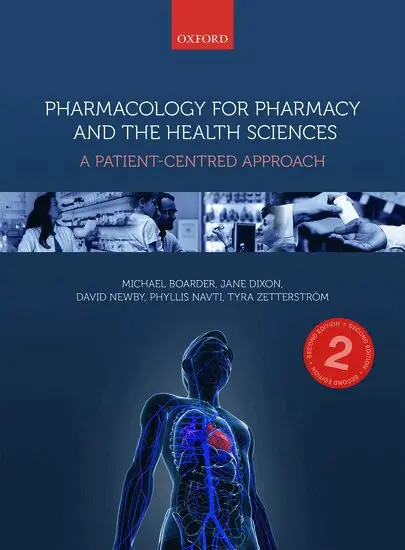
Pharmacology for Pharmacy and the Health Sciences introduces pharmacology in a way that is tailored to the needs of pharmacy and health care students. It provides an understanding of drug action at the cellular and molecular level, which is interfaced seamlessly with an explanation of the clinical use of drugs to treat common conditions. Taking a novel patient-centred approach, the book features a series of embedded workbooks which explore clinical topics in the context of individual patients and their experience of illness, and so relate the scientific basis of pharmacology to real-life pharmacy practice. The workbooks help you to interpret presenting symptoms, hospital clinical clerking, and patient history notes, and to understand the therapeutic strategy and clinical outcome, all within a simple reader-friendly format.Pharmacology for Pharmacy and the Health Sciences is the perfect course companion for anyone needing to develop a solid understanding of pharmacology and its impact on pharmacy and clinical practice.Online ResourcesThe oneline resources to accompany Pharmacology for Pharmacy and the Health Sciences feature: For registered adopters: - Figures from the book, available to download- PDF versions of all workbooks appearing in the text - Suggested answers to questions posed within the workbooks
166 kr
Skickas inom 5-8 vardagar
2 386 kr
Kommande
This book will provide a thematic overview of one of European history’s most devastating famines, the Great Finnish Famine of the 1860s. In 1868, the nadir of several years of worsening economic conditions, 137,000 people (approximately 8% of the Finnish population) perished as the result of hunger and disease. The attitudes and policies enacted by Finland’s devolved administration tended to follow European norms, and therefore were often similar to the “colonial” practices seen in other famines at the time. What is distinctive about this catastrophe in a mid-nineteenth-century context, is that despite Finland being a part of the Russian Empire, it was largely responsible for its own governance, and indeed was developing its economic, political and cultural autonomy at the time of the famine. Finland’s Great Famine 1856-68 examines key themes such as the use of emergency foods, domestic and overseas charity, vagrancy and crime, emergency relief works, and emigration.