David P. Auerswald – författare
Visar alla böcker från författaren David P. Auerswald. Handla med fri frakt och snabb leverans.
12 produkter
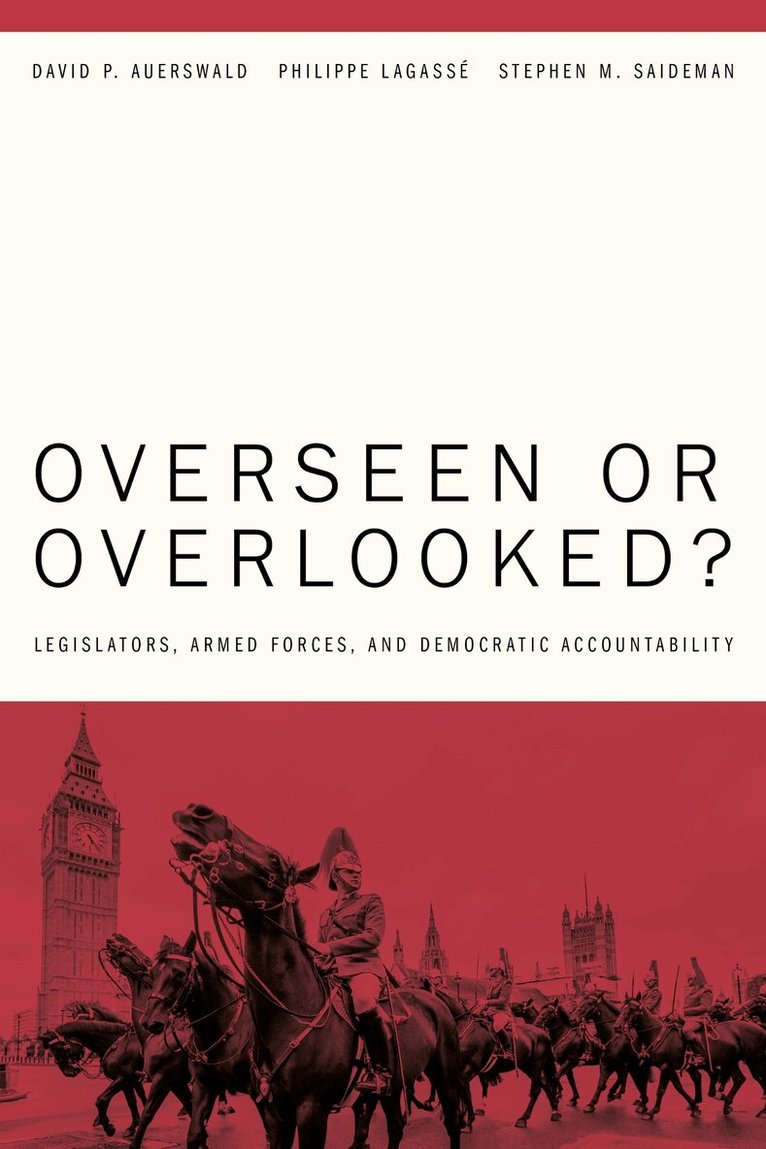
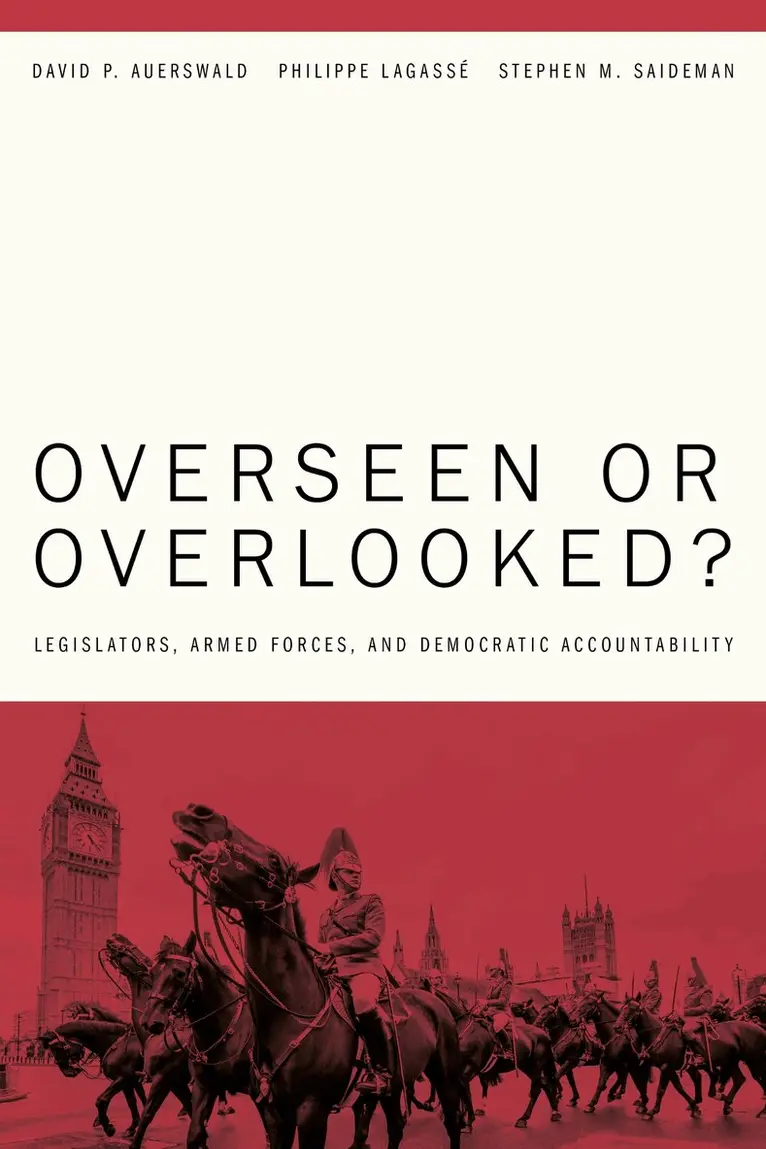
Overseen or Overlooked?
Legislators, Armed Forces, and Democratic Accountability
Av David P. Auerswald, Philippe Lagassé m. fl.
Inbunden, 2025
848 kr
Lägg i varukorg
"War is too important to be left to the generals," declared French Prime Minister Georges Clemenceau over a century ago. But which civilians, exactly, play the most important roles in controlling the armed forces? When civilian control is studied, the focus is typically on those in the upper …
Disarmed Democracies
Domestic Institutions and the Use of Force
E-bok, 2010
1231 kr
Lägg i varukorg
In Disarmed Democracies: Domestic Institutions and the Use of Force , David P. Auerswald examines how the structure of domestic political institutions affects whether democracies use force or make threats during international disputes. Auerswald argues that the behavior of democracies in interstate …
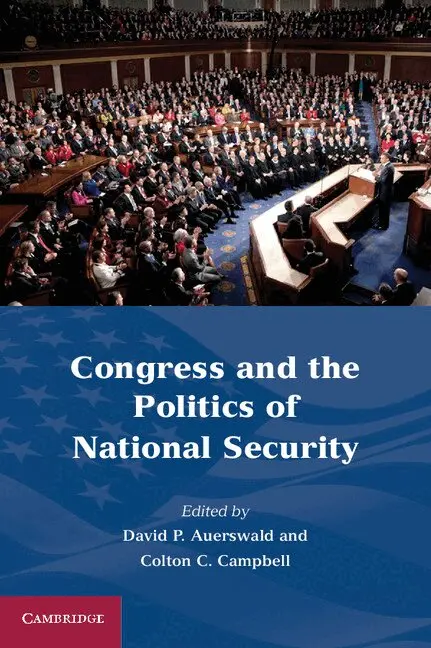
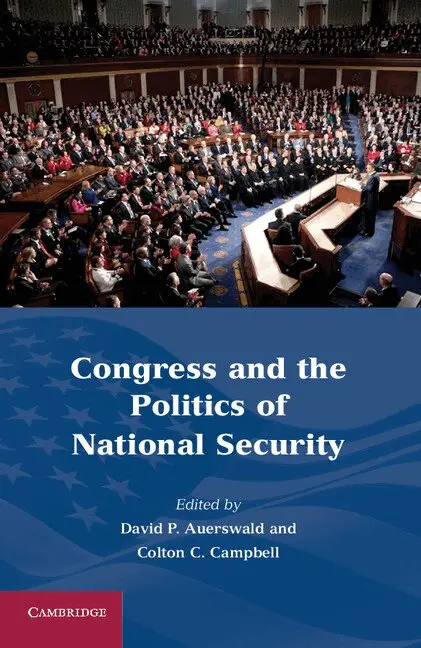
Congress and the Politics of National Security
Av David P. Auerswald, Colton C. Campbell
Häftad, 2011
448 kr
Lägg i varukorg
In an increasingly complex and unpredictable world, a growing number of observers and practitioners have called for a re-examination of our national security system. Central to any such reform effort is an evaluation of Congress. Is Congress adequately organized to deal with national security …
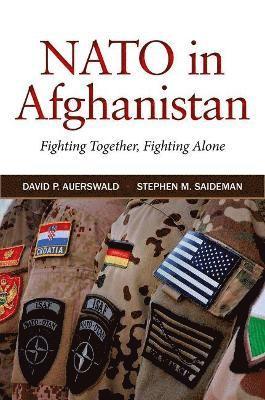
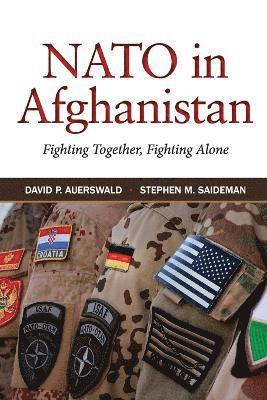
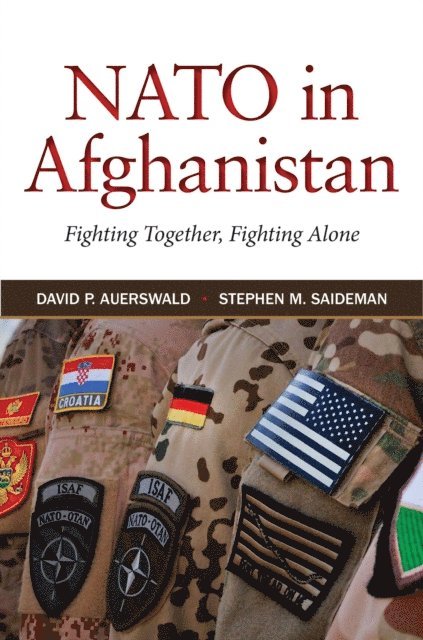
NATO in Afghanistan
Fighting Together, Fighting Alone
Av David P. Auerswald, Stephen M. Saideman
Inbunden, 2014
470 kr
Lägg i varukorg
Modern warfare is almost always multilateral to one degree or another, requiring countries to cooperate as allies or coalition partners. Yet as the war in Afghanistan has made abundantly clear, multilateral cooperation is neither straightforward nor guaranteed. Countries differ significantly in …
NATO in Afghanistan
Fighting Together, Fighting Alone
Av David P. Auerswald, Stephen M. Saideman
Häftad, 2016
269 kr
Lägg i varukorg
Modern warfare is almost always multilateral to one degree or another, requiring countries to cooperate as allies or coalition partners. Yet as the war in Afghanistan has made abundantly clear, multilateral cooperation is neither straightforward nor guaranteed. Countries differ significantly in …
Congress and the Politics of National Security
Av David P. Auerswald, Colton C. Campbell
Inbunden, 2011
1539 kr
Lägg i varukorg
In an increasingly complex and unpredictable world, a growing number of observers and practitioners have called for a re-examination of our national security system. Central to any such reform effort is an evaluation of Congress. Is Congress adequately organized to deal with national security …
NATO in Afghanistan
Fighting Together, Fighting Alone
Av Stephen M. Saideman, David P. Auerswald
E-bok, 2014
368 kr
Lägg i varukorg
Modern warfare is almost always multilateral to one degree or another, requiring countries to cooperate as allies or coalition partners. Yet as the war in Afghanistan has made abundantly clear, multilateral cooperation is neither straightforward nor guaranteed. Countries differ significantly in …
Overseen or Overlooked?
Legislators, Armed Forces, and Democratic Accountability
Av David P. Auerswald, Philippe Lagassé m. fl.
E-bok, 2025
970 kr
Lägg i varukorg
"War is too important to be left to the generals," declared French Prime Minister Georges Clemenceau over a century ago. But which civilians, exactly, play the most important roles in controlling the armed forces? When civilian control is studied, the focus is typically on those in the upper …
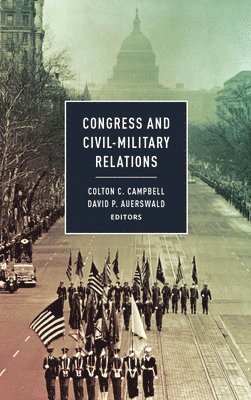
Congress and Civil-Military Relations
Av Colton C. Campbell, David P. Auerswald
Häftad, 2015
616 kr
Lägg i varukorg
While the president is the commander in chief, the US Congress plays a critical and underappreciated role in civil-military relations - the relationship between the armed forces and the civilian leadership that commands it. This unique book edited by Colton C. Campbell and David P. Auerswald will …
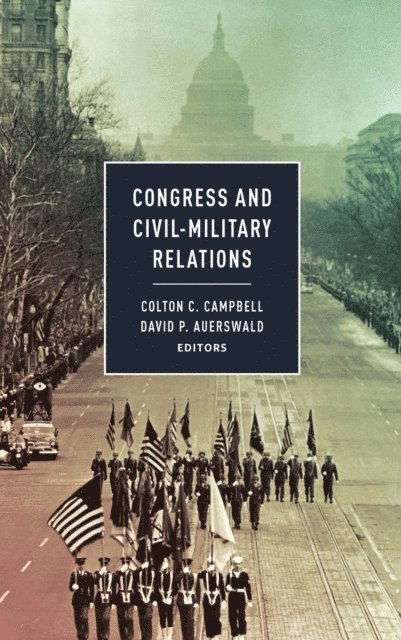
Congress and Civil-Military Relations
Av David P. Auerswald, Colton C. Campbell
E-bok, 2015
447 kr
Lägg i varukorg
While the president is the commander in chief, the US Congress plays a critical and underappreciated role in civil-military relations—the relationship between the armed forces and the civilian leadership that commands it. This unique book edited by Colton C. Campbell and David P. Auerswald will …
Congress and Civil-Military Relations
Av Colton C. Campbell, David P. Auerswald
Inbunden, 2015
1119 kr
Lägg i varukorg
While the president is the commander in chief, the US Congress plays a critical and underappreciated role in civil-military relations - the relationship between the armed forces and the civilian leadership that commands it. This unique book edited by Colton C. Campbell and David P. Auerswald will …
Disarmed Democracies
Domestic Institutions and the Use of Force
Inbunden, 2000
1197 kr
Tillfälligt slut
In Disarmed Democracies: Domestic Institutions and the Use of Force, David P. Auerswald examines how the structure of domestic political institutions affects whether democracies use force or make threats during international disputes. Auerswald argues that the behavior of democracies in interstate …